No. 13The 1880s
Comet
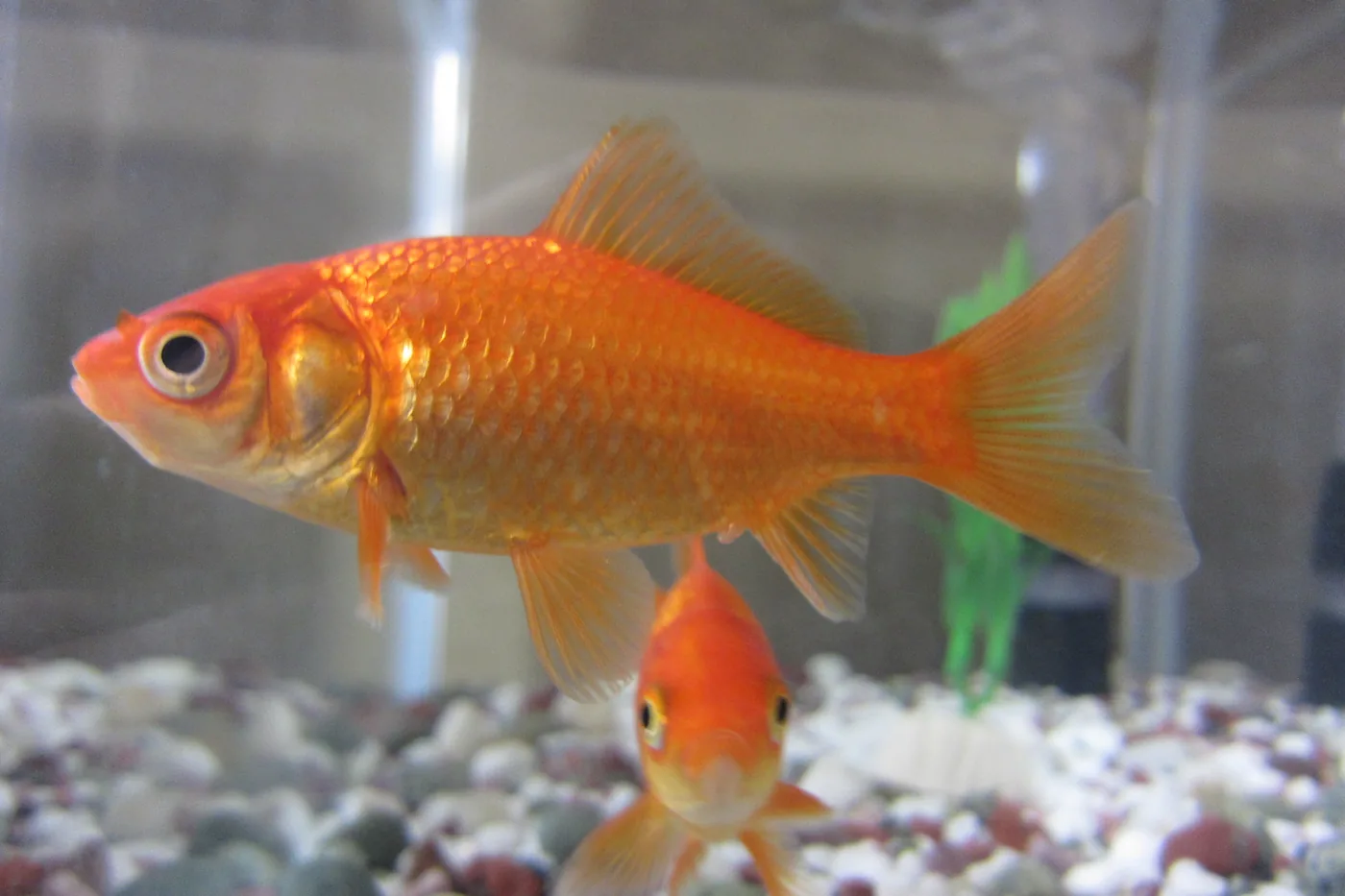
A fast, streamlined goldfish with a tail like a comet's trail.
Also known as Comet goldfish · Comet-tailed goldfish · Sarasa comet (red-and-white variety)
- Specimen
- Single-tailed goldfish, United States
- Adult size
- 25–30 cm
- Lifespan
- 15–20 years
- Water
- 10–24 °C
- Care
- Easy
- Swimming
- Strong
- First fish needs
- 150 litres
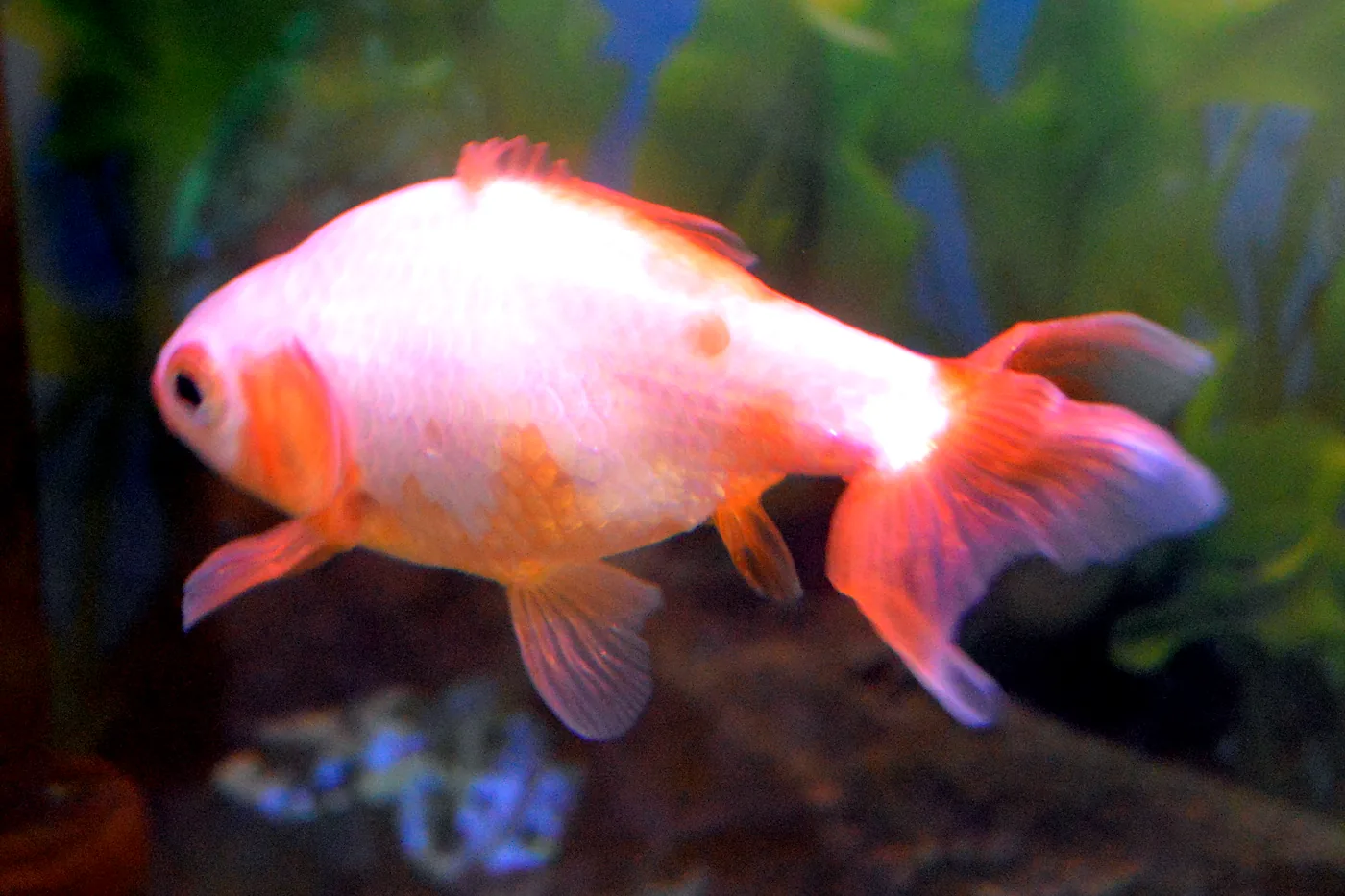
Photograph: Yatokin, CC BY-SA 4.0 · Wikimedia Commons
About these figures Size, lifespan and water are the ranges keepers' guides give for a fish in good care, not measurements of this breed, and swimming and care are this site's own ratings of the published advice. Lifespan is where the sources differ most: how long goldfish live sets them side by side. First fish needs is a middle figure for one fish, from advice that runs from 50 litres to about 300; tank size sets that out.
The specimen
Quick facts
- Classification
- Single-tailed goldfish
- Body type
- Slim, elongated body with long pointed fins and a deeply forked single tail that can approach the body in length
- Tail and dorsal
- Single tail, dorsal fin present
- Swimming ability
- Strong
- Keeper experience
- Beginner
- Temperament
- Energetic, fast and restless; peaceful, but far too quick to share a tank with slow fancy goldfish
- Adult size
- 25–30 cm (10–12 in)
- Temperature
- 10–24 °C (50–75 °F)
- Minimum aquarium
- 150 L (40 US gal) for one fish
- Origin
- United States, 1880s
How to recognise one
- Long, deeply forked single tail with pointed lobes, often nearly as long as the body
- Slimmer, more elongated body than the common goldfish
- Long, pointed pectoral and pelvic fins and a tall dorsal fin
- Metallic scales in orange, red, yellow, white or red-and-white (sarasa)
- Fins that trail at rest and snap flat in a burst of speed
Identification
A comet is a common goldfish drawn out at both ends. The body is slimmer, the pectoral and pelvic fins are long and pointed, and the tail is the giveaway: a single, deeply forked fin with tapering lobes that, on a good fish, comes close to the body in length. At rest it trails like the comet’s tail the breed is named for; under acceleration it snaps flat and the fish becomes a spear.
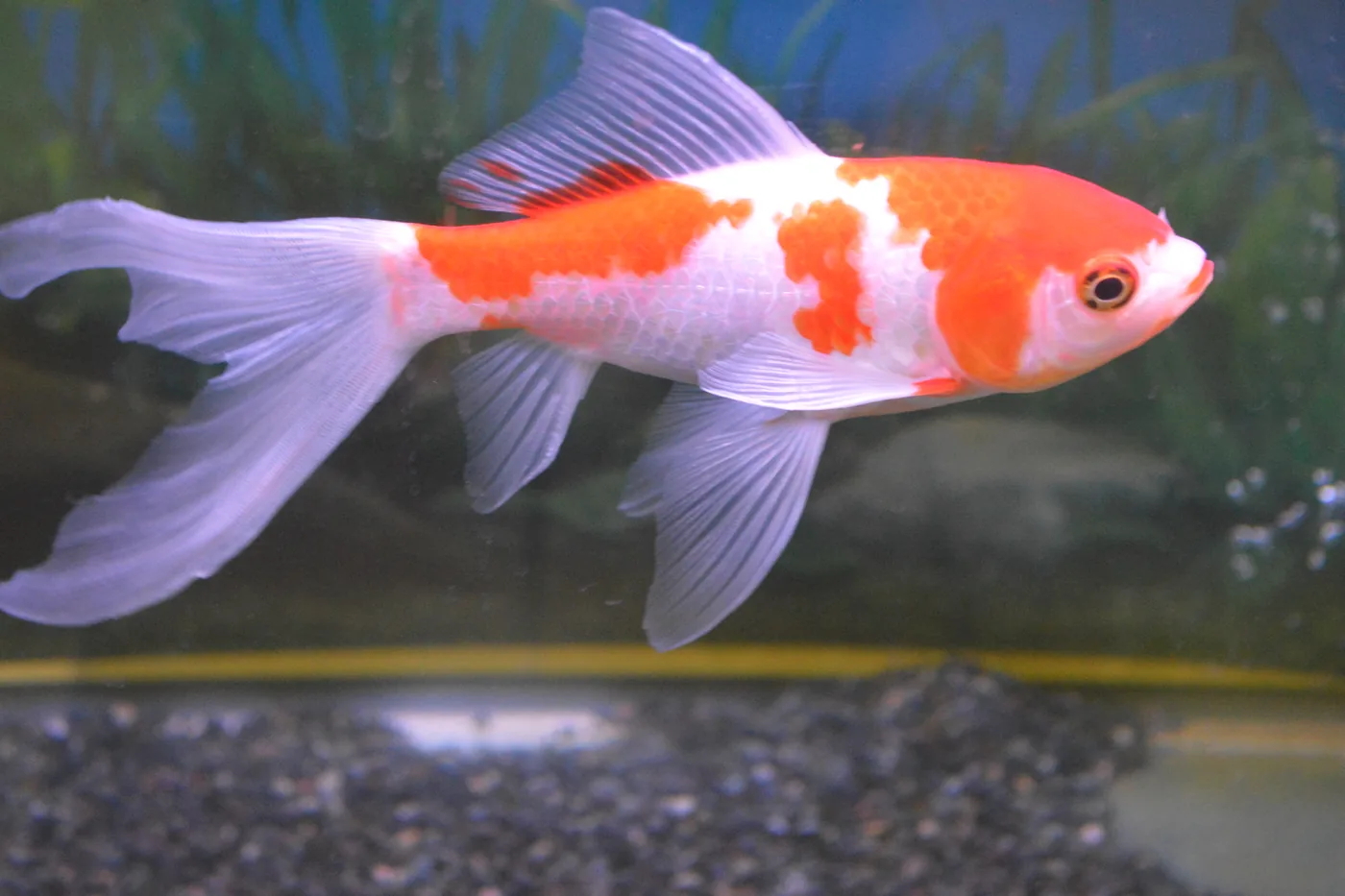
Against the common goldfish, judge by tail length and fork depth, since the colours overlap completely. Against the shubunkin, judge by the scales: a shubunkin is calico on a semi-transparent ground, while a comet has metallic scales in one or two colours. All three want the same things, and all three are pond fish. Orange and red are the norm, yellow and white common, and the red-and-white sarasa the most sought-after pattern; young comets are often bronze and take most of a year to colour up.
Common, comet or shubunkin?
-
A short tail
-
A long, deeply forked tail
-
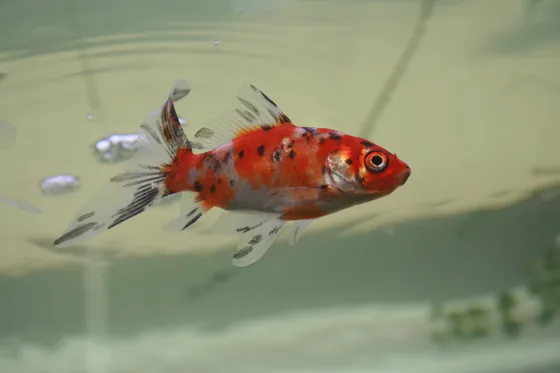
Calico, on see-through scales
Three single-tailed goldfish side by side: a common goldfish with its short tail ringed, a comet with its long, deeply forked tail ringed, and a shubunkin with its calico body ringed.
- Common Goldfish. A short tail and a metallic shine.
- Comet. Slimmer, with a long, deeply forked tail.
- Shubunkin. The same outline, wearing a calico pattern on semi-transparent scales.
Photographs: Common Goldfish, ぱたごん, CC BY-SA 3.0; Comet, Yatokin, CC BY-SA 4.0; Shubunkin, Michelle Jo, CC BY-SA 3.0. Rings added.
The varieties
Few named forms, because the comet was bred for a shape rather than for ornament.
- Orange and red. The default, and what most ponds hold.
- Sarasa. Clean white with deep red patches, named from a Japanese word for patterned cloth. The most sought-after form and the one whose pattern is least settled in a young fish.
- Yellow and white. Less common, and a white comet shows every mark, which is worth knowing before buying one.
- Bronze. Not a variety. Young comets are wild-type olive-brown and colour up later; a bronze fish is simply one that has not yet, or one of the few that never will.
How it develops
Comets grow quickly, which is the source of much of the trouble they cause their owners. Most goldfish hatch bronze and lose the dark pigment during the first year; growth depends on food, space and water.
Growth is the thing that catches people. A five-centimetre comet bought in spring can need adult housing within a year, and how big do goldfish get covers what the finished fish looks like. Buying the final tank first is cheaper than buying two, and the tank size guide sets the figures.
Colour is the part nobody warns about. A tank of drab brown juveniles is the normal midpoint of a successful spawn, not a failure, and breeding goldfish covers why breeders cannot judge on colour for most of a year.
Choosing one
Comets are cheap, widely sold, and frequently sold from tanks you would not choose to buy from. Both facts matter.
- Watch it move. A comet should be cruising, not hanging. Fins carried open, body straight, no listing.
- Look at the tail. Even lobes, no permanent kink or fold, no ragged edges. A torn tail heals; a bent caudal peduncle does not.
- Check for flicking against decor, which points at parasites — flashing and rubbing covers what that behaviour means.
- Look at the whole system, not the fish. Feeder tanks and crowded display tanks share filtration, so one sick fish means the water carries it — choosing and bringing home a goldfish covers reading a shop.
- Then quarantine, for at least four weeks, without exception. This is a breed where it matters, because comets are often held badly before sale. Quarantining a new goldfish covers doing it.
On feeder fish specifically: the fish is ordinary and the conditions are not. What you are buying is a normal comet with an above-average chance of arriving with ich or flukes, and a full quarantine turns that from a problem into a formality.
Where you will find one. Any general pet shop, and frequently in the same feeder tanks as commons, with the same warning attached. What varies is fin length and the evenness of the colour, and neither is visible at the 3 cm size comets are usually sold at — they show at 8 to 10 cm. If the finnage is what you are buying the fish for, buy a larger one and pay for it. Sarasa comets, the red-and-white ones, are the single variant where quality genuinely varies enough to be worth shopping around for.
Personality and behaviour
The comet is a fast, streamlined goldfish and behaves like it. It cruises constantly, darts the length of the tank for no obvious reason and usually reaches food before the slower fish have noticed. That energy is good company for commons and shubunkins and bad news for orandas, ranchus and other slow fancies, which go hungry in a comet’s tank; the compatibility checker flags the combinations that fail.
Comets are sociable and do best in a small group. In spring, males chase females relentlessly, which can leave the long tail frayed for a few weeks — is my goldfish breeding? covers why that looks so much worse than it is. They are also strong jumpers, particularly when new or startled at night, so a lid matters, and first aid for an injured goldfish covers what to do if one gets out.
Aquarium requirements
Think in length. A working range for adults is 150 to 200 litres (40 to 53 US gallons) for the first comet and 75 to 100 litres for each additional one, but a comet in a tall, short tank is worse off than one in a lower tank of the same volume. Many keepers of adults settle on 280 litres (75 US gallons) or more, or a tank at least 120 cm (4 feet) long, and beyond that a pond serves the fish better than any indoor setup. The tank size guide explains the reasoning and the pond guide covers the move outdoors.
Keepers commonly aim for filtration that turns the volume over five to ten times an hour; comets enjoy some current and will play in an outflow that would exhaust a fancy. Keep the water between 10 and 24 °C (50 and 75 °F) with gradual changes, change 25 to 50 percent weekly according to nitrate, and choose sand, a bare bottom or large smooth stones — substrate for goldfish covers grain size. Plants are eaten or uprooted unless tough, and plants for goldfish tanks covers the few that survive.
Feeding
Comets eat anything and beg for more. Base the diet on a quality pellet, floating or sinking, and add blanched vegetables, duckweed, gel food and frozen foods across the week. Feed small amounts one to three times a day, finished within a minute or two, and skip a day now and then; overfeeding a comet harms the water more than the fish. The feeding frequency guide gives a routine that scales with tank size.
In a pond, ease off as the water cools, move to a wheat-germ-based food below about 15 °C, and stop feeding when the fish stop taking food, usually around 8 to 10 °C — feeding through the seasons has the bands and a pond through the year the rest of the calendar.
Common health considerations
Comets are hardy, and most of their problems are mechanical or water-related. The long tail is easily torn on sharp decor, in spawning chases or by a jump into the lid; torn fins heal cleanly in good water but invite fin rot if the damage is repeated or the water is poor. Ammonia and nitrite in an undersized or uncycled tank show as gasping, red streaks and clamped fins, and are corrected with water changes rather than medication.
Ich, the white-spot parasite, is common in newly bought comets that have passed through crowded dealer tanks; quarantine new fish for at least four weeks, watch for salt-grain spots and flashing, and treat early. Pond comets can also pick up anchor worm, fish lice and flukes from new stock.
What goes wrong, in order
A hardy fish, so its problems are mostly housing and mechanics rather than disease.
| What you see | Usually | Where to look |
|---|---|---|
| A frayed or split tail | Sharp decor, a jump, or the spring chase | Torn fins |
| Salt-grain spots after a purchase | Ich, from a crowded dealer tank | White spots |
| Gasping, red streaks, clamped fins | Ammonia or nitrite in an undersized tank | Red streaks |
| Found on the floor | It jumped, and there was a reason | First aid |
| Flicking against decor | Parasites, usually newly arrived | Flashing and rubbing |
| Worn snout, dull colour, glass-surfing | The tank is too short | Goldfish tank size |
The last row is the one that is hardest to see, because nothing looks acutely wrong. A comet in a tank it has outgrown does not get ill; it gets diminished, and the signs read as personality rather than as a problem.
Is a comet right for you?
It suits you if you have a pond, or a tank at least 120 cm long, or intend to get one. It is hardy, forgiving of beginners’ mistakes, tolerant of a seasonal temperature swing, long-lived, and among the most rewarding goldfish to watch because it actually uses the space it is given.
It does not suit you if the tank is small, if it would share water with fancies, or if you want a fish that stays the size you bought it. A comet is a pond fish that tolerates aquariums, not the other way round, and goldfish ponds is the page that makes that argument properly.
And it is a decade-or-more commitment, which is the thing least often said about the cheapest fish in the shop. What keeping goldfish costs puts the rest of it in proportion.
History and origin
The comet was developed in the United States; the veiltail, fixed in Philadelphia in the 1890s, is the other well-known American breed. It appeared in the early 1880s, and the Cincinnati aquarist and author Hugo Mulertt is generally credited with developing and promoting it; some accounts also place early comets in government fish ponds in Washington, D.C., in the same decade. Whatever its exact beginnings, the fish was fast, tough and easy to breed in outdoor ponds, and within a few decades it was widely produced.
The red-and-white sarasa, named with a Japanese word for patterned cloth, is a prized form, and comets remain a staple of the pond trade in North America and Europe. Comets have a show standard in Britain and were once widely exhibited, though few are shown today; the appeal now is movement, hardiness and a tail that looks best in open water.
Before you bring one home
- Needs swimming length far more than height; a long tank or a pond suits it best
- Fast and greedy at feeding time, so fancy goldfish are usually outcompeted
- The long tail tears on sharp decor and gets nipped during spring spawning chases
- A capable jumper, especially in a new tank; use a lid or keep the water line low
- Often sold cheaply as a feeder fish, which changes nothing about its adult size or needs
Suitable companions
Single-tailed goldfish are fast and boisterous. Keep them with fish that can keep up.
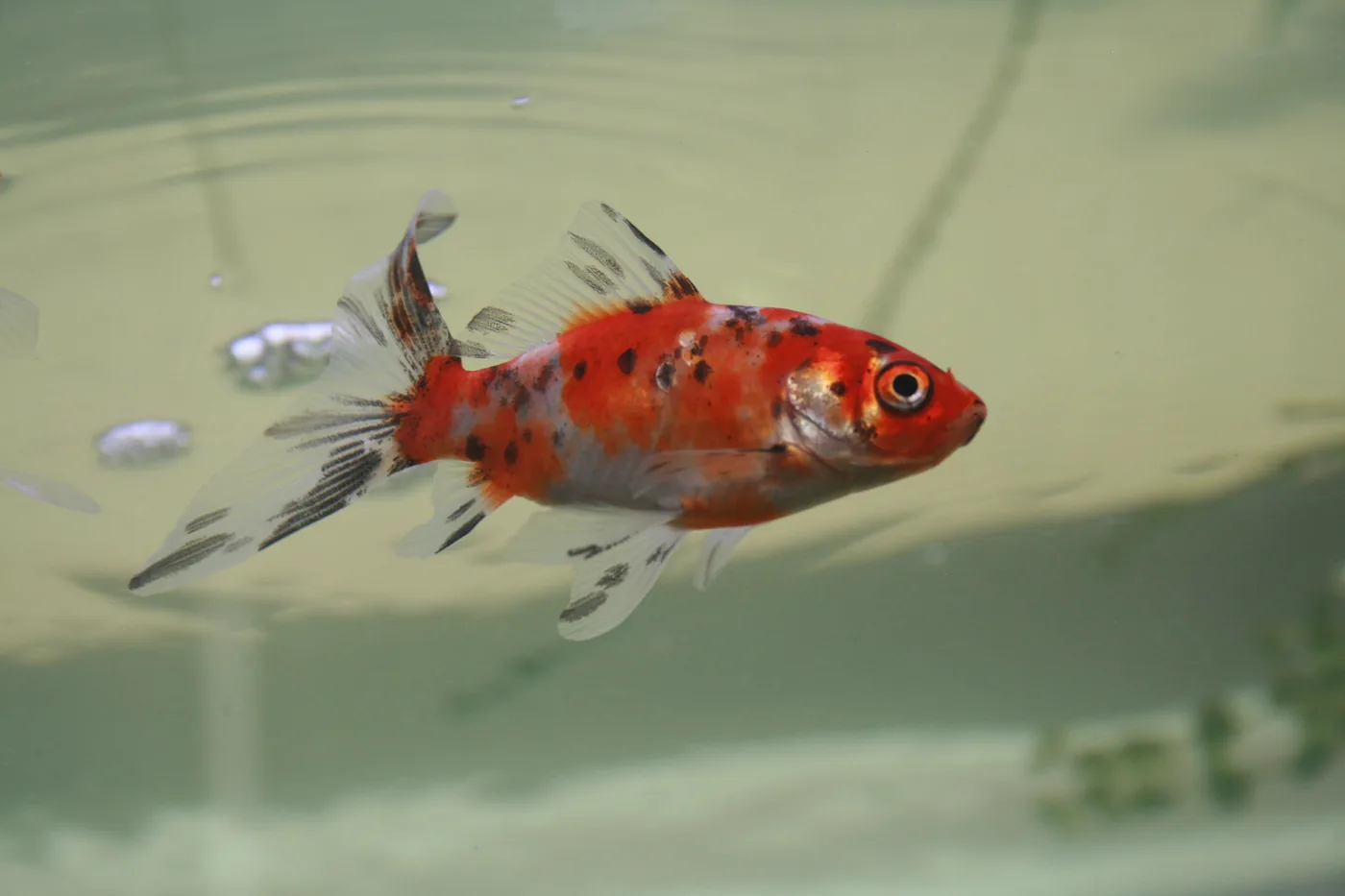
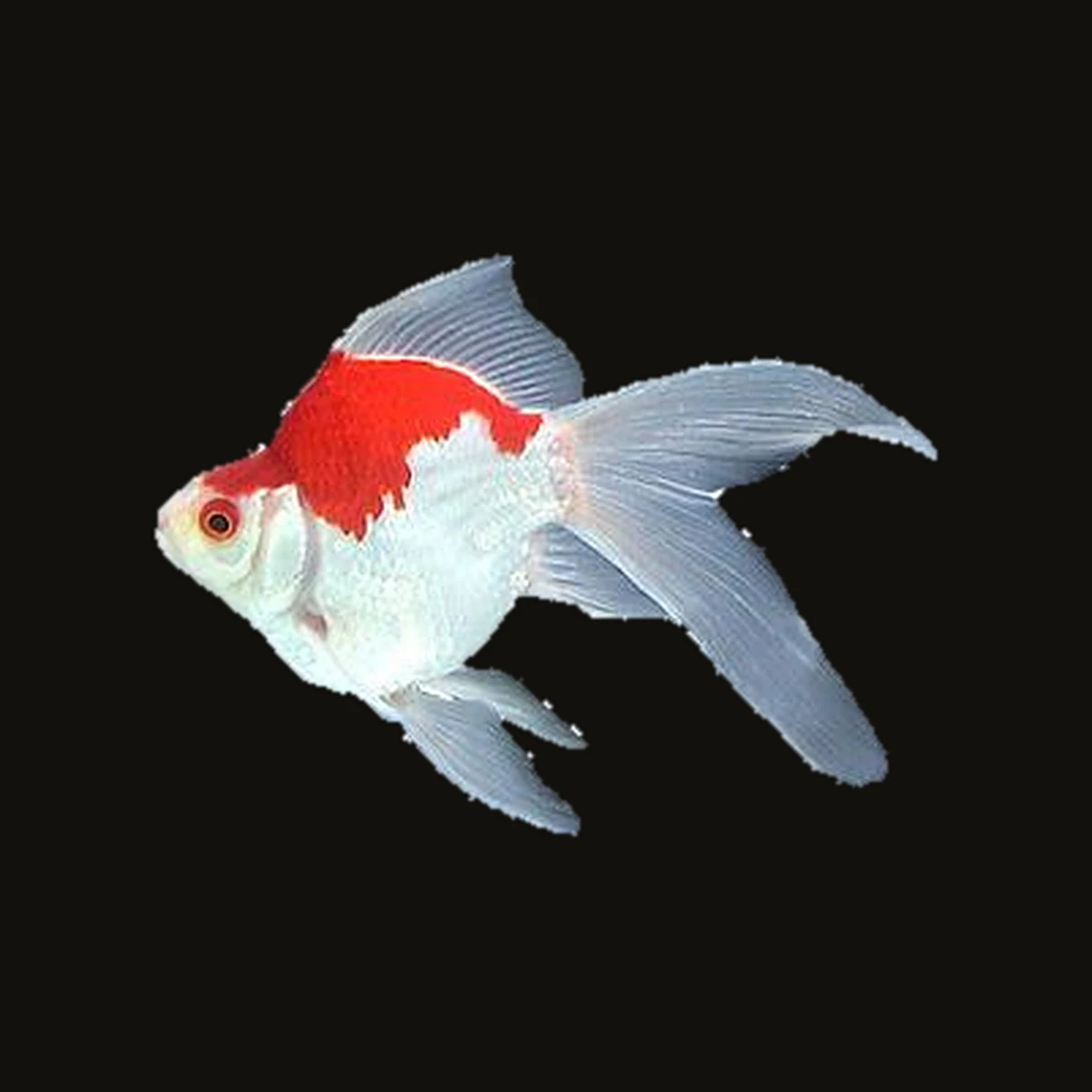
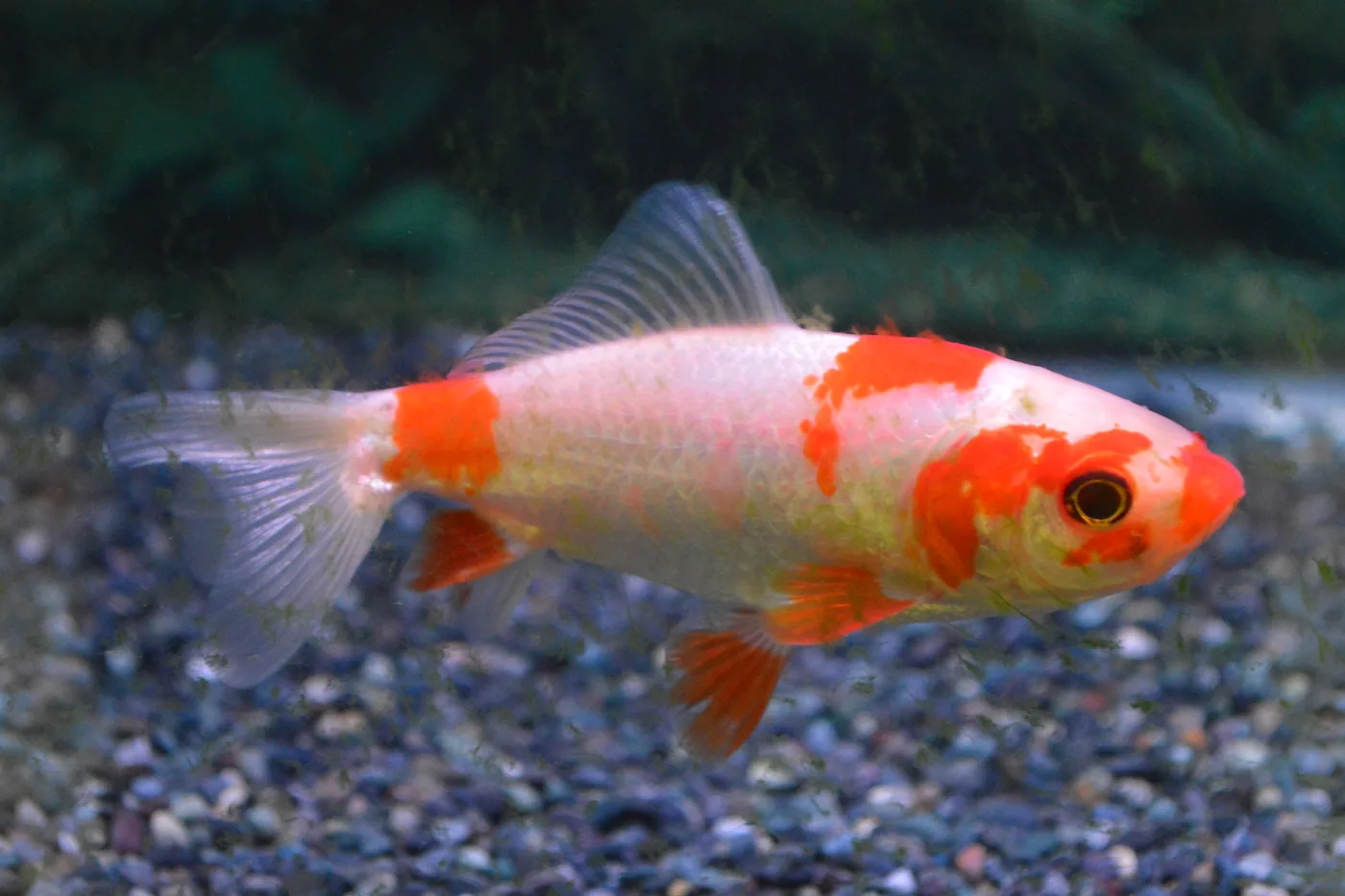
Best kept apart from: Fantail, Oranda, Ranchu, Lionhead, Ryukin, Telescope, Black Moor, Pearlscale, Bubble Eye, Celestial Eye, Pompom, Veiltail, Tosakin, Lionchu, Jikin. Speed and appetite differences leave the slower fish underfed.
Thinking about other species? Try the compatibility checker.
Similar breeds
Of the breeds most like the comet, the common goldfish, shubunkin and wakin are pictured above among its companions. The others:
Frequently asked questions
How big do comet goldfish get?
Most comets reach 25 to 30 cm (10 to 12 inches) including the tail, and pond fish with room and years behind them can exceed that. Growth is rapid in the first two years, so a 5 cm juvenile can need adult-sized housing surprisingly soon. Plan for the adult from the start rather than upgrading under pressure later.
What is a sarasa comet?
Sarasa is a Japanese term for a red-and-white pattern, and a sarasa comet is simply a comet with a clean white ground colour and patches of deep red. It is the same breed with the same needs, not a separate kind of fish. The pattern can shift over the first year or two as juvenile pigment settles, so young fish are sold on promise rather than finished colour.
Are comets good pond fish?
They are among the best. Comets tolerate the seasonal swing of a temperate pond, use the space in a way no aquarium allows, and their bright colours show well from above. Give them a pond deep enough not to freeze solid, a filter or plenty of plants, and protection from herons, and stop feeding once the fish stop taking food, usually around 8 to 10 °C.
Is it worth buying a feeder comet?
The fish is fine; the tank it came from is the problem. Feeder stock is ordinary young comets, mass-produced and held at densities that make disease routine, so the risk is what arrives with it rather than what it will become. If you buy one, quarantine for at least four weeks without exception, expect it to need it, and be ready to treat. What you are getting is a fish that can reach 25 to 30 cm and live a decade or more, which is the part the price does not convey.
Why is my comet brown?
Because that is what a goldfish is before it changes. Every goldfish hatches in wild-type olive-bronze, and the orange, red and white appear later as the dark pigment recedes — a change keepers call going colour. In comets it usually happens somewhere between three months and a year, earlier in warm water and good light, and a few fish never change at all. A bronze comet is not ill and is not a different breed.
Why does my comet keep jumping?
Comets are strong jumpers and they jump for reasons: poor water, a startle, a spawning chase, or a tank they have outgrown. A lid stops the consequence and the reason still needs finding — test the water first, then look at whether something is chasing it. A fish that has been out of the water needs putting straight back into its own tank water and then watching for a few days, and the first-aid page covers what to look for.
Can comets live with fancy goldfish?
Not well, and the harm is invisible for months. A comet is much faster than an oranda or a ranchu and usually reaches the meal first, so the fancy is slowly underfed while nothing that looks like aggression ever happens. Add a spring spawning chase from a fish twice its speed and you get a thin fancy with torn fins and no obvious culprit. Keep comets with commons and shubunkins, and fancies with fancies.
Can a comet live in a small tank for now?
A juvenile can be housed temporarily in 60 to 80 litres if the tank is filtered and the water is changed often, but treat it as a stopgap measured in months, not years. Comets grow fast and need 150 litres (40 US gallons) or more as adults, with more length than height. Buying the final tank first is cheaper than buying two.