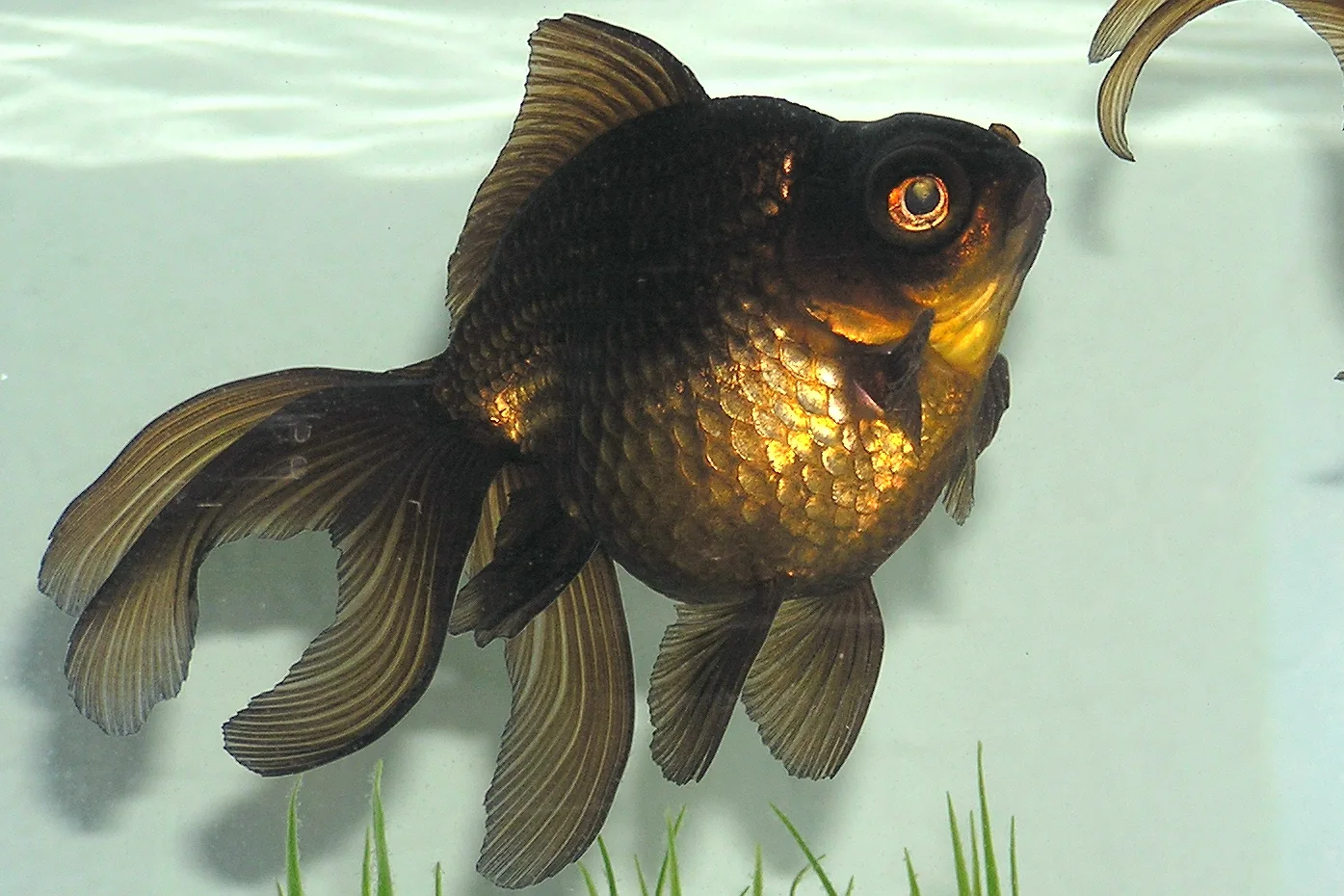
No. 04By the late 16th century
Telescope
The wide-eyed fancy that needs a soft-edged, thoughtfully arranged aquarium.
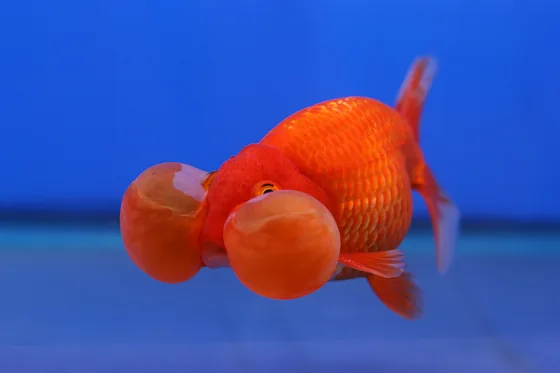
Also known as Demekin · Globe Eye · Dragon Eye · Telescope Eye
- Specimen
- Fancy goldfish, China
- Adult size
- 15–20 cm
- Lifespan
- 7–10 years
- Water
- 18–24 °C
- Care
- Moderate
- Swimming
- Moderate
- First fish needs
- 100 litres
Photograph: Fanghong, CC BY 2.5 · Wikimedia Commons
About these figures Size, lifespan and water are the ranges keepers' guides give for a fish in good care, not measurements of this breed, and swimming and care are this site's own ratings of the published advice. Lifespan is where the sources differ most: how long goldfish live sets them side by side. First fish needs is a middle figure for one fish, from advice that runs from 50 litres to about 300; tank size sets that out.
The specimen
Quick facts
- Classification
- Fancy goldfish
- Body type
- Egg-shaped body with a dorsal fin, a double tail and large eyes that project sideways on cone-shaped mounts
- Tail and dorsal
- Double tail, dorsal fin present
- Swimming ability
- Moderate
- Keeper experience
- Intermediate
- Temperament
- Peaceful and unhurried; relies on smell as much as sight and is easily beaten to food by quicker fish
- Adult size
- 15–20 cm (6–8 in)
- Temperature
- 18–24 °C (64–75 °F)
- Minimum aquarium
- 100 L (26 US gal) for one fish
- Origin
- China, refined in Japan, Kept in China by the late 1500s
How to recognise one
- Eyes that protrude from the head on cone- or globe-shaped mounts, visible from above as two bumps either side of the skull
- Egg-shaped body with a full dorsal fin and a double caudal fin
- Japanese demekin lines often carry a deeper, ryukin-like body with a hint of shoulder hump
- Butterfly-tail lines spread the tail wide and flat when seen from above
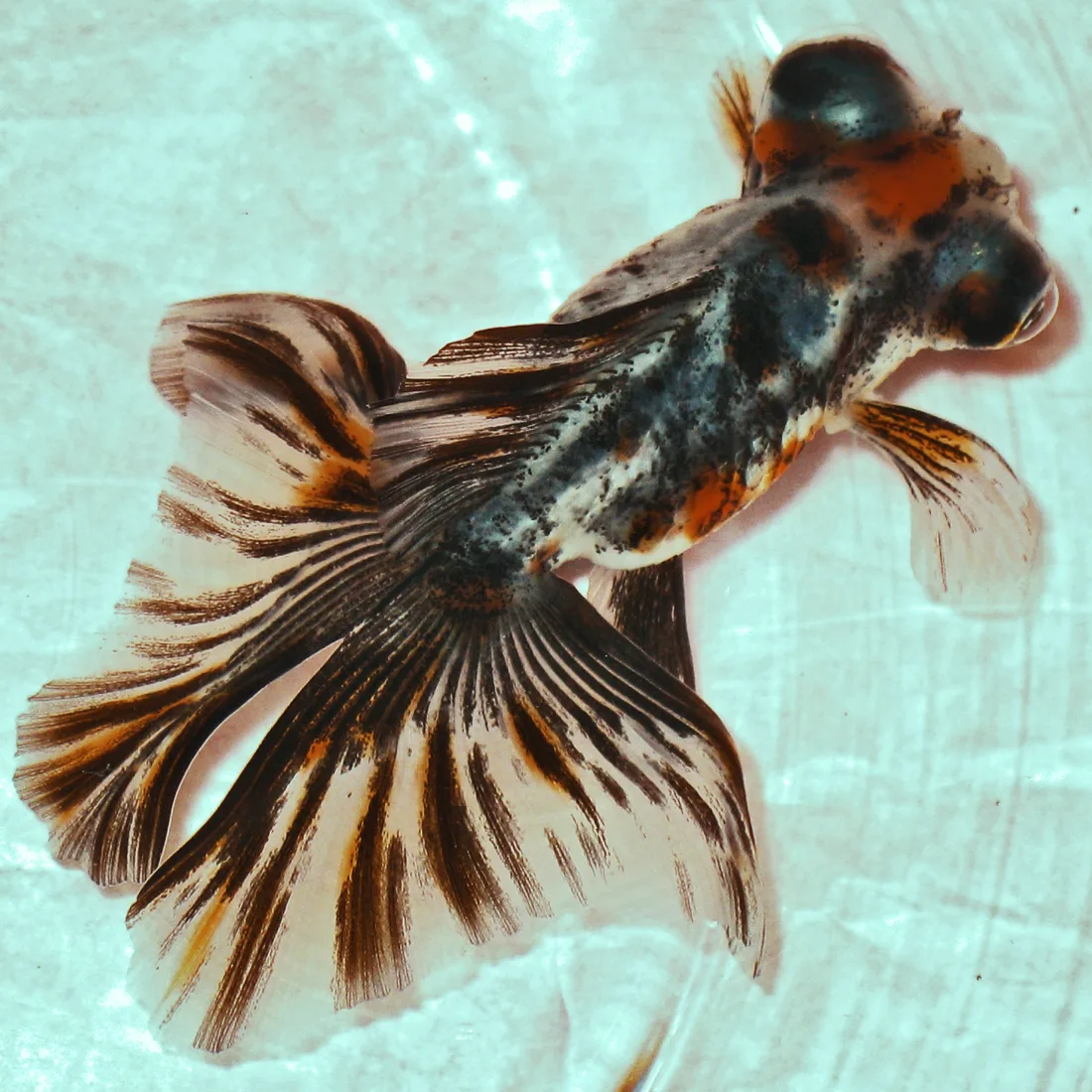
- Wide colour range including red, red-and-white, calico, chocolate, blue and black-and-white panda; the solid black form is the black moor
Identification
Telescope goldfish are named for eyes that project outward from the skull on fleshy, cone-shaped mounts, so that from above the head shows two distinct bumps either side. The eyes may be globular, conical or flattened at the front depending on the line. Fry hatch with ordinary eyes, and the protrusion develops over the first year, so a small telescope may still look much like a fantail.
Behind the eyes sits a standard fancy body: egg-shaped, with a full dorsal fin and a double tail. Japanese demekin lines are often built on a deeper, ryukin-like body, while Chinese and Western lines tend to be rounder; butterfly telescopes carry a tail that spreads wide and flat when seen from above.
Colour is where the breed is most varied. Red, red-and-white, calico and chocolate are common, along with blue-scaled fish and the black-and-white panda pattern. Solid black telescopes have their own name, the black moor, though apart from colour they are very much the same kind of fish, and the British show standard judges the moor as a separate type.
Telescope, celestial or bubble eye?
-
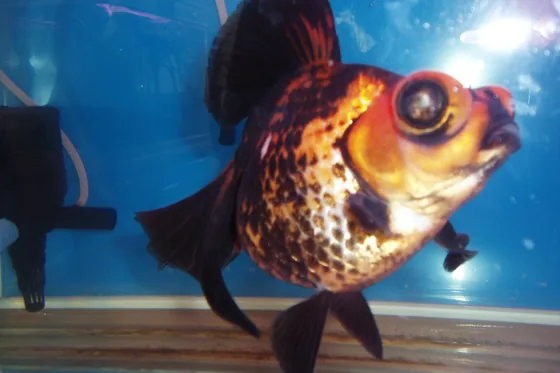
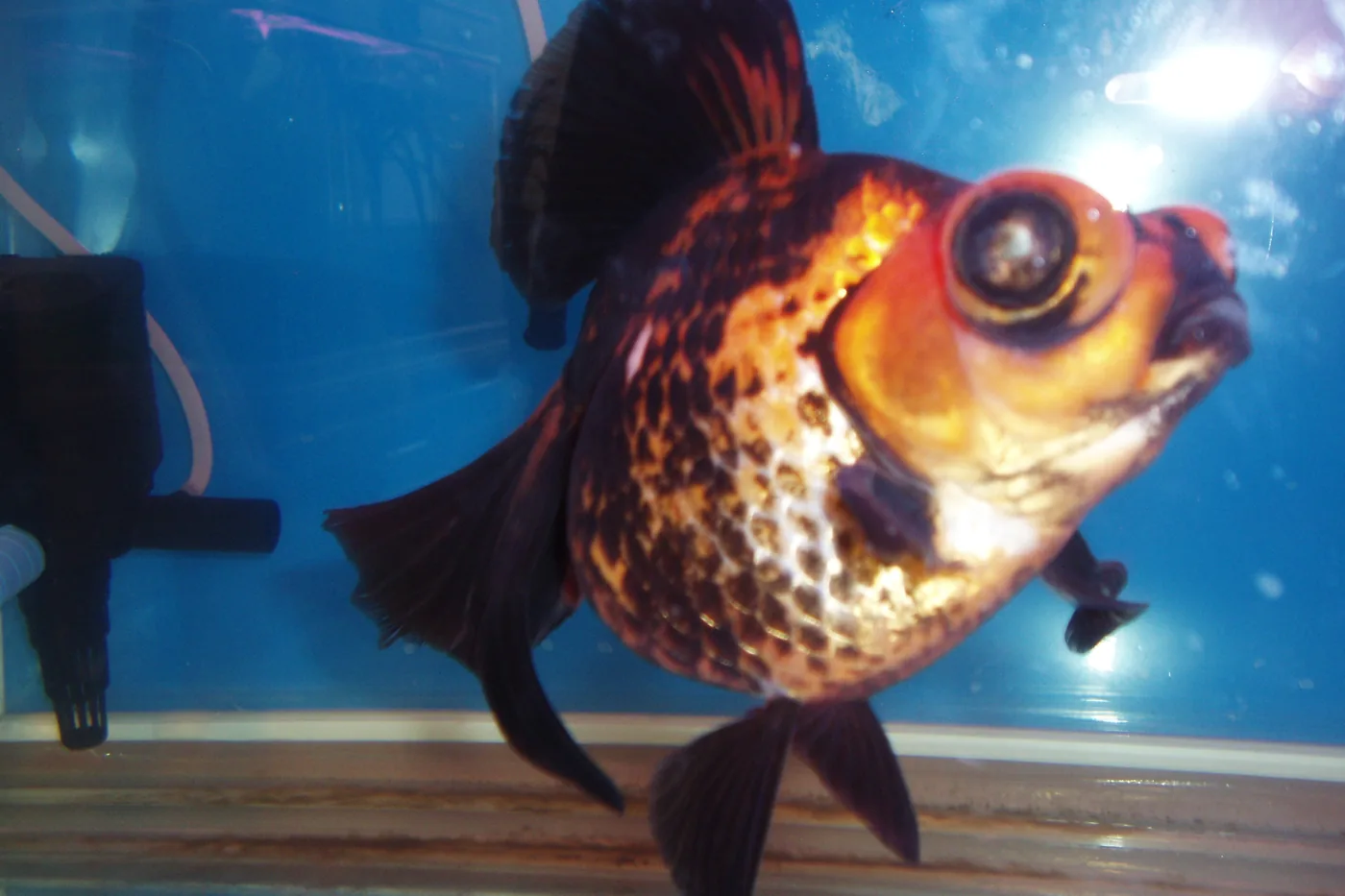
Eyes pushed out to the sides
-
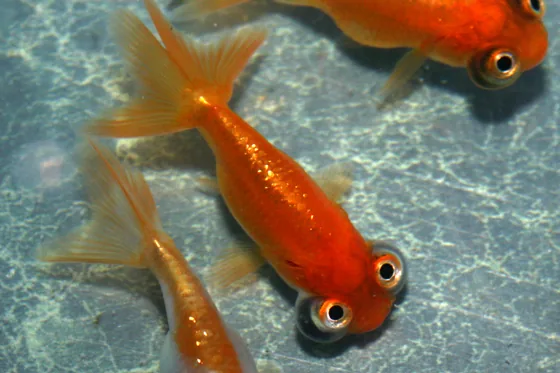
Eyes turned to the sky
-
A sac beneath each eye
Three eye breeds side by side: a telescope with an eye projecting from the side of its head ringed, a celestial seen from above with an upturned eye ringed, and a bubble eye with the fluid sac beneath its eye ringed.
- Telescope. Eyes that project outward from the sides of the head. The black moor is the black form of the telescope (the British show standard judges it as a separate type).
- Celestial Eye. No dorsal fin in the standard, and eyes turned upward to gaze at the surface, with no sac beneath them.
- Bubble Eye. No dorsal fin in the standard, upturned eyes, and a fluid-filled sac beneath each one that trembles with every movement.
Photographs: Telescope, Fanghong, CC BY 2.5; Celestial Eye, Michelle Jo, CC BY 3.0; Bubble Eye, Lerdsuwa, CC BY-SA 4.0. Rings added.
The varieties
One breed, several names, and the names describe different things.
- Demekin. The Japanese form, typically with a deeper, more ryukin-like body and a hint of shoulder hump.
- Butterfly tail. Selected so the tail spreads wide and flat, read from above rather than the side. A different viewing tradition on the same fish.
- Black moor. The solid-black telescope. The British show standard treats it as a separate type; the care is much the same.
- Panda. Black and white, and frequently unstable — many panda telescopes do not stay panda, for the reasons the moor page sets out.
- Dragon eye. A trade name for the protruding eye itself rather than a distinct variety.
- Calico, chocolate and blue. Colour lines on the standard body.
And the neighbouring breeds are not telescopes. A celestial eye has eyes that rotate upward and no dorsal fin; a bubble eye has fluid-filled sacs beneath upward-pointing eyes. Both are generally considered more fragile than a telescope, not less.
How the eyes develop
A telescope is not born a telescope, which surprises people who buy a small one. Fry hatch with ordinary eyes, and the protrusion begins within the first two or three months and keeps developing, though no published source gives a finer timetable for telescopes.
So a young telescope can look like a plain fantail for months, and how far the eyes will project is a property of the line rather than of anything you do — the argument in breeding goldfish about buying from someone who grades applies here as much as anywhere.
A slightly uneven pair is common. A large difference, or one eye that changes after having been settled, is a different matter and belongs on popeye and bulging eyes.
What a telescope can actually see
Worth understanding, because every practical recommendation on this page follows from it.
It is not blind. A telescope registers light, shadow and movement, learns to come to a hand at the glass, and recognises the person who feeds it.
It is generally described as focusing badly. Published work links the enlarged eye to raised pressure inside it and to a thinner retina, though acuity has not been measured; small objects directly in front of the fish are said to be the hardest thing for it to resolve — which is unfortunately where food is.
It compensates with two other senses. The lateral line detects water movement and obstacles, and smell finds food. Goldfish anatomy and biology covers both properly, and it is the page that explains why a fish with poor sight is not a fish in difficulty.
The practical consequence is that a telescope needs time at feeding and consistency in where food appears, and it needs a tank it cannot injure itself in. Both are easy; neither is optional.
Designing the tank around the eyes
The whole of telescope husbandry, in one section.
- Nothing sharp. Run a hand over every ornament; if it catches skin it will catch an eye. Aquarium decorations covers the test.
- Nothing with a narrow gap a fish could push into.
- Sand or bare glass, not coarse gravel — substrate for goldfish covers grain size.
- A sponge over the filter intake, always. A protruding eye against an uncovered intake slot is a recognised risk in the breed, and the filter buying guide treats the pre-filter sponge as part of the purchase rather than an accessory.
- Gentle flow, so the fish is not pushed into anything.
- Low, open decor rather than tall structures to navigate around.
- A feeding spot, used every time.
Choosing one
- The eyes first. Both clear, undamaged, roughly matched.
- Then swimming. Level, unhurried, fins open.
- Then eating. Watch a feed if you can, and see whether the fish finds food or gives up.
- Read the shop’s whole system, as choosing and bringing home a goldfish sets out.
- Quarantine for at least four weeks — quarantining a new goldfish.
A fish with one damaged eye is not a fish to reject on welfare grounds. It will live well. Buy it knowingly rather than by accident.
Where you will find one. Widely available, and sold young, which matters because the eyes do not reach their adult protrusion for months. A juvenile telescope looks much less dramatic than the adult it becomes, so buy for health and body shape and let the eyes arrive in their own time. Coloured varieties beyond the standard orange and black tend to need a specialist.
Personality and behaviour
Telescopes are calm, unhurried fish that spend the day nosing along the bottom. Their vision is poor: a telescope reacts to a shadow or a hand at the glass, but its ability to judge distance and pick out a pellet in front of it is limited, so it relies on smell and on the lateral line, the sensory system that detects water movement.
In a tank of telescopes and black moors, everyone finds food at the same pace. Add a fast single-tail or even an enthusiastic ryukin and the telescope will be last to every pellet. They are entirely peaceful; the risk runs the other way, so check combinations with the compatibility checker.
Aquarium requirements
Plan on 100 litres (26 US gallons) for the first telescope and 40 to 50 litres for each additional fish, with a long footprint rather than a tall one. Everything a telescope can bump into should be smooth: rounded stones, smooth wood, silk plants or soft live plants such as anubias, and no resin ornaments with holes and ledges or gaps the head could wedge into. The decorations guide covers what works.
Filter intakes need a sponge pre-filter so that eyes and fins cannot be drawn against the slots. Keep the outflow gentle, since a strong current pushes a round fish around the tank; the filtration guide explains how to soften a powerful filter. Many guides give 18 to 24 °C (64 to 75 °F) and some breed societies 15 to 20 °C; keep the water stable, with 25 to 40 percent changed weekly.
Substrate should be sand or bare glass: small gravel can be swallowed, and sharp gravel is exactly what a poorly sighted fish should not be rooting through.
Feeding
The base of the diet is a good sinking pellet made for fancy goldfish. Drop it in the same spot at every meal; within a few days the fish learns where food arrives. Sinking food also avoids the air-gulping at the surface that so often precedes a floating episode in round-bodied fish.
Feed small amounts two or three times a day, only what is eaten within a couple of minutes. Because a telescope finds food slowly, watch each meal: if a faster tankmate is emptying the feeding spot, spread the food or feed at two points. Blanched peas, zucchini and spinach, gel food and frozen daphnia or brine shrimp bring variety, and gel food is especially useful because it stays where it lands.
Common health considerations
The eyes are the vulnerable point. A knock against a hard edge can scratch the cornea or damage the eye itself. Cloudiness in one eye is usually the result of a scrape or of poor water quality and typically clears in clean water; cloudiness in both, swelling behind the eye or a rapidly growing bulge deserves more attention, and the cloudy eyes guide walks through the possibilities.
Buoyancy problems are the other recurring issue, as in all round-bodied fancies. A fish that floats, tilts or sinks after a meal has often gulped air or overeaten, and sinking food with a day’s fast sometimes sets it right, though vets find other causes too. Fins tear on sharp decor and in strong current; clean water heals most damage, but fix the cause.
What goes wrong, in order
Almost all of it traces to the eyes or to being slow.
| What you see | Usually | Where to look |
|---|---|---|
| One cloudy eye | A scrape on decor, gravel or a net | Cloudy eyes |
| Both eyes cloudy | Water quality first, though other causes exist | Cloudy eyes |
| A bulging or swollen eye | Infection or fluid, not the breed | Popeye |
| A damaged or lost eye | An intake, an ornament, a net | First aid |
| Floating or tipping after meals | Often diet, though other causes exist | Floating upside down |
| Thin, with no obvious cause | Beaten to every meal | Chasing and bullying |
One eye versus both is a useful distinction here. One is an event that happened; both is a condition the fish has, which usually means the water. That split is the same one the popeye page makes, and it saves a great deal of guessing.
Living with a one-eyed fish
Common enough to be worth saying plainly, and more cheerful than people expect.
A telescope that loses an eye usually copes. Telescopes are generally described as seeing poorly, and the lateral line and smell do much of the work, so the loss may remove less than it would from a fish that hunts visually; it still needs time to adjust.
What it needs afterwards is what it needed before, applied more carefully: smooth surroundings, a consistent feeding spot, unhurried company, and time at meals.
Watch the socket for a fortnight while it heals, keep the water clean, and resist the urge to treat — first aid for an injured goldfish covers why clean water beats anything applied, and why the cause needs finding before a second eye goes the same way.
Is a telescope right for you?
It suits you if you like a slow, characterful fish, you are willing to furnish a tank around its limitations, you will feed deliberately in one place, and you can keep it with other unhurried fancies.
It does not suit you if the tank holds single-tails, if it is full of rock and ornament you are attached to, or if you want a fish that looks after itself. A telescope is not difficult; it is unforgiving of a tank furnished without it in mind.
And it is a breed worth thinking through. Protruding eyes are a selected trait with a real cost, and the argument in goldfish welfare about how far selection should go is one a telescope keeper should have read — the moderate forms are a good deal easier to defend than the extreme ones. Expect roughly 7 to 10 years, and up to about 15 in an exceptionally well-kept fish.
History and origin
Goldfish with protruding eyes, called dragon eyes in China, a name that survives in English as Dragon Eye, were kept there by the late sixteenth century, the earliest possible reference being from about 1590. The trait is a recessive mutation, traced in recent work to a single gene, and was fixed by selection. From China the fish spread to Japan, where it became the demekin, roughly “protruding-eye goldfish”, and Japanese breeders produced lines with matched, symmetrical eyes and the deeper ryukin-type build.
The telescope reached Europe and North America in the late nineteenth and early twentieth centuries with the wider goldfish trade. It has since become one of the parent breeds of the fancy goldfish family: the black moor is its black form, some authors treat the celestial eye as a mutation of the telescope, though genetic work suggests the two arose separately, and the panda and butterfly lines are recent developments.
Before you bring one home
- Poor eyesight means the fish finds food slowly; feed in the same place each time and check that it is actually eating
- Protruding eyes are the first thing to hit an obstacle, so decor must be smooth and filter intakes guarded
- Eye injuries and cloudy eyes are a recognised risk and usually trace back to a knock or to water quality
- Round body and gulped surface air make buoyancy upsets likely; sinking food reduces the risk
Suitable companions
Round-bodied goldfish should live with fish of similar speed. These breeds share the same pace, water and food.
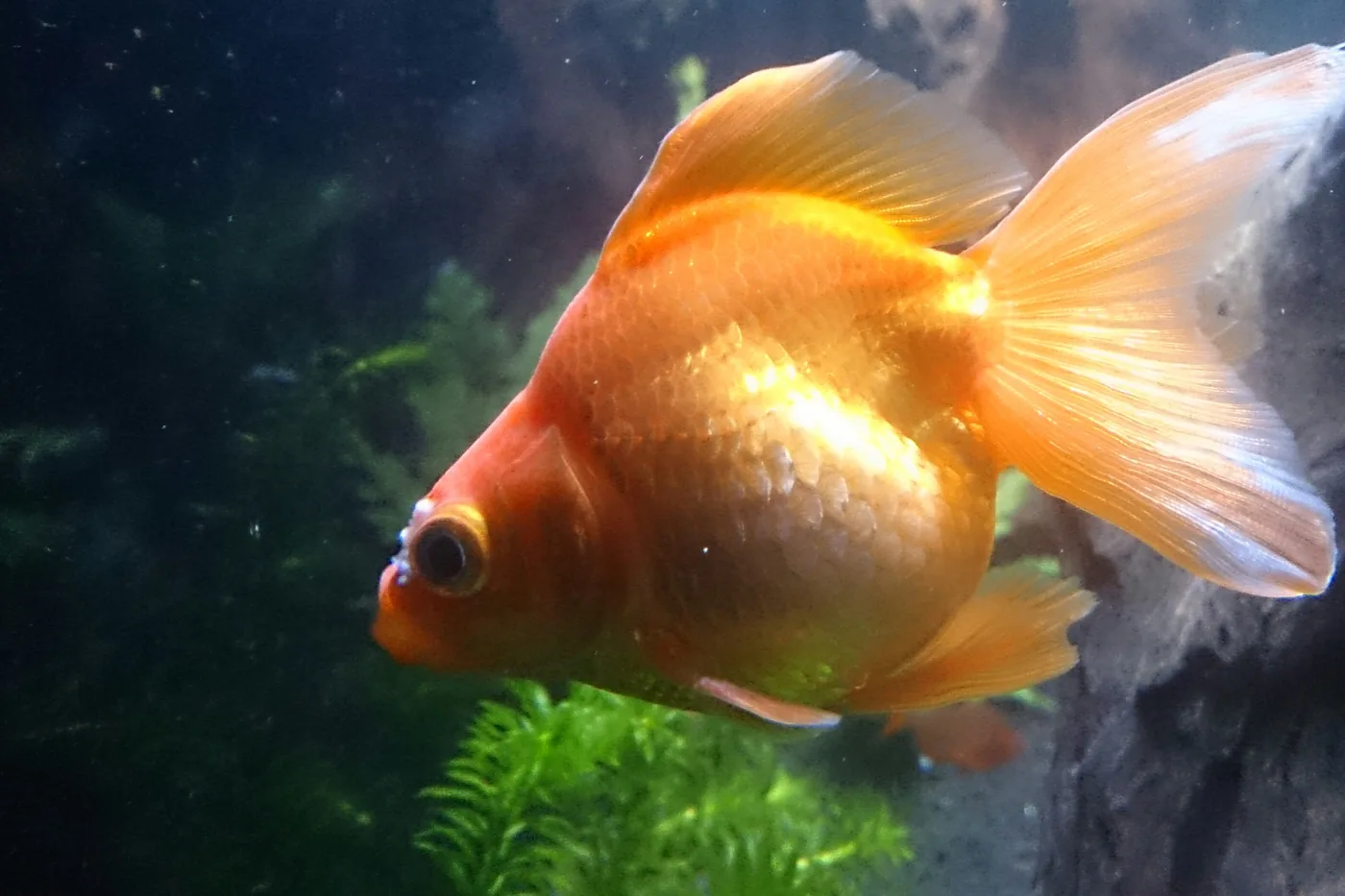
Fantail
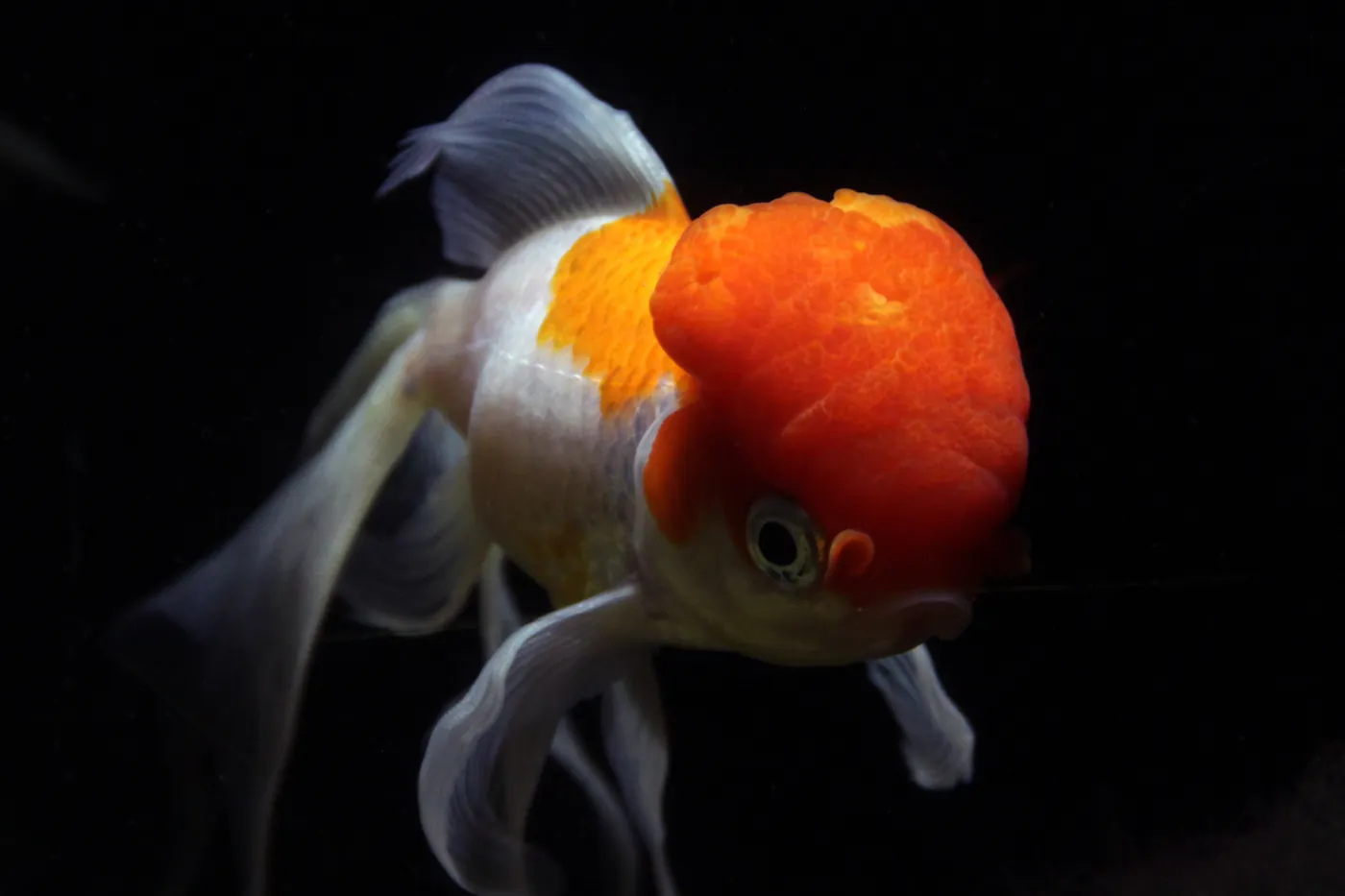
Oranda
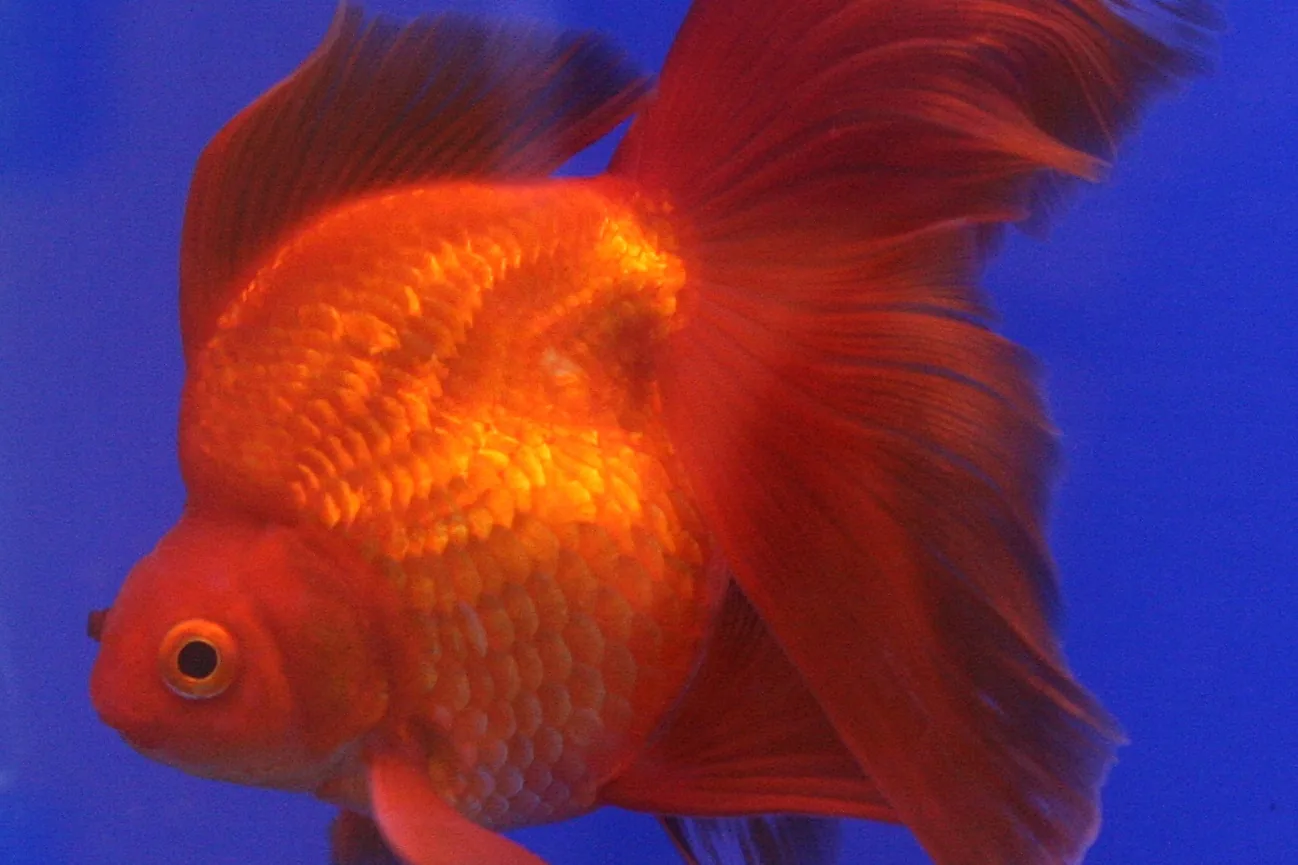
Ryukin
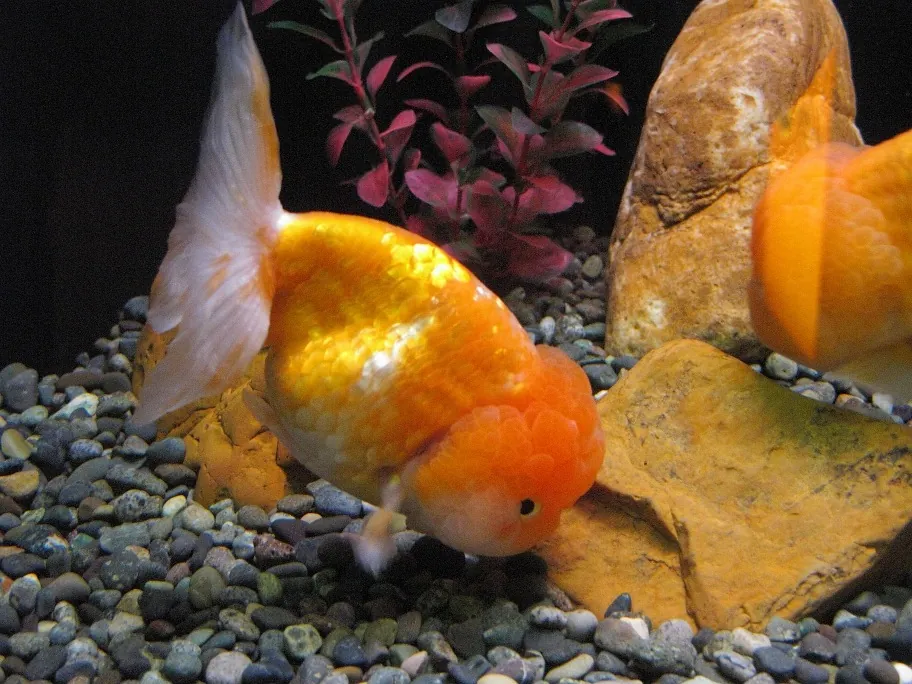
Lionhead
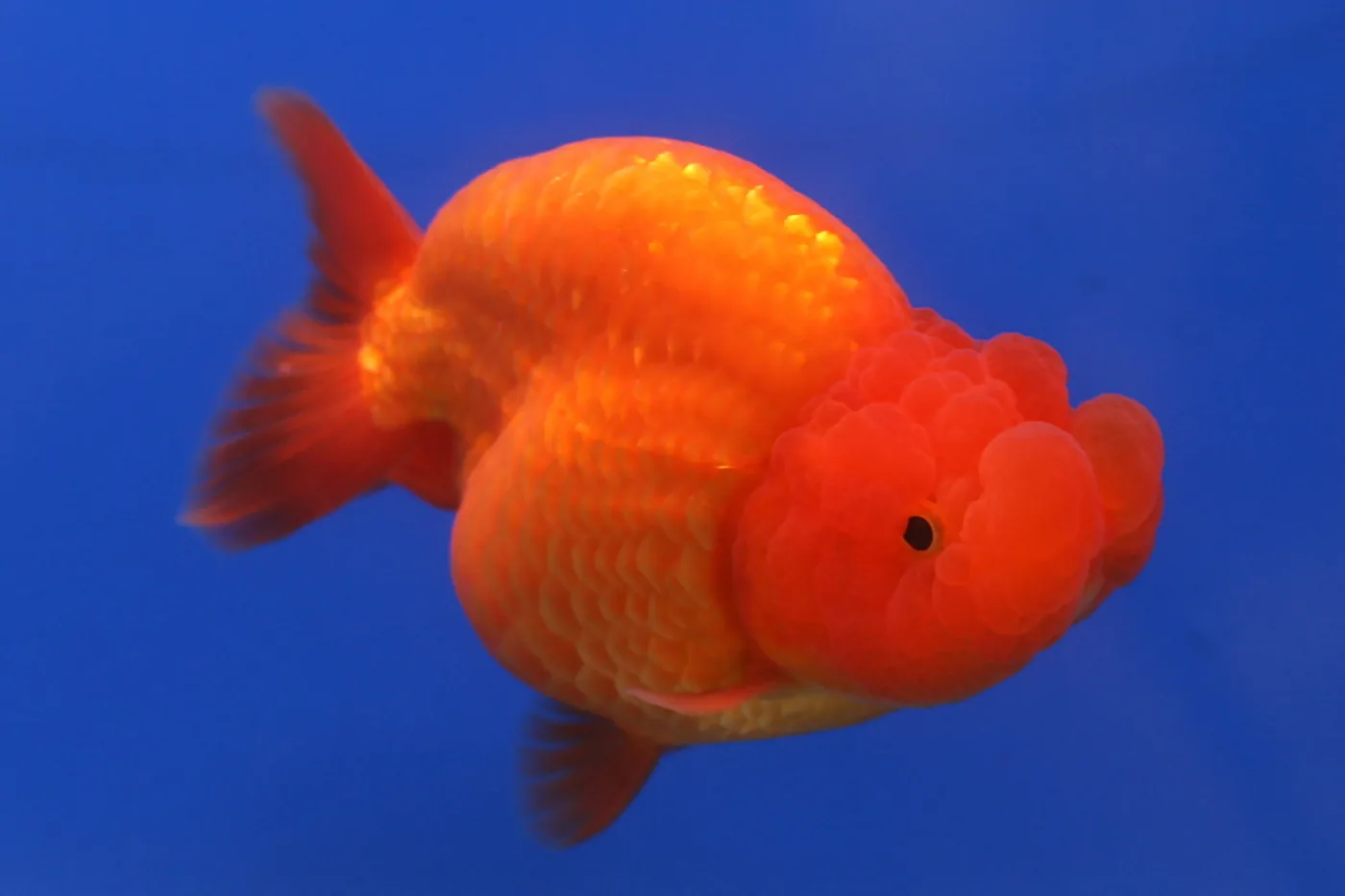
Ranchu
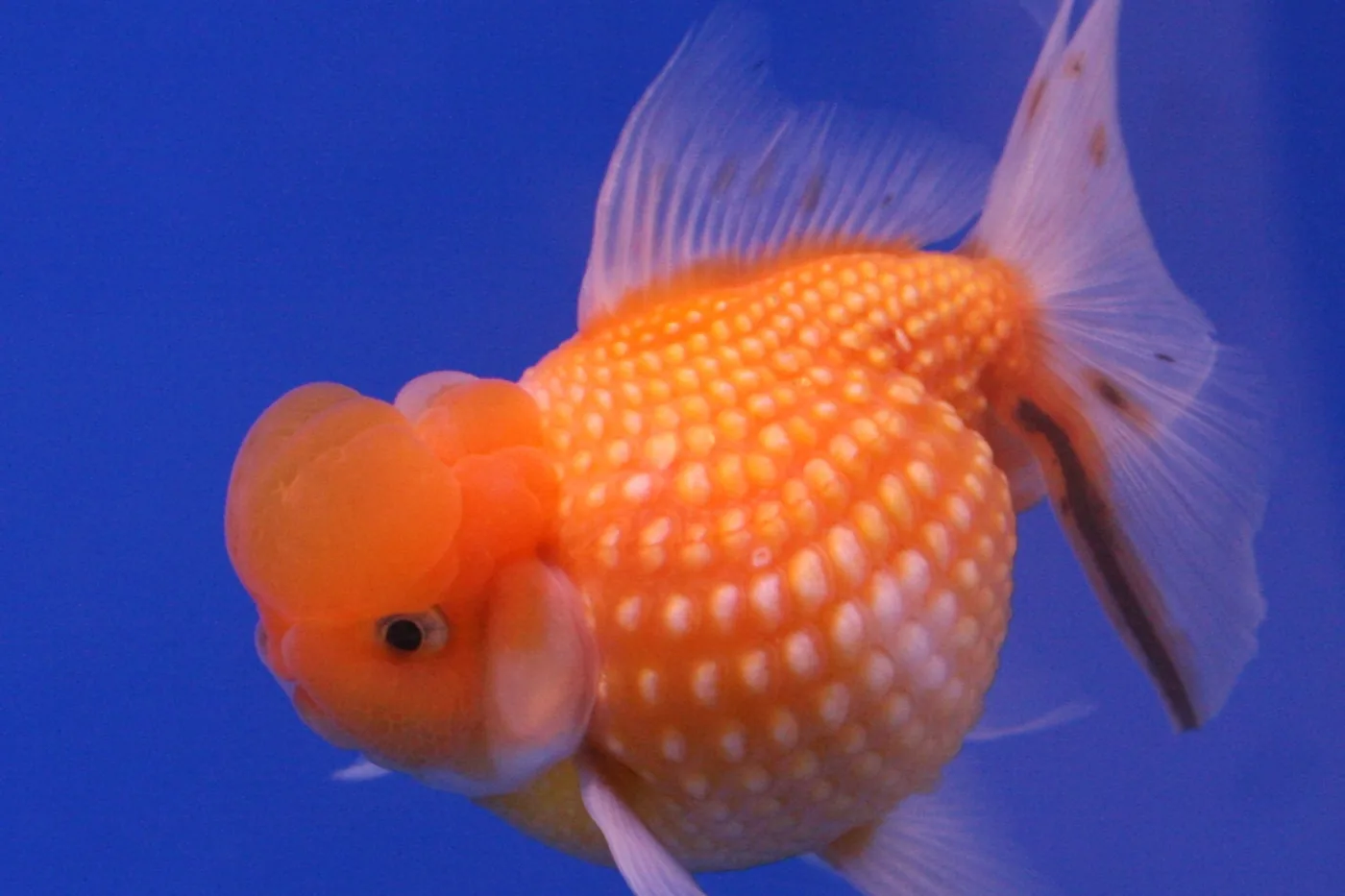
Pearlscale
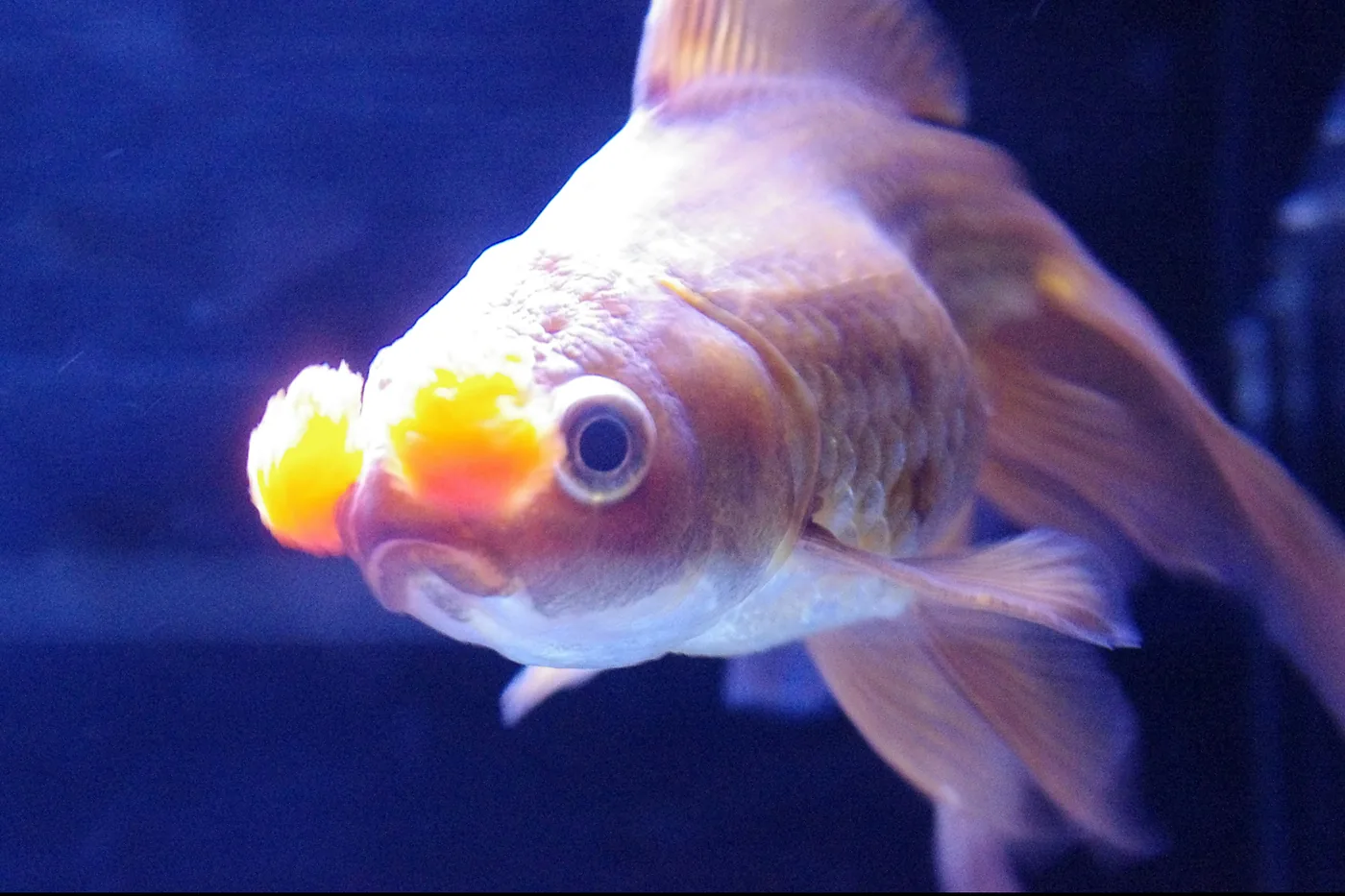
Pompom
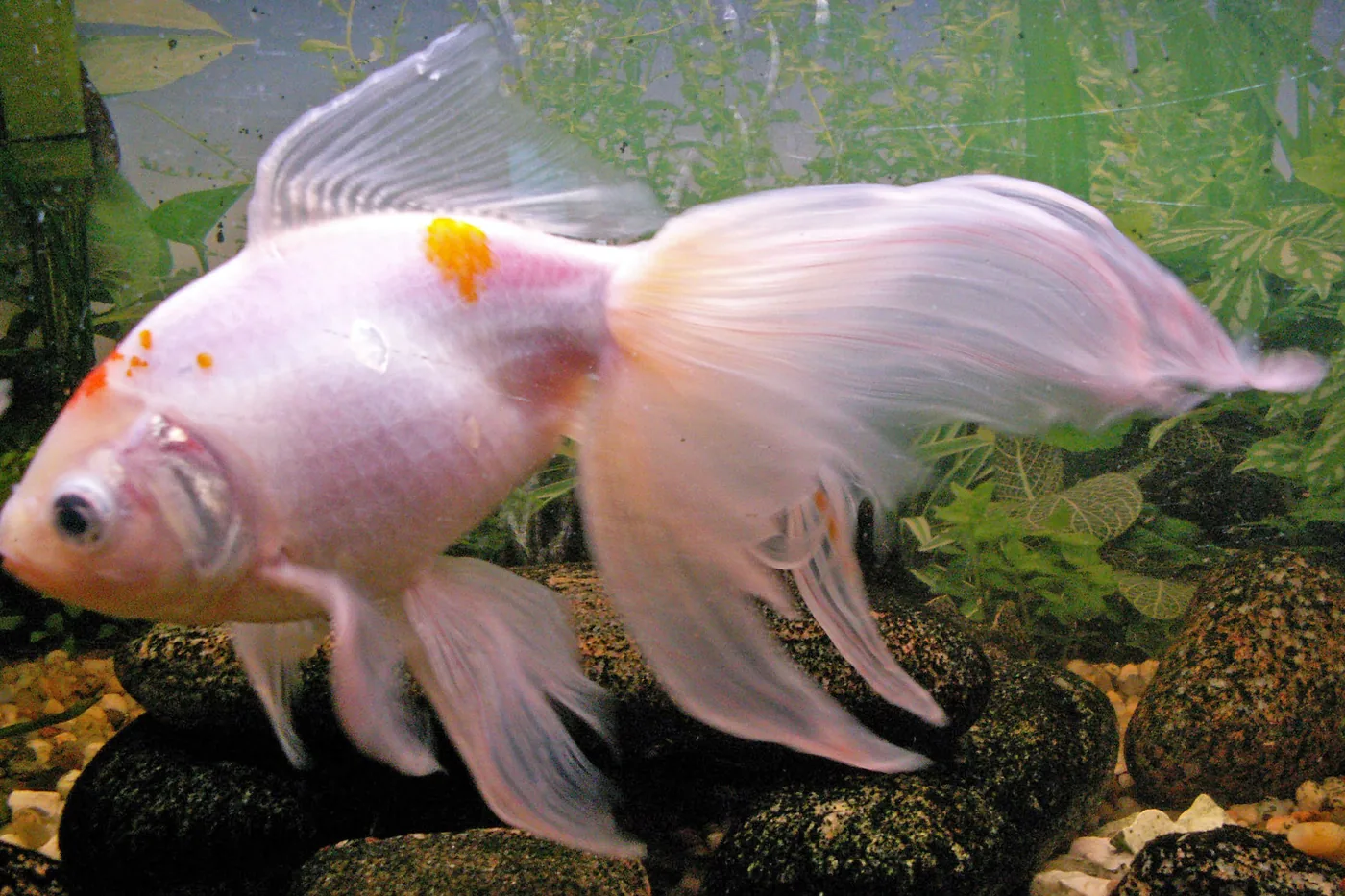
Veiltail
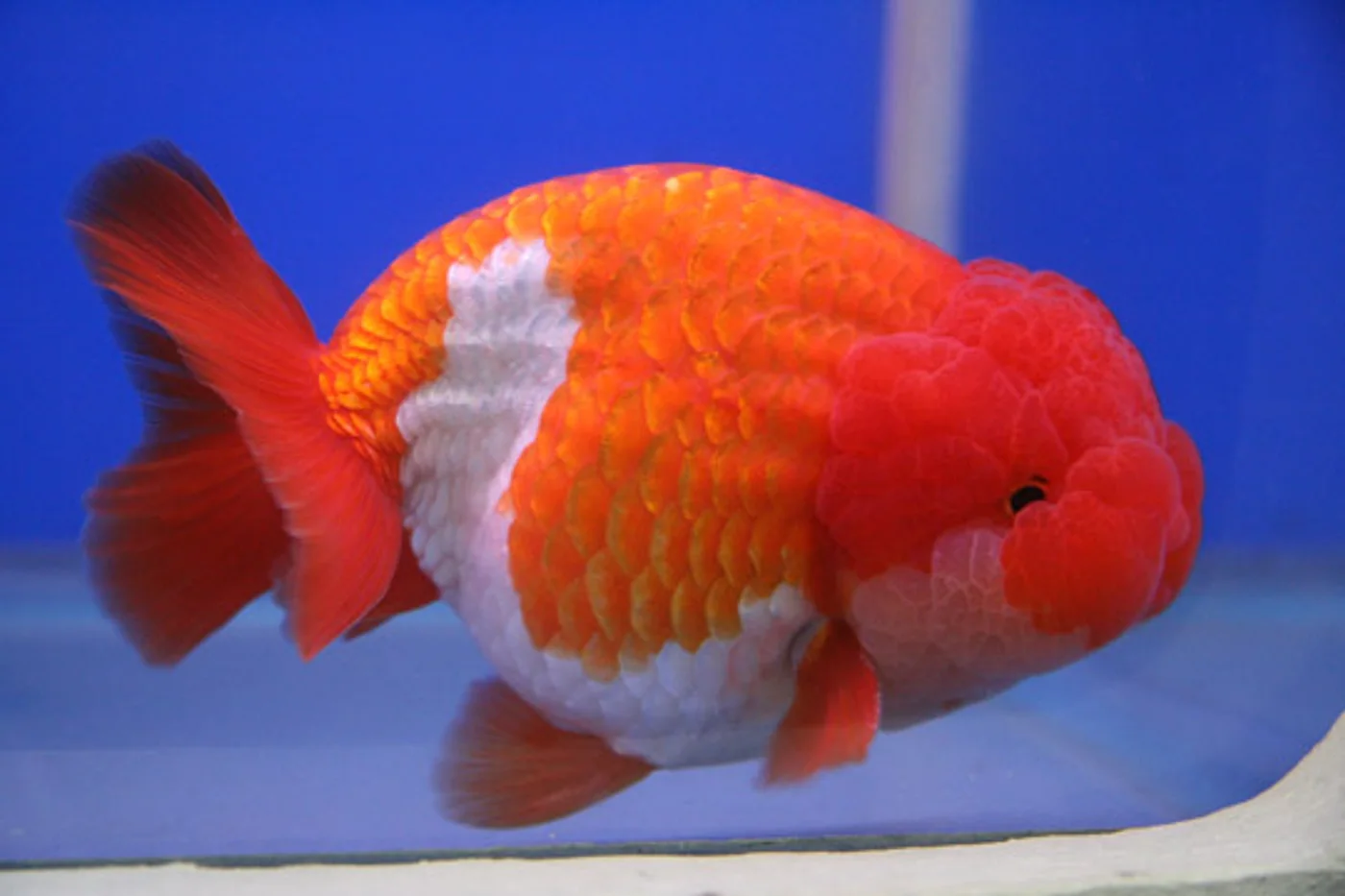
Lionchu
Best kept apart from: Common Goldfish, Comet, Shubunkin, Bubble Eye, Celestial Eye, Wakin, Jikin. Speed and appetite differences leave the slower fish underfed.
Thinking about other species? Try the compatibility checker.
Similar breeds
Of the breeds most like the telescope, the black moor, fantail, veiltail and ryukin are pictured above among its companions. The others:
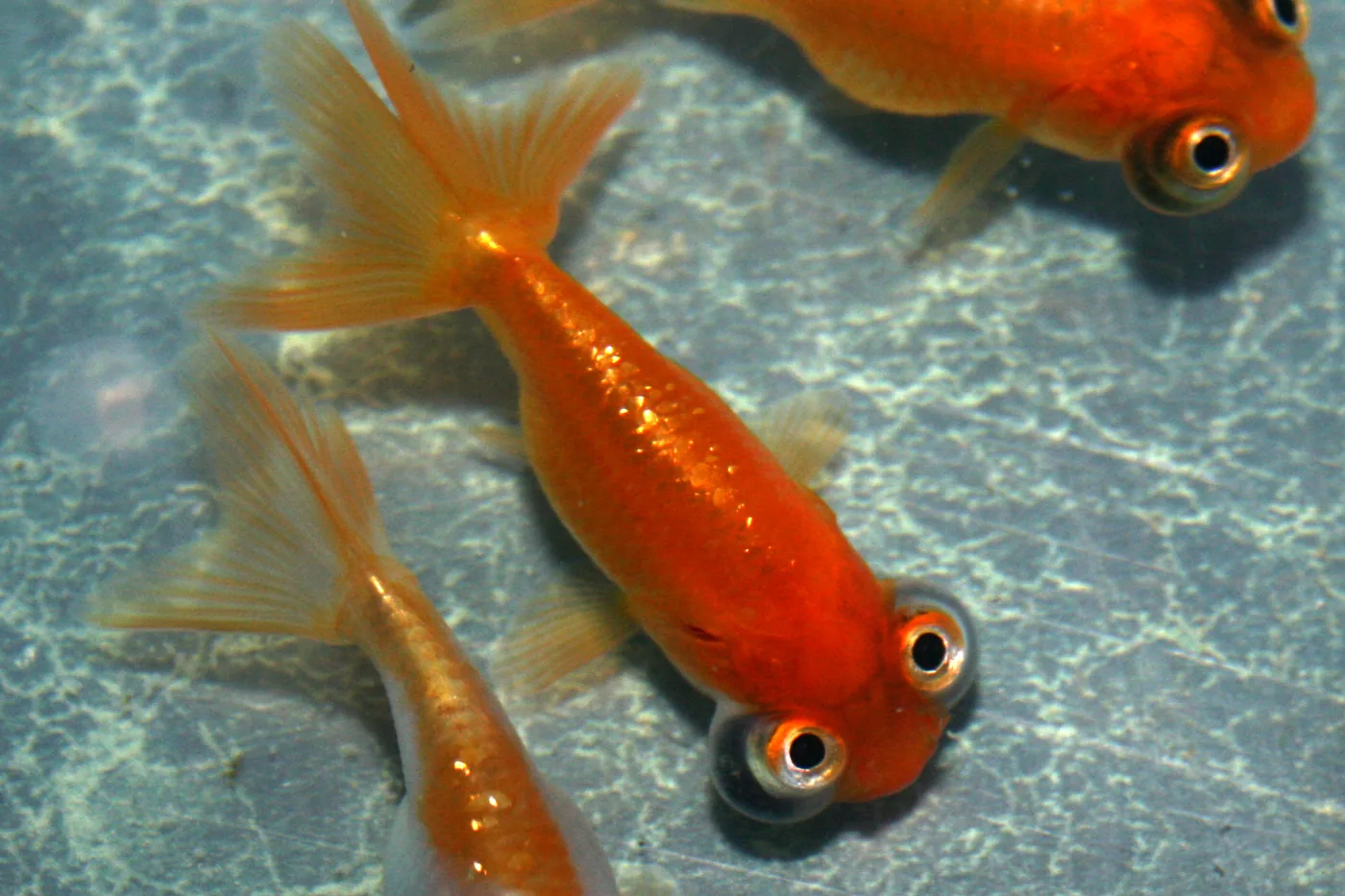
Frequently asked questions
Are telescope goldfish blind?
No. Telescopes are generally described as seeing poorly rather than not at all, though their acuity has not been measured. They notice light, shadow and movement, and will come to a hand at the glass, but are said to struggle to focus on small objects in front of them. They compensate with smell and the lateral line, which is why they do well when food is offered in the same spot at every meal.
When do a telescope's eyes develop?
Fry hatch with ordinary eyes. The protrusion usually begins within the first two or three months and continues to develop through the first year, sometimes longer, so a small telescope may look like a fantail for a while. The final size and symmetry of the eyes vary between lines and individual fish, and a slightly uneven pair is common and harmless.
Can a telescope live with a black moor?
Yes, and it is one of the best combinations available. A black moor is the solid-black form of the telescope, with the same kind of eyes and much the same needs, though the British show standard judges it as a separate type. Kept together they find food at the same pace and neither is outcompeted. Fantails and orandas are also reasonable company; single-tailed goldfish are not.
What should I look for when buying a telescope?
The eyes first, because they are the part that cannot be repaired. Both should be clear, undamaged and roughly matched — a little asymmetry is normal and common, a large difference is not. Then check it swims level and holds its fins open, and that it can actually find food, which is worth watching rather than assuming. A telescope that has already lost the surface of an eye to a scrape in a shop tank will live perfectly well, but you should know you are buying it.
Can a telescope goldfish live without an eye?
Yes, and it is more common than people expect. A telescope that loses an eye to an injury or an infection usually copes, though it needs time to adjust: telescopes are generally described as seeing poorly, and the lateral line and smell do much of the work. What it needs afterwards is what it needed before, only more so: smooth decor, a consistent feeding spot, unhurried tankmates and time. It is not a reason to give up on the fish.
Do telescopes need a special tank?
Not special, but designed. Everything a telescope needs follows from the eyes projecting beyond the skull: nothing sharp, nothing with a narrow gap, sand or bare glass rather than coarse gravel, a sponge over the filter intake, gentle flow, and low decor it will not bump into. The tank itself is an ordinary fancy goldfish tank of around 100 litres for the first fish. It is the furnishing that changes.
Why is one of my telescope's eyes cloudy?
A single cloudy eye is most often a scrape from decor, gravel or a net, and it may clear over a week or two in clean water. Test the water first, since ammonia and nitrite irritate the cornea. Cloudiness in both eyes, a bulge that keeps growing, or swelling behind the eye needs closer attention and possibly a veterinarian.