No. 06Poorly documented; dates vary
Lionhead
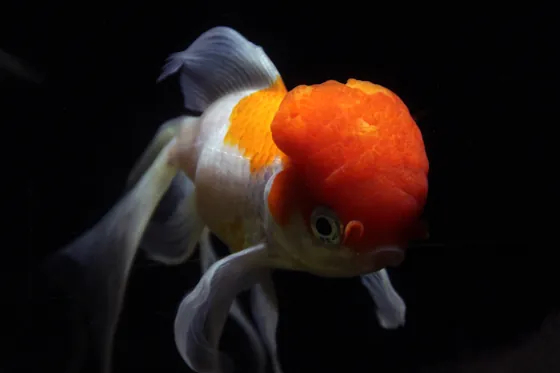
A dorsal-less goldfish with a heavy hood, and a mane to match its name.
Also known as Chinese lionhead · Lionhead goldfish
- Specimen
- Fancy goldfish, China
- Adult size
- 15–20 cm
- Lifespan
- 7–10 years
- Water
- 18–24 °C
- Care
- Demanding
- Swimming
- Weak
- First fish needs
- 100 litres
Photograph: Lawrencekhoo, CC BY-SA 4.0 · Wikimedia Commons
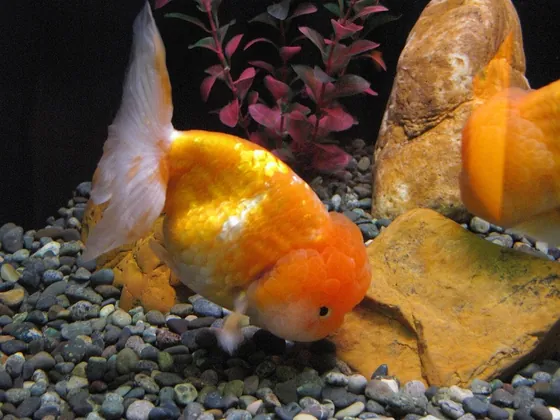
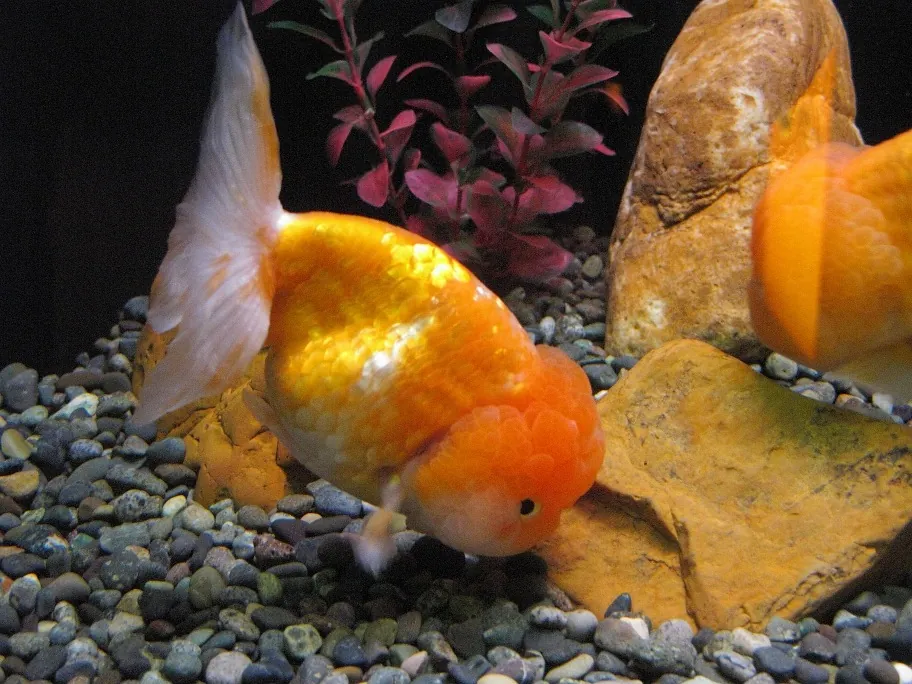
About this pictureHead down and foraging in the gravel, as goldfish do for much of the day. Follow the back from the hood to the tail: there is no fin anywhere along it, and that absence is what separates this fish from an oranda.
About these figures Size, lifespan and water are the ranges keepers' guides give for a fish in good care, not measurements of this breed, and swimming and care are this site's own ratings of the published advice. Lifespan is where the sources differ most: how long goldfish live sets them side by side. First fish needs is a middle figure for one fish, from advice that runs from 50 litres to about 300; tank size sets that out.
The specimen
Quick facts
- Classification
- Fancy goldfish
- Body type
- Egg-shaped, dorsal-less body with a fairly straight back, a short double tail and a wen that can cover the whole head
- Tail and dorsal
- Double tail, no dorsal fin
- Swimming ability
- Weak
- Keeper experience
- Intermediate
- Temperament
- Placid and slow; peaceful with other slow fancies but easily crowded out at feeding time
- Adult size
- 15–20 cm (6–8 in)
- Temperature
- 18–24 °C (64–75 °F)
- Minimum aquarium
- 100 L (26 US gal) for one fish
- Origin
- China, Poorly documented; dates range from before the 17th century to the 19th
How to recognise one
- No dorsal fin, with a back that runs fairly straight or gently curved rather than sharply arched
- A large, raspberry-textured wen that can cover the head, cheeks and gill covers
- Tail set at a shallower angle than a ranchu's, with only a mild tuck at the base
- Longer, more egg-shaped body than the ranchu when seen from the side
- Short, paired double tail held out rather than draped
Identification
The lionhead is a hooded, dorsal-less goldfish, and the hood is the point. The name comes from the hood’s resemblance to a lion’s head. Wen care covers the tissue itself in full, including what to do when it reaches that stage. Its wen is typically among the largest of any breed, a dense, raspberry-textured growth that in mature fish covers the head, cheeks and gill covers and can close over the eyes, giving the mane the name describes. Beneath it is an egg-shaped body with no dorsal fin, a back that is fairly straight or gently curved rather than sharply arched, and a short, paired double tail set at a shallow angle with only a mild tuck at the base.
That profile is the reliable way to tell a lionhead from a ranchu, which has a shorter, deeper body, a continuously arched back and a tail base that turns down abruptly. The oranda is easier: it has a dorsal fin. Colours span orange, red, red-and-white, calico, chocolate, black, blue and white, and the wen keeps developing for a year or more, so a young fish gives only a hint of its adult head.
Oranda, lionhead or ranchu?
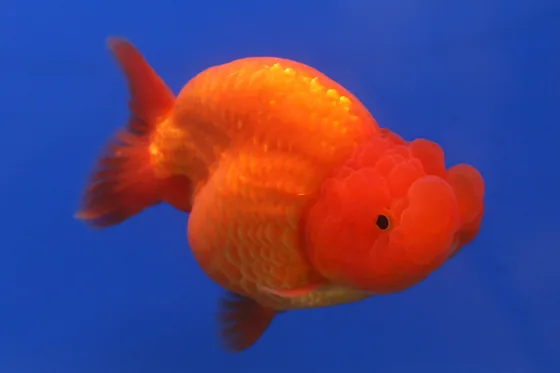
Three hooded goldfish side by side: an oranda with a dorsal fin ringed on its back, a lionhead with its fairly straight, finless back ringed, and a ranchu with its arched, finless back ringed.
- Oranda. The one of the three with a dorsal fin. Its hood can spread down the cheeks and over the gill covers.
- Lionhead. No dorsal fin, and a back that runs fairly straight or gently curved, with only a mild tuck at the tail. Shops often sell it as a ranchu.
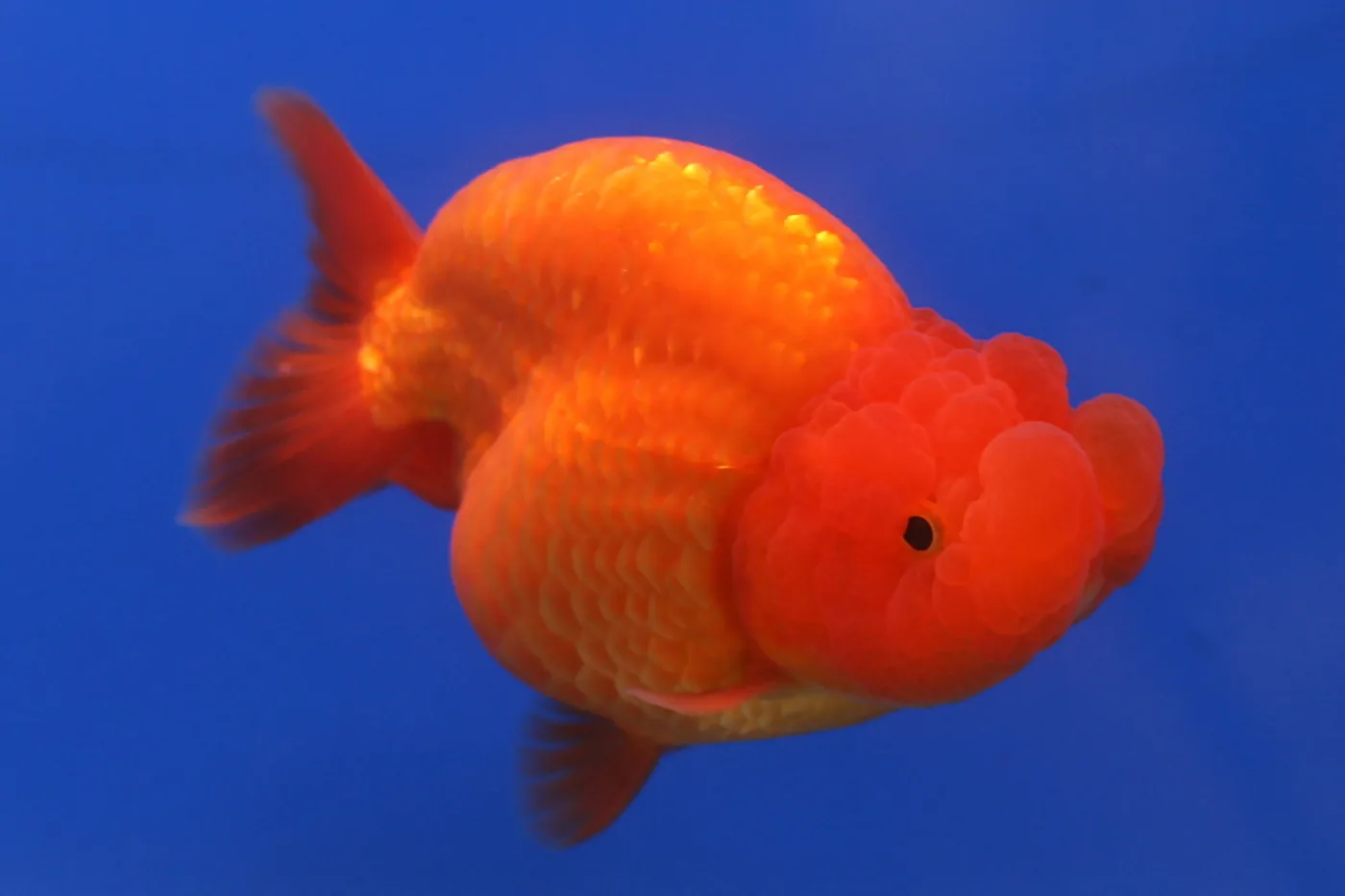
- Ranchu. No dorsal fin, and one smooth arch from head to a tail tucked in at about 45 degrees.
Photographs: Oranda, Vassil, CC0; Lionhead, Lawrencekhoo, CC BY-SA 4.0; Ranchu, Lerdsuwa, CC BY-SA 4.0. Rings added.
The varieties, and the mislabelling
A lionhead is often sold under the wrong name.
- Chinese lionhead. The standard: flatter back, shallow tail set, and a large, loose hood.
- Lionchu. A ranchu cross selected for an arched back with a lionhead’s heavier hood. Used loosely, and many fish sold as one are simply a parent.
- Colour lines. Orange, red, red-and-white, calico, chocolate, black and blue. Black lionheads lighten with age for the reasons the black moor page sets out.
The mislabelling is with the ranchu, often in both directions. Check the back: a lionhead runs fairly straight with only a mild tuck at the tail base; a ranchu arches smoothly and drops steeply into a sharply angled tail. Both lack a dorsal fin, both carry a wen, and juveniles of the two are close to indistinguishable.
How it develops
The hood is the last thing to arrive and the biggest thing to arrive, which makes a young lionhead one of the less informative juveniles. The wen shows from about four months and keeps developing for a year or more, and no published source gives a finer timetable.
So you are buying a line, not a fish. Breeding goldfish covers why the parents tell you more than the juvenile does, and it matters more here than anywhere because the trait in question can eventually reach the eyes.
A hard fish to swim with
Worth stating plainly, because it explains every husbandry decision below.
Two things compound. No dorsal fin, so nothing resists roll and yaw: in the one study of dorsal-less goldfish they swam about as efficiently as finned ones but rolled and yawed more and accelerated poorly. And a heavy hood at the front, which may add weight and drag, though hooded fish have not been tested.
The result is normal for the breed: short deliberate bursts, frequent resting, and a fish that tires in a current a finned fancy might ignore.
What follows practically:
- Gentle flow, always. A sponge filter, a spray bar aimed at the glass, or a baffled outflow — goldfish filtration covers getting turnover without current.
- Shallow rather than deep. Depth is work. A wide, low tank suits it.
- Smooth, low decor and nothing with a gap, since a fish navigating by touch with a hood over its eyes will find it — aquarium decorations covers the test.
- A consistent feeding spot, used every time.
- Slow company only. A ryukin or a fantail will take every meal first, and chasing and bullying covers what that does over months.
Choosing one
- The back, to confirm it is a lionhead at all.
- Both eyes clear and not yet crowded by hood.
- The wen developing evenly, not heavily to one side.
- Swimming level, without visible struggle.
- Read the shop, then quarantine for at least four weeks — this is a breed that takes transport and new water badly, so the quiet fortnight is doing real work.
Where you will find one. This is the edge of specialist territory. General shops do stock lionheads, but they are routinely mislabelled as ranchu and vice versa, so the back is the check that matters before anything else. A properly developed wen takes a year or more, so any lionhead you can buy cheaply will be a young fish with the hood barely started. For a specific quality of hood you are looking at a breeder, and the wait that comes with one.
Personality and behaviour
Lionheads are placid and unhurried, drifting along the bottom for most of the day. A fish whose wen has grown over its eyes navigates largely by smell and touch, which makes it slower still and prone to bumping into decor. They are peaceful company for other slow fancies and learn feeding spots quickly, but they cannot compete with fantails, ryukins or any single-tail, and in a mixed tank they go short until the loss of condition is obvious. A group of lionheads, or lionheads with ranchus and telescopes, is the arrangement that works.
Aquarium requirements
Around 100 litres (26 US gallons) for the first lionhead and 40 to 50 litres for each further slow fancy is a reasonable working range, and a wide, shallow footprint serves it better than a tall tank. Filter for five to ten turnovers an hour but tame the outflow with a spray bar, a sponge or a baffle, because a dorsal-less fish cannot hold position in a current; the filtration guide covers the options. Keep the temperature between 18 and 24 °C (64 and 75 °F) and stable.
Water quality is the whole game with a lionhead. Change 25 to 50 percent of the water weekly, guided by nitrate, following the water change guide. A bare bottom or fine sand makes uneaten food easy to see and remove, and decor should be smooth and sparse, since a fish that cannot see well collides with whatever is in front of it.
Feeding
A quality sinking pellet made for fancy goldfish is the base. Soak it for a minute, drop it in the same spot at every meal so a fish with limited vision can find it, and feed two or three small portions a day, each gone in a minute or two. Floating food encourages air-gulping, which is often blamed for a lionhead’s buoyancy trouble; the sinking versus floating guide explains why. Gel food and shelled peas add moisture and fibre; frozen daphnia makes a good weekly treat. Rich, high-protein feeding to force the wen is a breeder’s technique that depends on heavy water changes; in a home tank it mostly fouls the water.
Common health considerations
The wen leads the list. Reddened, fluffy or pitted patches on the hood are usually bacterial and often follow a lapse in water quality, so test and change water before anything else; small white pimples on the wen alone are often new growth, by keepers’ experience, and the white spots guide helps separate that from ich, which spreads to the body. A wen that grows over the eyes is not a disease, but a fish that cannot find food loses condition, which is where loss of appetite often starts in this breed.
Buoyancy problems, floating or tilting after meals, are common in any dorsal-less, round-bodied goldfish and often respond to sinking food, smaller portions and a few days of peas, though vets find other causes too. Lionheads also tire in current and rest on the bottom when flow is too strong; that is a husbandry problem, not an illness.
What goes wrong, in order
| What you see | Usually | Where to look |
|---|---|---|
| Redness or fuzz in the wen folds | Water quality, then bacteria | Wen care |
| Resting low between bursts | Normal for the breed | Nothing, unless other signs |
| Resting low, clamped, breathing fast | Water, temperature, or flow | Sitting on the bottom |
| Floating or tipping after meals | Often diet, though other causes exist | Floating upside down |
| Hood crowding the eyes | The breed, taken far | Wen care |
| Losing condition quietly | Outcompeted at feeding | Chasing and bullying |
Rows two and three are the same posture with different company. Telling them apart is the daily skill of keeping this breed, and the distinguishing signs are the fins, the breathing and whether the fish responds. Fast or laboured breathing covers counting a gill rate, which turns that judgement into a number.
Is a lionhead right for you?
It suits you if you have kept fancy goldfish before, you will run gentle flow and a shallow tank, you will feed in one place and check the fish is actually eating, and you find a slow animal restful rather than dull.
It does not suit you if it would share water with anything quicker, if the tank is deep with a strong filter, or if it is your first goldfish — goldfish for beginners is straight about where to start, and a fantail is the answer.
And the welfare question here is about the hood. A lionhead carries one of the largest hoods of any goldfish on a body with no dorsal fin, and in extreme lines that hood reaches the eyes and the gill covers. Goldfish welfare sets out the argument properly; the short version is that a moderate lionhead is a thriving animal and an extreme one is a fish whose selected features have begun to cost it function. Choosing the moderate fish is the keeper’s part of that.
History and origin
The lionhead came from China, from dorsal-less egg-fish stock, but its early history is poorly documented and sources disagree on dates. English sources place its arrival in Japan in the seventeenth or eighteenth century, Chinese accounts date the hooded form to the late nineteenth, and a review says only that dorsal-less mutants date from the Ming and Qing periods.
In Japan the Chinese lionhead is listed as a form of ranchu, and the ranchu was reshaped there for top viewing; the Japanese word shishigashira belongs to the dorsal-finned oranda instead. In China the lionhead continued along its own line, and Western shows judge both breeds mainly from the side. The Chinese lionhead remains the more heavily hooded of the two.
Before you bring one home
- The wen can grow over the eyes and gill covers; make sure the fish can still find food and breathe easily
- Wen folds trap debris and are prone to infection in poor water; a wen that bleeds, ulcerates or changes quickly needs a vet
- No dorsal fin means weak swimming, so keep filter flow gentle and decor smooth
- Prone to buoyancy and digestive problems; sinking food in small portions is the safer routine
- Often mislabelled as a ranchu in shops, so check the back and tail set before buying
Suitable companions
Round-bodied goldfish should live with fish of similar speed. These breeds share the same pace, water and food.
Bubble Eye
Celestial Eye
Telescope
Black Moor
Pearlscale
Oranda
Fantail
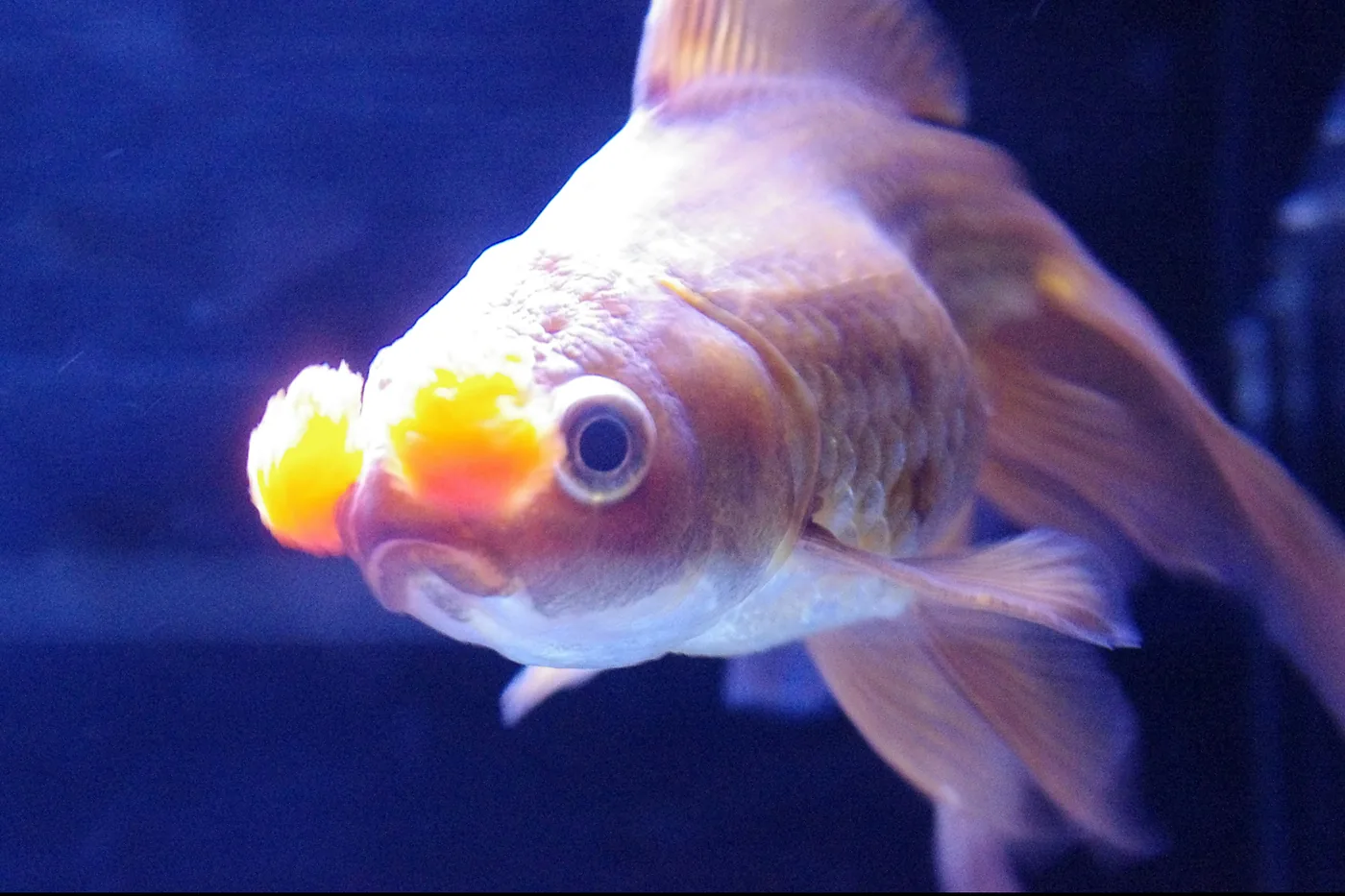
Pompom
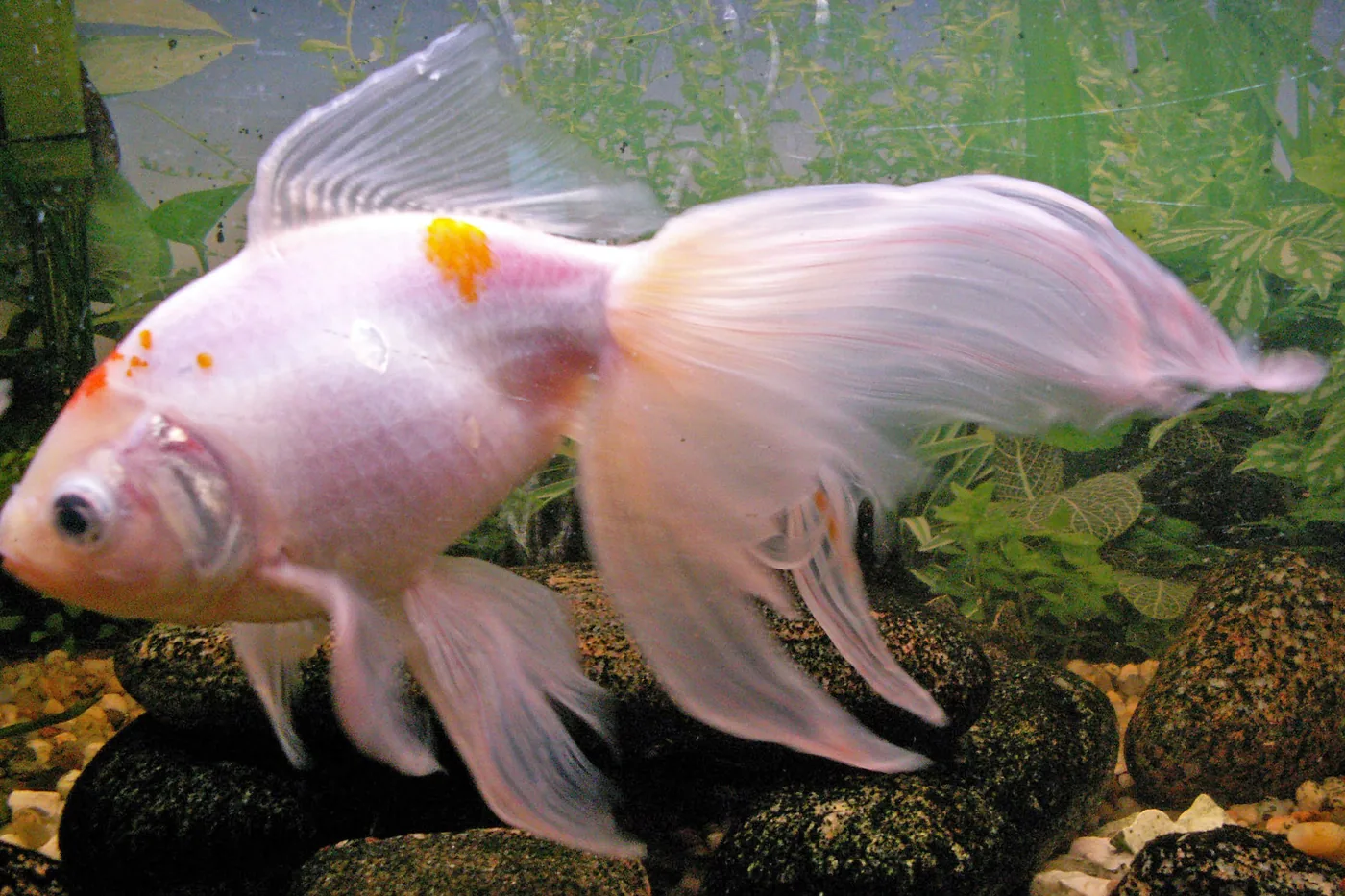
Veiltail
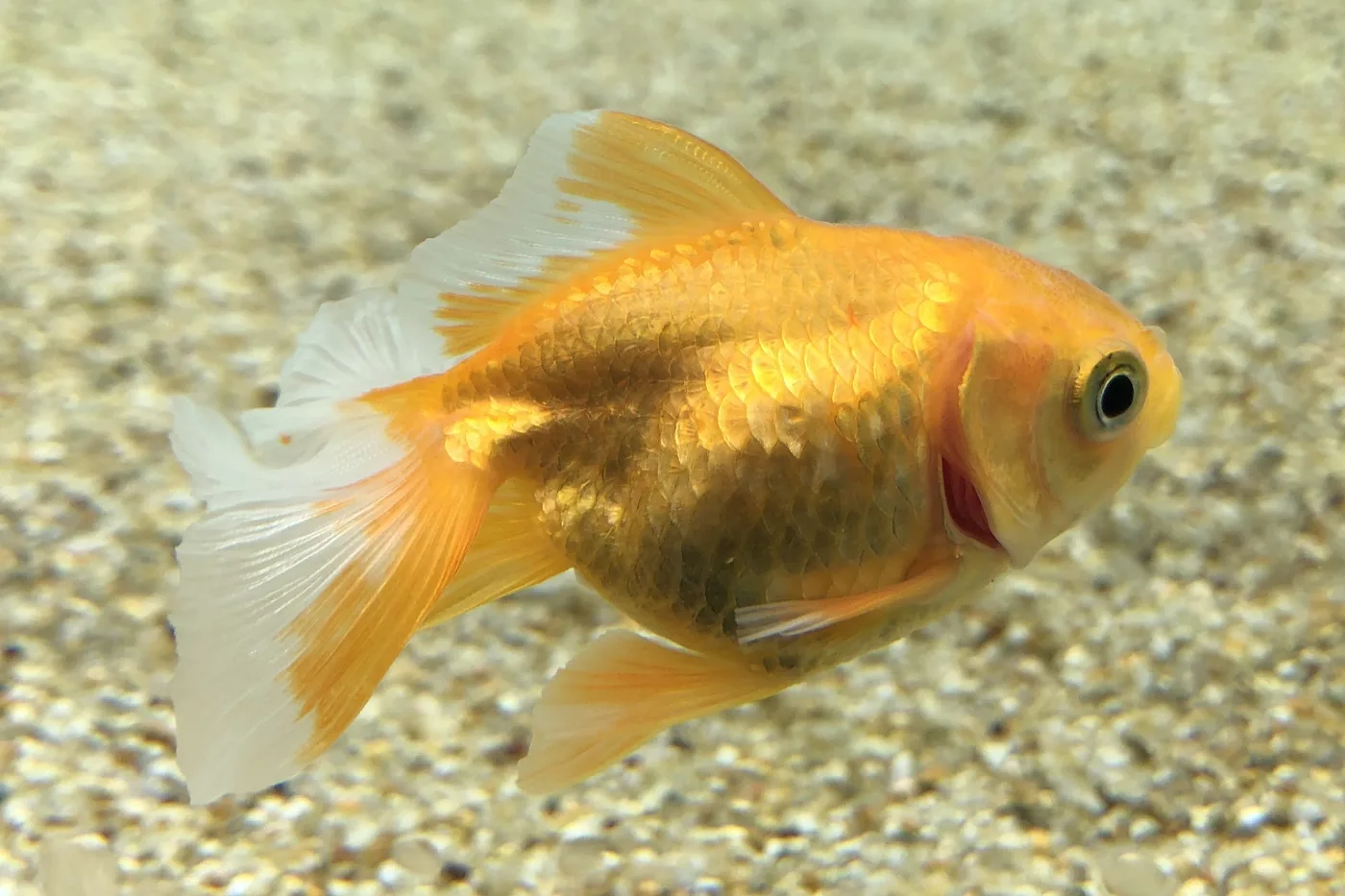
Tosakin
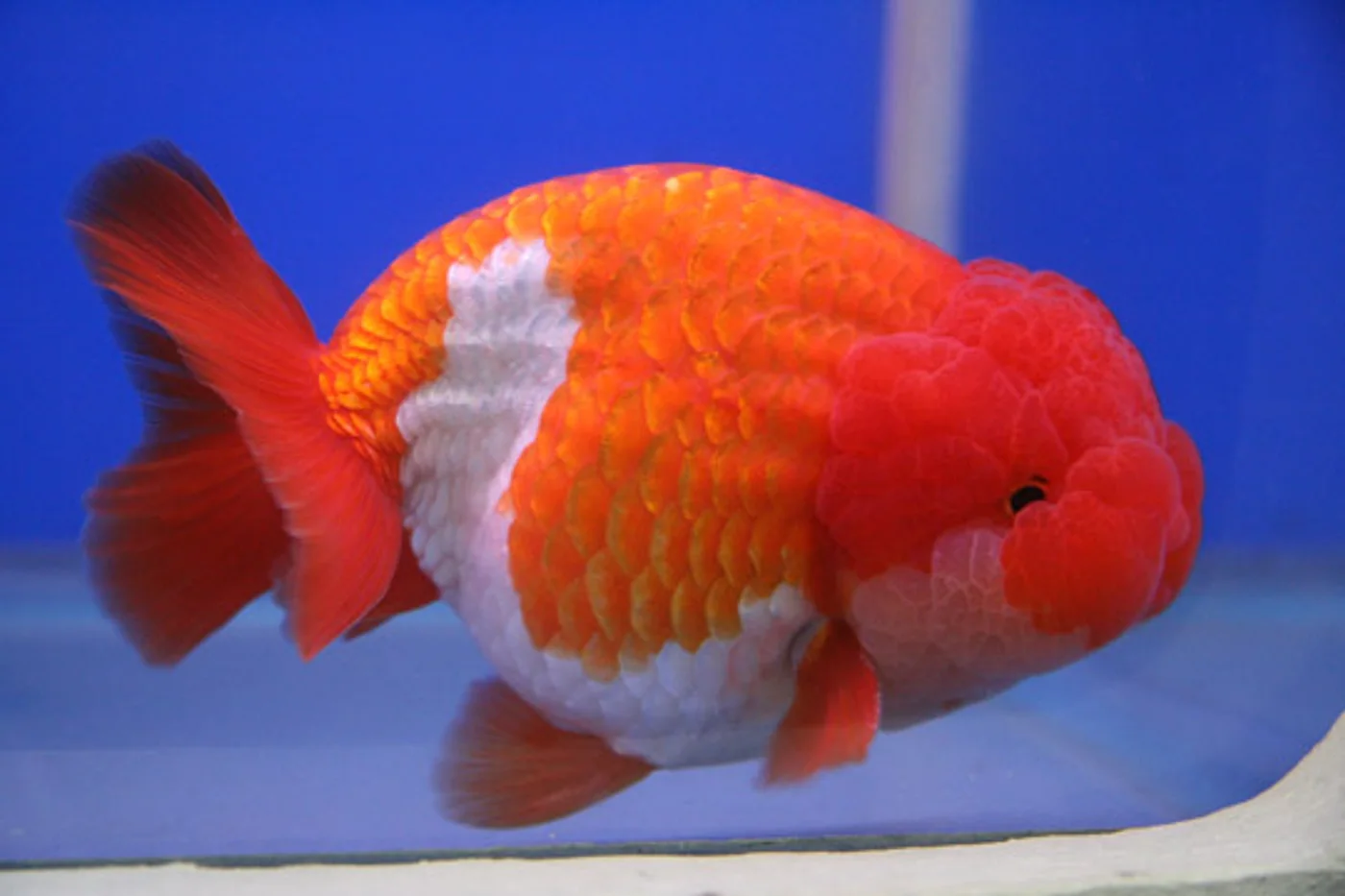
Lionchu
Best kept apart from: Common Goldfish, Comet, Shubunkin, Ryukin, Jikin, Wakin. Speed and appetite differences leave the slower fish underfed.
Thinking about other species? Try the compatibility checker.
Similar breeds
The breeds most like the lionhead — the ranchu, oranda, bubble eye, pompom and lionchu — are all pictured above among its companions.
Frequently asked questions
Is a lionhead a good first fancy goldfish?
Not usually. A fantail or oranda is a better starting point, because a lionhead combines three things that punish beginner mistakes at once. It has no dorsal fin, so it swims weakly, a large wen that can harbour bacteria when the water slips, and a round body prone to buoyancy trouble. Keep a hardier fancy for a year first, and a lionhead will reward the habits you have built.
Can the wen grow over my lionhead's eyes?
In some lines, yes, and a fish with its eyes covered can still live well. Drop food in the same spot at each meal so it learns where to look, keep tankmates slow, and avoid decor it could blunder into. Trimming the wen is a surgical procedure that experienced breeders occasionally perform; if the growth is interfering with eating or breathing, consult an aquatic veterinarian rather than attempting it yourself.
Why does my lionhead have white spots on its head?
Small white pimples confined to the wen, with the fish behaving normally, are usually new wen growth and need nothing but clean water. White spots the size of salt grains scattered over the body and fins, especially with flashing or clamped fins, suggest ich instead. Fluffy white or grey patches on the wen point to a bacterial or fungal problem. Test the water first in every case.
What should I look for when buying a lionhead?
The back first, because it is what separates a lionhead from a ranchu and shops often mislabel them: a lionhead's back runs fairly straight or gently curved with only a mild tuck at the tail base, while a ranchu arches smoothly and drops steeply. Then check that both eyes are clear and not yet crowded by hood, that the wen is developing evenly rather than heavily on one side, and that the fish swims level and finds its food. The hood arrives last, so judge a juvenile on its body and its swimming.
What is a lionchu?
A cross between a lionhead and a ranchu, selected for a ranchu's arched back with a lionhead's heavier hood. It is a deliberate cross rather than an accident, though the Goldfish Society of America does not yet recognise it as a variety, and the name is used loosely, so many fish sold as lionchu are simply one parent or the other. Whatever the label, a fish with that combination needs everything on this page, because a big hood on a dorsal-less body is an awkward arrangement for swimming.
Is my fish a lionhead or a ranchu?
Look at the back and the tail first. A lionhead's back runs fairly straight or gently curved with only a mild tuck where the tail joins, and its tail sits at a shallow angle. A ranchu's back arches in one smooth curve and drops steeply into a tucked tail. The hood helps less than it seems: a lionhead's is usually larger and looser, but it is the last thing to arrive and varies from fish to fish. Young fish of the two are close to indistinguishable, and a fish with a ranchu's arch under a heavy hood may be a lionchu.
Why does my lionhead struggle to swim?
Because of what it is, before anything else. A lionhead has no dorsal fin to act as a keel and carries a heavy hood at the front, which is a weak combination for swimming. Short deliberate bursts and frequent resting are normal for the breed rather than signs of illness. What is not normal is a fish that cannot hold level, tires visibly in the tank's own current, or rests with clamped fins and fast breathing — and the first thing to check there is the filter outflow, then the water.
How big a tank does a lionhead need?
Around 100 litres (26 US gallons) for the first fish and 40 to 50 litres for each additional slow fancy is a sensible working range. Lionheads are not fast, so length matters less than it does for a comet, but a wide footprint gives more surface for oxygen exchange and more room to place food where a poorly sighted fish can find it. Gentle filtration matters as much as volume.