No. 01Song dynasty, a thousand years ago
Common Goldfish
The original goldfish, and one of the hardiest.
Also known as Common · Feeder goldfish (trade term) · Hibuna (Japan)
- Specimen
- Single-tailed goldfish, China
- Adult size
- 25–35 cm
- Lifespan
- 15–20 years
- Water
- 10–24 °C
- Care
- Easy
- Swimming
- Strong
- First fish needs
- 150 litres
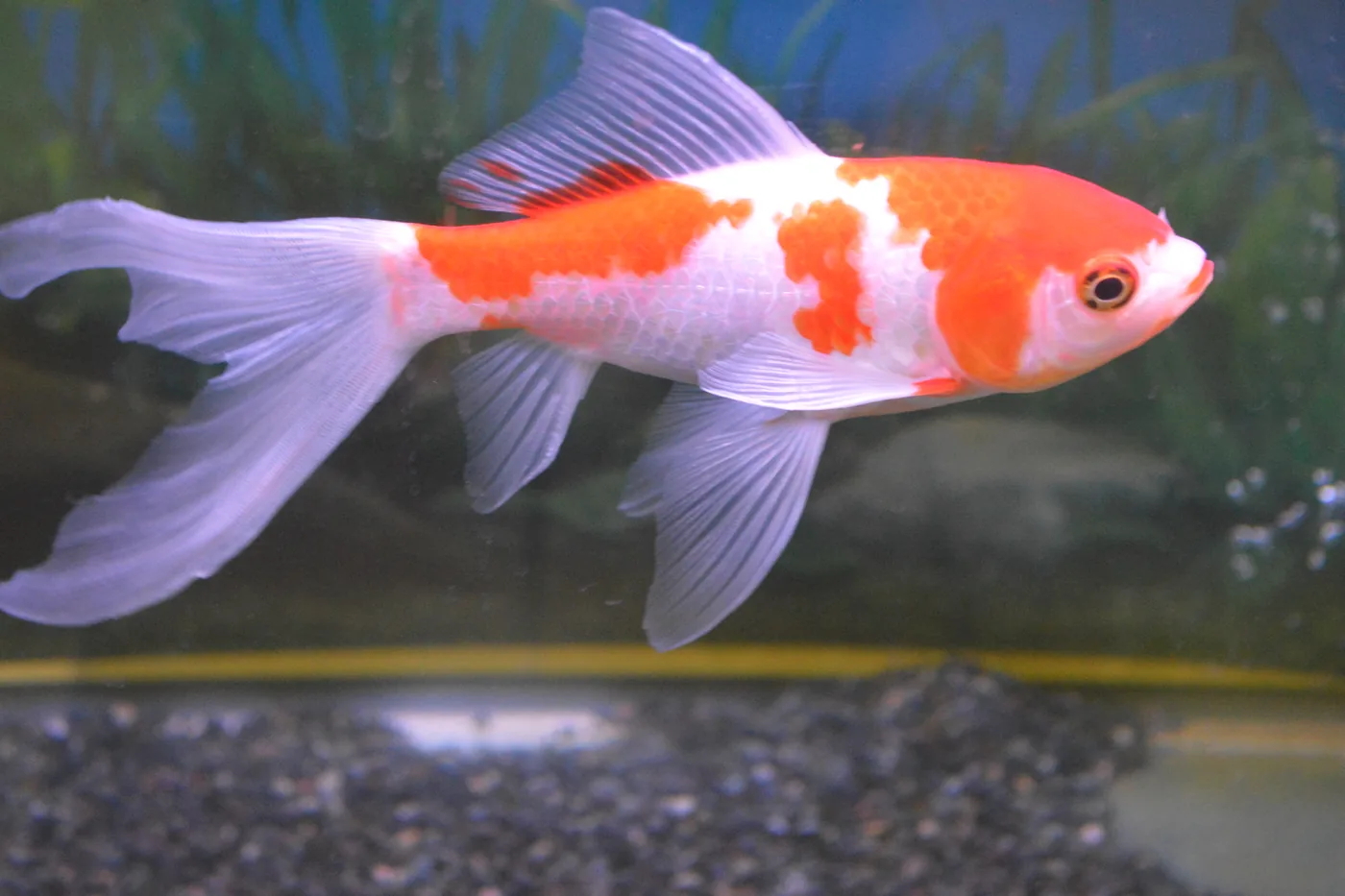
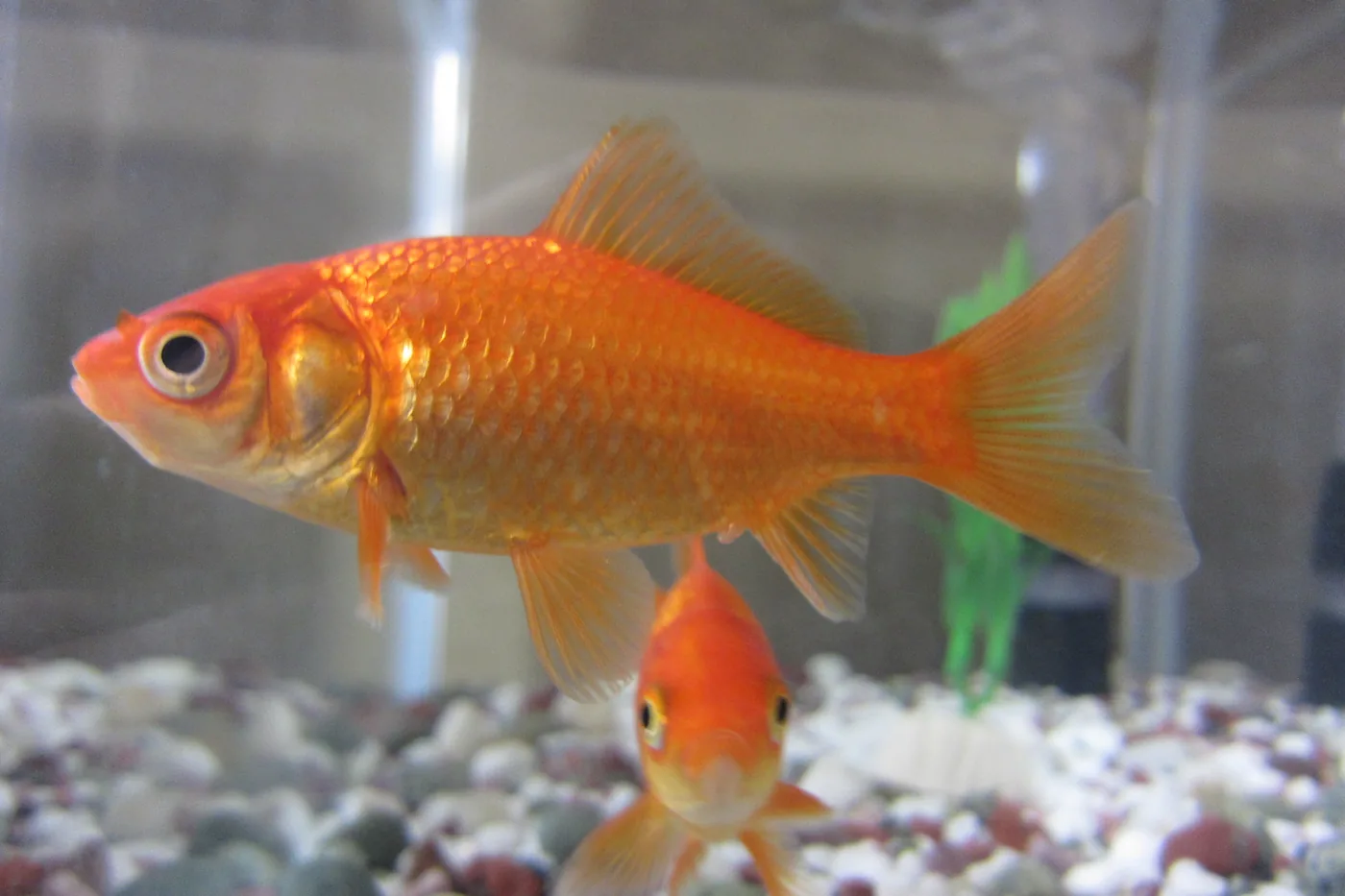
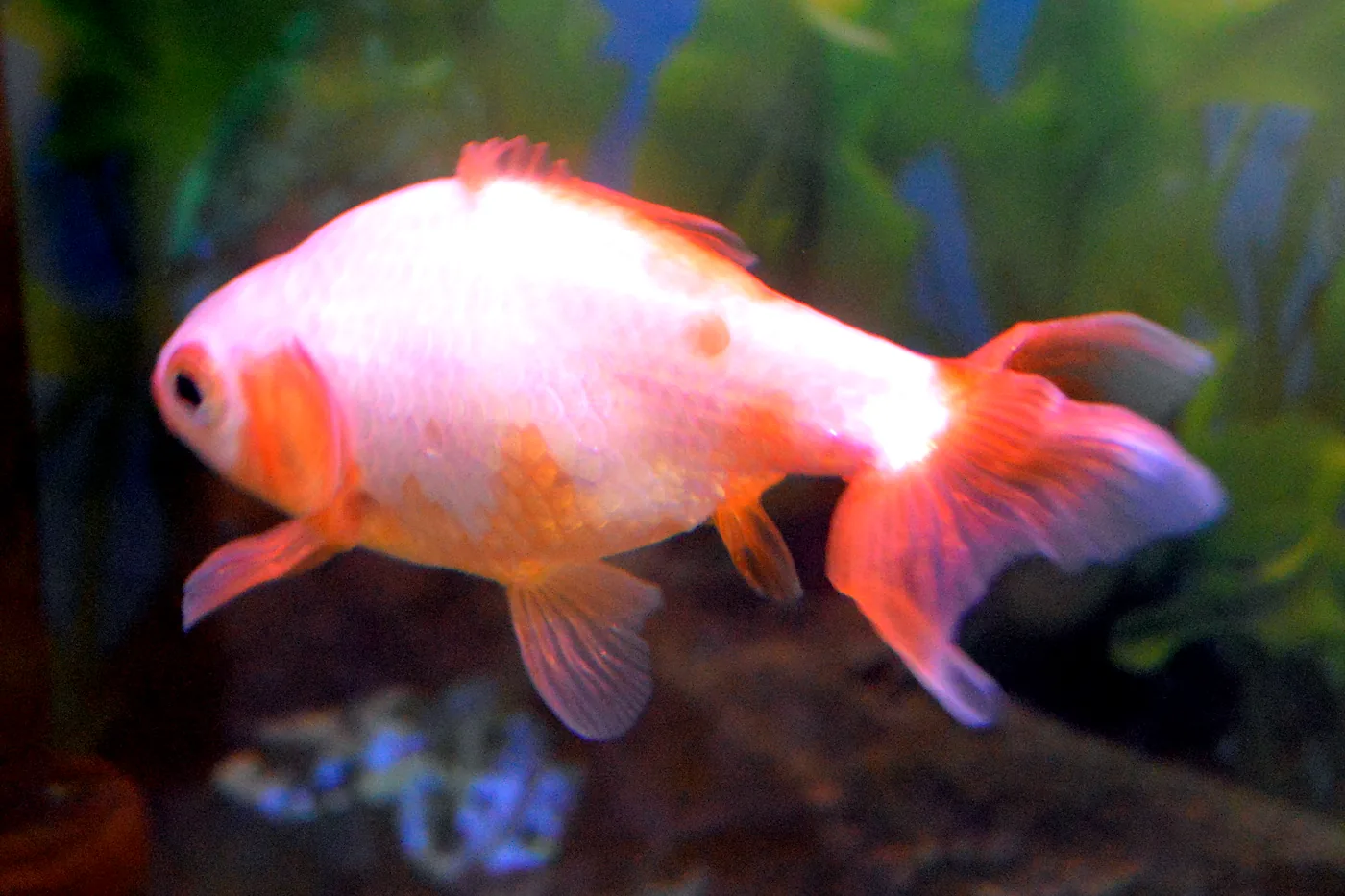
Photograph: ぱたごん, CC BY-SA 3.0 · Wikimedia Commons
About these figures Size, lifespan and water are the ranges keepers' guides give for a fish in good care, not measurements of this breed, and swimming and care are this site's own ratings of the published advice. Lifespan is where the sources differ most: how long goldfish live sets them side by side. First fish needs is a middle figure for one fish, from advice that runs from 50 litres to about 300; tank size sets that out.
The specimen
Quick facts
- Classification
- Single-tailed goldfish
- Body type
- Slim, streamlined body with short stiff fins and a single, shallowly forked tail
- Tail and dorsal
- Single tail, dorsal fin present
- Swimming ability
- Strong
- Keeper experience
- Beginner
- Temperament
- Boisterous, fast and greedy; peaceful with its own kind but outcompetes slower fancy goldfish
- Adult size
- 25–35 cm (10–14 in)
- Temperature
- 10–24 °C (50–75 °F)
- Minimum aquarium
- 150 L (40 US gal) for one fish
- Origin
- China, Domesticated over 1,000 years ago (Song dynasty era)
How to recognise one
- Slim, torpedo-shaped body that is clearly longer than it is deep
- Single tail with short rounded lobes and a shallow fork
- Short, stiff fins held close to the body, including a full upright dorsal fin
- Metallic scales in orange, red, yellow, white or the wild bronze
- No hood, no eye modification and no doubling of the tail
Identification
The common goldfish is the baseline every other breed departs from, so it is easiest to describe by what it lacks: no hood, no altered eyes, no doubled tail, no exaggerated body. What remains is a slim, muscular fish, clearly longer than it is deep, with a single tail of short rounded lobes and a shallow fork, a full upright dorsal fin, and every fin short and stiff relative to the body.
Two single-tailed breeds are regularly confused with it: the comet, slimmer and with a long, deeply forked tail, and the shubunkin, which has the same outline but wears a calico pattern on semi-transparent scales. A short tail and a metallic shine mean a common.
Orange is the most frequent colour, then red, yellow, white and red-and-white. Most goldfish hatch bronze, like their wild ancestor, and shed that dark pigment during their first year; a few never change and stay bronze for life.
Common, comet or shubunkin?
-
A short tail
-
A long, deeply forked tail
-
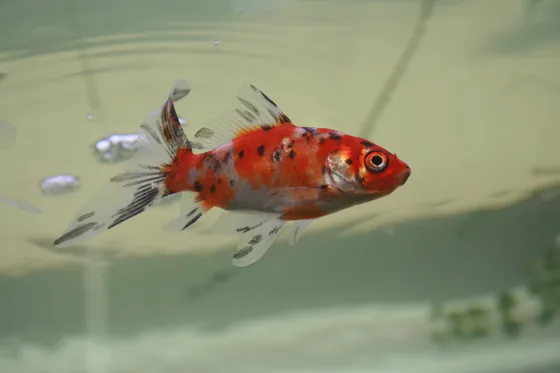
Calico, on see-through scales
Three single-tailed goldfish side by side: a common goldfish with its short tail ringed, a comet with its long, deeply forked tail ringed, and a shubunkin with its calico body ringed.
- Common Goldfish. A short tail and a metallic shine.
- Comet. Slimmer, with a long, deeply forked tail.
- Shubunkin. The same outline, wearing a calico pattern on semi-transparent scales.
Photographs: Common Goldfish, ぱたごん, CC BY-SA 3.0; Comet, Yatokin, CC BY-SA 4.0; Shubunkin, Michelle Jo, CC BY-SA 3.0. Rings added.
Varieties, and the absence of them
The common goldfish is the one breed defined by what has not been done to it.
- Orange, red, yellow, white and red-and-white. Colour is the only thing that really varies.
- Bronze, the wild type. Not a variety. Every goldfish hatches this colour and most change later; a bronze adult is simply one that did not.
- Hibuna. The Japanese name for a plain red single-tail, sometimes used in the trade as though it were a distinct breed.
- Feeder goldfish. A trade category, not a kind of fish. The stock is ordinary commons and comets held at densities that make disease routine — the fish is normal, the conditions are not.
Everything else on this site descends from this shape. The domesticated goldfish is the history, and the short version is that the wen, the telescope eye, the doubled tail and the missing dorsal fin are all departures from the animal on this page.
How it develops
Quickly, which is where the trouble starts. Most goldfish hatch bronze and lose the dark pigment during the first year; growth depends on food, space and water, and in feral fish length keeps climbing for around five years.
A five-centimetre fish in spring can need adult housing within the year, which is a very consequential fact about the breed. How big do goldfish get covers the finished animal, and goldfish tank size the volume it implies.
The growth does not stop, it only slows, and that is the fact the breed is most often sold against. A common at two years is not a finished fish; it is a fish that has reached most of its length and will go on thickening for years after, especially in a pond. The idea that it will simply stop at whatever its container allows is dealt with in how big do goldfish get, and the short version is that the growth that stops is the visible part.
A cramped first year can cost length. The fastest growth happens early, and a fish held back by crowding often grows again once it is moved, though recovery may be incomplete if the delay is long. If you are going to buy the correct tank at any point, the cheapest moment is before the fish, which is the argument the stocking checker is there to make concrete.
Hardy is not the same as undemanding
An important thing on this page, and a reason this breed is so often kept badly.
A common goldfish is tougher than most. It tolerates a wider and colder temperature range than most fancies, copes with a missed water change, and recovers from mistakes that would do more damage to a delicate fancy.
Which is precisely the problem. A fish that tolerates poor conditions takes longer to show what they are doing to it, so the feedback a beginner needs arrives late or not at all. The goldfish in a bowl is alive, and that is read as evidence that the bowl is fine — can goldfish live in a bowl? works through why it is not.
What hardiness actually buys you is time to learn: room to get the water changes wrong once, to recover from a cycling mistake, to survive a hot week. That is genuinely valuable and it is not the same as needing less.
The bill is still the same. 150 to 200 litres for a first fish, a filter sized for a messy animal, and a weekly water change — and, ideally, a pond, which goldfish ponds argues is where this fish belongs.
Choosing one
- From above: a straight spine and an even body.
- The fins: held open, not clamped, no ragged edges.
- Movement: cruising, not hanging in a corner.
- Flicking against decor points at parasites — flashing and rubbing covers it.
- Read the whole system. Commons are sold from shared tanks, so one sick fish means the water carries it — choosing and bringing home a goldfish.
- Quarantine for at least four weeks, without exception — quarantining a new goldfish.
Where you will find one. Everywhere, and that is the problem rather than the advantage. Commons are the fish most often sold cheaply from bare feeder tanks, which are often overcrowded, unfiltered and a likely parasite reservoir. The few extra coins for one out of a properly maintained display tank buy you more health than any amount of selection does. A well-grown, well-kept common is as good as the breed gets, and a fish sold as a rare colour variant of one is usually just a common.
Personality and behaviour
Commons are energetic, inquisitive and almost permanently hungry. They patrol the whole tank, sift sand for missed food and learn within days where food arrives. They are not aggressive, but they are boisterous: a shoal of commons at feeding time moves like a single fast animal, and a slow fancy in the same tank is pushed aside and left hungry; with comets and shubunkins they are entirely peaceful.
In spring, mature males chase females for hours, nudging them against plants and glass; it looks alarming but is normal spawning behaviour. Newly introduced commons also jump, so a lid, or a water line a few centimeters below the rim, is worth having.
Aquarium requirements
Size the aquarium for the adult. A common working range is 150 to 200 litres (40 to 53 US gallons) for the first fish and 75 to 100 litres for each additional one, and many keepers prefer 280 litres (75 US gallons) or more for adults. Length matters more than height: a fish that cruises and turns all day needs a long footprint, and a longer tank has more surface for gas exchange. The tank size guide explains the figures, and the stocking checker tells you whether a given tank is already full.
Filtration must be generous: five to ten turnovers an hour with mechanical and biological media, and 25 to 50 percent water changes weekly, guided by nitrate readings. No heater is needed in most homes; commons are comfortable from 10 to 24 °C (50 to 75 °F) provided changes are gradual. Use sand, a bare bottom or stones too large to swallow, and expect soft plants to be eaten. Where climate allows, a pond suits a common better than any aquarium; the pond guide covers depth, filtration and overwintering.
Feeding
Commons are unfussy omnivores. Build the diet on a quality pellet, floating or sinking, and add variety across the week: blanched peas, zucchini or spinach, duckweed, gel food and frozen treats. Feed small amounts one to three times a day, only what is gone within a minute or two. Single-tails are less prone to buoyancy trouble than round-bodied fancies, though not exempt, so floating food is less of a concern than it is for an oranda.
In an unheated pond, appetite follows temperature: reduce feeding as the water cools through the mid-teens, switch to an easily digested wheat-germ food, and stop when the fish stop taking food, usually around 8 to 10 °C, as the gut slows.
Common health considerations
In a suitable tank with clean water, a common is one of the most robust fish in the hobby, and most problems trace back to water. A fish gasping at the surface, showing red streaks or clamping its fins is usually reacting to ammonia, nitrite or low oxygen, and the first response is a water test and a large water change.
White spots like grains of salt are usually ich, which often follows transport stress or a temperature swing and is treatable when caught early. New arrivals and pond fish can carry parasites such as anchor worm and fish lice, so quarantine anything new for at least four weeks.
What goes wrong, in order
Few of its problems are diseases.
| What you see | Usually | Where to look |
|---|---|---|
| Outgrowing the tank | It was always going to | Goldfish tank size |
| Gasping, red streaks, clamped fins | Ammonia or nitrite in too little water | Red streaks |
| Salt-grain spots after a purchase | Ich, from a shared dealer system | White spots |
| Found on the floor | It jumped, and there was a reason | First aid |
| A slower fancy going thin | The common is eating its share | Chasing and bullying |
| A curve in the back over months | Stunting, or something worse | Bent spine |
The first and last rows are the same story at different speeds. A common in too little water does not get acutely ill; it gets smaller than it should be, then misshapen, and perhaps shorter-lived. That is the failure mode of one of the hardiest goldfish.
Is a common goldfish right for you?
It suits you if you have a pond or will have one, or a tank of at least 150 to 200 litres with real length, and you want a fish that is forgiving while you learn. It is long-lived, personable, and among the best fish anyone can keep outdoors.
It does not suit you if you want something small, something for a desk tank, or company for fancy goldfish — it will outgrow the first two and outcompete the third.
And it is the goldfish with nothing to answer for. Goldfish welfare spends most of its length on the costs of selective breeding; the common carries none of them. It swims well, sees well, digests normally and has no feature that needs managing. The only thing it needs is room, and that is the one thing it is least often given.
History and origin
Most genetic work traces the goldfish to a drab olive wild carp of southern China, Carassius auratus, in which red or gold individuals occasionally appear. Chinese records of such fish reach back to the Jin dynasty in the fourth century, and deliberate keeping and breeding is documented from the Song dynasty, roughly a thousand years ago, when coloured carp were held in ornamental ponds and, by the twelfth century, at the imperial court. The common goldfish is therefore not a breed in the modern sense but the domesticated species itself, changed in colour yet still close to the wild fish in shape.
Goldfish are traditionally said to have reached Japan in 1502, Portugal in 1611 and North America in the nineteenth century. Along the way it gave rise to every fancy variety without being displaced: it remains the goldfish most people picture, the fish won at fairs and sold as feeders, and, given the space it deserves, one of the longest-lived pets a family can keep. The lifespan guide sets out realistic expectations.
Before you bring one home
- Can reach 25 to 35 cm and needs an aquarium or pond sized for that adult, not for the juvenile in the shop
- Produces a great deal of waste, so filtration and water changes must be scaled to match
- Fast and greedy at feeding time, which leaves slower fancy goldfish underfed
- Tolerates cold water well and is one of the best goldfish for an outdoor pond
- A capable jumper, especially when newly introduced; use a lid or a lowered water line
Suitable companions
Single-tailed goldfish are fast and boisterous. Keep them with fish that can keep up.
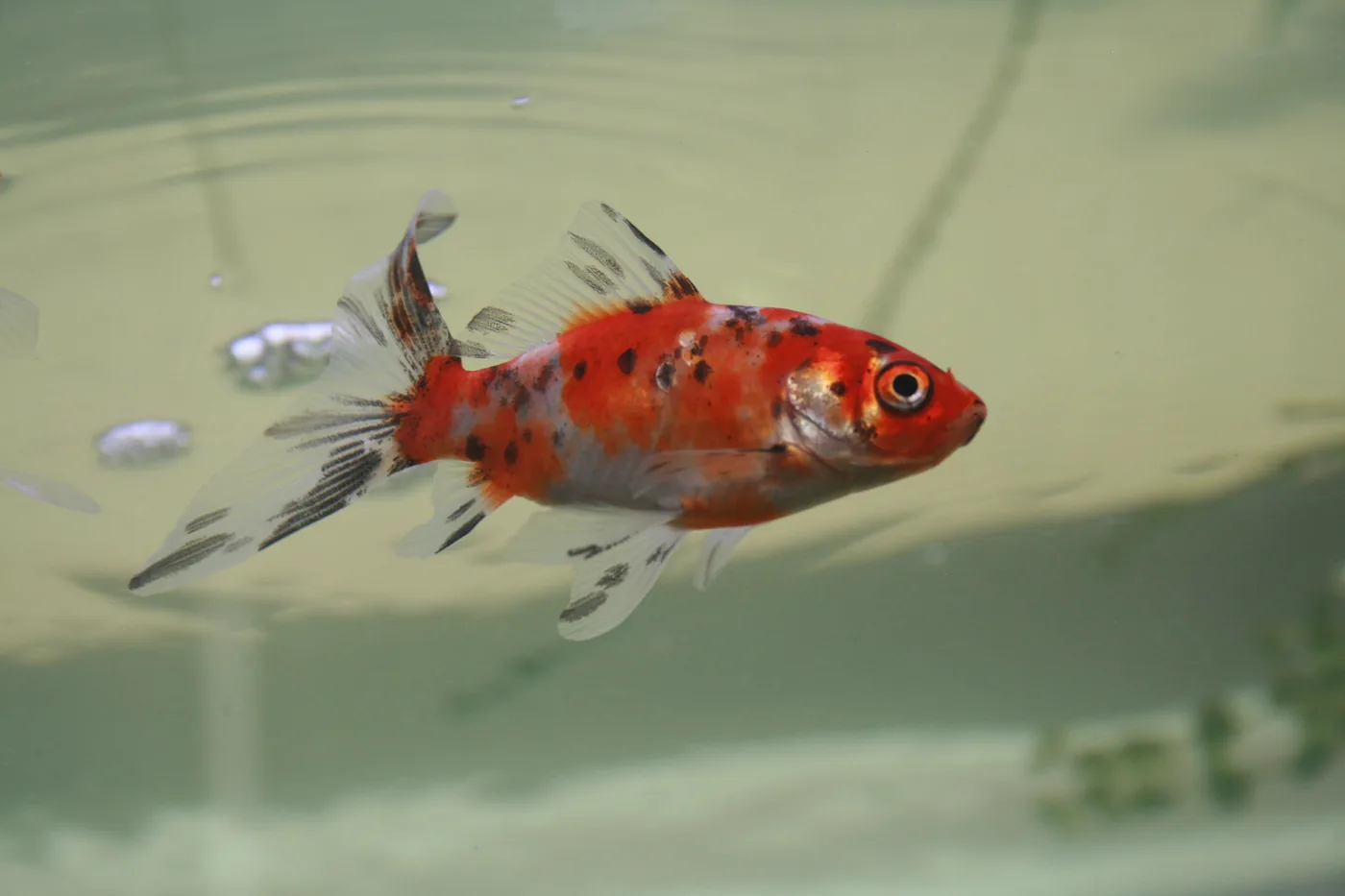
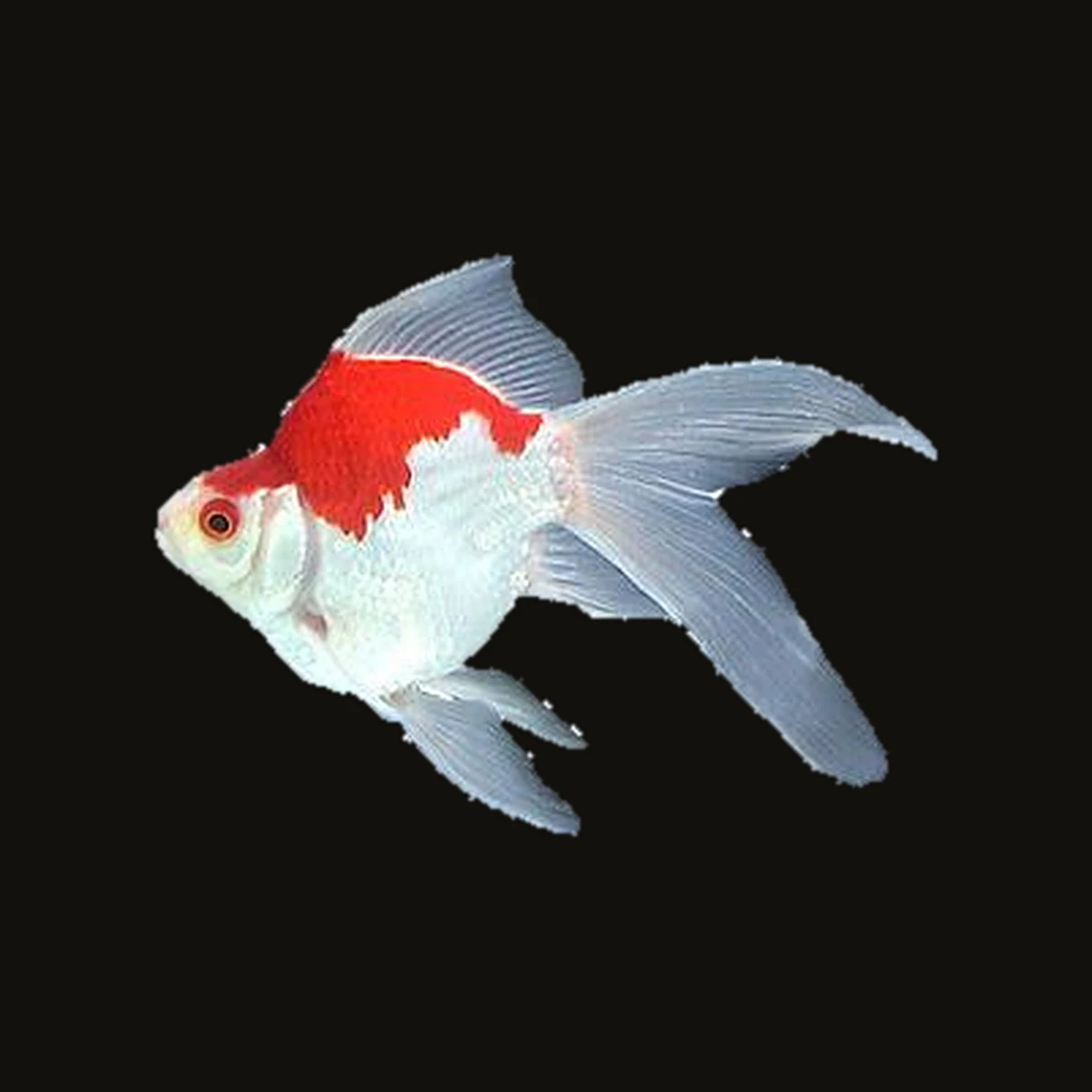
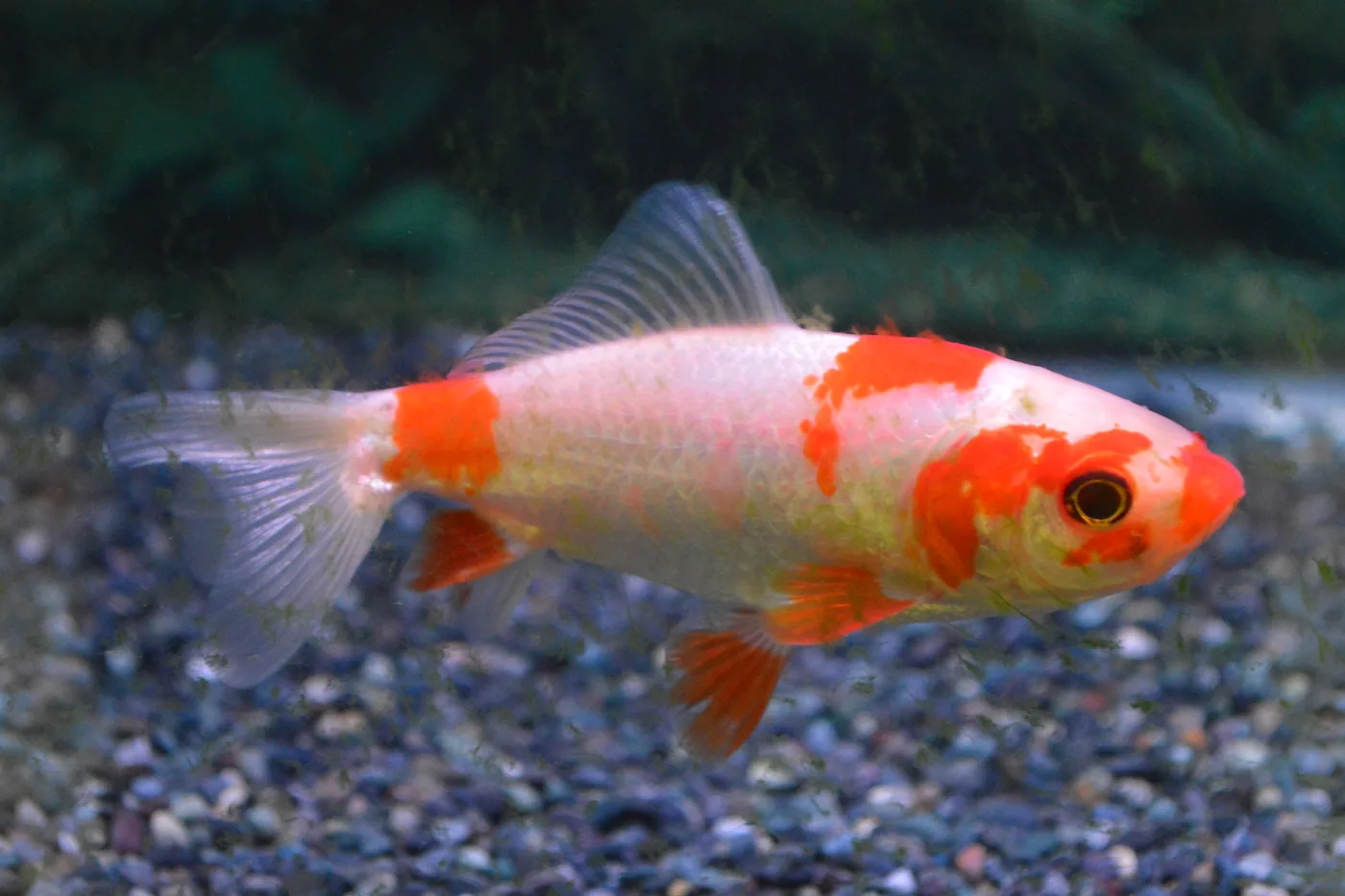
Best kept apart from: Fantail, Oranda, Ranchu, Lionhead, Ryukin, Telescope, Black Moor, Pearlscale, Bubble Eye, Celestial Eye, Pompom, Veiltail, Tosakin, Lionchu, Jikin. Speed and appetite differences leave the slower fish underfed.
Thinking about other species? Try the compatibility checker.
Similar breeds
Of the breeds most like the common goldfish, the comet, shubunkin and wakin are pictured above among its companions. The others:
Frequently asked questions
How big does a common goldfish get?
Given room and clean water, a common goldfish commonly reaches 25 to 30 cm (10 to 12 inches), and a warm, well-fed pond fish can reach 35 cm or more. Growth is fastest in the first two or three years and slows afterwards, but it does not stop at the size of the container. The small fish in a shop tank is a juvenile, not a small variety.
Can a common goldfish live in a bowl?
It can survive for a while, which is why the idea persists, but an unfiltered bowl makes stable water quality extremely difficult and leaves no room for a fish that grows to 30 cm. Moving it to a filtered aquarium of 150 litres (40 US gallons) or more is the single biggest improvement you can make, and the fish usually responds within weeks.
Can common goldfish stay outside all year?
In temperate climates, yes, provided the pond is deep enough not to freeze solid, generally 60 to 90 cm (2 to 3 feet) or more depending on winter severity. Stop feeding once the fish stop taking food, usually around 8 to 10 °C, keep part of the surface ice-free for gas exchange, and leave fish resting near the bottom undisturbed in midwinter.
What should I look for when buying a common goldfish?
A straight spine seen from above, fins held open rather than clamped, clear eyes, and a fish that is cruising rather than hanging. Check for flicking against decor, which points at parasites, and look at the whole tank rather than the one fish, because commons are usually sold from shared systems where one sick fish means the water carries it. Then quarantine for at least four weeks.
Is a common goldfish really hardy?
Relatively, yes, and that is exactly why it ends up housed badly. A common tolerates ammonia, cold, neglect and undersized tanks for longer than most fancies would — but surviving is not thriving, and a fish that tolerates poor conditions simply takes longer to show what they are doing to it. Hardiness buys a beginner time to learn rather than permission to skip the tank, the filter or the weekly water change.
What is the difference between a common goldfish and a comet?
The tail, and only the tail, at a glance. A common has a short single tail with rounded lobes and a shallow fork; a comet's is long, deeply forked and pointed, sometimes approaching the body in length. The bodies are similar, the colours overlap completely, and the care is identical. Young fish of both are frequently mixed in the same tank and sold interchangeably, so judge by the tail rather than the label.
How long do common goldfish live?
With good care, 15 to 20 years is the figure most care guides give, though some breed references put the typical range nearer 10 to 15, and some live considerably longer. The record for any goldfish is 43 years, set by Tish, a fairground-prize goldfish in the UK that died in 1999. Many early deaths trace back to small unfiltered containers and poor water quality rather than to anything inherent in the fish.