No. 21Modern times, date unrecorded
Tamasaba
A ryukin-shaped goldfish on a single tail, bred by koi keepers in Niigata to swim with koi and come through the winter.
Also known as Mackerel tail goldfish · Ball mackerel
- Specimen
- Fancy goldfish, Niigata, Japan
- Adult size
- 18–30 cm
- Lifespan
- 7–10 years
- Water
- 5–24 °C
- Care
- Moderate
- Swimming
- Strong
- First fish needs
- 100 litres
Photograph: Desaix83, after Ghasem1122, CC BY-SA 3.0 · Wikimedia Commons
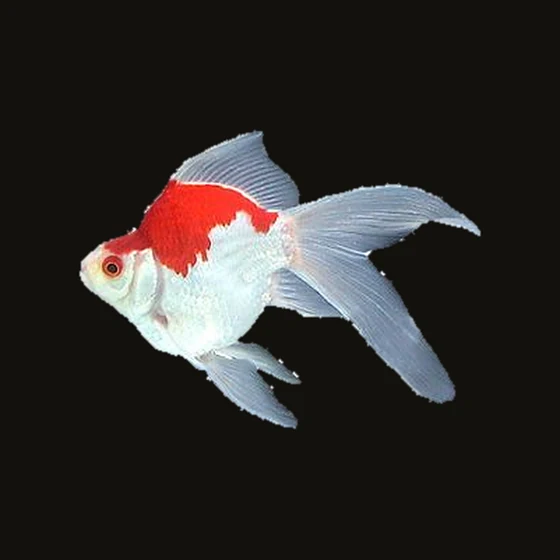
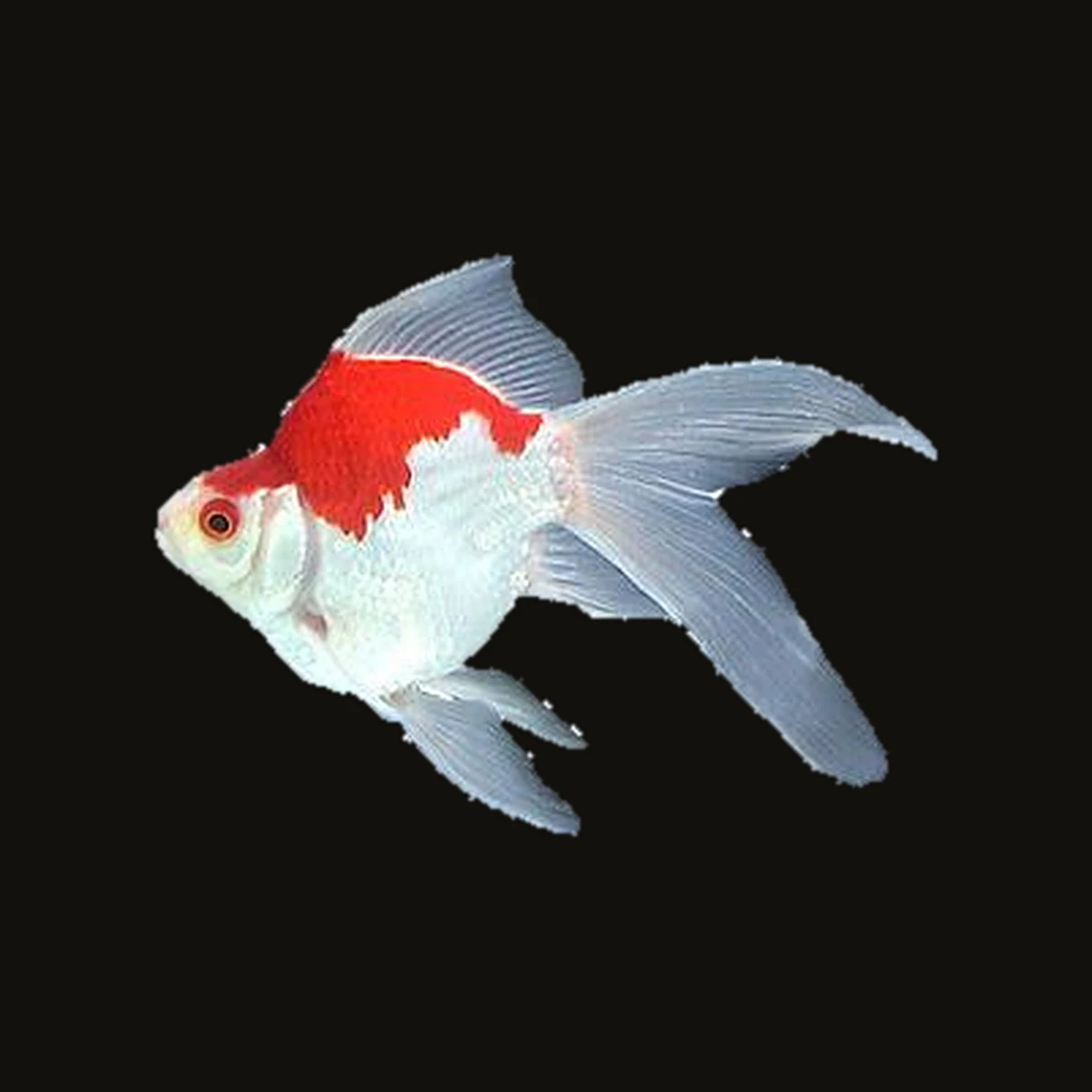
About this pictureCut out from a small photograph, which its photographer titled 'Tamasaba or Sabao', and set on black, so it is softer than the others. It is the only openly licensed photograph of the breed we have found. What it shows is the look the breed is known for: a ryukin's deep body carrying a single long tail.
About these figures Size, lifespan and water are the ranges keepers' guides give for a fish in good care, not measurements of this breed, and swimming and care are this site's own ratings of the published advice. Lifespan is where the sources differ most: how long goldfish live sets them side by side. First fish needs is a middle figure for one fish, from advice that runs from 50 litres to about 300; tank size sets that out.
The specimen
Quick facts
- Classification
- Fancy goldfish
- Body type
- Deep, rounded, ryukin-like body with a steep back and a tall dorsal fin, carrying a single undivided tail that runs from a short crucian-type tail to a long streaming one
- Tail and dorsal
- Single tail, dorsal fin present
- Swimming ability
- Strong
- Keeper experience
- Intermediate
- Temperament
- Agile and quick for a deep-bodied fish, bred to swim with koi, and competitive at feeding time in a way most fancies are not
- Adult size
- 18–30 cm (7–12 in)
- Temperature
- 5–24 °C (41–75 °F)
- Minimum aquarium
- 100 L (26 US gal) for one fish
- Origin
- Chūetsu district of Niigata Prefecture, Japan, bred by koi keepers, Modern times, date unrecorded
How to recognise one
- A deep rounded body with a steep back and a tall dorsal fin, close to a ryukin's, carrying a single tail
- A tail that is undivided and varies from fish to fish, from short and crucian-like to long and streaming
- A rounder body than the sabao, the older crucian-tailed type it was selected from
- Red and white is the classic colouring, with solid red, yellow and calico fish also bred
- Reported hardy in unheated ponds, including in the UK, which most deep-bodied fancies are not
- Swims with the agility of a wakin, which is unusual in a ryukin-shaped fish
This site has a rule it repeats: a deep-bodied fancy goldfish is a fish for indoors or a mild climate, and does not belong outdoors through a hard winter.
The tamasaba is the notable exception, and the reason for it is traceable.
Identification
A deep body carrying a single tail. That is the look, and it is the reverse of the wakin — one is a long body with a doubled tail, the other a round body with a single one. Between them they show that body shape and tail count are separate traits that usually, but not always, travel together.
The tail is undivided, and it varies. It runs from a short crucian-type tail to a long streaming one like a comet’s, and from fish to fish and line to line. The name tells the story: tamasaba is tama, ball, for the round body, and saba, mackerel, for the tail of the older sabao type it was selected from. The sabao is the less round of the two, and the tamasaba the rounder.
A back that rises behind the head, close to a ryukin’s profile, with a tall dorsal fin. A tamasaba is often taken for a ryukin with a single tail, and in shape it is close to one.
Red and white is the classic colouring. Solid red, yellow and calico fish are also bred, and the best have clean white fins.
Ryukin, fantail or tamasaba?
Three deep-bodied goldfish side by side: a ryukin with the hump behind its head ringed, a fantail with its smooth back ringed, and a tamasaba with its single long tail ringed.
- Ryukin. The back climbs sharply behind the head before the dorsal fin, on a deeper body. In a young fish the hump is slight, so judge body depth too: the British standard asks for about 80% of body length in a ryukin and 65% in a fantail.
- Fantail. The body rises in one smooth egg shape with no hump, over a double tail.
- Tamasaba. A back that rises behind the head like a ryukin’s, with a full dorsal fin, but a single undivided tail, which in the photograph is a long one.
Photographs: Ryukin, Lerdsuwa, CC BY-SA 3.0; Fantail, ProjectManhattan, CC BY-SA 3.0; Tamasaba, Desaix83, after Ghasem1122, CC BY-SA 3.0. Rings added.
How it develops
No timetable has been published for the tamasaba, so there is no table of ages here. What the sources do say is short. The breed was selected over generations for a rounder body and a longer tail, the tail varies from short to long, and the back from steep to gently sloped, so a young fish is a prediction in the way every fancy is: goldfish genetics explains why.
The line decides more than the juvenile does. A single-tailed ryukin can look the same at any age, and a young tamasaba cannot be told from one by its tail. Where it was bred is the question to ask.
Why this fancy is reported cold-hardy
Worth setting out properly, because “a fancy that overwinters outdoors” sounds like a claim to be sceptical of, and the history is the reason to take it seriously, as long as it is called a report and not a measurement.
The tamasaba was developed in the Chūetsu district of Niigata Prefecture, in northern Japan, largely by koi keepers — people whose fish are expected to come through the winter. The story is that it came from a ryukin crossed with the single-tailed Shōnai goldfish, a cold-hardy type from the neighbouring region that is no longer available, and Japanese sources say it was bred from the start to swim with koi. It was almost lost in the war, and was bred back from the survivors.
So the hardiness is not a property of the shape. It is thought to have arrived from the other side of the parentage, which is how goldfish genetics says traits behave: they recombine, and there is no reason a body and a temperature tolerance have to travel together.
And one thing the ancestry did not change. The body is still a ryukin’s. Nothing about the tamasaba’s digestion has been published, and what reports exist call it less prone to disease than a ryukin, but the sensible assumption is that a deep body brings the usual care for buoyancy, and floating upside down is worth knowing about.
Aquarium requirements
100 litres minimum for the first fish and more comfortably, the same floor as any fancy of its size — the tank size guide has the arithmetic. Reports of its adult size disagree, from about 18 to 20 cm including the tail to well over 30 cm, so plan for the large end.
Or a pond, which is where it is kept in Japan. It is often raised in outdoor ponds and viewed from above, and a UK importer describes it as pond-hardy all year. Goldfish ponds covers what one needs, and a tamasaba can use the same one a comet would, including through the winter that a pond through the year sets out.
Steady water, and not hot. It is reported hardy in the cold, so the number that matters is the warm end: no goldfish wants to sit above the mid-twenties for long, and the temperature guide is clear that heat is the harder problem for all of them.
Gentle to moderate flow. It swims better than its shape suggests but it is not a comet, and a long single tail still catches on sharp decor.
Personality and behaviour
Agile and surprisingly quick. Japanese sources describe a tamasaba that swims with the agility of a wakin despite its ryukin shape, as a fish bred to share a pond with koi should, and it competes at feeding time in a way a ranchu cannot. That changes the tankmate arithmetic in both directions: it keeps up with single-tails, and it will outcompete the slower fancies.
That makes it one of the few fish that sits comfortably in either group, and the compatibility checker will settle any specific pairing.
Feeding
A fancy’s regime, not a single-tail’s, as a precaution. In Japan it is fed the same food as the koi it shares water with, and nothing about its feeding has been published beyond that. The body is a ryukin’s, so soak dry food, feed sinking pellets, keep portions small and include vegetables, as overfeeding goldfish and sinking versus floating set out for round-bodied breeds.
And feed to the temperature, in a pond. As the water cools the fish digests more slowly whatever its reported tolerance, so the seasonal taper in feeding through the seasons applies in full. Cold hardiness means it is reported to survive the winter well, not that it should be eating through it.
Common health considerations
Buoyancy trouble is possible, as in any deep-bodied fish, and nothing breed-specific has been published about it.
Fin damage, because a long single tail on a fish that turns hard meets sharp decor. Torn fins covers it.
Otherwise reported robust. No wen, no altered eyes, no bubble sacs, and accounts that call it less prone to disease than a ryukin. What to watch is what signs of a healthy goldfish lists.
What goes wrong, in order
| What you see | What it usually is | Where to go |
|---|---|---|
| Floating or struggling to stay down | The deep body, usually after eating | Floating upside down |
| A tear in the tail | Sharp decor, met at speed | Torn fins |
| Slower fancies thinning | Outcompeted at feeding | Tankmates |
| Sluggish through a mild winter | Normal, and not a problem to fix | A pond through the year |
| Bloating after a cold snap and a meal | Fed while too cold to digest | Feeding through the seasons |
Overwintering one
The practical payoff, and the part worth getting right because it is the reason to own the fish.
The pond has to be a proper pond. Depth, volume and a surface that can be kept open matter far more than the breed does. Building a goldfish pond covers depth and siting, and a shallow ornamental basin is not made suitable by stocking it with a hardy fish.
Keep a hole in the ice, which is the one non-negotiable of a frozen pond. Gases have to exchange; a sealed surface over a pond full of decomposing material is how fish are lost in winter, and it has nothing to do with cold. The seasonal routine in a pond through the year is the whole of what to do and none of it changes for this breed.
Stop feeding as the water cools, on the same schedule as any pond fish. This is where reported cold tolerance is most often misread: a fish can survive winter well, and a fish fed through winter does not.
Let it cool gradually. The reported hardiness is to a season, not to a shock. A fish moved from a heated indoor tank into a cold pond in November has been given a different problem from the one it was bred for.
Choosing one
- Look for a single tail on a deep body, and treat it as the look and not as proof. A single-tailed ryukin can look the same.
- Ask where it was bred, because the reported hardiness is a property of the line and not of the name, and a fish raised warm has not shown it.
- Check the tail is undamaged, since its sweep is the feature.
- Expect to buy from a specialist, usually a koi importer. A tamasaba in a general shop tank is more likely a ryukin with a single tail.
- And know where specialists are found, which is its own exercise and is set out in finding a goldfish no shop stocks.
Is a tamasaba right for you?
Yes, if you want a fancy-shaped goldfish for an outdoor pond and have been told repeatedly that there is no such thing. This is the one that is reported to manage it, and it is the reason to seek it out rather than settle for keeping a ryukin indoors.
No, if you wanted the fancy look without the fancy feeding. The body is a ryukin’s and the precautions come with it, and reported cold tolerance changes none of that.
History and origin
The tamasaba was bred in modern times by koi keepers in the Chūetsu district of Niigata Prefecture, from what the story gives as a ryukin crossed with the single-tailed Shōnai goldfish. It was selected for a rounder body and a longer tail than the older sabao, it was meant from the start to swim with koi, and it nearly disappeared in the war before it was bred back. It is still mostly a koi farmer’s fish, and it travels to the West with koi shipments.
What makes it worth a page beyond its rarity is what it demonstrates. The domestication story is usually told as a list of traits accumulating — a doubled tail here, a shortened body there, a hood on top. The tamasaba is the same process run for a different purpose: not a new ornament, but an existing ornament made to cope with a Niigata winter and a koi pond.
That is a breeder solving a climate problem rather than chasing a standard, and it is a good example of goldfish keeping as agriculture rather than as decoration.
Before you bring one home
- A single-tailed ryukin can look the same, so the line matters more than the look: ask where the fish was bred
- Reported hardy outdoors all year in unheated ponds, which is rare in a deep-bodied fancy
- Quick and competitive, so slower fancies lose out at feeding time
- The body is a ryukin's, so the usual care for buoyancy is sensible, although nothing breed-specific has been published
- Rare outside Japan, and usually imported with koi shipments by specialists
Suitable companions
Round-bodied goldfish should live with fish of similar speed. These breeds share the same pace, water and food.
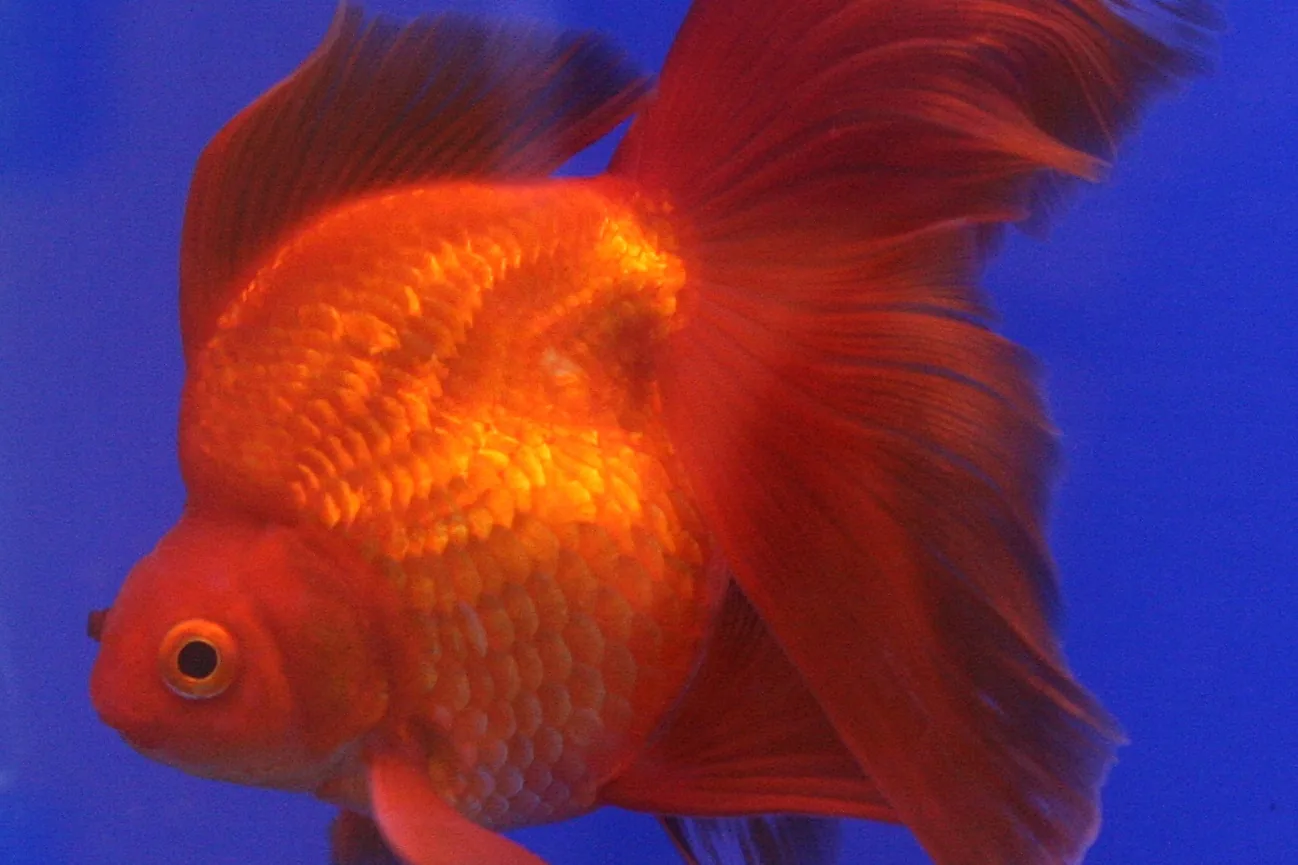
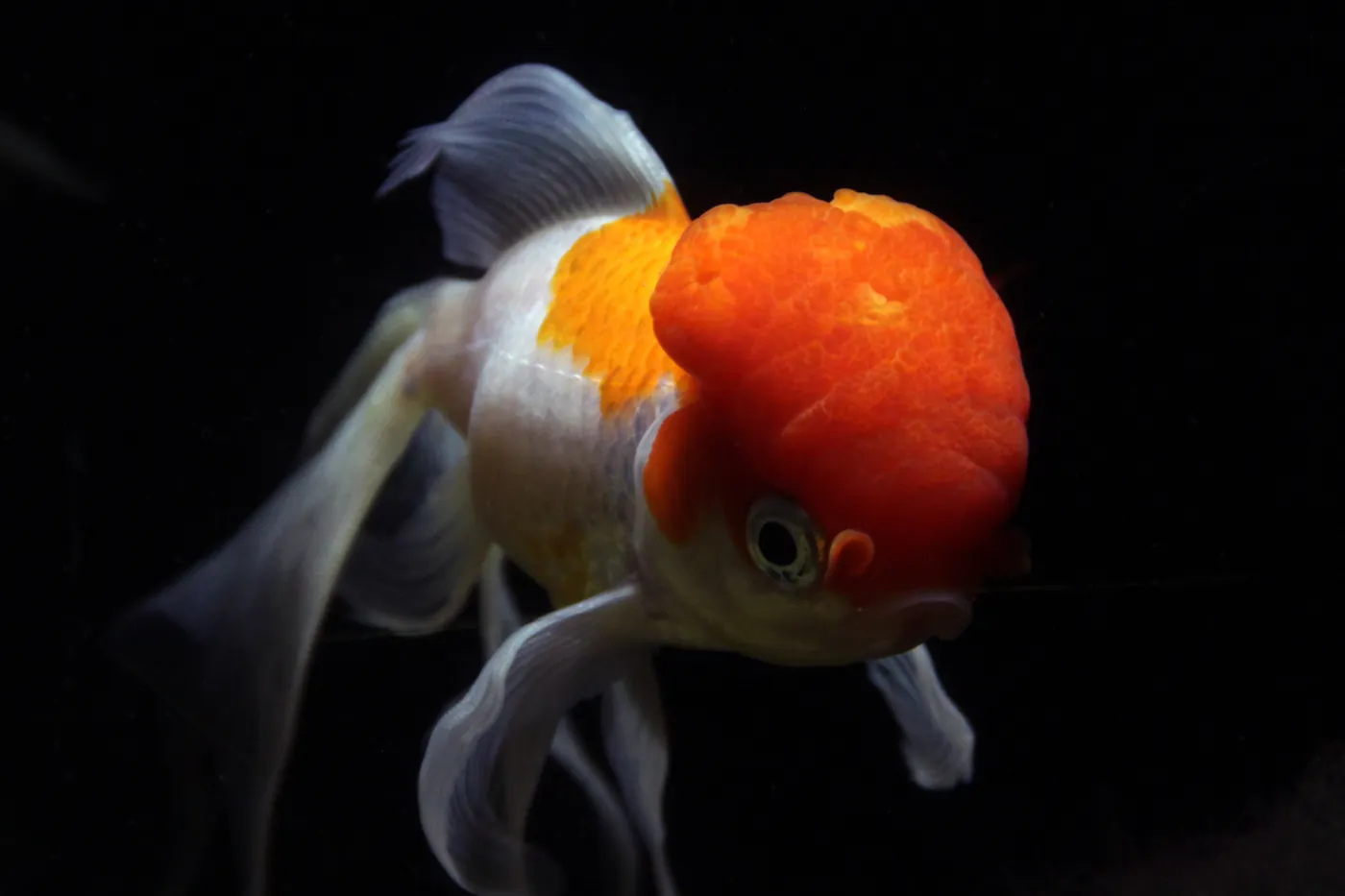
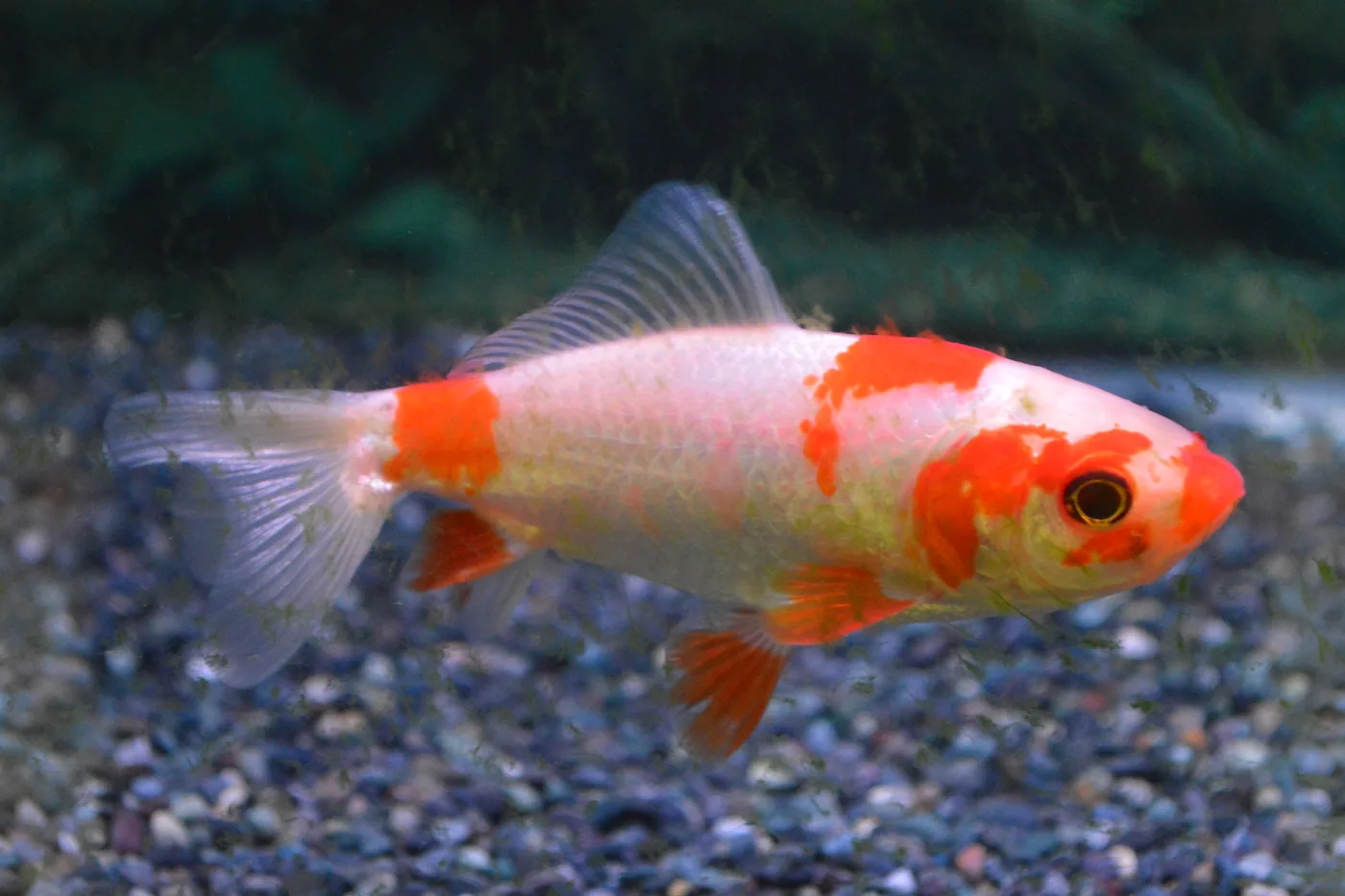
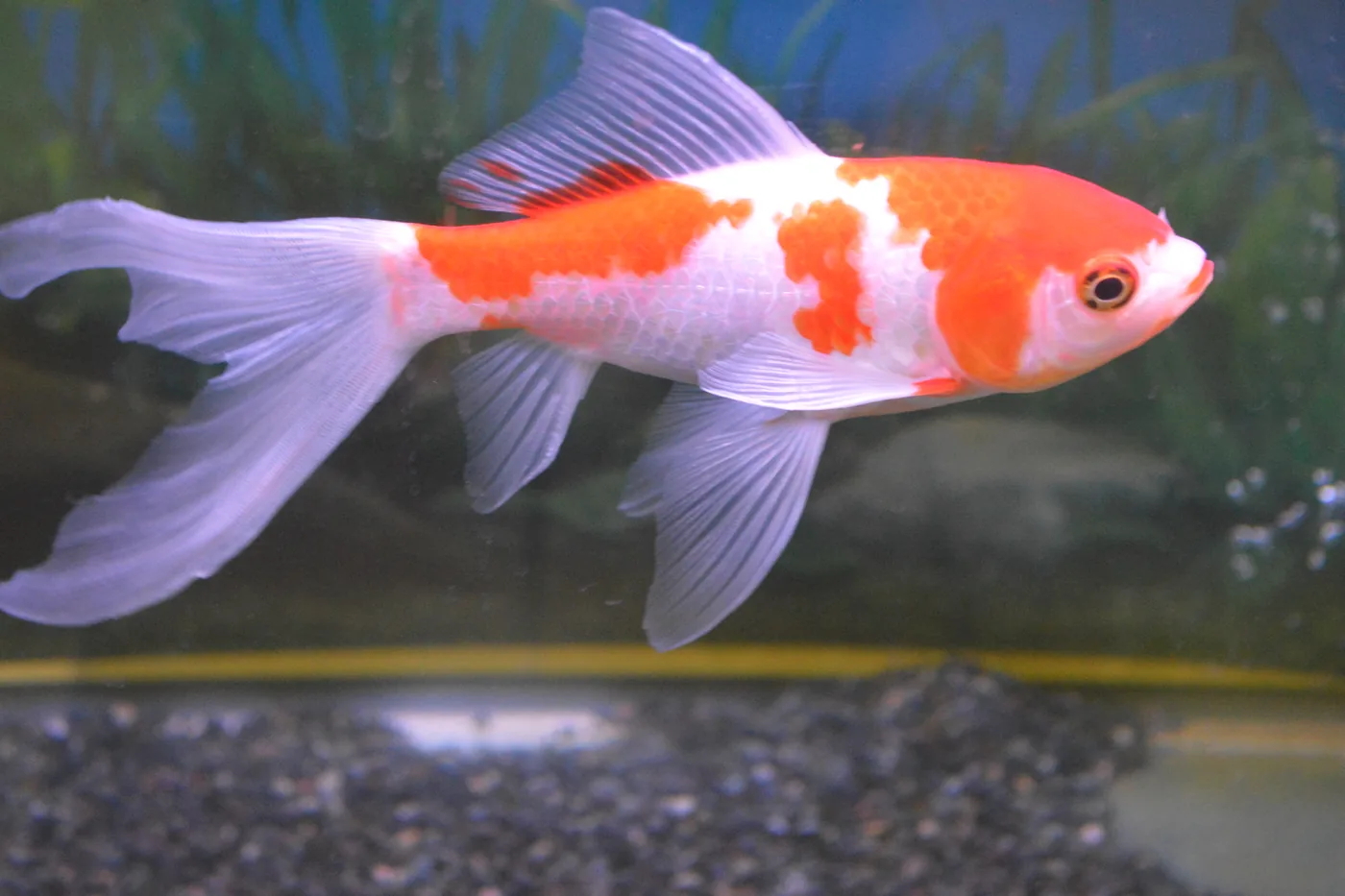
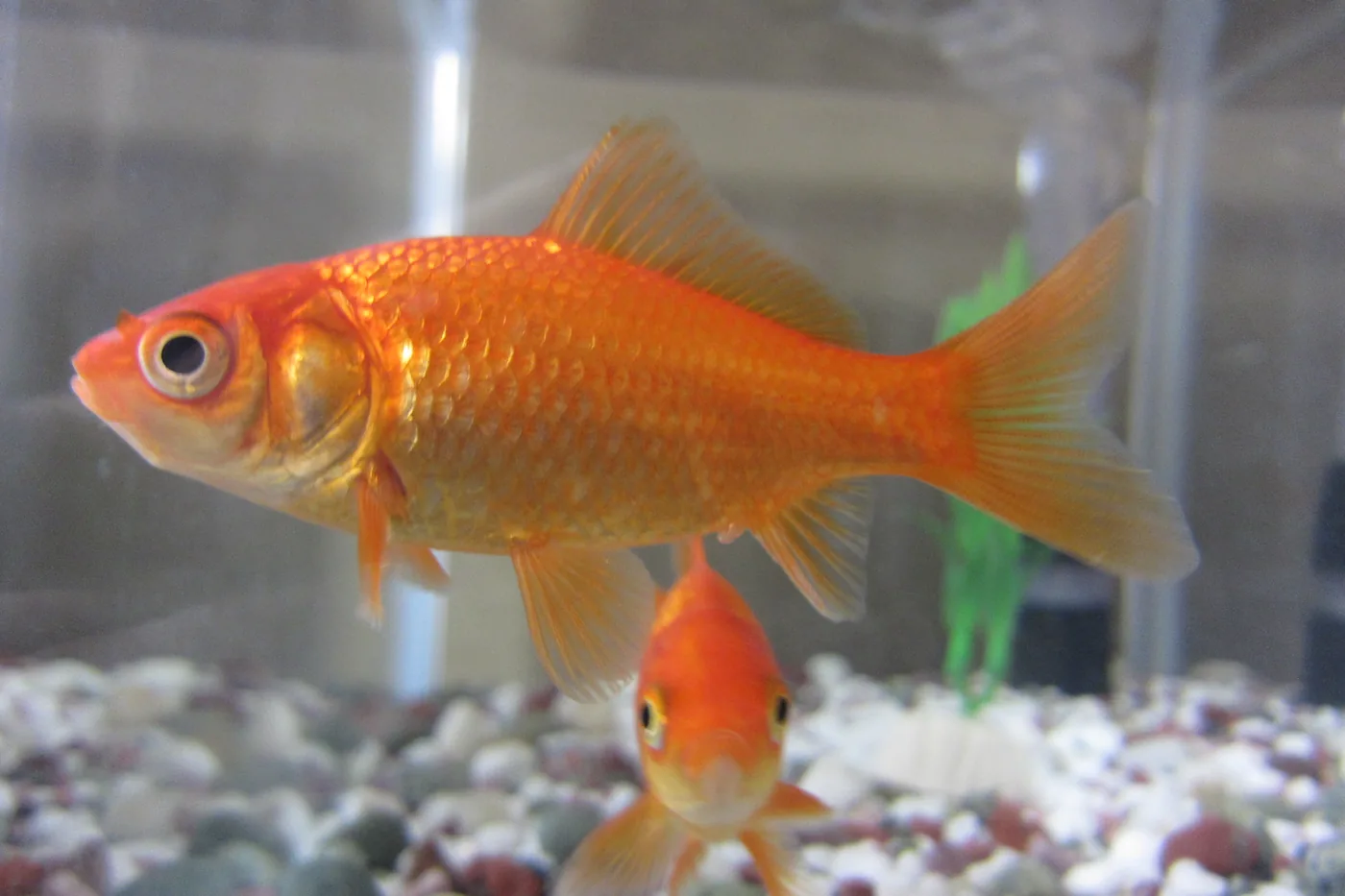
Best kept apart from: Bubble Eye, Celestial Eye, Pearlscale, Veiltail, Pompom, Jikin. Speed and appetite differences leave the slower fish underfed.
Thinking about other species? Try the compatibility checker.
Similar breeds
The breeds most like the tamasaba — the ryukin, fantail and wakin — are all pictured above among its companions.
Frequently asked questions
Can a tamasaba really live in an unheated pond?
It is reported to. It was bred in Niigata, where winters are cold, and a UK importer's account says it is fully pond-hardy and lives outdoors all year in unheated ponds, unlike the ryukin. The reason is thought to be its ancestry: the story is that it came from a ryukin crossed with the single-tailed, cold-hardy Shōnai goldfish. The reports come from importers and enthusiasts, though, and no study of its cold tolerance has been published.
Is a tamasaba a fancy or a single-tail?
A ryukin-shaped body on a single tail, so a fancy by body and a single-tail by fin, which is the reverse of the wakin. The body is what usually decides care on this site, and nothing breed-specific has been published about its digestion, so the precautions for a round-bodied fancy are the sensible ones: soaked, sinking food and small portions.
What is a mackerel tail?
The name tamasaba comes from tama, ball, for the round body, and saba, mackerel, for the tail of the older sabao type it was selected from. The tail itself is single and undivided, and it varies: short and crucian-like, long and streaming like a comet's, or somewhere between.
How do I tell a tamasaba from a ryukin with a single tail?
By the line, not by the look. A single-tailed ryukin can look the same, and Japanese sources say the two differ in their genetics, cold hardiness among them. Ask where the fish was bred. One seen only in a shop tank is more likely to be a ryukin with a single tail than a tamasaba from Niigata.
Can a tamasaba live with koi?
It was designed to. Japanese sources describe it as bred to swim with koi, and in Japan it is kept in the same water and fed the same food. The general caution still holds, because koi grow far larger and need far more water than goldfish, so the pond has to be a koi pond and not a goldfish pond with koi in it.
Can a tamasaba live with other fancy goldfish?
With the robust ones, yes. It is quicker and more competitive than most of them, so a ranchu, bubble eye or celestial will lose out at feeding. Fantails, ryukins and orandas keep up well enough.
Why are tamasaba hard to find?
They are bred by koi farmers, mostly in Niigata, and they reach Europe and North America in small numbers, usually with koi shipments through specialist importers. A tamasaba in general retail is more likely to be a ryukin with a single tail.