No. 17First recorded around 1900
Pearlscale
A golf ball of a goldfish, armoured in domed scales and short on balance.
Also known as Chinshurin · Pearl Scale · Ping Pong Pearlscale · Crown Pearlscale (Hama Nishiki)
- Specimen
- Fancy goldfish, China
- Adult size
- 12–18 cm
- Lifespan
- 7–10 years
- Water
- 18–24 °C
- Care
- Demanding
- Swimming
- Weak
- First fish needs
- 100 litres
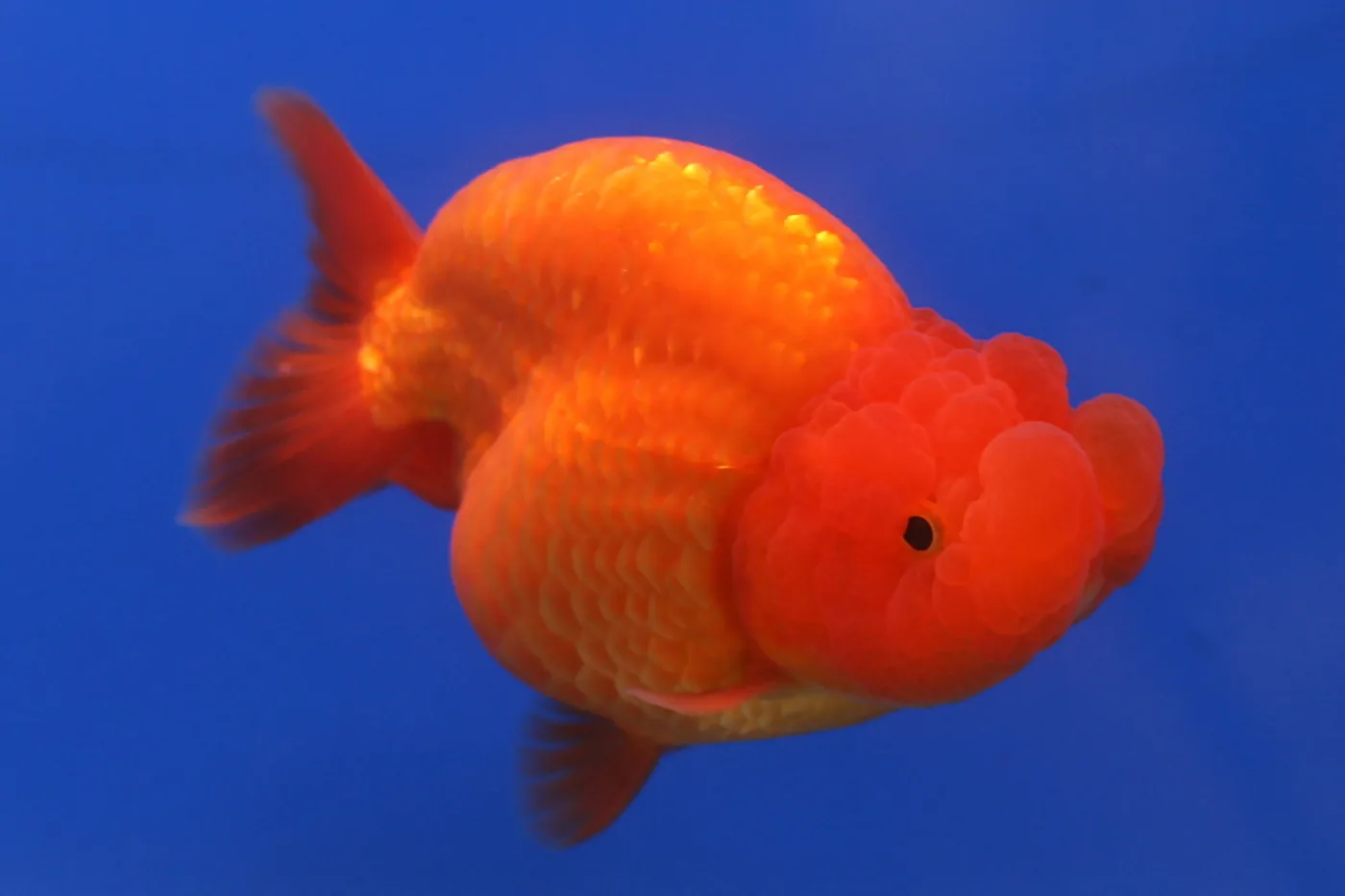
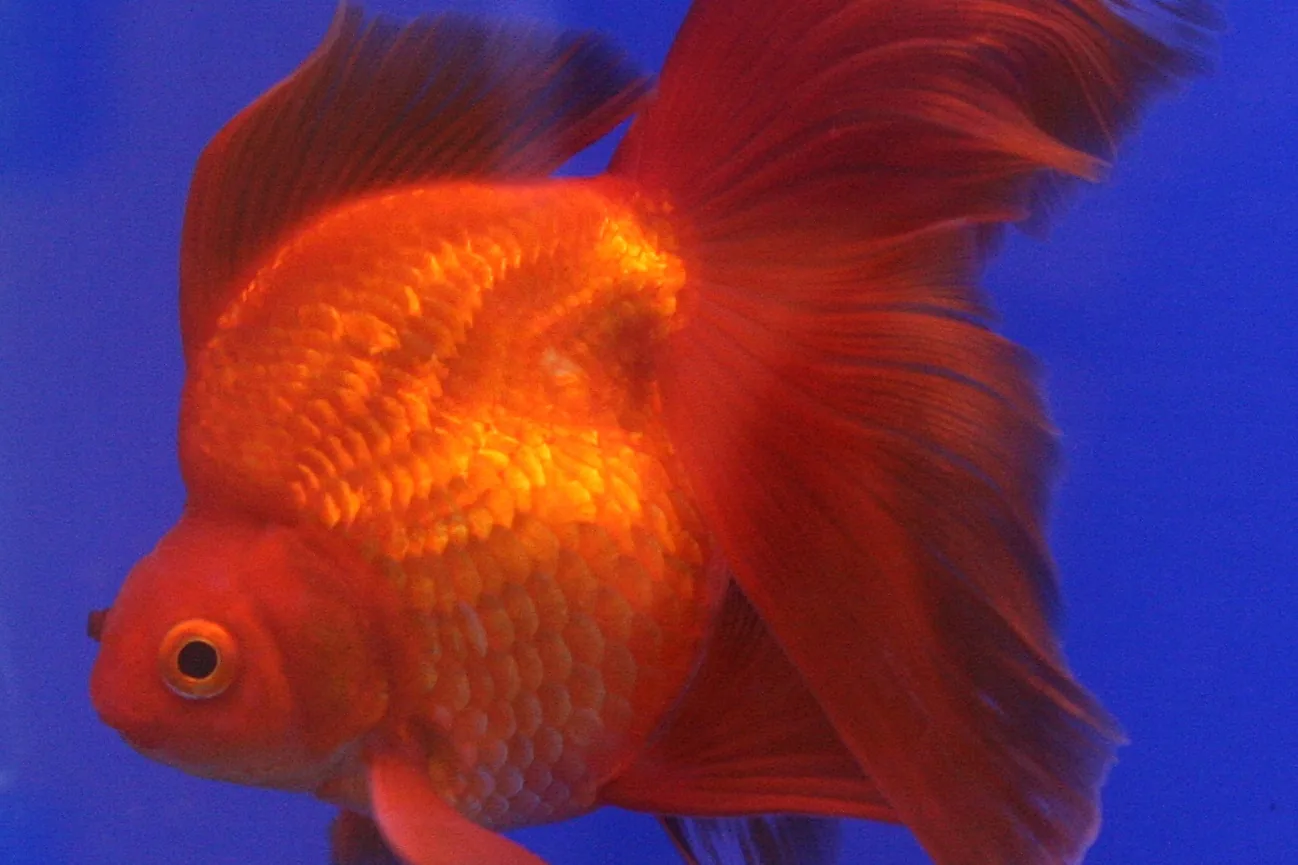
Photograph: Lerdsuwa, CC BY-SA 3.0 · Wikimedia Commons
About this pictureThis one is a Crown Pearlscale. The smooth head bubbles are a separate trait from the pearled scales, and most pearlscales have the plain pointed head the fourth point below describes.
About these figures Size, lifespan and water are the ranges keepers' guides give for a fish in good care, not measurements of this breed, and swimming and care are this site's own ratings of the published advice. Lifespan is where the sources differ most: how long goldfish live sets them side by side. First fish needs is a middle figure for one fish, from advice that runs from 50 litres to about 300; tank size sets that out.
The specimen
Quick facts
- Classification
- Fancy goldfish
- Body type
- Extremely round, almost spherical body with a dorsal fin, a double tail and thickened, domed scales that stand out from the skin
- Tail and dorsal
- Double tail, dorsal fin present
- Swimming ability
- Weak
- Keeper experience
- Experienced
- Temperament
- A slow, waddling swimmer; easily outcompeted and best kept with other unhurried fancies
- Adult size
- 12–18 cm (5–7 in)
- Temperature
- 18–24 °C (64–75 °F)
- Minimum aquarium
- 100 L (26 US gal) for one fish
- Origin
- China, with the crowned form bred in Japan, First recorded around 1900
How to recognise one
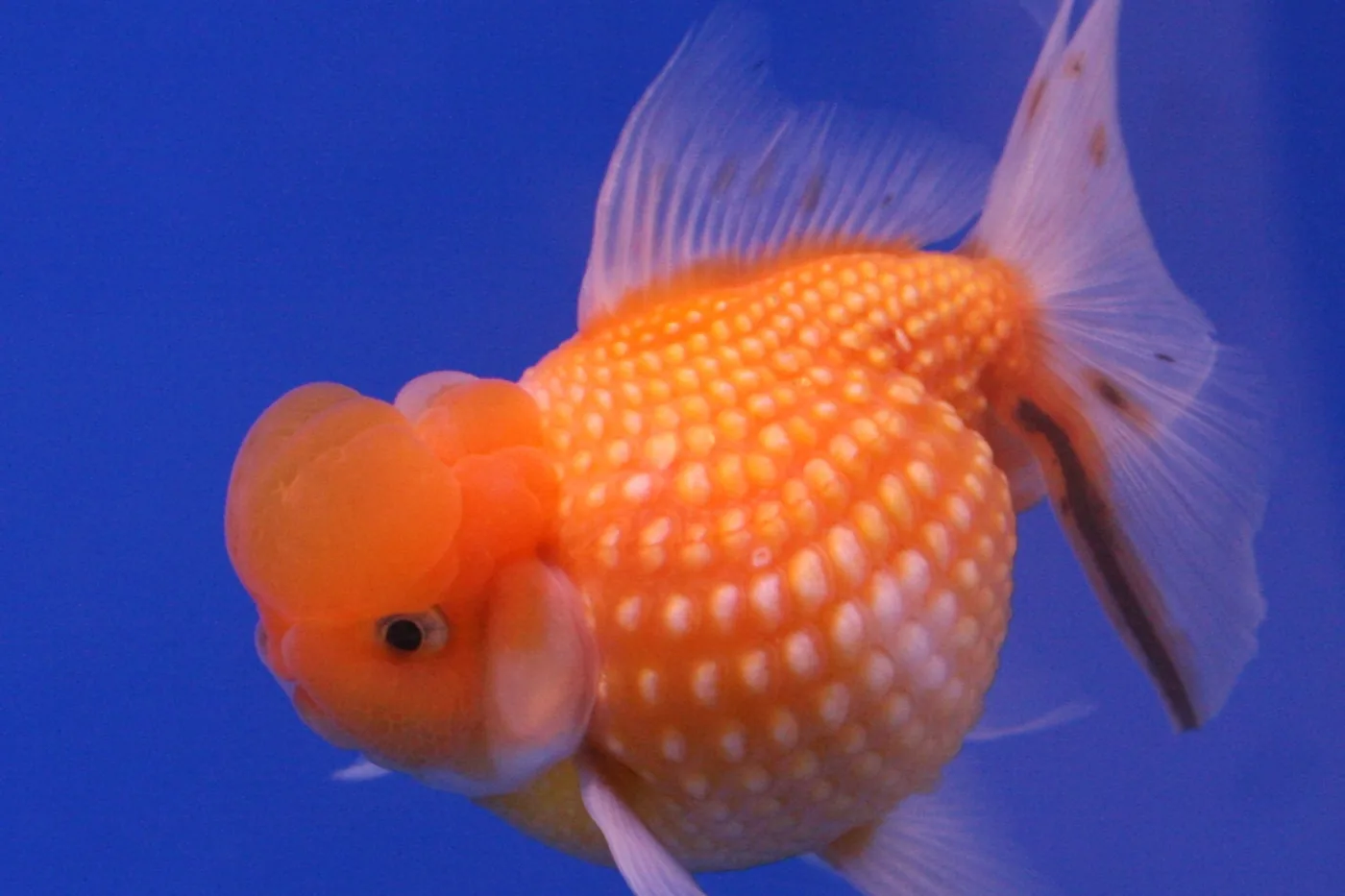
- Domed, thickened scales with a raised, pearl-like centre, giving the body a beaded texture
- Extremely round body, with depth about three-quarters of body length in the show standard, often compared with a golf ball or ping-pong ball
- Dorsal fin present, with a double tail that is usually short and fanned
- Small, pointed head, or in the Crown Pearlscale (Hama Nishiki) a bubble-like head growth, usually in two lobes
- Colours include orange, red-and-white, calico, white and chocolate, with the pearls often paler than the surrounding scale
Identification
No other goldfish looks like a pearlscale. Each scale is thickened and domed, with a raised, pale centre that catches the light like a seed pearl, so the whole fish appears beaded. The scales are firm and lie against the body rather than standing away from it, which is the crucial difference from dropsy. Beneath the armour the body is almost spherical, with depth about three-quarters of body length in the show standard, and a small head, a full dorsal fin and a short, fanned double tail.
A scale that is knocked off often regrows without its dome, so a pearlscale from a rough tank is easy to spot. Colours run from orange and red-and-white through calico, white, chocolate and black, with the pearl centres often paler than the surrounding scale.
The Crown Pearlscale, or Hama Nishiki, adds a bubble-like growth on top of the head, usually in two lobes, and is a Japanese-bred line of the late twentieth century. Ping pong pearlscales are a strain selected for an extremely spherical body and a short tail.
The scales, and what they actually are
The breed’s whole identity, and the source of a common false alarm.
Each scale carries a raised, calcium-rich dome in its centre, so the fish is covered in something closer to beading than to the flat overlapping tiles of an ordinary goldfish. A normal scale is a thin plate under living skin — goldfish anatomy and biology covers the standard arrangement — and a pearl is that plate with a thickened deposit on top.
They may not grow back as pearls. A scale knocked off may regrow flat and plain, leaving a smooth patch; one breed standard says a lost scale may or may not regrow its raised centre. That is the practical reason this breed needs smooth decor, careful netting and no gravel with edges — handling and netting covers doing it without loss, and missing scales what to expect afterwards. The flat regrowth can be one of the permanent outcomes on a goldfish — what heals and what does not has the rest of that short list.
And the pearls are usually paler than the surrounding colour, which is why a calico pearlscale reads as speckled.
Pearls, against dropsy
The confusion that sends people to the medicine cabinet, and it is worth settling clearly because the two look superficially alike.
| What to compare | Pearlscale scales | Dropsy |
|---|---|---|
| Pattern | Regular, even, all over | Irregular, worst where swelling is |
| Since when | Since the fish was a juvenile | New, and progressing |
| The body | Round but firm | Swollen, often asymmetrical |
| The fish | Eating, active, normal | Lethargic, off food |
| Seen from above | An even beaded surface | Scales pushed out like a pinecone |
The deciding question is whether the fish is well. Pearls are a texture on a healthy animal; dropsy is fluid pushing scales outward on a sick one, and swollen abdomen works through it. Shops get this wrong too, so a pearlscale described as “bloated” by a seller is worth looking at yourself.
The varieties
- Standard pearlscale. Round, but still recognisably a goldfish.
- Ping-pong pearlscale. Selected for an extremely spherical body and a short tail. Whatever is difficult about the breed is likely to be more so.
- Crown pearlscale, or hama nishiki. A bubble-like head growth, usually in two lobes, that breed standards treat as a wen; soft tissue that a knock can damage, as with a bubble eye’s sacs.
- Colour lines: orange, red-and-white, calico, white, chocolate and black.
How it develops
No published source gives a pearlscale timetable. One breed society shows young pearlscales in a current-year class with the typical very round body, so a juvenile may already be round, and the buoyancy trouble that defines the breed can arrive months after purchase rather than on day one. Most goldfish also hatch bronze and lose the dark pigment during the first year.
Plan the tank and the feeding for the round fish, not the one you can see. That means depth kept moderate, nothing sharp, and a diet built around sinking or gel food from the start rather than switched over in a hurry when the first episode happens. Pearls are also unforgiving in the wrong direction: one knocked off in a juvenile may grow back flat, and the gap can still be there at three years.
Choosing one
- Even pearls over the whole body, both sides matching, no bald patches.
- Level swimming, without effort. A juvenile already struggling to stay upright may not improve as it rounds out.
- From above: symmetry, and a clean vent area.
- Watch it feed if you can.
- Read the shop, then quarantine for at least four weeks.
Where you will find one. A good aquatic shop or a specialist; less consistently stocked than the common fancies. Inspect the scales closely before buying, because a pearl knocked off often does not grow back the same, and a gap in the pattern can be permanent. The crown pearlscale, with its bubble-like head growth, is a distinctly harder fish to find and to keep, and is not a beginner’s purchase.
Personality and behaviour
Pearlscales swim with a rolling, waddling motion, paddling with their pectoral fins to steer a body with very little streamlining, and they are slow enough to be outcompeted. They spend the day picking along the bottom and become tame enough to feed from a fingertip.
They are also easily outcompeted. A ryukin or a single-tail will take every pellet before a pearlscale has turned toward it. Ranchus, lionheads and calm orandas make suitable company, and so do other pearlscales.
Aquarium requirements
A pearlscale needs at least 100 litres (26 US gallons) for the first fish and 40 to 50 litres more for each addition, with the emphasis on length and width. The volume matters less for swimming room than for stability, since more water changes temperature more slowly and dilutes waste better. Work from the tank size guide, not from the size of the fish in the shop.
Temperature is what keepers say separates this breed from other fancies. Many aim for 20 to 24 °C (68 to 75 °F), held steady with a heater in any room that dips overnight, and never allow a rapid drop; the water temperature guide explains how to set and check this. Filtration should be thorough but gentle, with the outflow softened and a sponge over the intake.
Furnish sparingly, because every knock risks a pearl: sand or a bare bottom, rounded stones and soft plants are enough. Water changes of 25 to 40 percent weekly, matched to nitrate readings, complete the routine.
Feeding
If there is one breed for which sinking food is not optional, it is this one. A pearlscale that gulps at the surface takes in air that a body already packed to capacity cannot easily shed. Use a quality sinking pellet made for fancy goldfish as the base and avoid floating flakes altogether; the sinking versus floating guide explains the mechanics.
Feed little and often: two or three small meals a day, each gone within a minute, with a fast day each week. Shelled peas and other blanched vegetables keep the gut moving, and gel food is excellent because it is soft and stays on the bottom. Overfeeding is the quickest route to a floating pearlscale; the overfeeding guide and the feeding calculator help set sensible portions.
Common health considerations
Buoyancy problems head the list. The pearlscale’s body is among the most compressed of any goldfish, and its cramped swim bladder and gut may mean that a large meal, a gulp of air, constipation or a chill can tip the fish onto its side, float it or pin it to the bottom. Some episodes are short and respond to fasting, sinking food and steady warmth, though vets find many causes; the floating guide and the sitting on the bottom guide cover what to check when they are not. Some fish live long lives with a persistent tilt.
Because the breed is so often confused with dropsy, learn what its normal scales look like and compare against the swollen abdomen guide before assuming the worst; real dropsy in a pearlscale is as serious as in any goldfish. Lost scales often regrow flat, and open scale pockets can become infected in dirty water, so move the fish in a container rather than a net.
Why buoyancy is a particular worry here
The defining difficulty of the breed, and it is anatomy rather than illness.
A shorter body changes the arrangement inside it. A comet runs its gut down a slim body; a ryukin packs it into a deep one; a pearlscale into something close to a sphere, with the swim bladder sharing what is left. Veterinary reviews suggest a short body may predispose goldfish to buoyancy problems, though they find many causes in fish of every shape. Goldfish nutrition covers what a stomachless gut can process, and the answer is: not much at once, and keepers avoid anything that swells.
So the routine is strict:
- Soak every dry pellet for a minute before feeding.
- Feed sinking only. Surface feeding means gulped air, and gulped air in a spherical fish has nowhere to go — sinking versus floating food.
- Small meals, several times a day, rather than one.
- Gel food suits it better than anything else, being soft, moist and easy to portion.
- Vegetables twice a week for the fibre.
- And keep it warm and steady. Digestion is temperature-driven, and keepers often give this breed 20 to 24 °C, held rather than allowed to drift.
Floating upside down covers the episode when it happens, and constipation the related picture.
What goes wrong, in order
| What you see | Usually | Where to look |
|---|---|---|
| Floating, tipping or sinking after meals | The body shape plus the food | Floating upside down |
| Scales standing out | Often the breed, not dropsy | Swollen abdomen |
| A smooth bald patch | A lost pearl, regrown flat | Missing scales |
| Long trailing faeces | Dry food and not enough fibre | Constipation |
| Sluggish in cooler water | Temperature, not illness | Goldfish water temperature |
| Losing condition beside quicker fish | It cannot compete | Chasing and bullying |
Four of those six are the same underlying fact — a gut and a swim bladder folded into a sphere. This is a breed where the feeding routine is the husbandry.
Is a pearlscale right for you?
It suits you if you have kept fancies before, you will feed soaked sinking food in small frequent meals without exception, you will hold the temperature steady in the low twenties, and you will keep it only with equally slow fish.
It does not suit you if you want a fish that copes with an ordinary routine, if the room is cool or swings, or if this is an early goldfish. Very few goldfish are as demanding.
And the ping-pong lines are where the welfare question bites. A standard pearlscale is a manageable animal kept well. The ping-pong lines take compression as far as it goes, and a fish that cannot reliably hold itself level is a fish whose selected features have overrun its function — which is exactly the line goldfish welfare tries to draw. The moderate fish is the defensible one, and the choice is made at purchase.
History and origin
The pearlscale is a Chinese-bred form first recorded around 1900. Chinese accounts trace the scale mutation to goldfish taken to India and re-imported in the late Qing period, and the very round types are later selections; Japanese sources say the origin is unknown.
The Hama Nishiki, the crowned pearlscale, is a Japanese-bred line of the late twentieth century. Modern pearlscales are bred in large numbers in Thailand and China.
Before you bring one home
- Among the most buoyancy-prone goldfish; sinking food, small meals and stable warmth are the everyday defenses
- Said to be sensitive to cold; keepers often give 20 to 24 °C and avoid sudden drops
- Scales that are knocked off often regrow without their dome, so handle gently and keep decor smooth
- Weak swimmer that must not compete with fast fish for food
- Its normal domed scales are easily mistaken for dropsy by owners and even by shops
Suitable companions
Round-bodied goldfish should live with fish of similar speed. These breeds share the same pace, water and food.
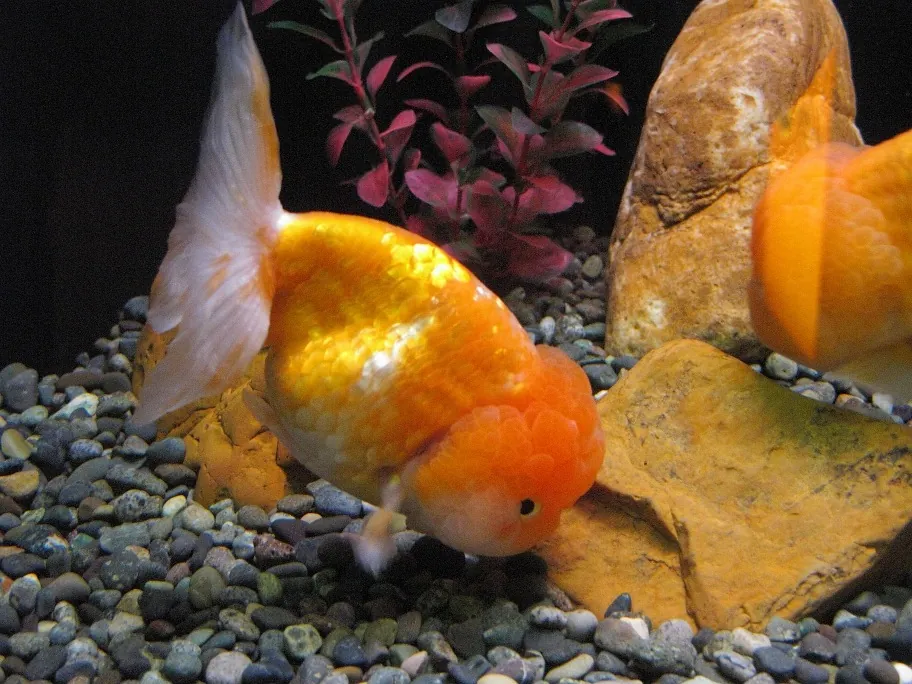
Lionhead
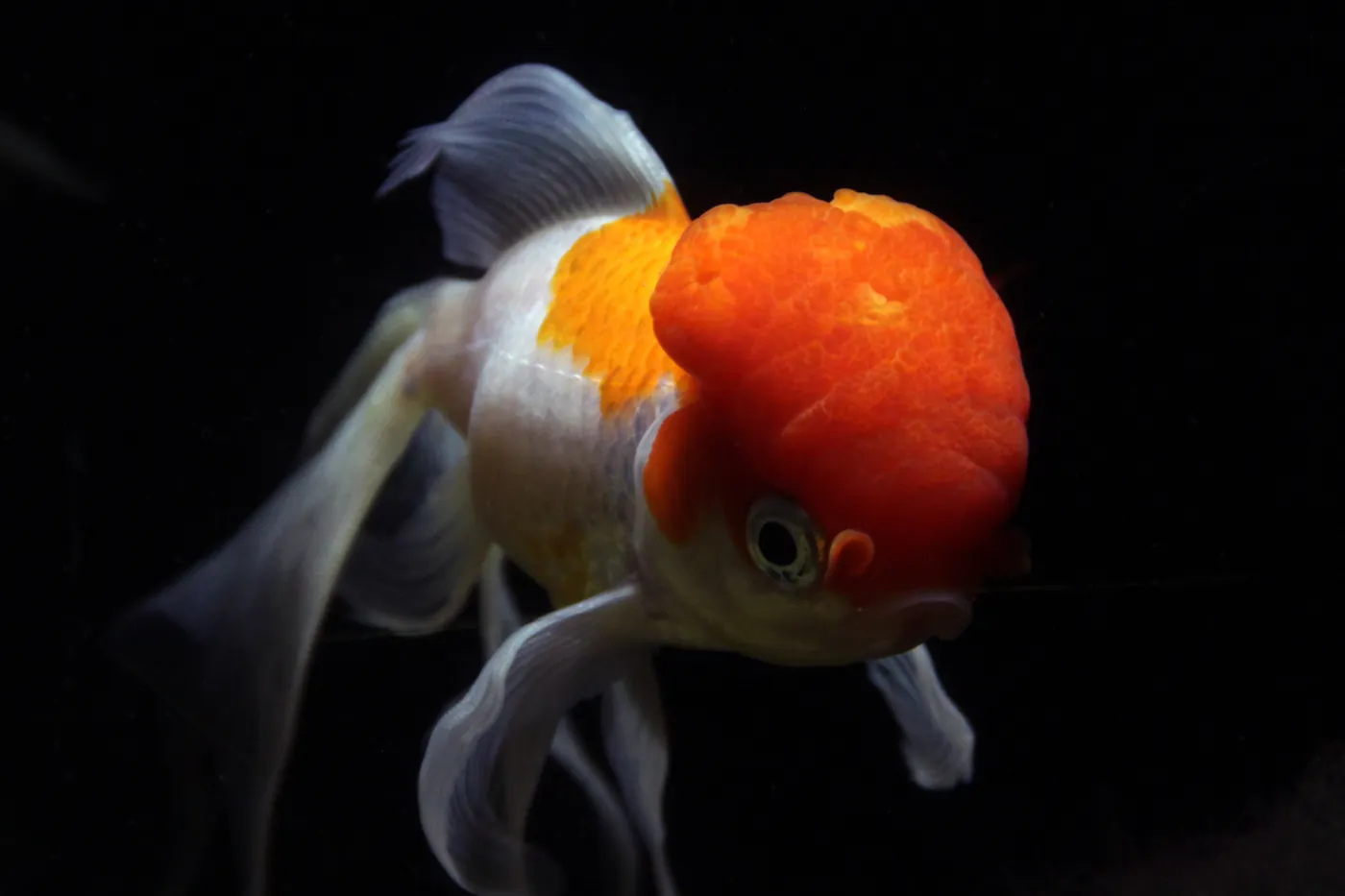
Oranda
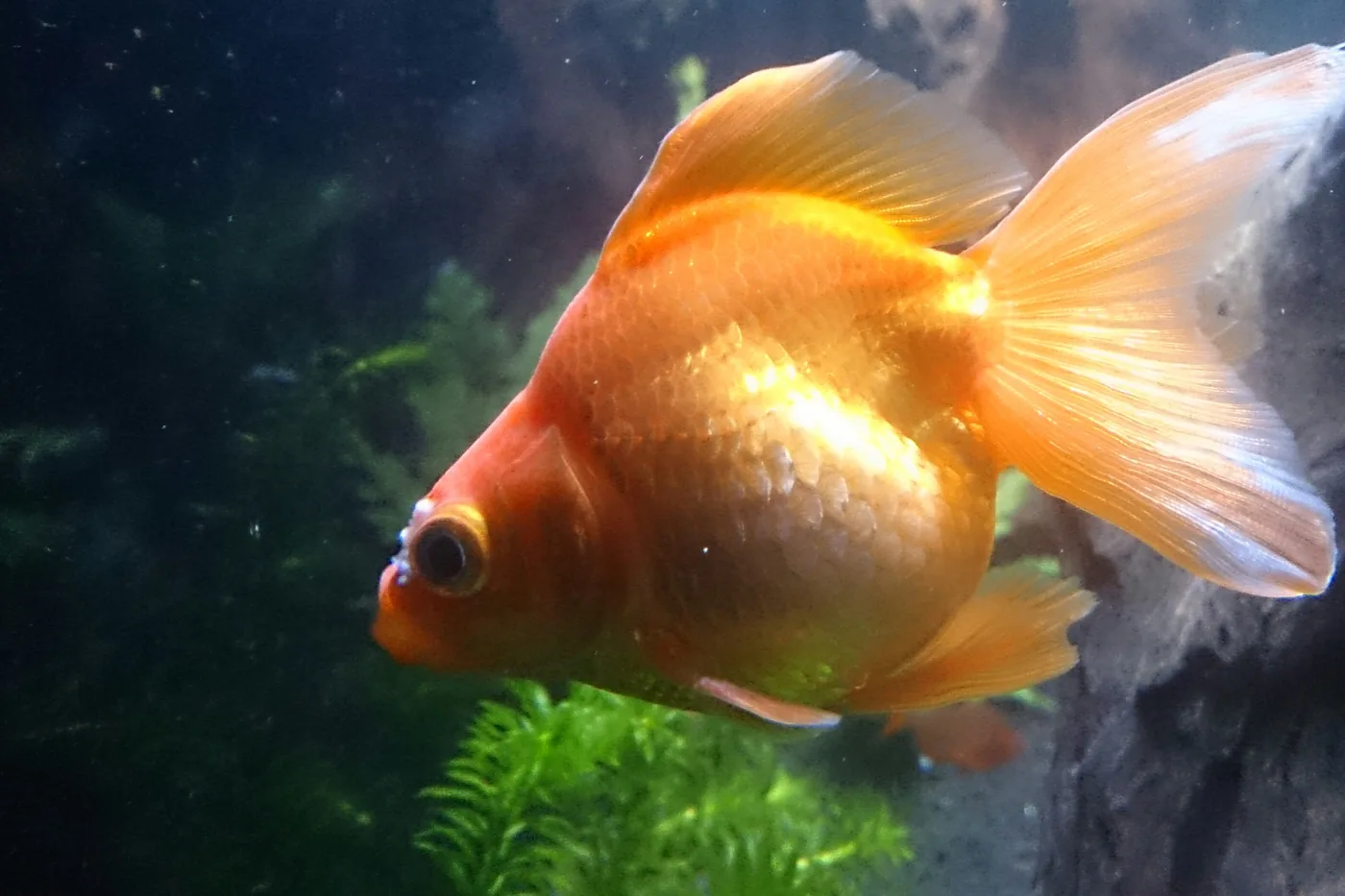
Fantail
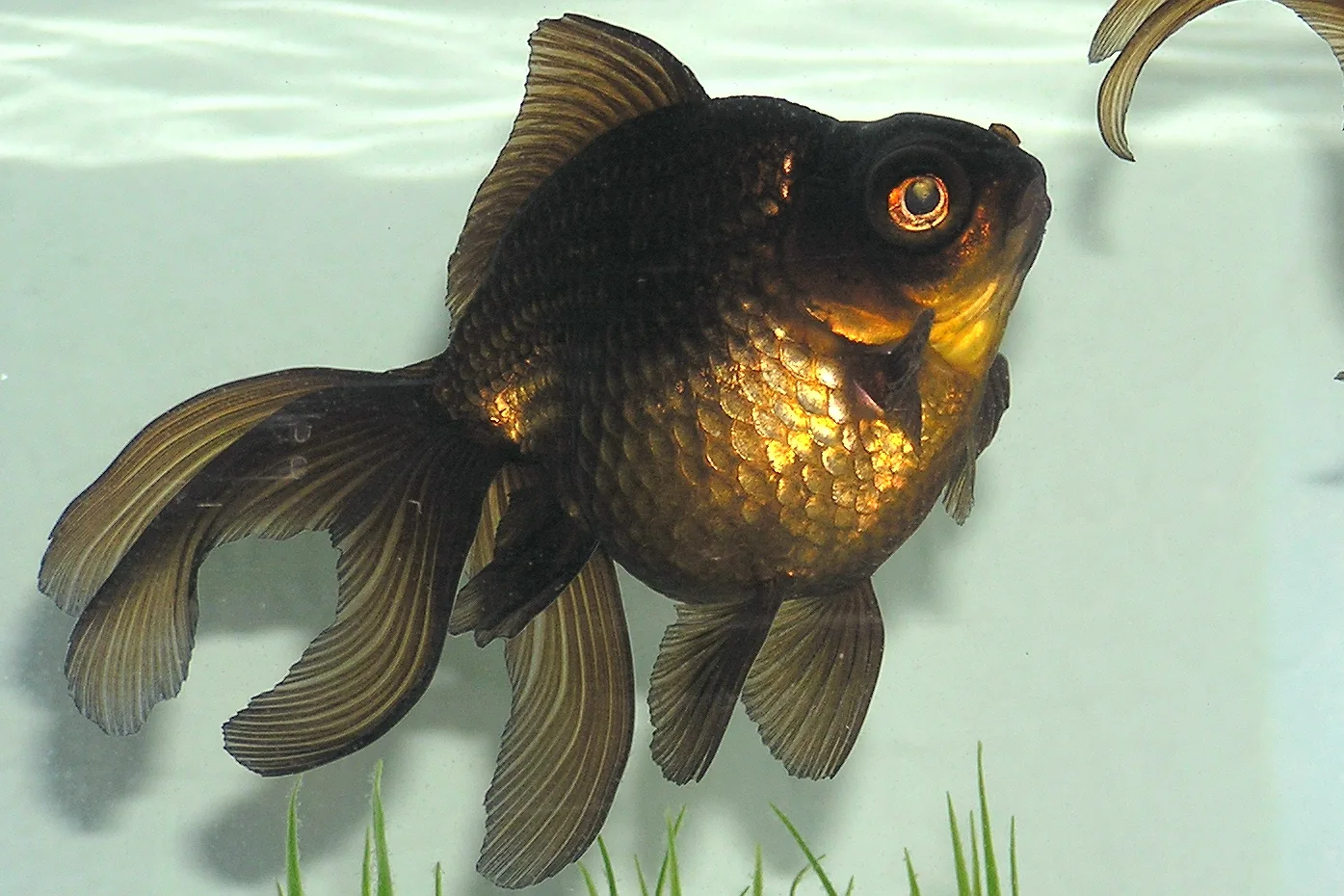
Black Moor
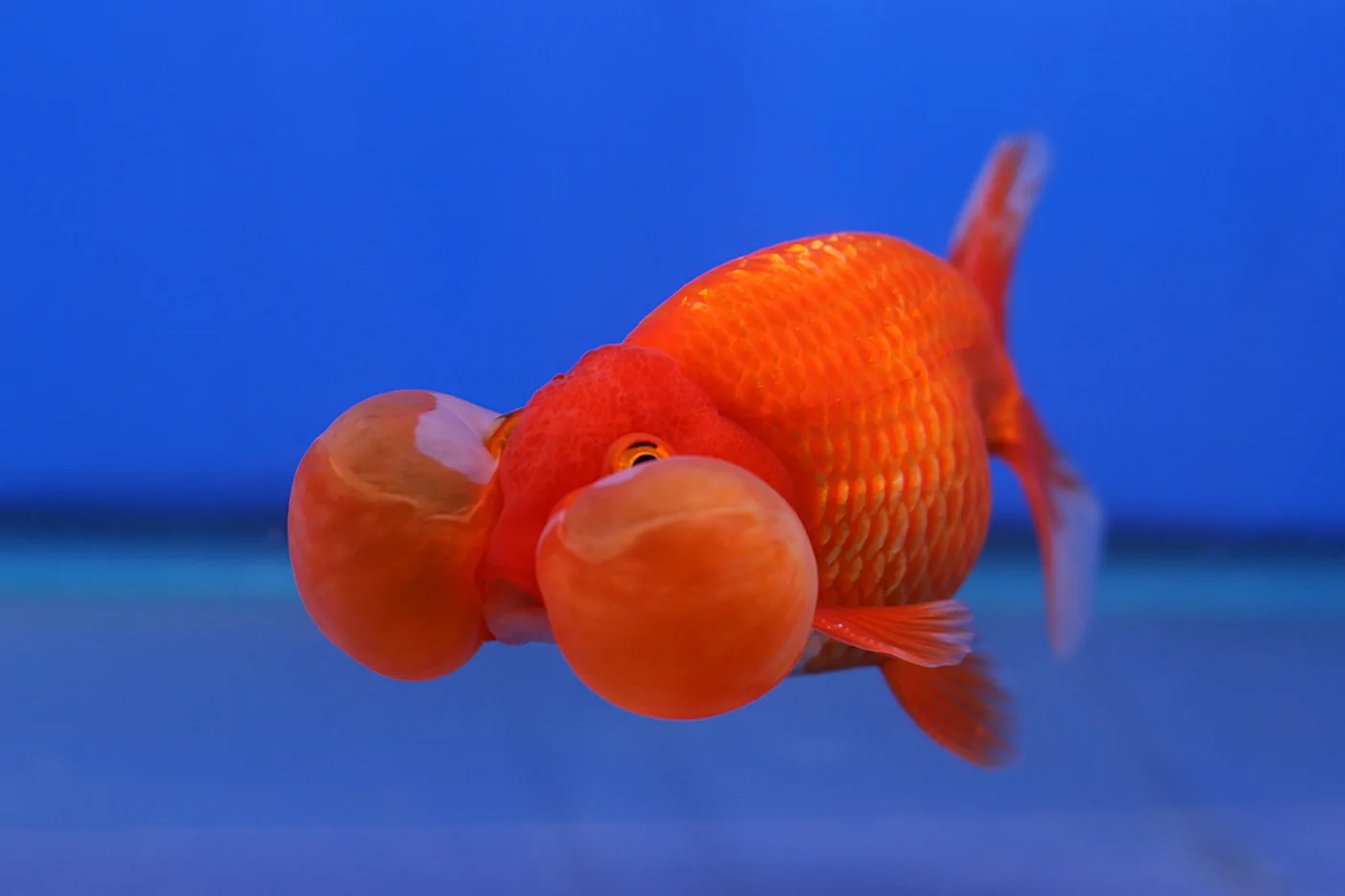
Bubble Eye
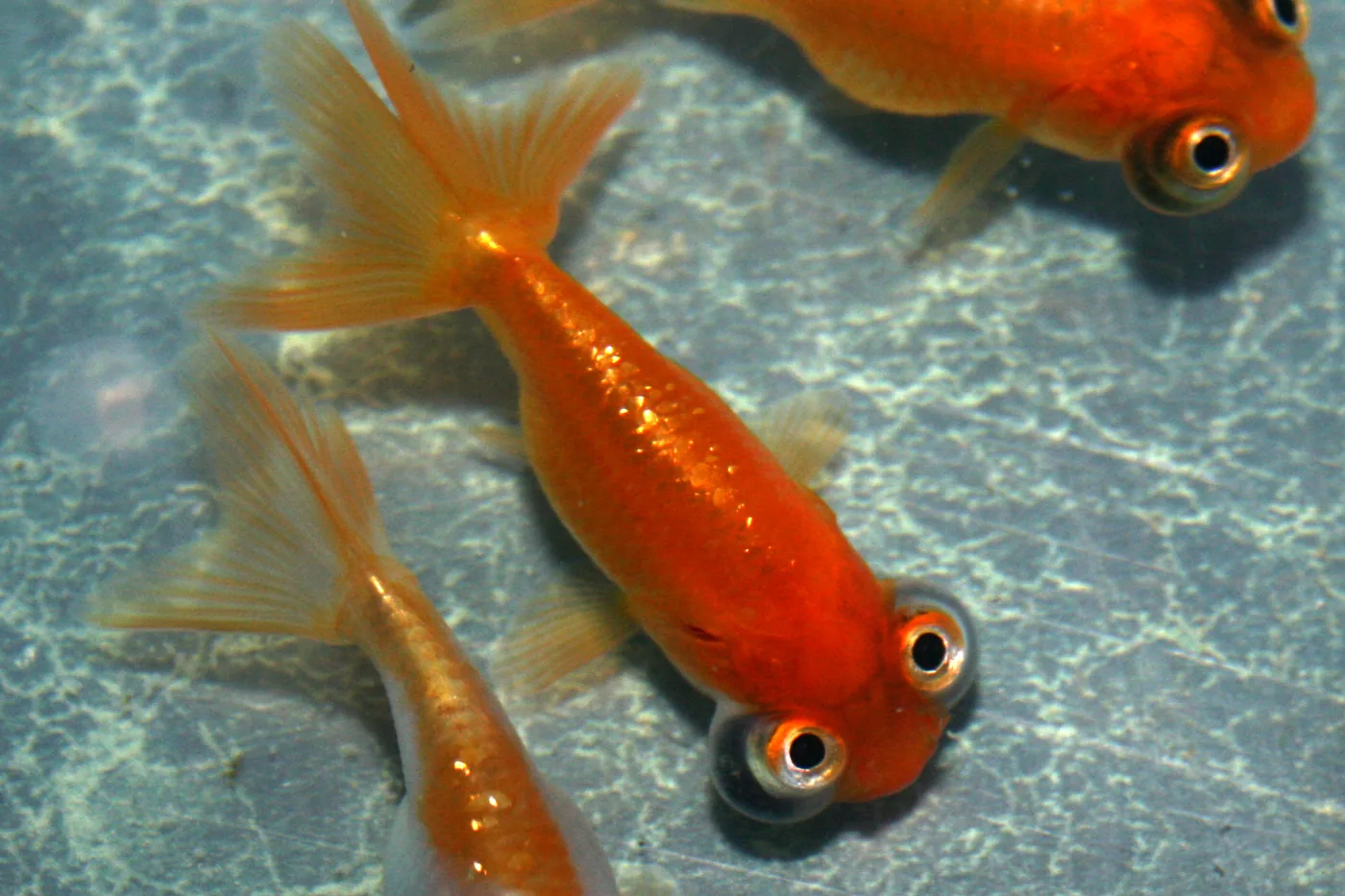
Celestial Eye
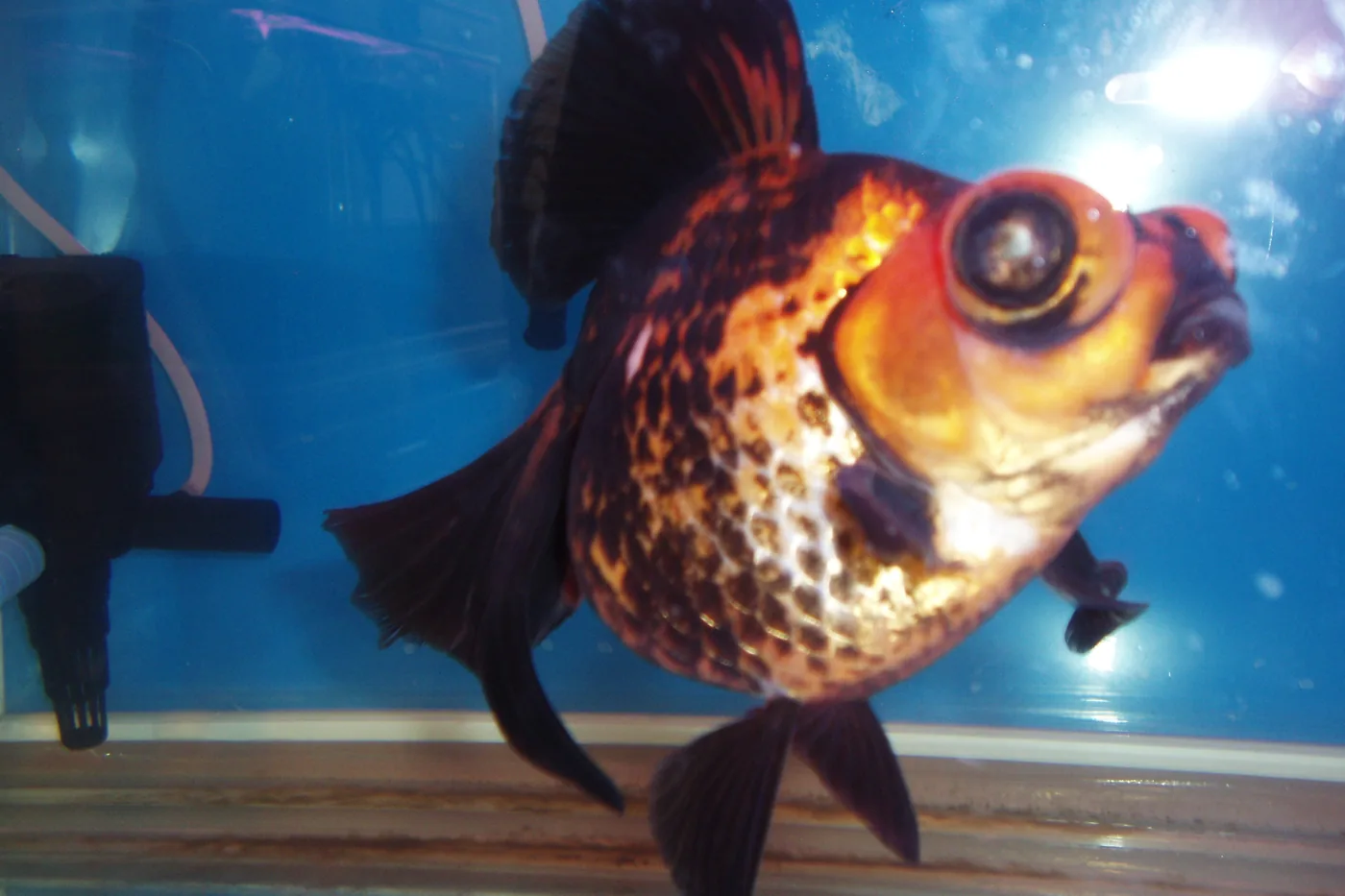
Telescope
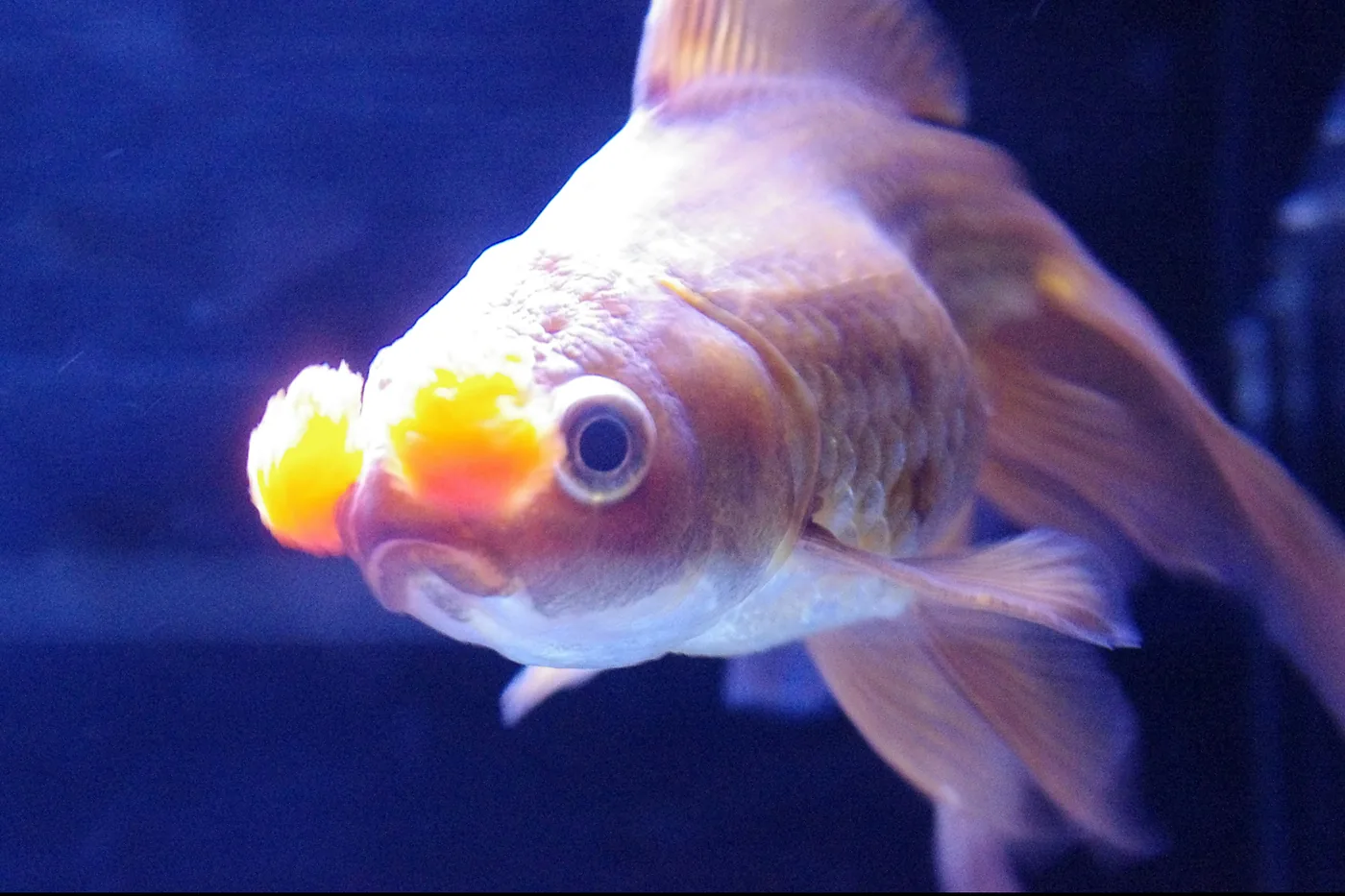
Pompom
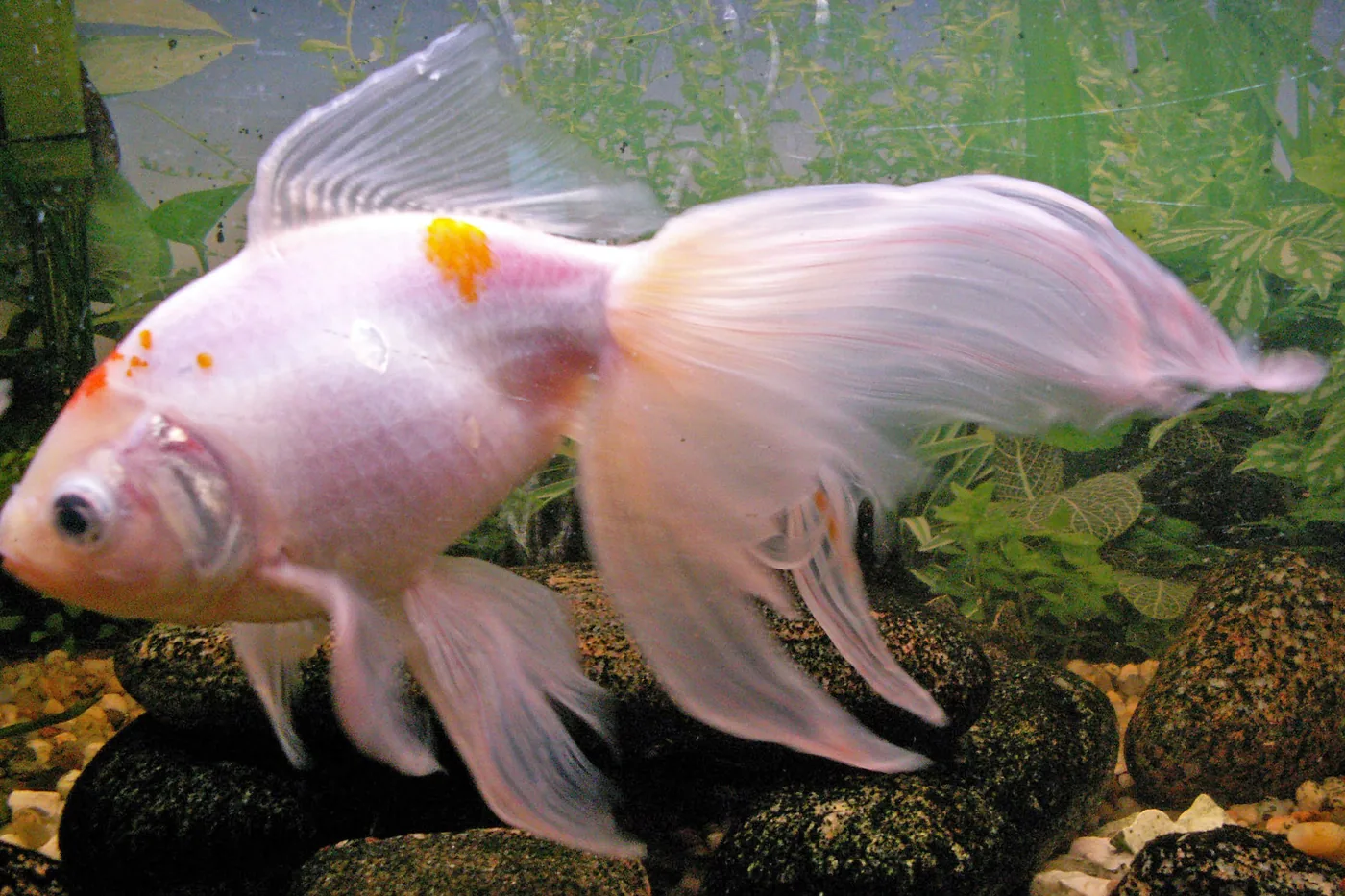
Veiltail
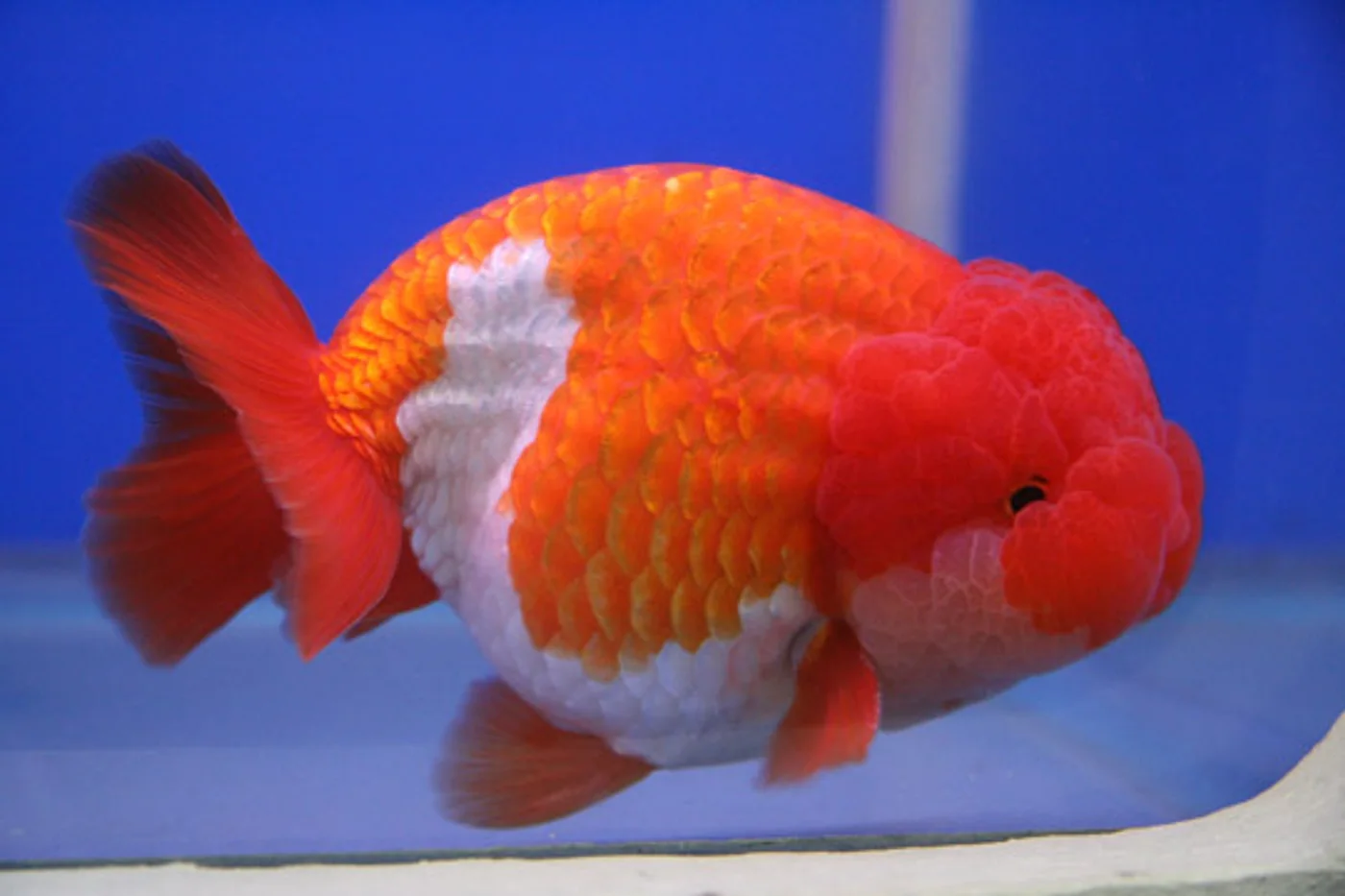
Lionchu
Best kept apart from: Common Goldfish, Comet, Shubunkin, Ryukin, Jikin, Tamasaba, Wakin. Speed and appetite differences leave the slower fish underfed.
Thinking about other species? Try the compatibility checker.
Similar breeds
Of the breeds most like the pearlscale, the fantail and oranda are pictured above among its companions. The others:
Frequently asked questions
Does my pearlscale have dropsy, or is that just its scales?
Almost certainly the scales. Pearlscale scales are thick and domed but lie against the body and have been there since the fish was young. Dropsy lifts the scales away from the skin so the fish looks like a pinecone from above, and it comes with a swollen belly, lethargy and loss of appetite. Compare with photographs of healthy pearlscales and check the swollen abdomen guide if in doubt.
Will knocked-off scales grow back?
Yes, but often not as pearls. A lost scale may regrow flat and plain, so a pearlscale that has been netted roughly or bumped against sharp decor can end up with smooth patches. Prevent it with rounded stones, soft plants and a sponge over the filter intake, and move the fish in a container rather than a net.
What temperature does a pearlscale need?
Many keepers aim for 20 to 24 °C (68 to 75 °F) and, above all, keep it stable; sources differ, and one gives a floor nearer 13 °C. Pearlscales are said to be more sensitive to cold than other fancies, and a chill slows digestion in a fish already prone to buoyancy problems. In most homes that means a heater set in the low twenties, with a thermometer you actually look at.
What should I look for when buying a pearlscale?
Even, regular pearls over the whole body with no bald patches, both sides matching, and a fish that holds level without working at it. Round is the point of the breed, but a fish so spherical that it cannot keep itself upright as a juvenile may not improve. Look from above for symmetry, check the vent area is clean, and watch it feed if you can — a pearlscale that cannot reach food in a shop tank will not manage better in yours.
What is a crown pearlscale?
A pearlscale carrying a bubble-like growth on the top of the head, usually in two lobes, known in Japan as the hama nishiki; breed standards describe it as a wen. It develops over the first year or two, and it is a soft growth that a knock on sharp decor could damage. Everything else about its care is a pearlscale's, which is demanding enough already.
Are ping-pong pearlscales the same fish?
A strain of the same breed, selected further. A ping-pong pearlscale is bred for an extremely spherical body and a short tail, and the difficulties of a pearlscale are likely to be more pronounced: the gut and swim bladder have less room, buoyancy trouble is thought to be commoner, and swimming is visibly laborious. They are compression taken as far as it goes, and worth thinking through before buying one.
Why does my pearlscale keep floating?
Its body is among the most compressed of any goldfish, so a gulp of surface air, a large meal, constipation or a drop in temperature can all leave it unable to stay level. Sinking food, small meals, a weekly fast day and steady warmth prevent most episodes. If a fish cannot right itself for more than a day, test the water and read the floating guide.