No. 20Recognised as a class in 2006
Lionchu
A ranchu's arch under a lionhead's hood, a cross that became a show class.
Also known as Lion chu
- Specimen
- Fancy goldfish, Thailand
- Adult size
- 15–20 cm
- Lifespan
- 7–10 years
- Water
- 18–24 °C
- Care
- Demanding
- Swimming
- Weak
- First fish needs
- 100 litres
Photograph: Melanochromis — Public domain · Wikimedia Commons
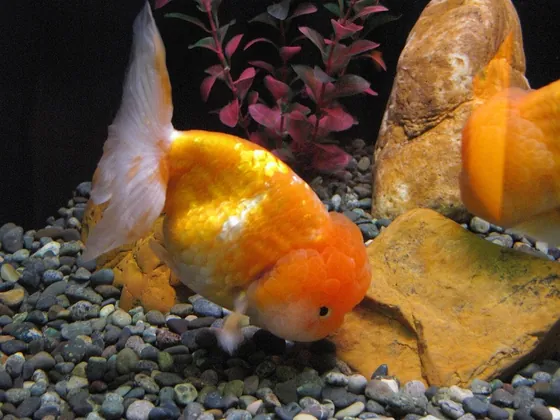
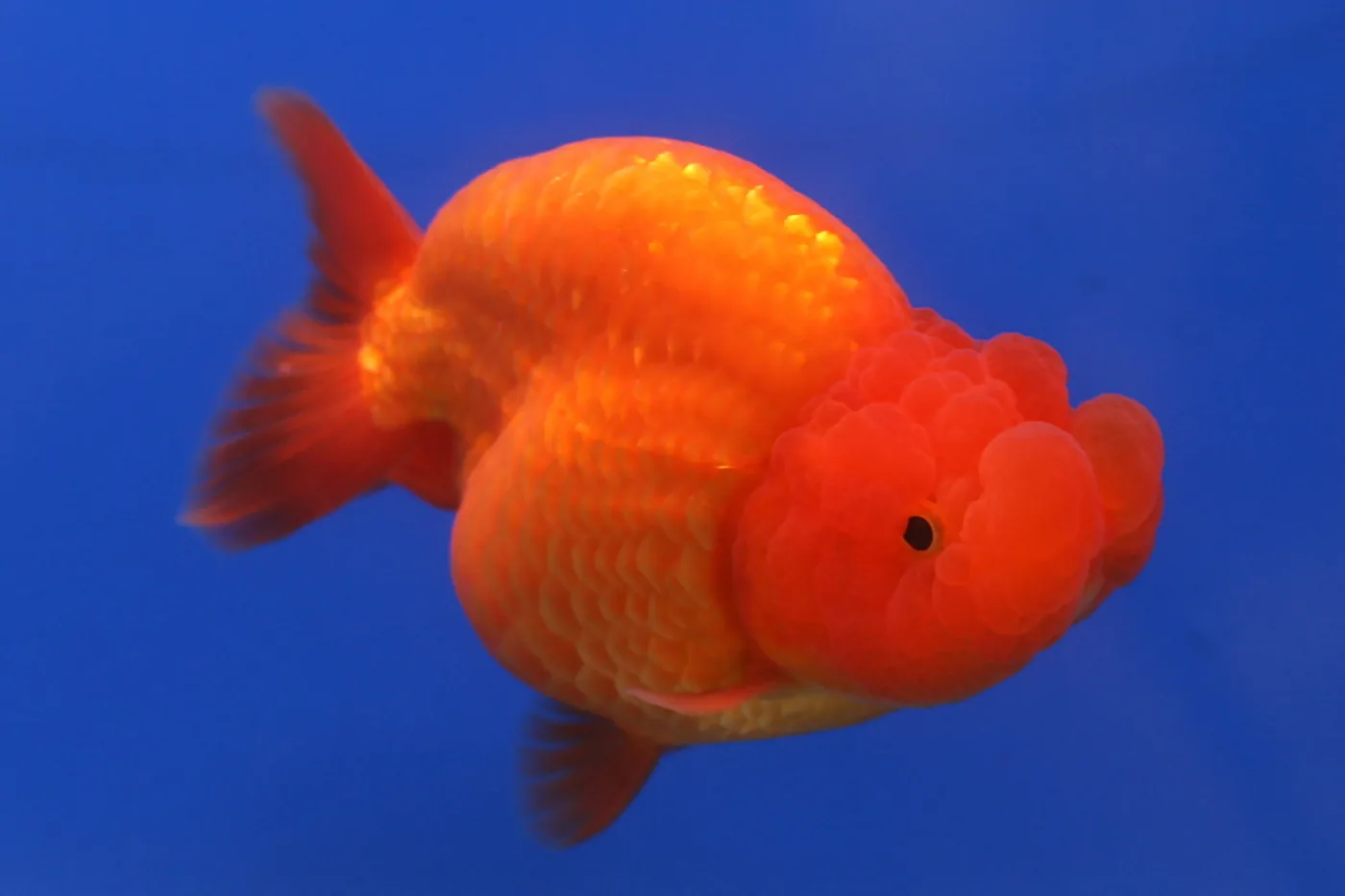
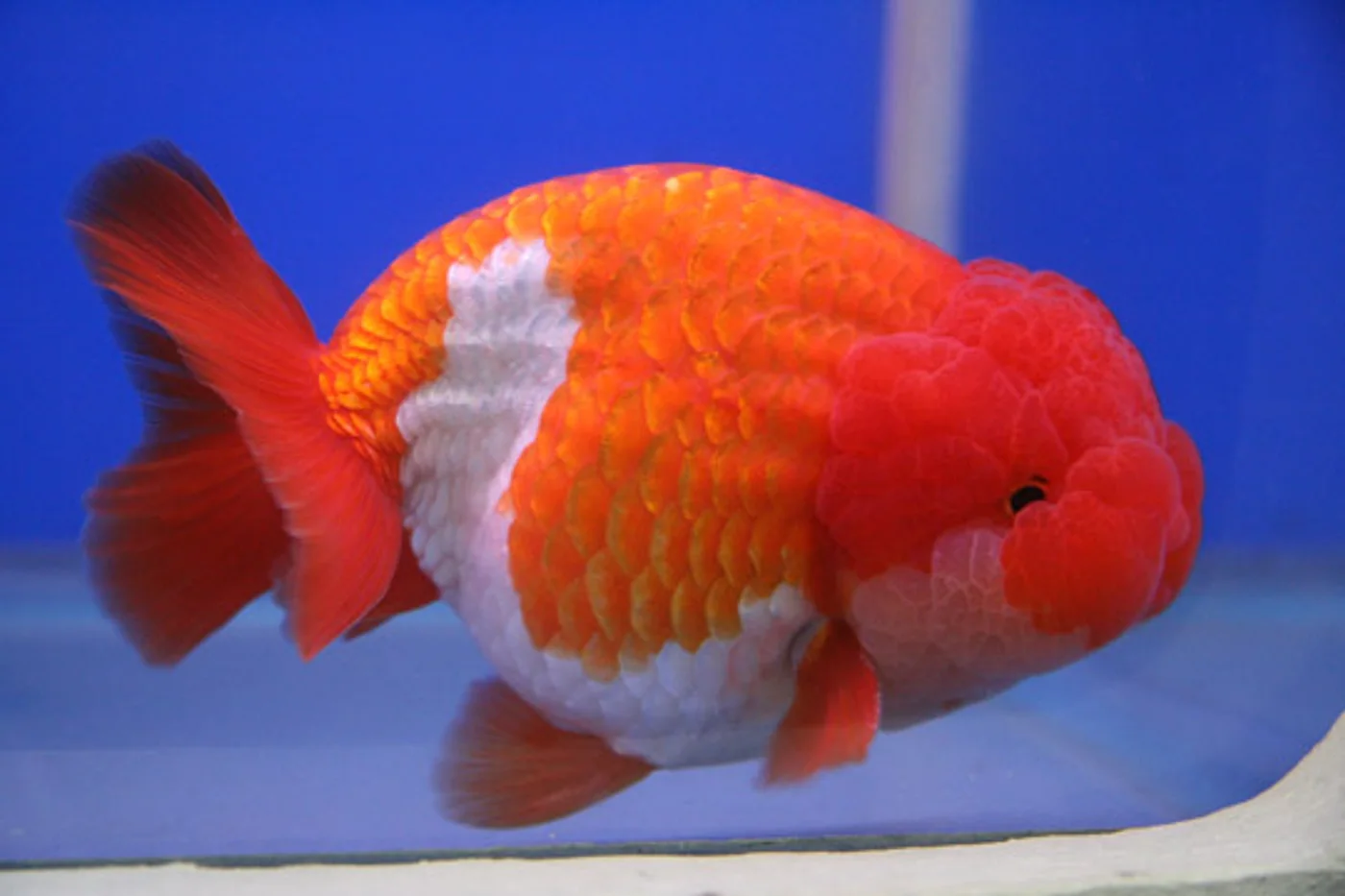
About this pictureA small photograph, enlarged, so it is soft. It shows the first-prize lionchu at a Thai show in 2008: the arch of a ranchu's back under a heavier hood.
About these figures Size, lifespan and water are the ranges keepers' guides give for a fish in good care, not measurements of this breed, and swimming and care are this site's own ratings of the published advice. Lifespan is where the sources differ most: how long goldfish live sets them side by side. First fish needs is a middle figure for one fish, from advice that runs from 50 litres to about 300; tank size sets that out.
The specimen
Quick facts
- Classification
- Fancy goldfish
- Body type
- Deep, dorsal-less body with the ranchu's broad, curved back and steeply set tail, carrying a large wen from the lionhead
- Tail and dorsal
- Double tail, no dorsal fin
- Swimming ability
- Weak
- Keeper experience
- Intermediate
- Temperament
- Calm and slow like both parents, easily outcompeted for food and unsettled by strong current
- Adult size
- 15–20 cm (6–8 in)
- Temperature
- 18–24 °C (64–75 °F)
- Minimum aquarium
- 100 L (26 US gal) for one fish
- Origin
- Thailand, Recognised as a class in 2006
How to recognise one
- No dorsal fin, and a back that arches broadly from head to tail, as a ranchu's does
- A tail set steeply and tucked under, taken from the ranchu rather than the lionhead's shallower angle
- A deep body, closer to the ranchu's than to the lionhead's longer egg shape
- A large wen, heavier than a ranchu's, over the head and cheeks
- Head growth that varies from fish to fish, between the neat hood of a ranchu and the full mane of a lionhead
A lionchu is two names run together, lion(head) and (ran)chu, and two bodies run together as well. The deep, arched back and steeply set tail of a ranchu carry the large hood of a lionhead, and, as on both of them, there is no dorsal fin.
It is also young. The lionchu came out of Thailand, and it was at a competition in Singapore in 2006 that it was recognised as a class of its own. Until then it had been taken for a mongrel.
Identification
It is recognised by sitting between two fish that are already easily confused. The ranchu and the lionhead are told apart by their profile, and the lionchu takes the ranchu’s side of that profile and the lionhead’s side of the head.
| Feature | Lionhead | Lionchu | Ranchu |
|---|---|---|---|
| Back | Fairly straight or gently curved | A broad, curved arch | One smooth arch |
| Tail set | Shallow, with a mild tuck | Steep, as on a ranchu | Steep, with a sharp tuck |
| Hood | Often large and loose | Large, and variable | Neater and more compact |
| Body | Longer and more egg-shaped | Deep | Short and deep |
| Dorsal fin | None | None | None |
The back and the tail set are the reliable marks, as they are for telling the two parents apart. A fish with a flat back and a shallow tail set is a lionhead, whatever its label says. A fish with the ranchu’s arch and tuck is a ranchu or a lionchu, and only the hood, once it has grown, separates those two.
The hood is the unreliable one. Head growth varies from one lionchu to the next, from something close to a ranchu’s to something close to a lionhead’s, and it is the last thing to arrive. A young fish of any of the three shows little of it, which is why a young lionhead is one of the less informative juveniles, and why the same holds here.
No dorsal fin, or none on a good one. Both parents lack one, and so does the lionchu. That is the standard, not a guarantee: a spawn from two dorsal-less parents routinely contains fish with a ridge or a partial fin, and the genetics guide explains that these are culled rather than sold. A ridge on a fish sold as a lionchu is a fault, as it is on its parents.
Lionhead, lionchu or ranchu?
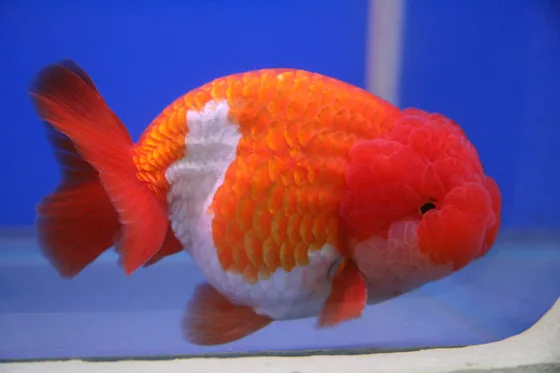
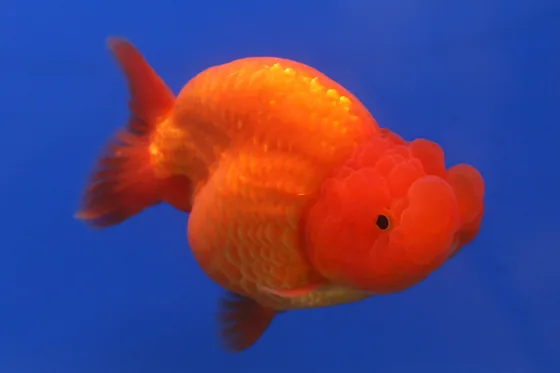
Three dorsal-less hooded goldfish side by side: a lionhead with its fairly straight back ringed, a lionchu with its broad, arched back ringed, and a ranchu with its smooth arched back ringed.
- Lionhead. A back that runs fairly straight or gently curved, with only a mild tuck at the tail, under a hood that is often large and loose.
- Lionchu. The ranchu’s broad arch and tail set, under a hood that is heavier than a ranchu’s and varies from fish to fish.
- Ranchu. One smooth arch from head to a tail tucked in at about 45 degrees.
Photographs: Lionhead, Lawrencekhoo, CC BY-SA 4.0; Lionchu, Melanochromis, Public domain; Ranchu, Lerdsuwa, CC BY-SA 4.0. Rings added.
A cross that became a class
A deliberate cross. The lionchu is a lionhead crossed with a ranchu, which makes it a cross between a breed and the one that was bred from it: the ranchu is traced in English sources to the Chinese lionhead, and the lionchu brings the two back together. The aim, as the name says, is the ranchu’s body and back with the lionhead’s head.
Recognised, not invented. It was popularised by goldfish hobbyists in Singapore, through an internet forum, and recognised as a class of its own at a competition there in 2006. Before that it had been seen as a mongrel, which is what a cross between two breeds is usually taken for.
What that means for the fish you can buy. The name is used loosely. Many fish sold as lionchu are simply a lionhead or a ranchu with a different name on the tag, and a seller who does not grade will not know the difference. What kind of goldfish do I have explains why a label is a guess more often than not.
What a cross means
Any cross between breeds gives a spread of fish, and the genetics guide sets out what to expect: goldfish cross easily, the offspring of two different fancies are usually neither one nor the other, and a breeder’s skill is mostly selection. A breeder aiming at a lionchu keeps the fish that come closest to the ranchu’s back with the lionhead’s head.
Two consequences for a keeper. A lionchu will not reliably breed true to its own kind, so a spawn is a spread and not a supply of the fish you own. And a juvenile sold as a lionchu cannot be checked against its parents, so whether it is one depends on the seller.
How it develops
No timetable has been published for the lionchu itself, so there is no table of ages here. Both parents develop slowly and late: the wen shows from about four months and keeps filling for a year or more, while breeders judge the back and the tail set early, because they say those do not improve with age.
The back and the tail set show before the hood does. The sensible reading of a young lionchu is the one for a young ranchu: judge the arch and the tuck, which are visible early, and treat the hood as a prediction.
Buy the line, not the fish. For a cross this matters more than for most: breeding goldfish and the genetics guide both argue that the parents tell you more than the juvenile does. And buy the tank for the adult: how big do goldfish get covers the gap between a shop fish and a grown one.
Aquarium requirements
No source gives separate requirements for the lionchu, and none is needed: it is a lionhead-ranchu cross and lives as they do.
About 100 litres for a first fish, as for both parents, from the fancy row of the tank size guide. A shallow, wide tank is better than a tall one, because depth is work for a fish with no dorsal fin.
18 to 24 °C, and steady. Goldfish water temperature explains why a swing is worse than either end of the range.
Gentle flow. A sponge filter, or a spray bar aimed at the glass, and nothing that pushes the fish around. Goldfish filtration covers how to keep a tank clean without a current.
Smooth decor, and a lid. Nothing sharp for the hood or the fins to meet: the decorations guide sets out the fingertip test.
Personality and behaviour
Calm and slow, like both parents. A lionchu rests often, moves in short, careful bursts and tires in a current that another fancy would ignore. None of that is a sign of illness in this fish.
It does decide the company. A lionchu is not an aggressor, and among faster fish it is simply the last to the food, which is the mechanism the chasing and bullying page identifies as the one that actually harms slow fish.
Company, then, is other slow fancies: ranchu, lionhead, and the other dorsal-less or slow-moving breeds. The compatibility lists below say which, and the tankmates guide explains the pace rule behind them.
Feeding
A deep-bodied fancy’s regime. Sinking food, in small portions, so that the fish is not gulping air at the surface: the reasons are in sinking versus floating food. Soak dry pellets before feeding, and feed where the fish is, because a slow fish will not cross the tank for a pellet that has landed on the far side.
How much, and how often, is in how often to feed goldfish. Nothing about the lionchu changes it.
Common health considerations
The wen. Its folds trap debris and are prone to infection when water quality slips: red or fluffy patches, or erosion at the edges. Wen care covers what the tissue is and what to do about it, including what to do when it grows over the eyes.
Buoyancy trouble. A deep body with no dorsal fin is prone to it. A fish that floats tail-up after eating, or struggles to leave the bottom, is covered by floating upside down, and the first answers are usually about food and water rather than medicine.
Breathing. A hood that grows over the gill covers can make breathing harder. Fast or laboured breathing covers what a raised gill rate can mean, and it is worth watching the rate in a young fish whose hood is filling.
How long it lives. No source gives a lifespan for the lionchu itself. The 7 to 10 years shown is the figure this site gives for both its parents, the ranchu and the lionhead, and the Bristol Aquarists’ Society puts the more developed fancies at about that; care guides such as the RSPCA’s say 10 to 15 for goldfish in general. How long goldfish live sets the sources side by side.
What goes wrong, in order
| What you see | What it usually is | Where to go |
|---|---|---|
| Red or fluffy patches on the hood | A bacterial problem in the folds, usually water | Wen care |
| Floating tail-up after meals | Buoyancy, from food or gulped air | Floating upside down |
| Rolling or tiring in the tank | Flow too strong for a fish with no dorsal fin | Filtration |
| Thinning while tankmates thrive | Outcompeted at every meal | Tankmates |
| A hood growing over the eyes | The wen, as it fills | Wen care |
| Fast gill movement at rest | Water first, then the hood over the gills | Fast or laboured breathing |
Choosing one
- Ask what the seller means by the word. A fish sold as a lionchu may be a lionhead or a ranchu, and a seller who can say which parents it came from is worth more than one who cannot.
- From the side: the arch and the tuck. One broad curve from head to tail, and a steep drop into the tail. A flat back and a shallow tail set mean a lionhead.
- Look along the back for a ridge. A ridge, or a short fin, where the dorsal would be is a fault, as it is on the parents.
- Do not judge the hood on a juvenile. It arrives last. Check that both eyes are clear and not yet crowded, and that what wen there is looks even.
- Watch it swim. It should hold level and move deliberately. A juvenile that lists, rolls or sinks will not grow out of it.
- Read the whole shop, as choosing and bringing home a goldfish sets out, then quarantine it before it joins other fancies. A rarer fish is found through breeders and clubs more often than shops, which finding a goldfish no shop stocks covers.
Is a lionchu right for you?
Yes, if you want a ranchu’s profile with a heavier hood, you can give a slow fish a tank with gentle flow and calm company, and you are willing to look at the profile and ask about the parents rather than trust the label.
No, if you want a fish with a long-established standard behind it, or a tank with fast fish and a strong current. A ranchu or a lionhead gives you the same care with a clearer history.
History and origin
The lionchu came out of Thailand, from crosses of the Chinese lionhead with the Japanese ranchu. It was popularised by goldfish hobbyists in Singapore through an internet forum, and at the My Fancy Goldfish Competition there in 2006 it was recognised as a class of its own, after having been taken at first for a mongrel. The fish in the photograph at the top of this page took first prize in the lionchu category at the 20th Pramong Nomklao fish show in Thailand, in July 2008.
Little more has been written about the lionchu than that, and this page says so rather than filling the gap. Where a question has no published answer for the lionchu itself, the answer here is the one for its parents, and the page says which. The showing guide has more on why breed lists and classes differ between countries and societies in the first place.
Before you bring one home
- The wen can grow over the eyes and the gill covers, and its folds trap debris and are prone to infection when water quality slips
- No dorsal fin and a heavy hood make a weak swimmer, so the flow must be gentle and the decor smooth
- Prone to buoyancy trouble, so sinking food in small portions is the safer routine
- Easily outcompeted by faster fancies at feeding time
- The name is used loosely, and many fish sold as lionchu are simply a lionhead or a ranchu
Suitable companions
Round-bodied goldfish should live with fish of similar speed. These breeds share the same pace, water and food.
Lionhead
Bubble Eye
Celestial Eye
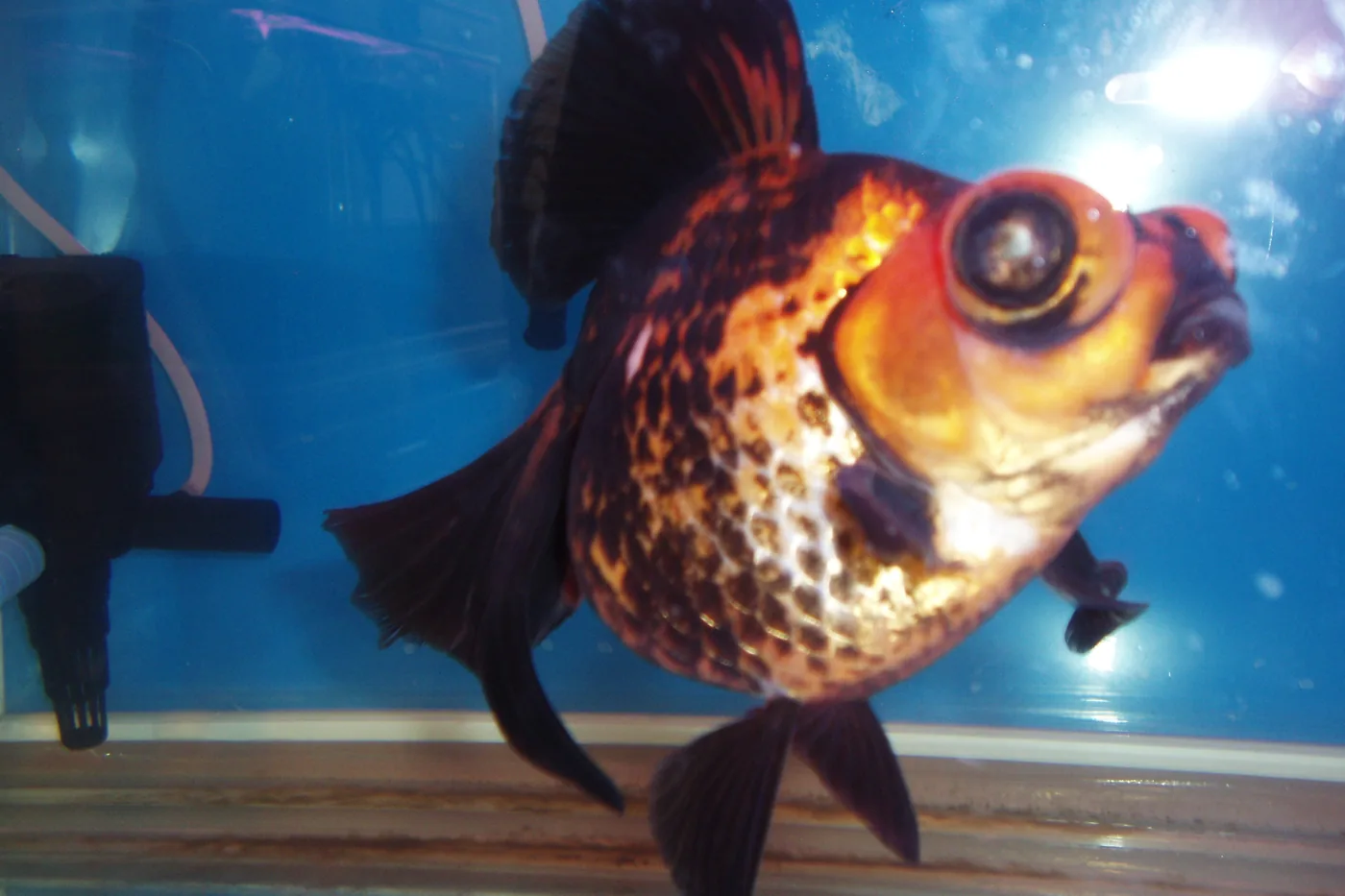
Telescope
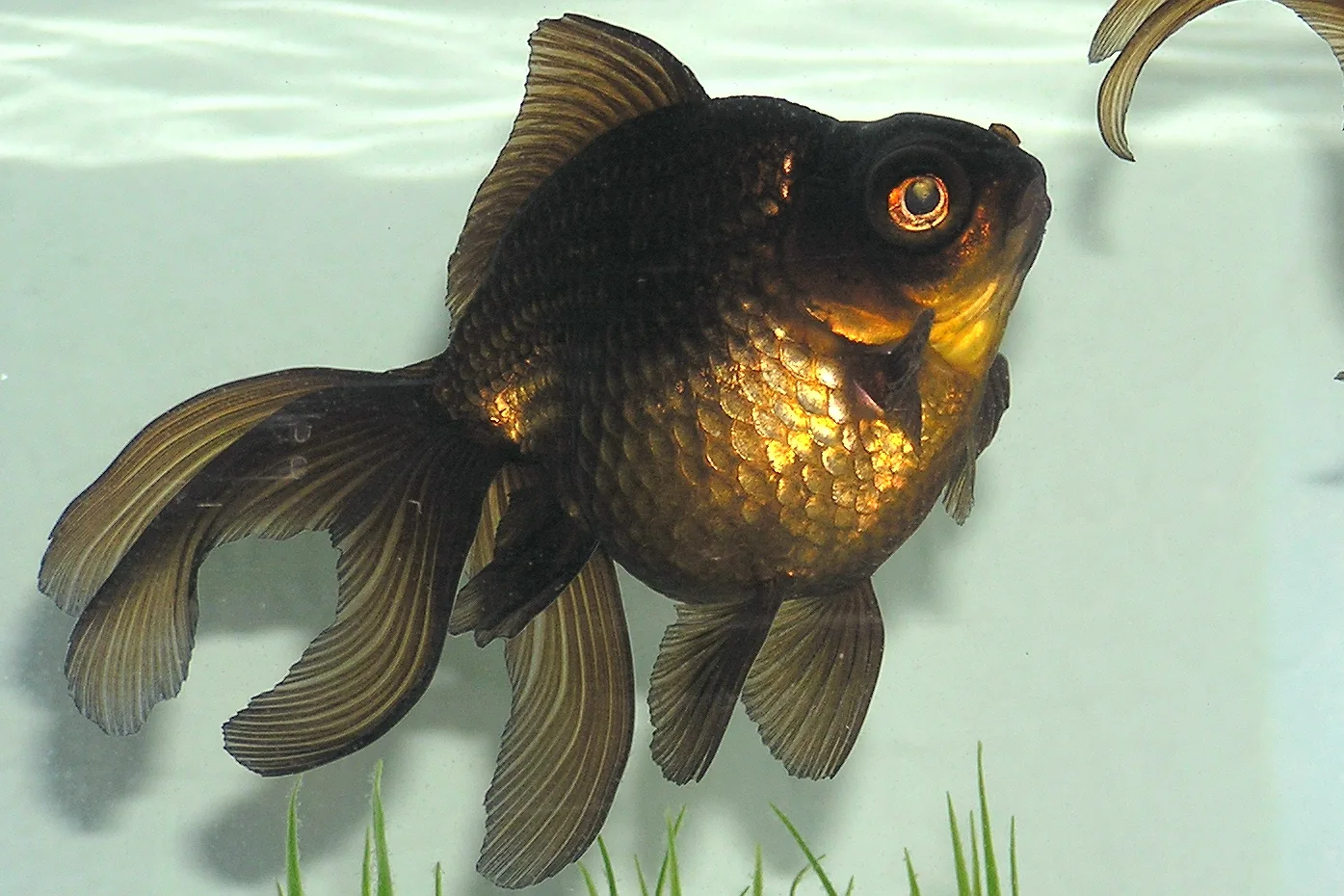
Black Moor
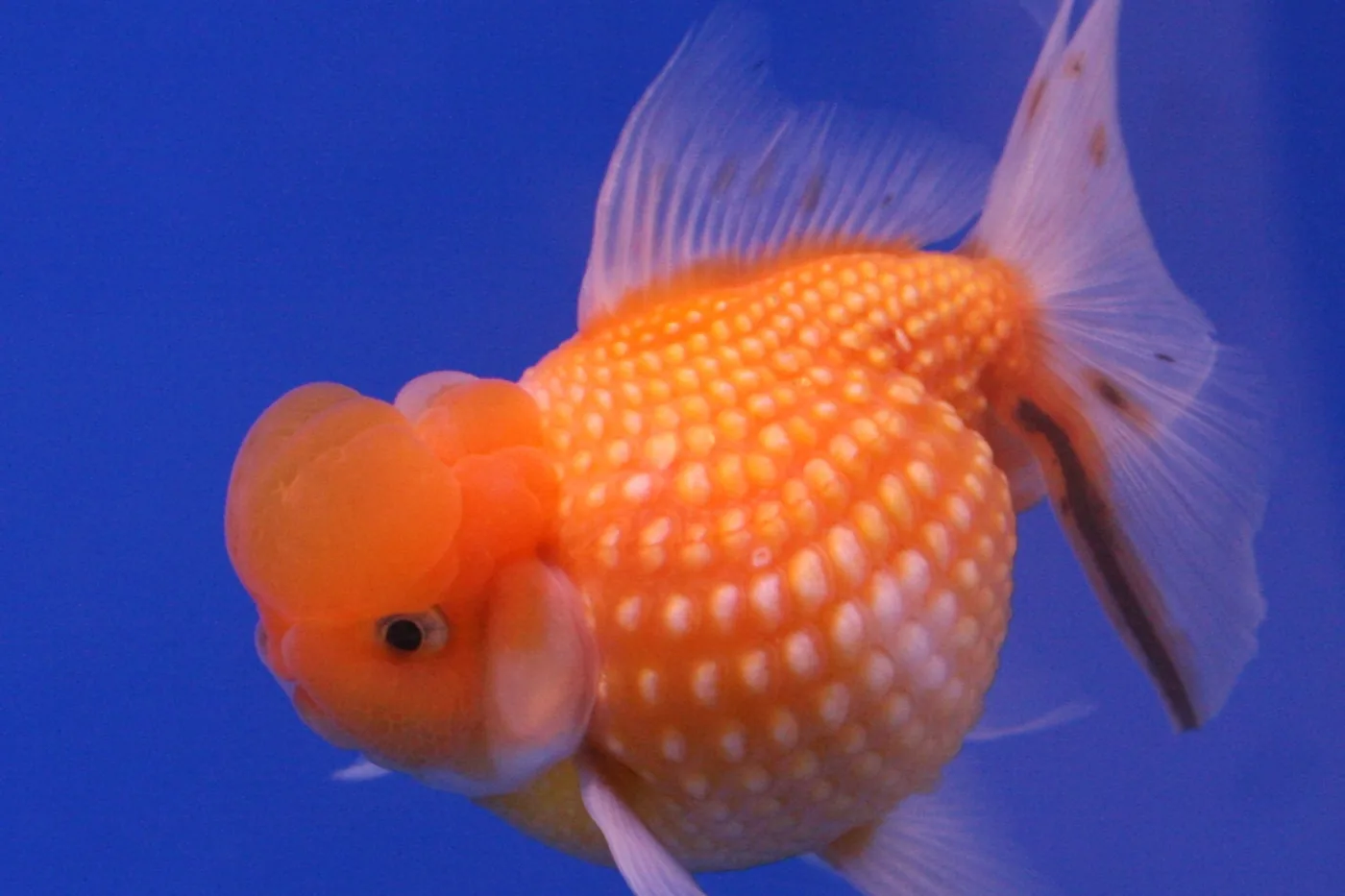
Pearlscale
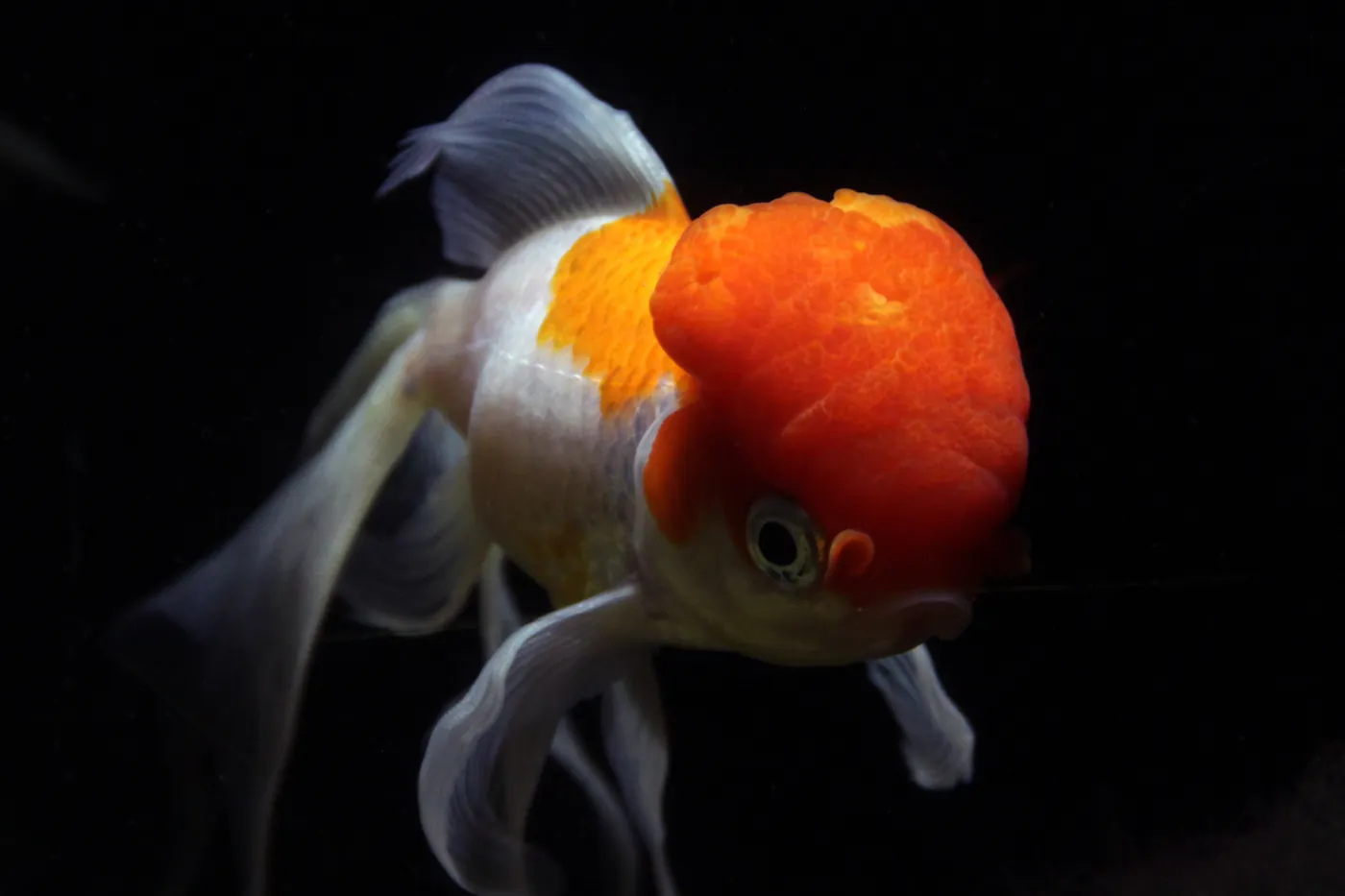
Oranda
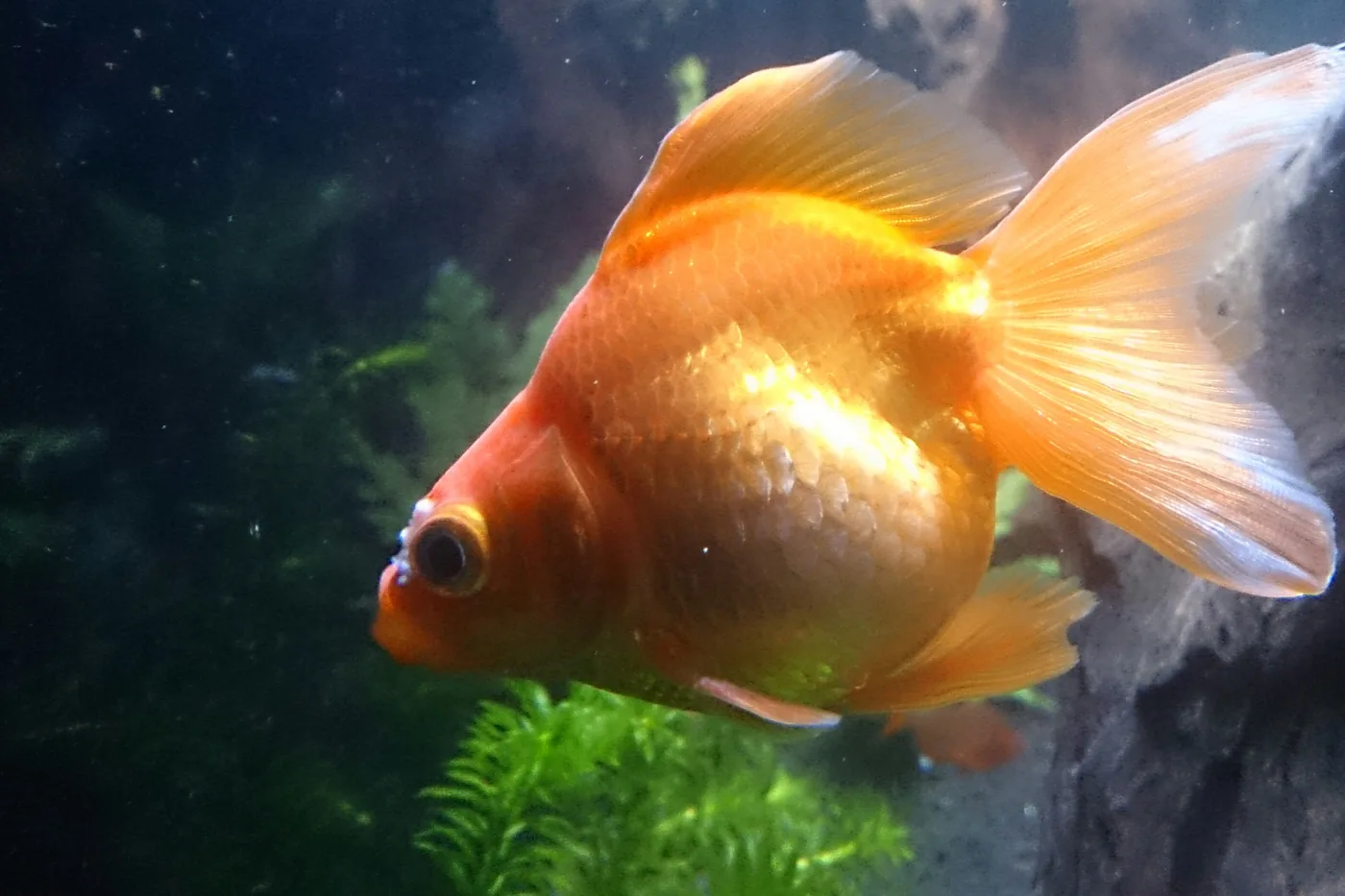
Fantail
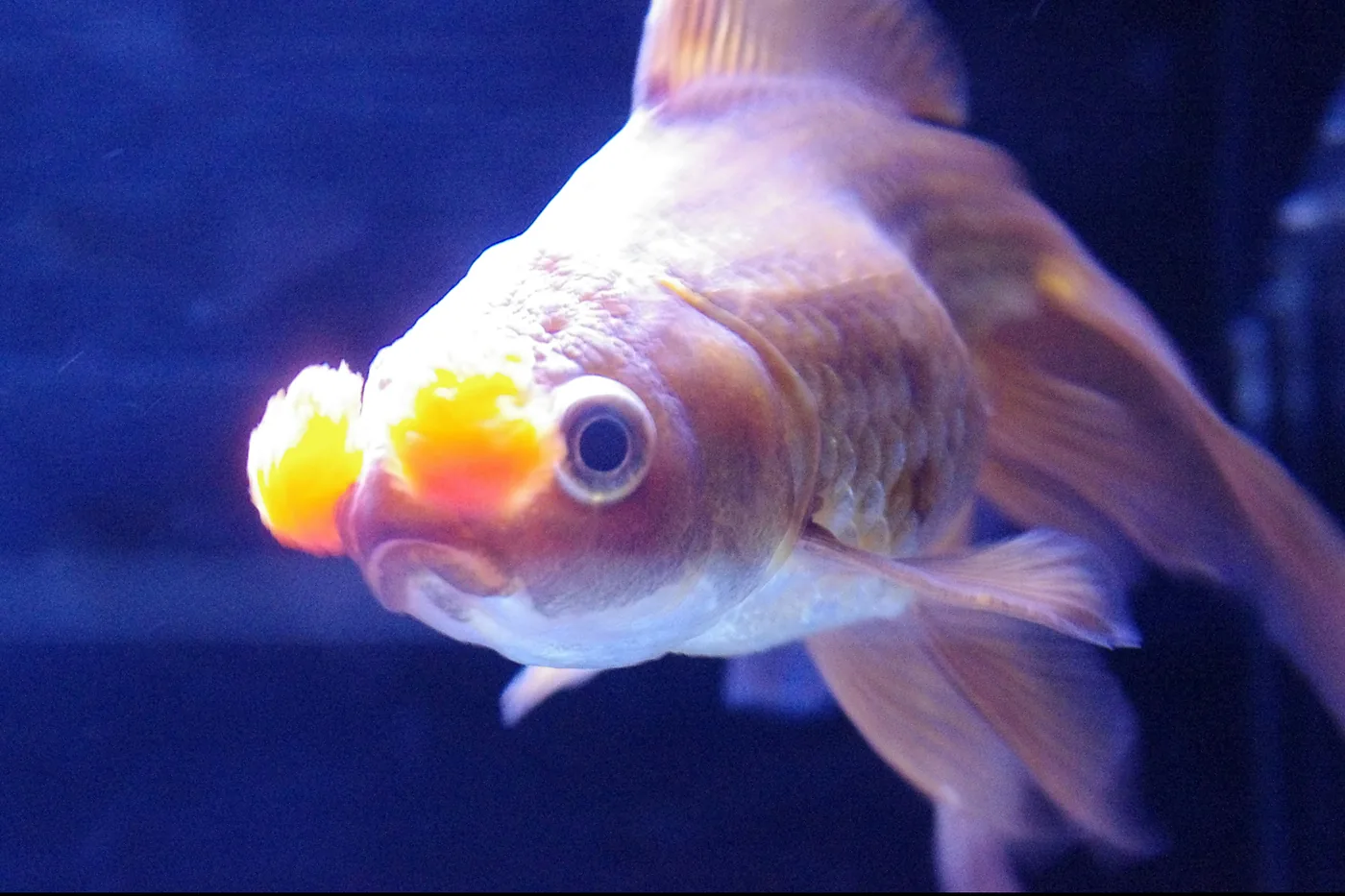
Pompom
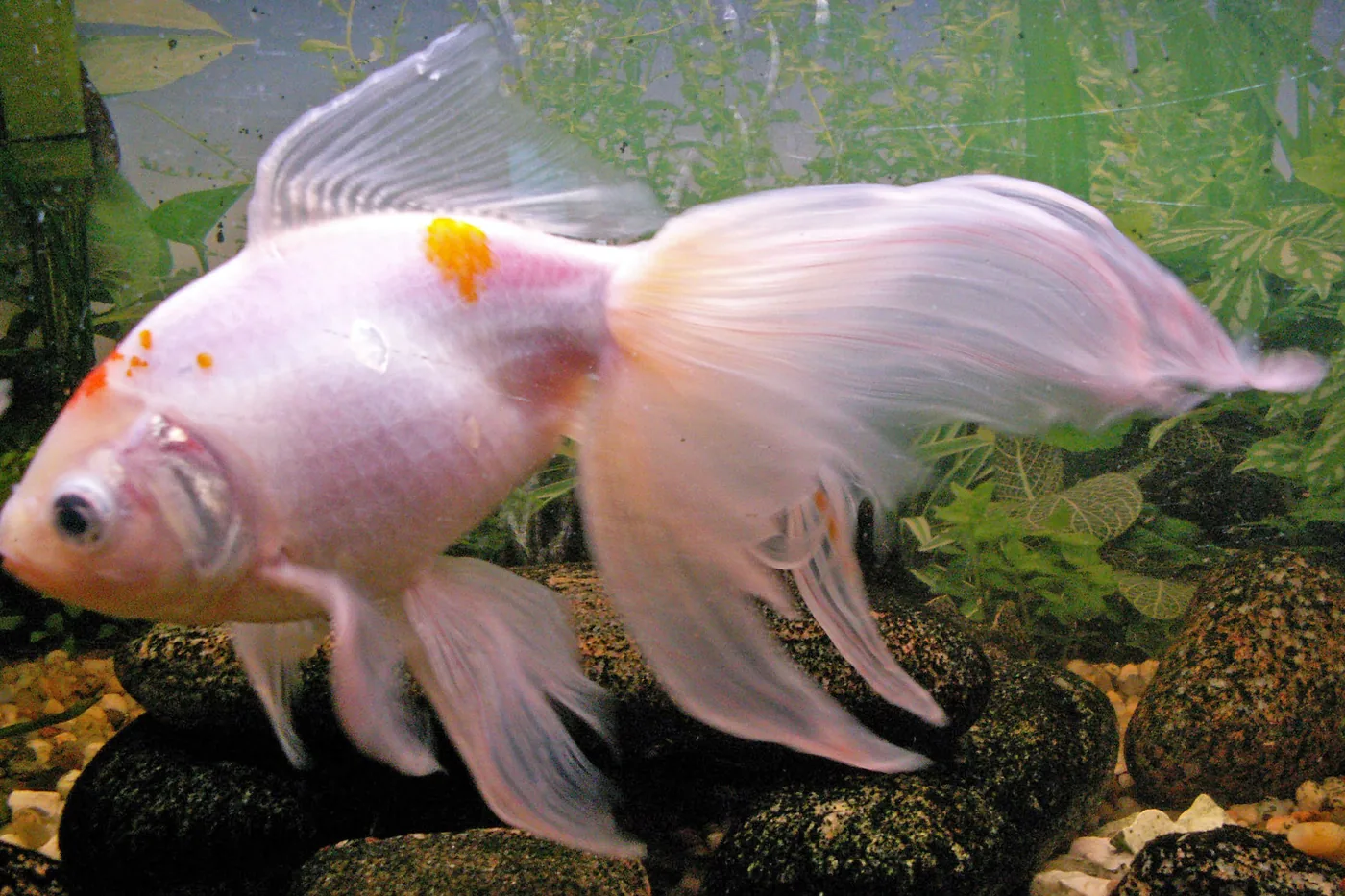
Veiltail
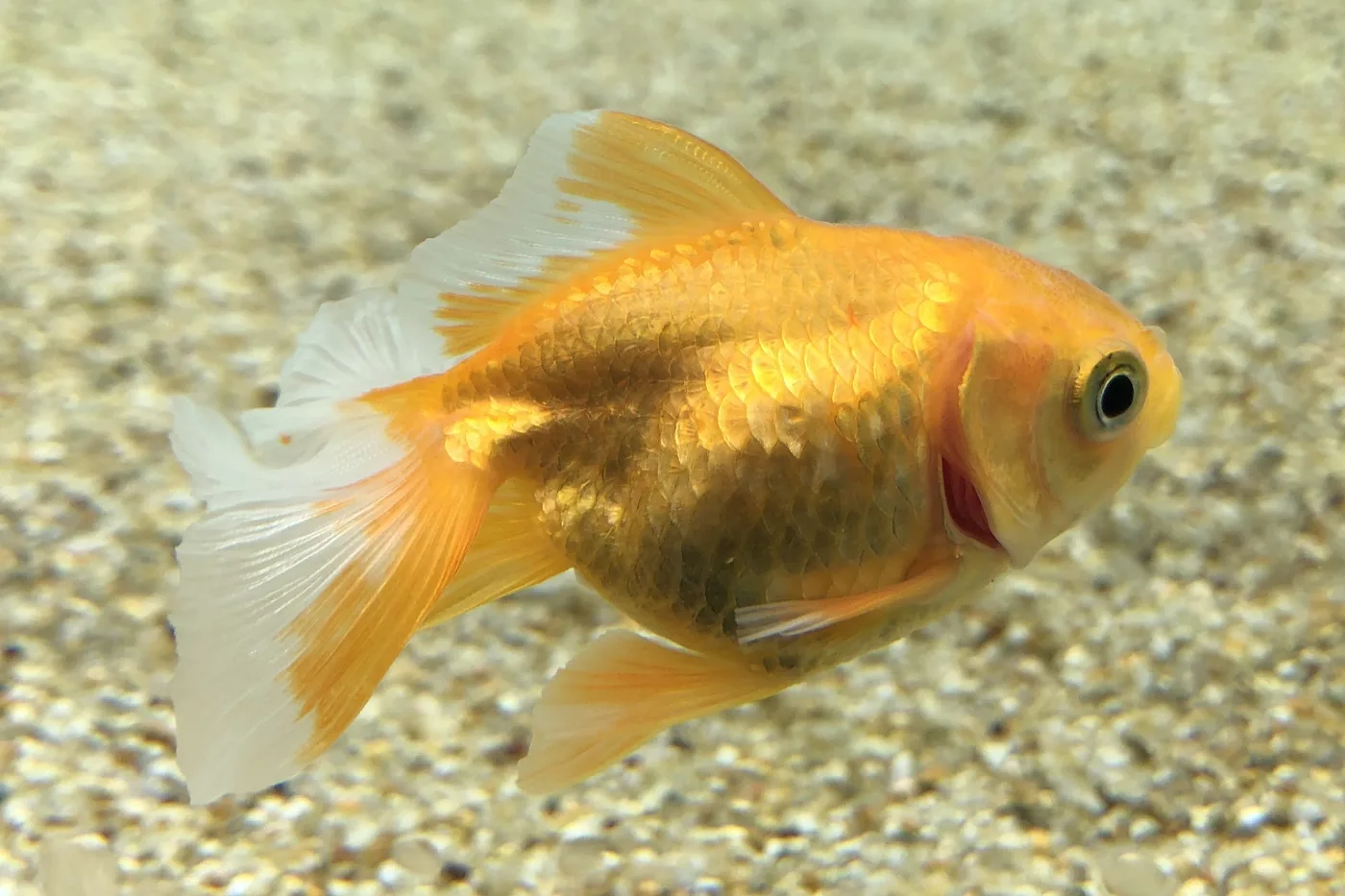
Tosakin
Best kept apart from: Common Goldfish, Comet, Shubunkin, Ryukin, Jikin, Wakin. Speed and appetite differences leave the slower fish underfed.
Thinking about other species? Try the compatibility checker.
Similar breeds
The breeds most like the lionchu — the ranchu and lionhead — are all pictured above among its companions.
Frequently asked questions
What is a lionchu?
A cross between a lionhead and a ranchu that came out of Thailand and was recognised as a class of its own at a goldfish competition in Singapore in 2006. It takes the ranchu's deep body, broad curved back and tail set, and the lionhead's large head growth, and like both parents it has no dorsal fin. It was at first taken for a mongrel, and it is now a show class in its own right.
How do I tell a lionchu from a ranchu or a lionhead?
By the back, the tail set and the hood together. A ranchu's back is one smooth arch that drops steeply into a tucked tail, under a neat, compact wen. A lionhead's back is straighter, its tail set shallower and its wen often large and loose. A lionchu has the ranchu's arch and tail set under a heavier hood than a ranchu's. Head growth varies, though, so the three overlap, and a young fish of any of them is close to impossible to name until the hood arrives.
Is a lionchu a real breed?
It is a young type rather than an old breed: a deliberate cross, recognised as a class in 2006, without centuries of selection behind it, and the Goldfish Society of America does not yet recognise it as a variety. The name is also used loosely, and many fish sold as lionchu are simply a lionhead or a ranchu, so what you are buying depends on who is selling.
Does a lionchu breed true?
Not reliably, which is true of every fancy goldfish and more so of a cross. The wen varies continuously, and a spawn from two dorsal-less parents routinely contains fish with a ridge or a partial dorsal fin, which breeders cull. Two lionchu tend to give a spread of fish around the parents, not copies of them.
How big does a lionchu get?
No source gives figures for the lionchu itself. Both parents reach 15 to 20 cm, and a lionchu is best expected to land in the same range, so the tank should be bought for an adult of that size rather than for the juvenile in the shop.
Is a lionchu harder to keep than a ranchu?
It needs what its parents need, with the same small margin for error. With no dorsal fin it is a weak swimmer, and a heavy hood on top of that makes it tire in a current a finned fancy might ignore. The wen needs clean water more than anything else, because its folds trap debris and are prone to infection. Everything on the lionhead and ranchu pages applies.
Can a lionchu live with a ranchu or a lionhead?
Yes. They share the same pace, water and food, and slow fancies like these suit one another. Goldfish of different breeds cross freely, though, so a pair that spawns will give a mixed batch.