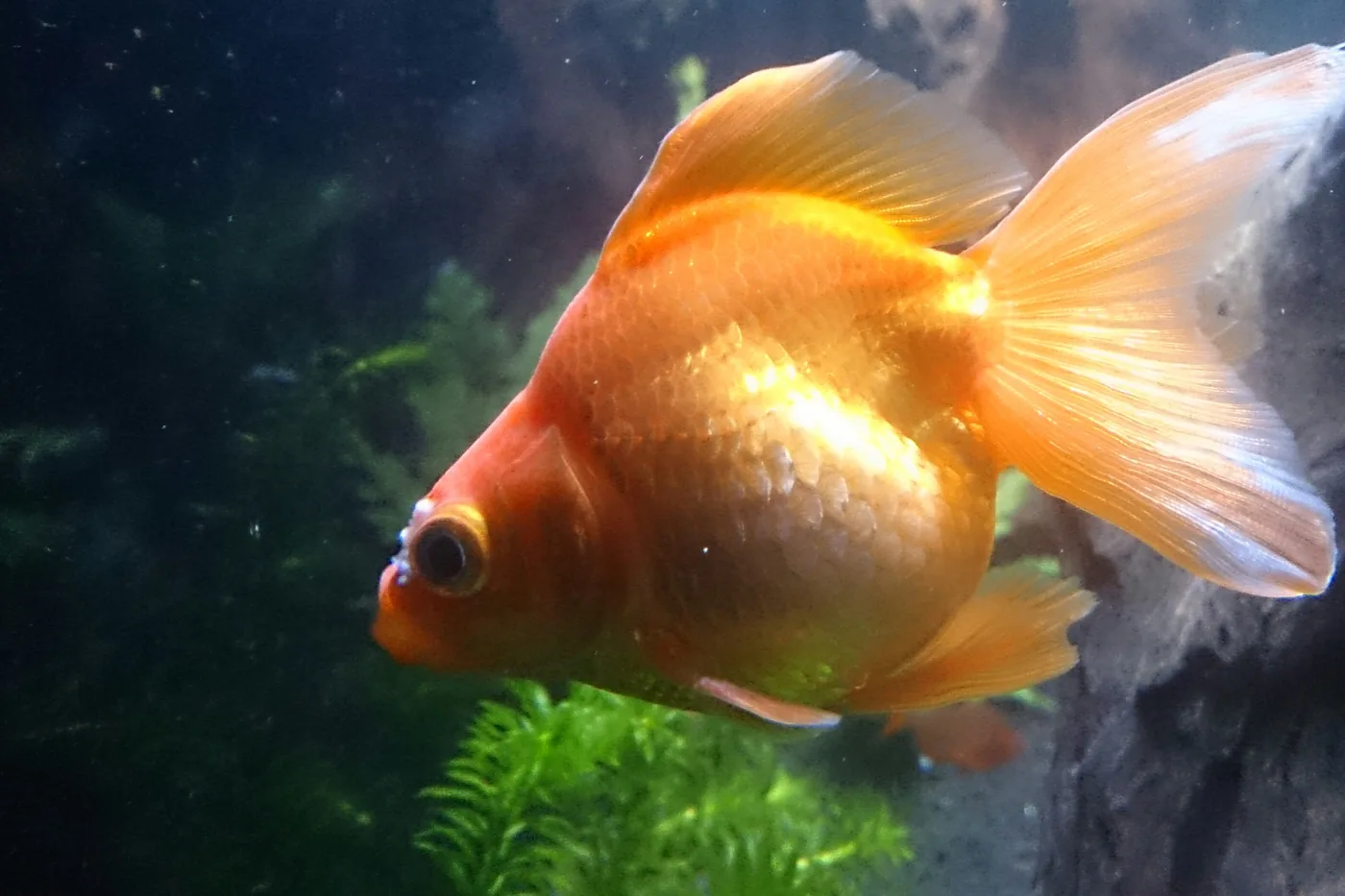
No. 02Ming dynasty
Fantail
The first fancy goldfish, and still the easiest one to keep.
Also known as Fantail goldfish · Fan-tailed goldfish · Japanese fantail (trade name)
- Specimen
- Fancy goldfish, China
- Adult size
- 15–20 cm
- Lifespan
- 10–15 years
- Water
- 18–24 °C
- Care
- Easy
- Swimming
- Moderate
- First fish needs
- 75 litres
Photograph: ProjectManhattan, CC BY-SA 3.0 · Wikimedia Commons
About these figures Size, lifespan and water are the ranges keepers' guides give for a fish in good care, not measurements of this breed, and swimming and care are this site's own ratings of the published advice. Lifespan is where the sources differ most: how long goldfish live sets them side by side. First fish needs is a middle figure for one fish, from advice that runs from 50 litres to about 300; tank size sets that out.
The specimen
Quick facts
- Classification
- Fancy goldfish
- Body type
- Egg-shaped body with a dorsal fin and a paired, moderately long double tail held stiffly rather than draped
- Tail and dorsal
- Double tail, dorsal fin present
- Swimming ability
- Moderate
- Keeper experience
- Beginner
- Temperament
- Peaceful, curious and steady; among the hardier fancy goldfish and able to hold its own among them
- Adult size
- 15–20 cm (6–8 in)
- Temperature
- 18–24 °C (64–75 °F)
- Minimum aquarium
- 75 L (20 US gal) for one fish
- Origin
- China, Ming dynasty; the earliest dated twin-tail record is from 1596
How to recognise one
- Egg-shaped body, deeper than a common goldfish but without the shoulder hump of a ryukin
- Two caudal fins, divided right up to the top and spread like a fan; a tail joined along the top is a show fault
- Normal dorsal fin, normal eyes and no head growth
- Moderate fin length, not the long drapes of a veiltail or oranda
- Metallic or calico scales in orange, red, red-and-white, calico, white or black
Identification
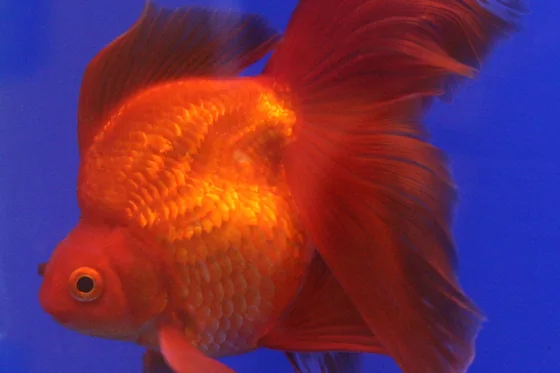
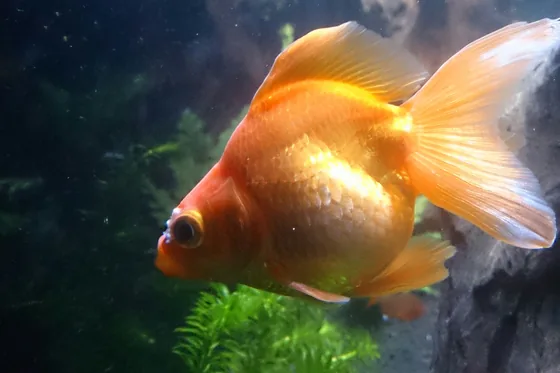
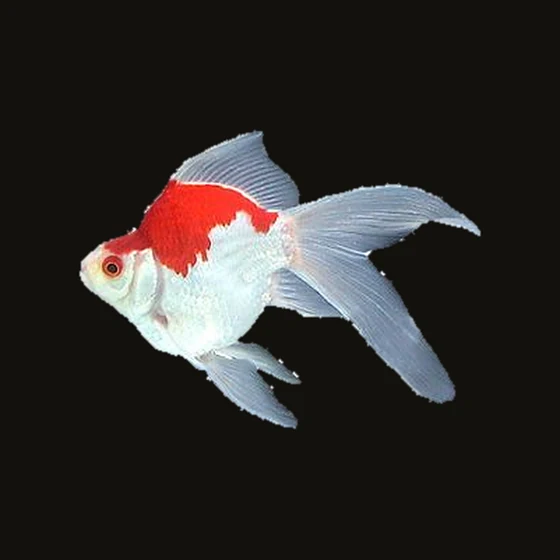
The fantail is the simplest fancy goldfish, and the one all the others are built on. The body is egg-shaped, deeper and shorter than a common goldfish but without the humped back of a ryukin, and the dorsal fin is normal and upright. The tail is the defining feature: two caudal fins side by side, divided right up to the top and held stiffly spread like an open fan at rest; a tail joined along the top edge is a show fault. The anal fins are paired as well. Fin length is moderate; the long, drooping tail of a veiltail and the draped finnage of an oranda are departures from the fantail standard.
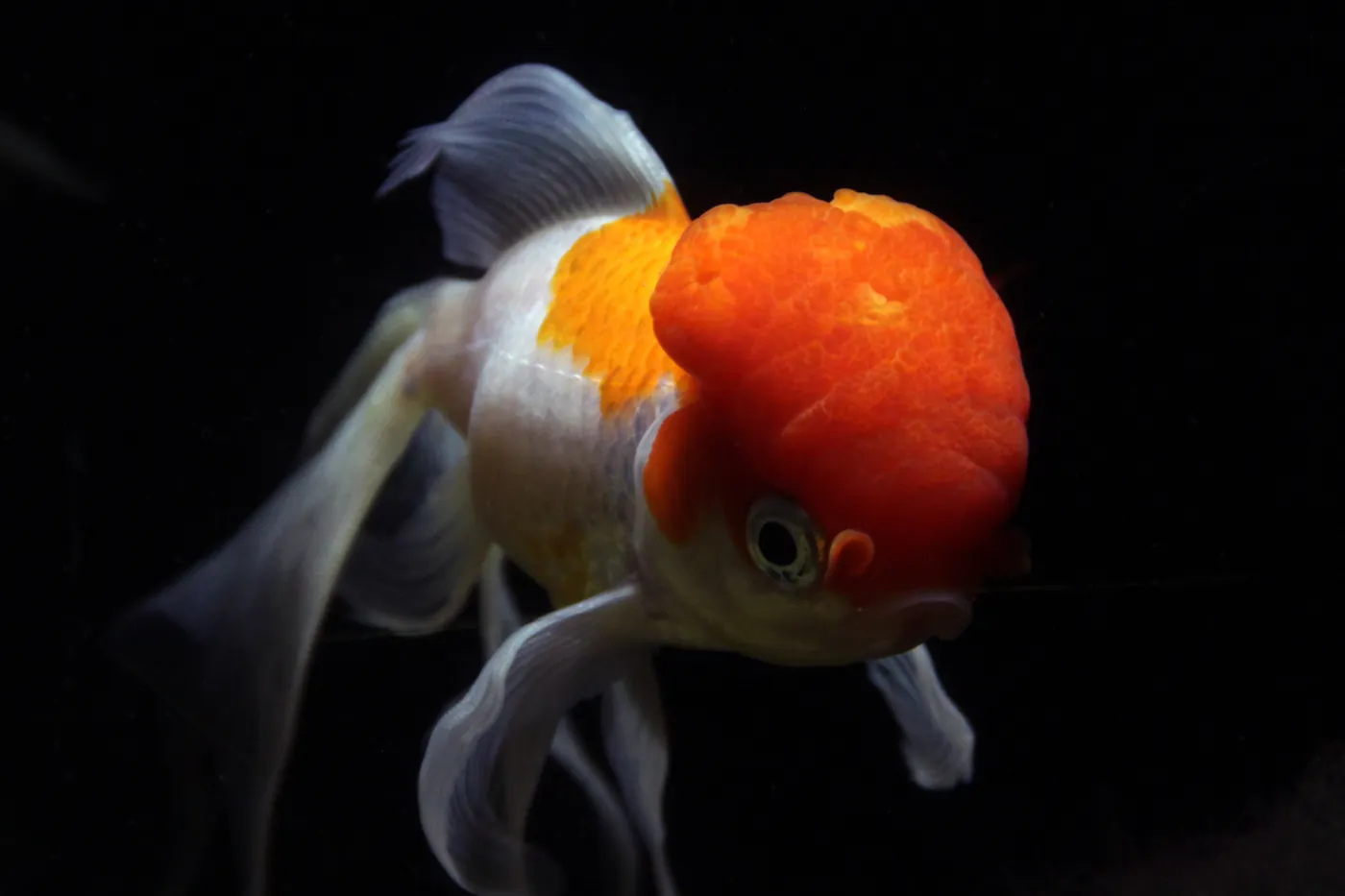
To rule out its relatives, check the head and eyes: a fantail has a smooth head with no wen, unlike the oranda, and normal eyes, unlike the telescope and black moor. Against the ryukin, look for the shoulder hump behind the head; a fantail’s back rises gently. Colours run from orange and red through red-and-white, calico, white and black, and the body deepens noticeably between the first and third year.
Ryukin, fantail or tamasaba?
Three deep-bodied goldfish side by side: a ryukin with the hump behind its head ringed, a fantail with its smooth back ringed, and a tamasaba with its single long tail ringed.
- Ryukin. The back climbs sharply behind the head before the dorsal fin, on a deeper body. In a young fish the hump is slight, so judge body depth too: the British standard asks for about 80% of body length in a ryukin and 65% in a fantail.
- Fantail. The body rises in one smooth egg shape with no hump, over a double tail.
- Tamasaba. A back that rises behind the head like a ryukin’s, with a full dorsal fin, but a single undivided tail, which in the photograph is a long one.
Photographs: Ryukin, Lerdsuwa, CC BY-SA 3.0; Fantail, ProjectManhattan, CC BY-SA 3.0; Tamasaba, Desaix83, after Ghasem1122, CC BY-SA 3.0. Rings added.
The varieties
Fewer distinct forms than most fancies, because the fantail is the baseline that the others were bred away from.
- Short-finned fantail. The standard, and the more robust of the two.
- Ribbontail or long-finned fantail. Longer, draping fins. Handsome, slower, and far easier to damage on decor.
- Calico fantail. Calico over nacreous scales. Frequently mistaken for a shubunkin, which is a single-tailed fish with the same colouring and completely different needs.
- Black and chocolate lines. Black fantails commonly lighten with age, for the reasons the black moor page sets out.
And “fantail” is also used loosely as a shop label for any egg-bodied, double-tailed goldfish without a wen or telescope eyes. That is usually accurate enough, but it is worth checking the back for a ryukin’s hump before assuming.
How it develops
Less dramatic than a wen or a telescope eye, but the tail is worth watching. Breeders pick for a divided tail at about four weeks and for body and tail at eight to twelve, so the lobes separate long before six months, and most goldfish hatch bronze and lose the dark pigment during the first year.
A tail fault tends to stay. A juvenile whose lobes are fused along the top, or carried permanently to one side, may keep that fault, and it can affect how the fish swims as well as how it looks.
The body keeps deepening after the tail has settled, and the two do not finish together. A fantail that stays slim may simply come from a slimmer line, which is worth knowing because it changes what the fish needs: a slimmer, faster fantail is closer to a comet in appetite and swimming than to an oranda, and it will outcompete round-bodied tankmates at feeding time.
Otherwise this is the least surprising fancy to raise, and that is the real argument for recommending it to beginners. There is no wen that might not arrive, no eye rotation, no pattern that takes three years to settle. Much of what you can see at a year is what you will have at three, apart from the deepening of the body, which for a first fancy is worth more than any amount of drama.
Why this is the fancy to start with
Worth stating plainly, because the fantail is usually recommended without a reason attached.
It has no added fragility. Normal eyes, no wen, a dorsal fin, and fins that are long by single-tail standards but not by fancy ones. Every other fancy adds at least one thing that needs managing.
It keeps its balance better than the extreme forms. The body is compressed, so buoyancy trouble is possible, but the shortest-bodied fancies, such as the pearlscale, are thought to be more prone to it.
It tolerates a wider temperature band than most fancies, which forgives a room that swings — goldfish water temperature covers where that band sits.
It can hold its own among other fancies, so a mixed fancy tank does not starve it, which chasing and bullying explains is the quiet failure mode of mismatched tanks.
But “easy” is relative to other fancies, not to a comet. A fantail still needs the volume, the filtration and the weekly water change that goldfish for beginners sets out. It is the gentlest introduction to fancy goldfish, not a fish that looks after itself.
Choosing one
A test worth learning, and few people do it.
- Look at the fish from behind as well as the side. The two tail lobes should be even and carried apart. A fused or single-sided tail may make a fish swim crookedly, and tail faults are common in cheap stock.
- Then from above: a straight spine and an even body. Bent spine covers what a curve means when you see one.
- Then swimming. Level, unhurried, fins open, not struggling to stay off the bottom or the surface.
- Read the shop, as choosing and bringing home a goldfish sets out, and then quarantine for at least four weeks.
Where you will find one. A widely available fancy, in most aquatic shops, and one of the few where you do not need a specialist to get a good one. The quality range at a single price is enormous, though: body depth and the way the twin tail is carried are what separate a good fantail from an indifferent one, and both are visible in a juvenile. Spend the time choosing rather than the money — in this breed the selection is worth more than the budget.
Personality and behaviour
Fantails are steady, sociable fish that spend the day working over the substrate. They are among the quicker swimmers of the fancies, able to hold their own with orandas, ryukins and telescopes and often first to a pellet. That same speed makes them a poor match for the slowest breeds, such as ranchus and bubble eyes, which can be quietly outcompeted, and they are in turn outpaced by comets and commons. In a small group of similar fish they are peaceful to the point of being uneventful, which is a compliment.
Aquarium requirements
Recommendations for a first fantail range from 60 to 100 litres (16 to 26 US gallons); the higher figures assume the fish reaches its full adult size, and 75 litres (20 US gallons) is a sensible minimum. Add 40 to 50 litres for each further fancy goldfish. A long, low tank gives more swimming room and gas exchange than a tall one of the same volume; the tank size calculator turns your own group into figures.
Filter for five to ten turnovers an hour, but soften the outflow with a spray bar or a sponge so the fish are not pushed around. A common range is 18 to 24 °C (64 to 75 °F). Fantails tolerate cooler water than most fancies and are sometimes overwintered in mild-climate ponds, but stable, moderate water indoors is the safer routine, and the water temperature guide explains the trade-offs. Change 25 to 50 percent of the water weekly according to nitrate, use sand or a bare bottom, and keep decor smooth so the double tail cannot snag.
Feeding
Base the diet on a quality sinking pellet made for fancy goldfish, soaked for a minute if your fish bolt food, and feed two or three small meals a day, each gone within a minute or two. Add shelled peas, blanched zucchini or spinach once or twice a week for fibre, and gel food or frozen daphnia for variety. Floating food is often blamed for a fantail’s buoyancy troubles; the sinking versus floating guide explains why. Skipping one day a week does no harm.
Common health considerations
Fantails are among the healthier fancy goldfish, but they share the round-bodied tendency to buoyancy problems: floating after meals, tilting, or struggling to stay level. Diet is a common cause, and a switch to sinking food with a few days of peas sometimes resolves it; the floating guide covers the other possibilities, and persistent trouble deserves a water test, since poor quality produces the same signs.
Newly bought fish often carry ich, which shows as white grains on fins and body within a week or two of arrival, so quarantine and watch. The double tail catches on rough decor and tears in strong current, and heals in clean water. Like all goldfish, fantails show ammonia or nitrite stress as clamped fins, red streaks and lethargy; the remedy is water changes, not medication.
What goes wrong, in order
| What you see | Usually | Where to look |
|---|---|---|
| Floating or tipping after meals | Often diet, though other causes exist | Floating upside down |
| Split or frayed tail | Sharp decor, or strong flow | Torn fins |
| Long trailing faeces | Too much dry food, not enough fibre | Constipation |
| Resting low, fins clamped | Water quality, or temperature | Sitting on the bottom |
| Swimming crookedly from new | A tail fault, not an illness | Nothing to treat |
| Thin, among quicker fish | Outcompeted at feeding | Chasing and bullying |
Three of those six are the diet, which is unusual — most breeds on this site fail at the tank first. A fantail’s weak point is its gut, and sinking versus floating food plus a vegetable or two a week fixes most of it.
Is a fantail right for you?
It suits you if you want a fancy goldfish and have not kept one before, if you want something that will cope with an ordinary room and an ordinary routine, or if you want a fish that mixes well with other fancies.
It does not suit you if it would share a tank with single-tails, which will beat it to everything, or if you were hoping for something that stays small. A fantail reaches 15 to 20 cm and often lives around ten years or more.
And it has little to answer for, in the terms goldfish welfare sets out. The double tail costs it some swimming efficiency and the compressed body costs it some digestive room, and that is the whole bill — which is a short one next to a bubble eye’s.
History and origin
The doubled tail is one of the oldest goldfish mutations, recorded in China during the Ming dynasty, the earliest dated account being from 1596. By then goldfish were being kept indoors in ceramic bowls and tubs, which let breeders notice and select unusual shapes that would have been lost in a pond. A shorter body followed the doubled tail, and together they produced the fish we now call the fantail.
Its twin tail runs through many later fancy breeds, which differ from it by a hood, a hump, protruding eyes or a missing dorsal fin. It remains the breed most often recommended in the beginner’s guide as a first step into fancy goldfish, because it has stayed close to a shape that works.
Before you bring one home
- The compressed body makes buoyancy and digestive problems more likely than in single-tails; sinking food helps
- Tolerates cooler water than most fancies but still needs stability and should never be exposed to freezing
- Quicker than the most extreme fancies, so it can beat ranchus or bubble eyes to food
- The double tail catches on sharp decor and suffers in strong filter currents
Suitable companions
Round-bodied goldfish should live with fish of similar speed. These breeds share the same pace, water and food.
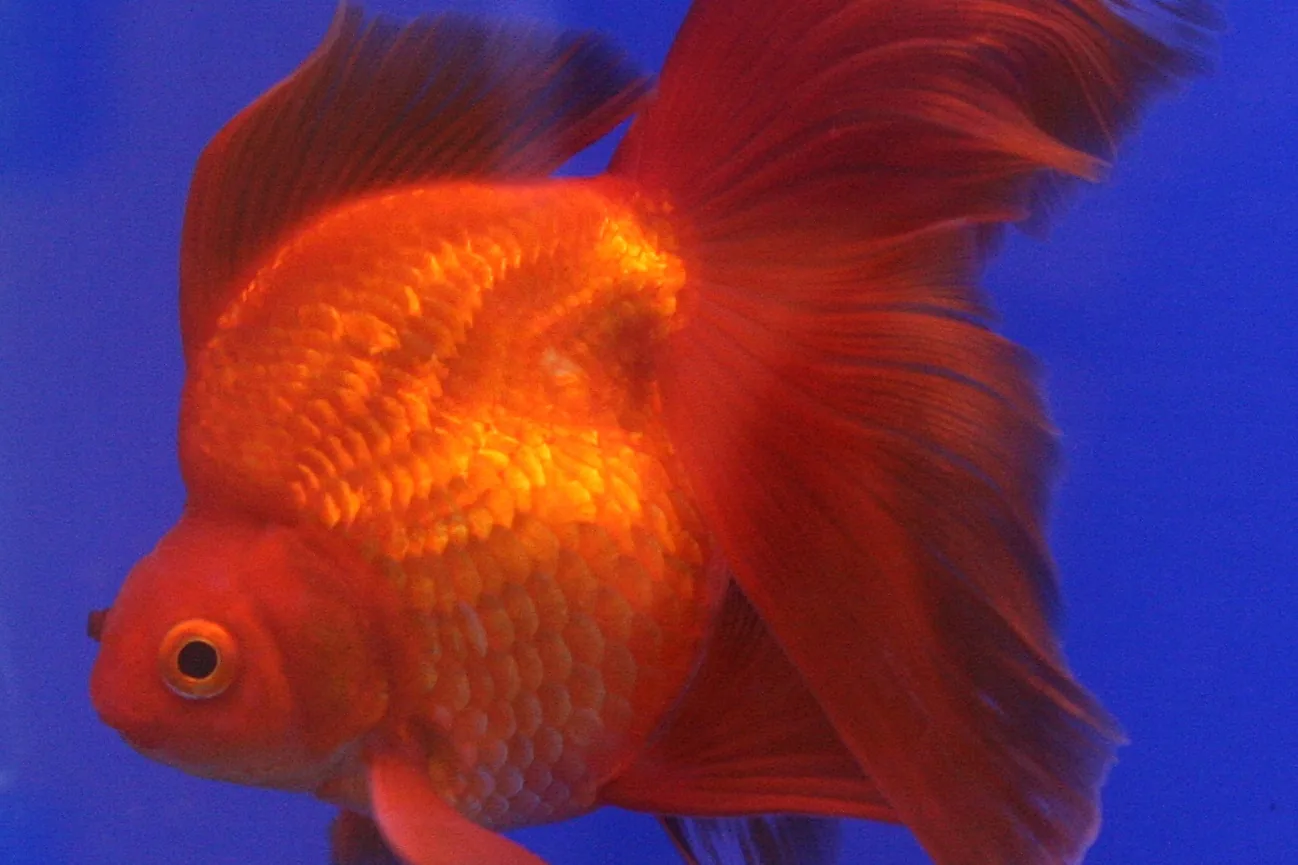
Ryukin
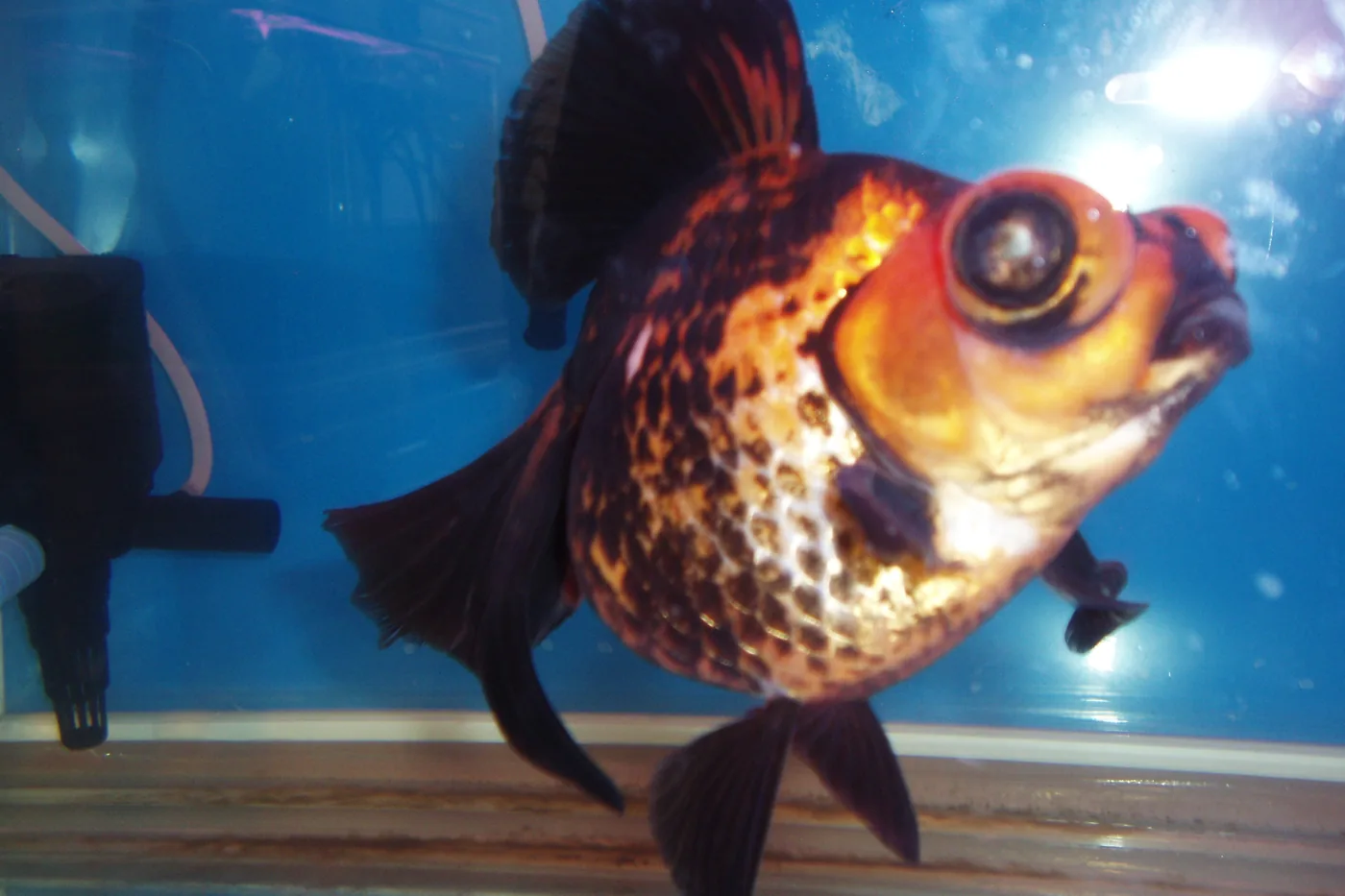
Telescope
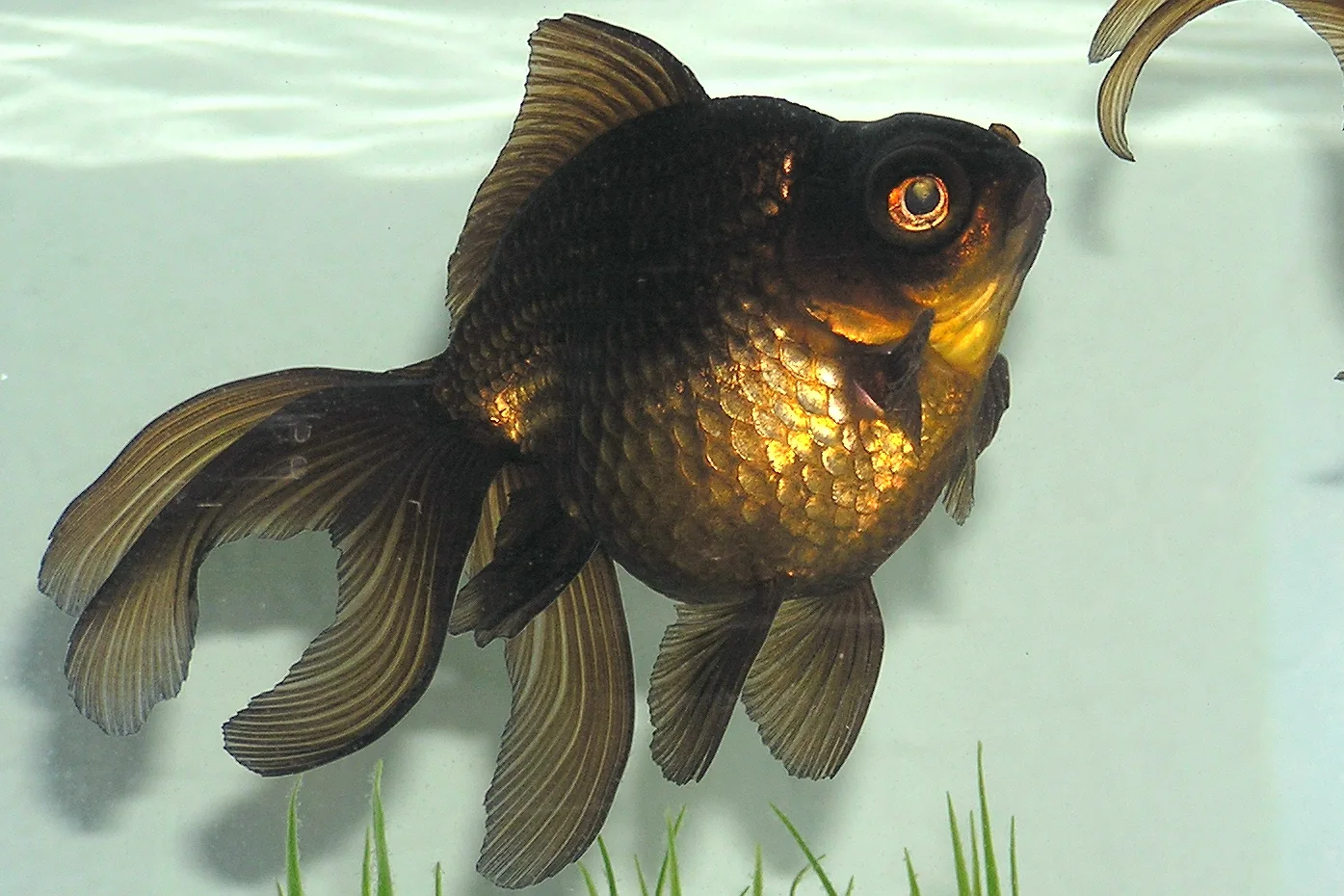
Black Moor
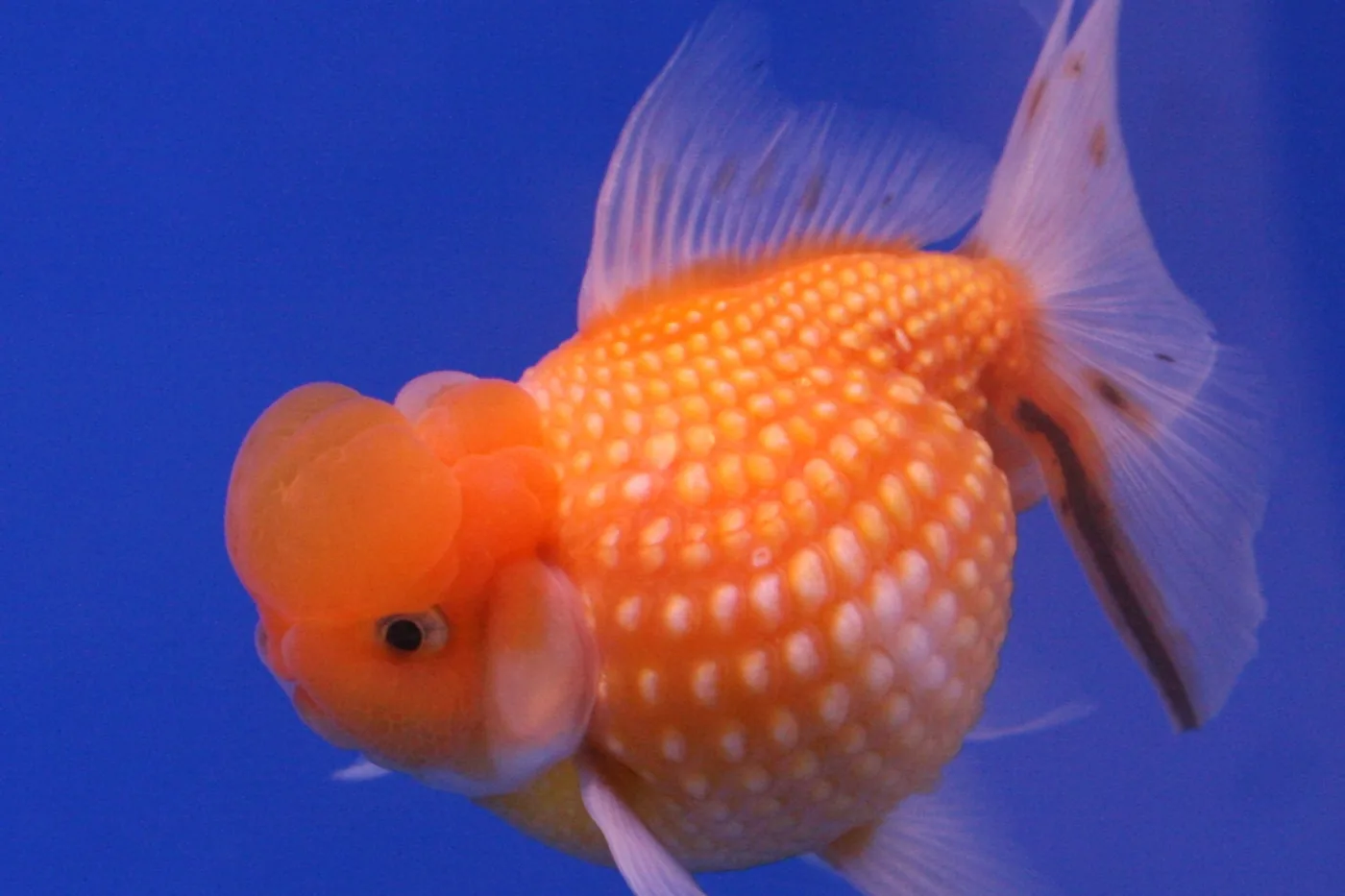
Pearlscale
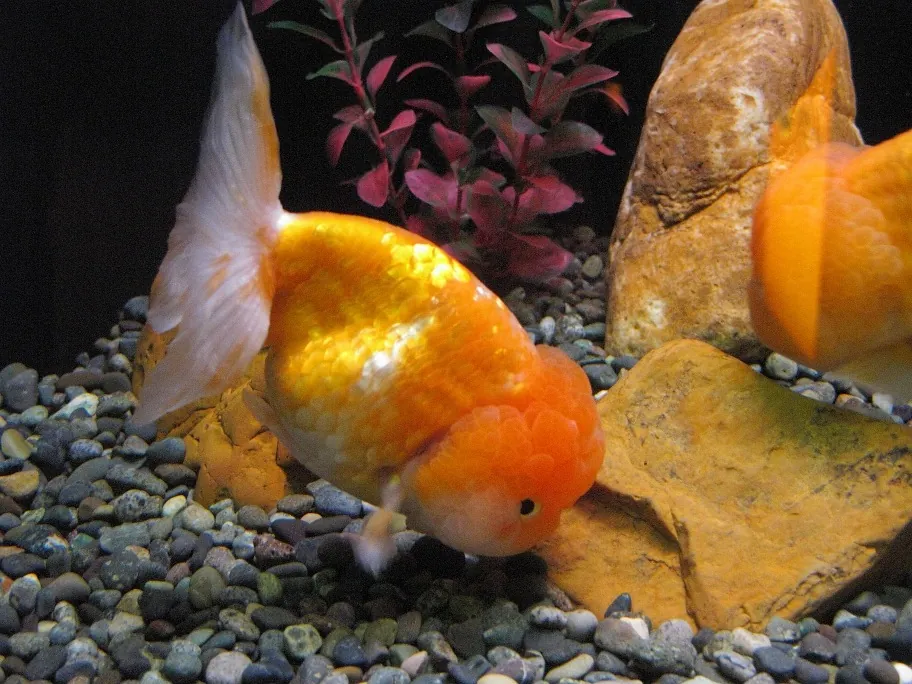
Lionhead
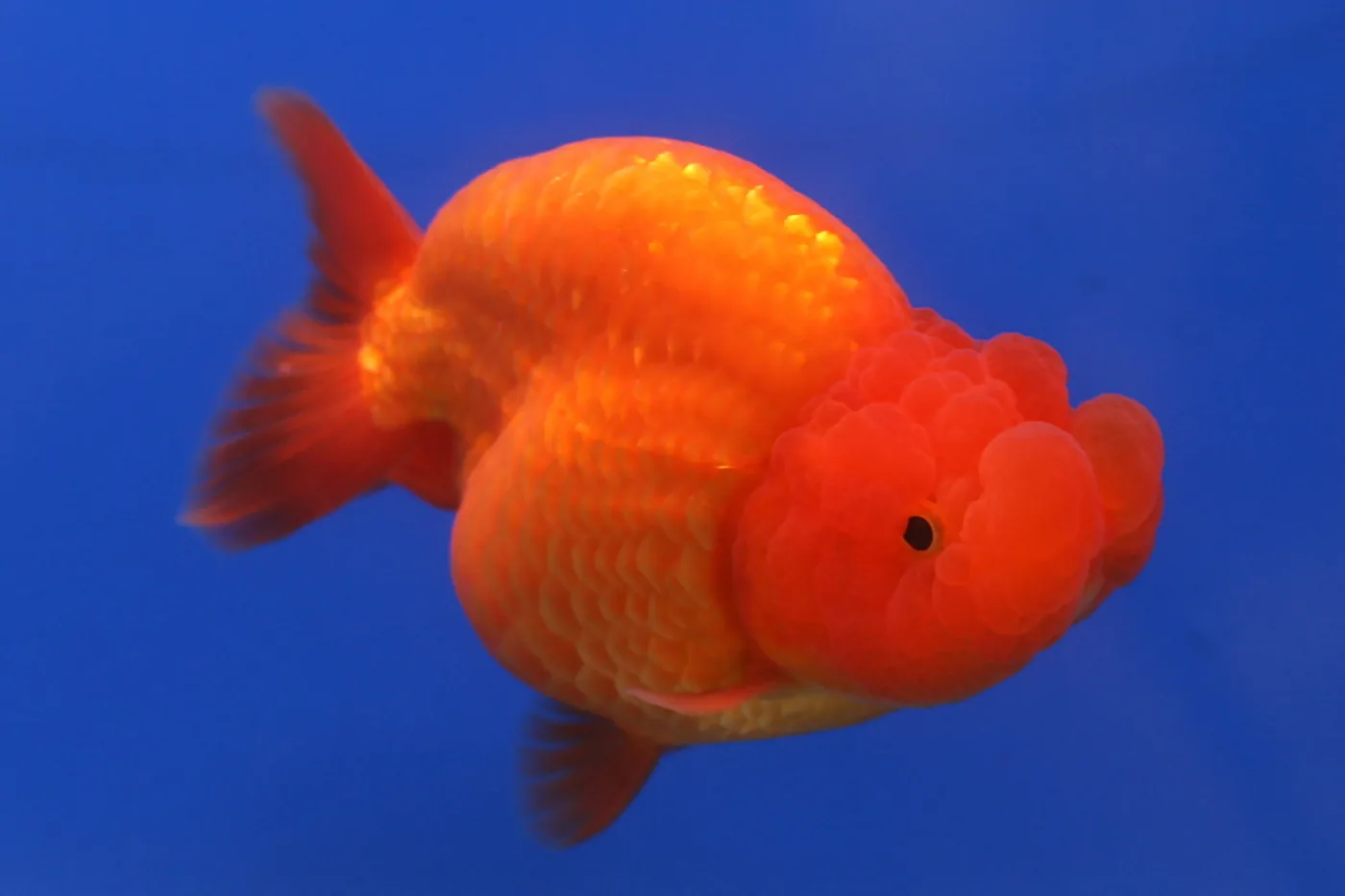
Ranchu
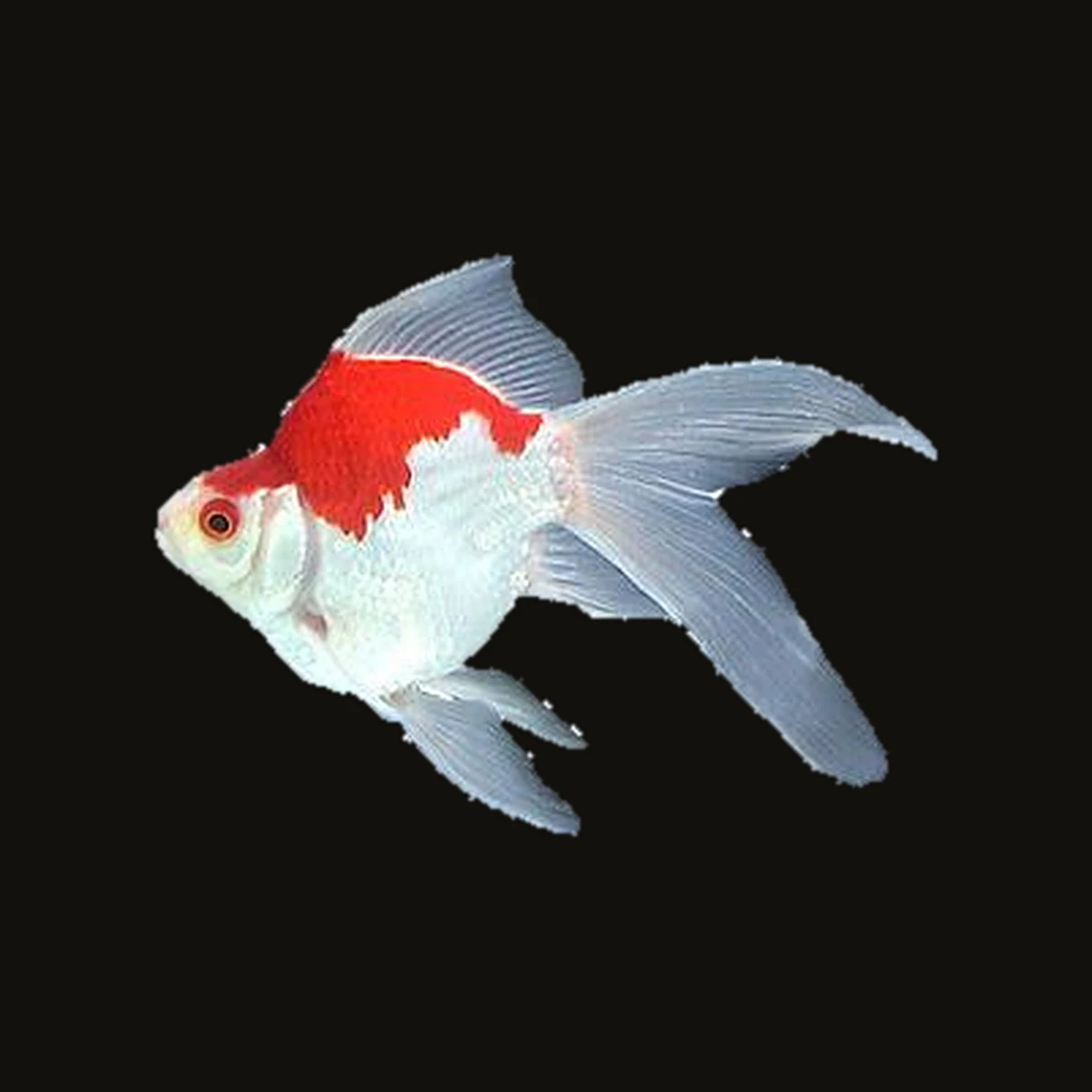
Tamasaba
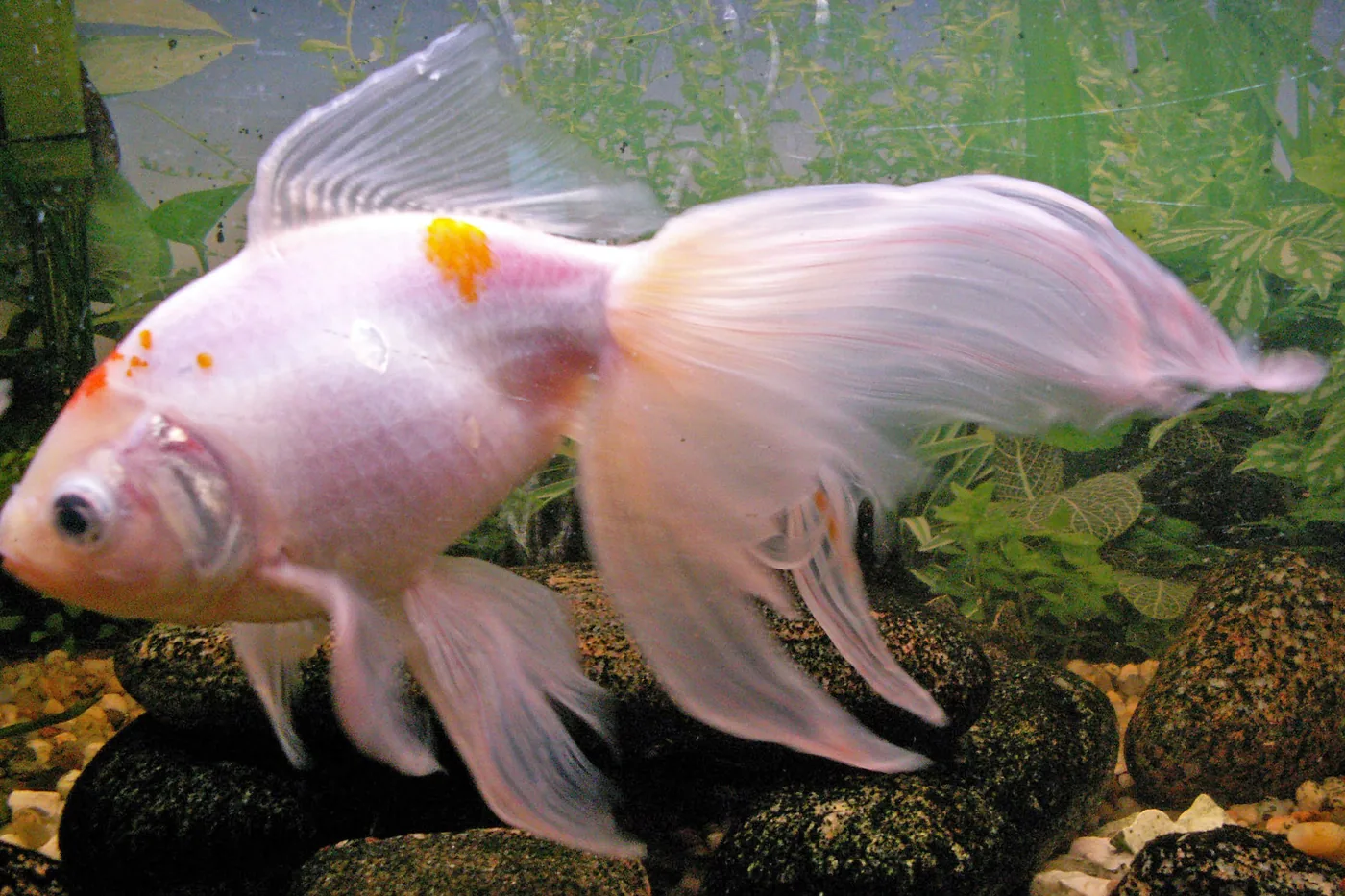
Veiltail
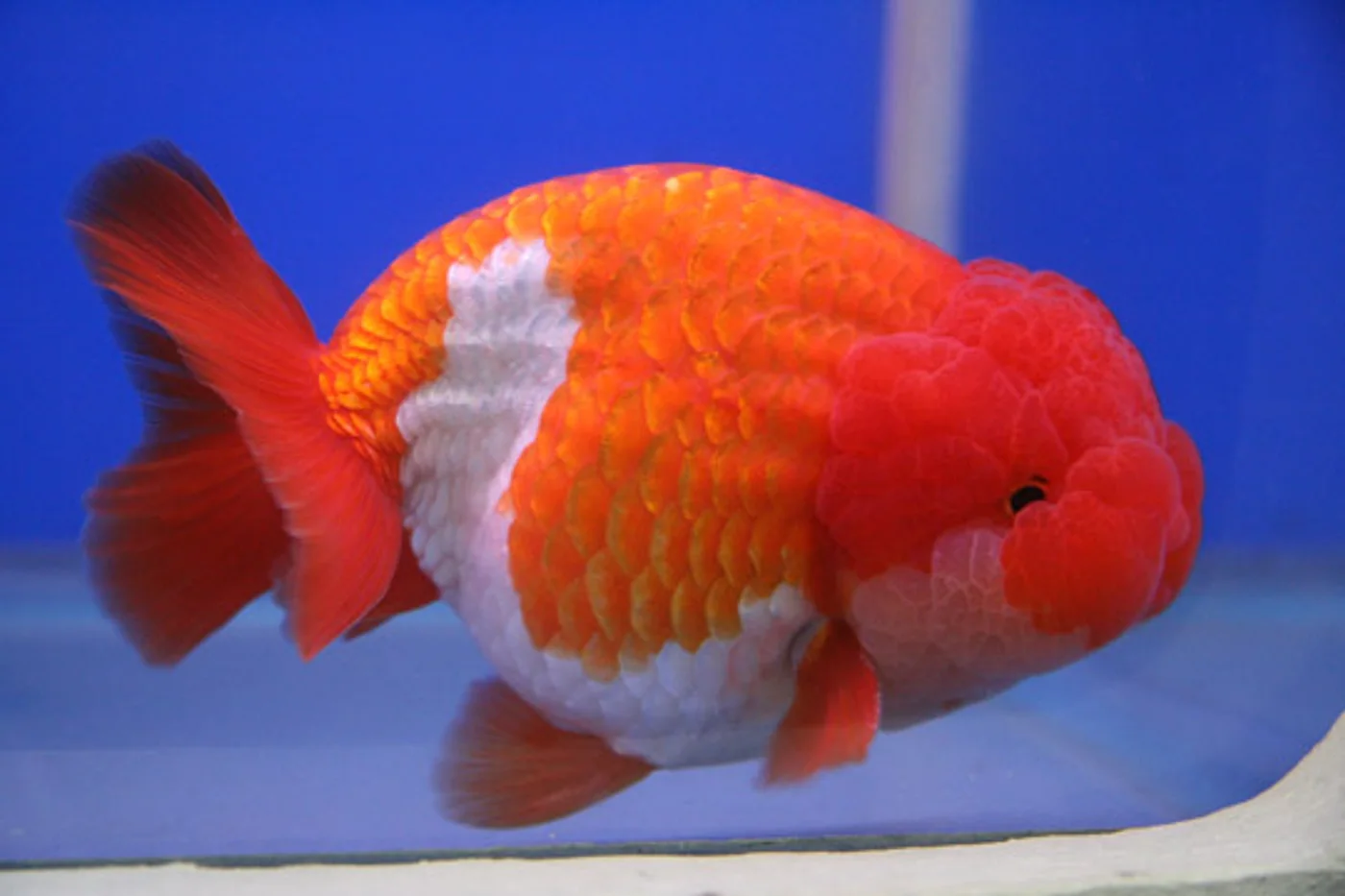
Lionchu
Best kept apart from: Common Goldfish, Comet, Shubunkin, Bubble Eye, Celestial Eye, Tosakin, Jikin. Speed and appetite differences leave the slower fish underfed.
Thinking about other species? Try the compatibility checker.
Similar breeds
Of the breeds most like the fantail, the ryukin, oranda, telescope, veiltail, black moor, pearlscale and tamasaba are pictured above among its companions. The others:
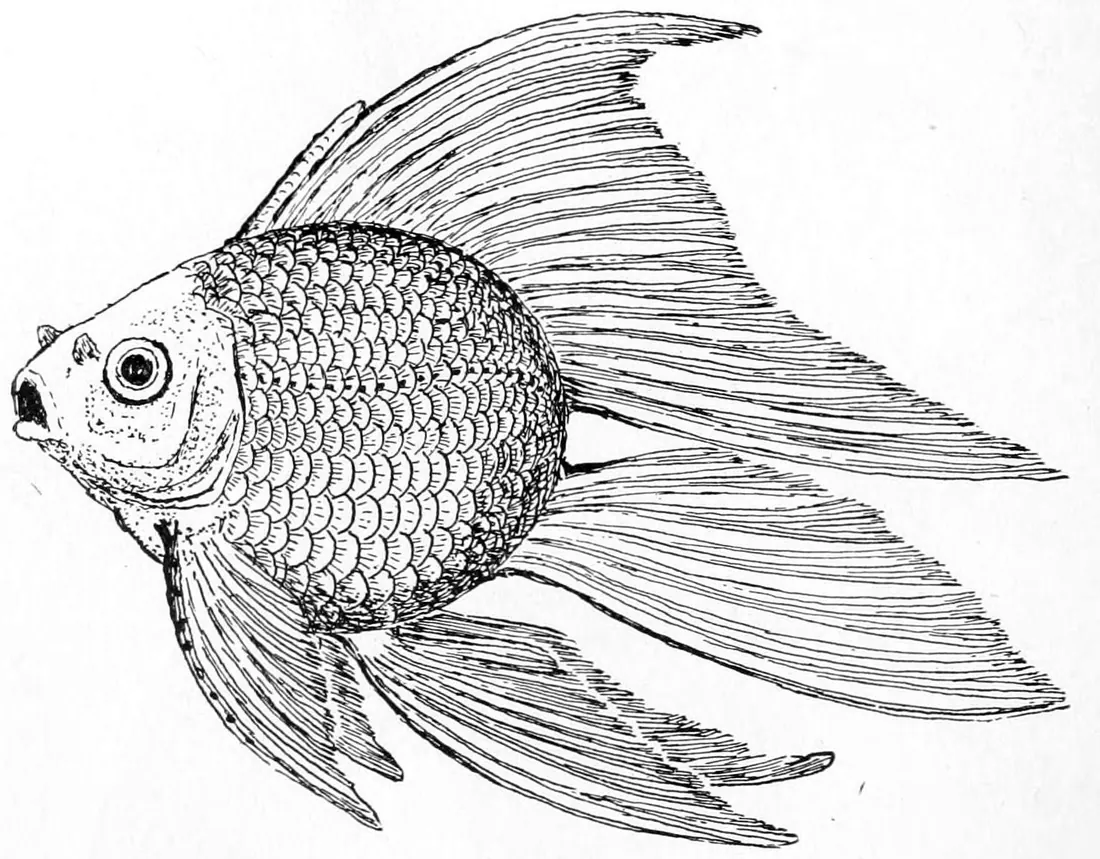
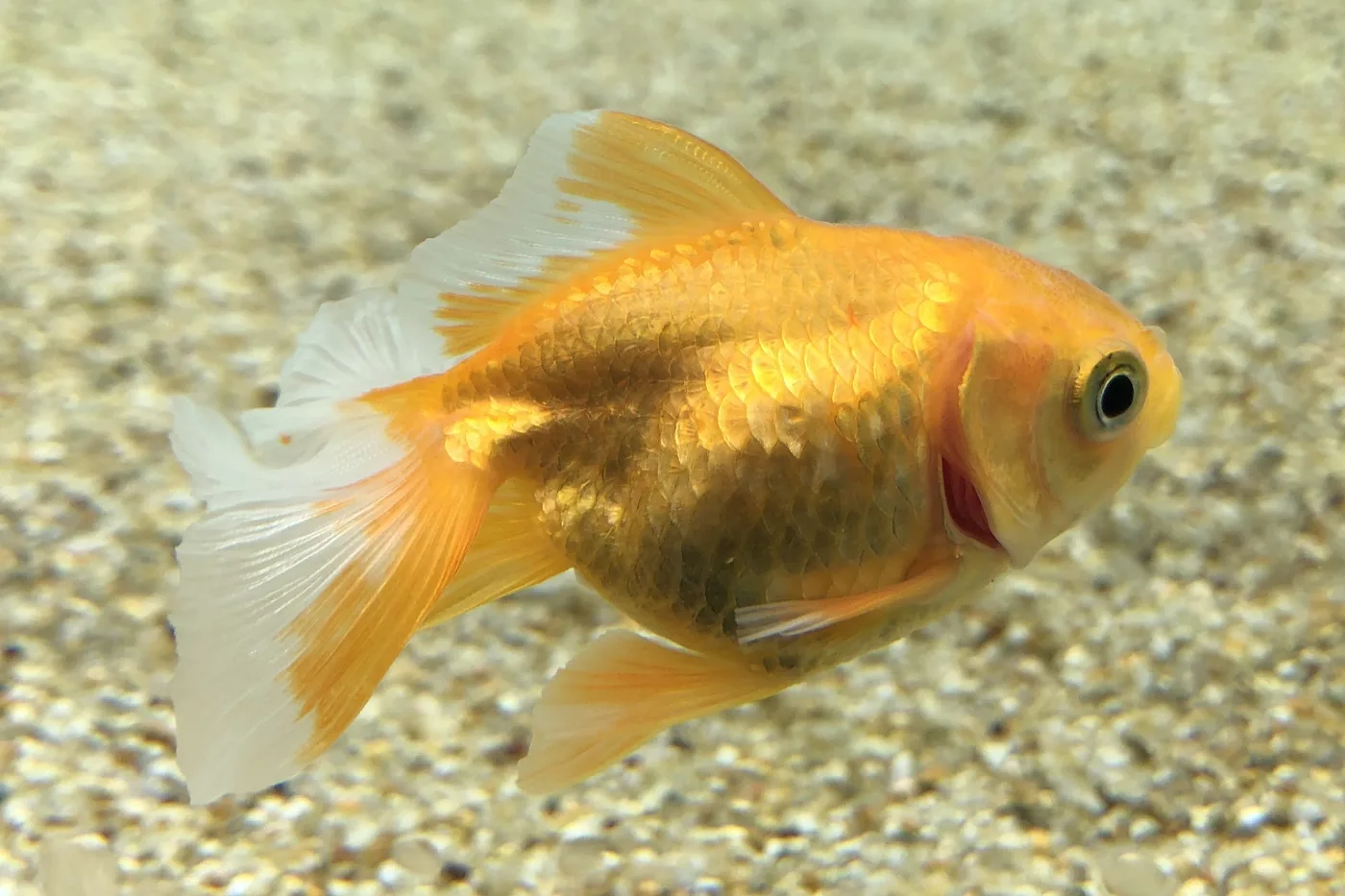
Frequently asked questions
Are fantails good for beginners?
For most people they are the best first fancy goldfish. Fantails have the round body and double tail of the fancies without a hood, altered eyes or an extreme shape, so they are steadier swimmers and less prone to injury. They still need a filtered aquarium of 75 litres (20 US gallons) or more, sinking food and weekly water changes, but they forgive the occasional mistake.
How big do fantail goldfish get?
A typical adult fantail measures 15 to 20 cm (6 to 8 inches) from nose to tail tip, with the body making up about three-quarters of that. Fish in large tanks or ponds with years of good feeding can grow a little bigger. The body deepens with age, so a slim two-year-old is not the final shape.
Can a fantail live with a comet or common goldfish?
It is not a good match. Fantails are among the quicker fancies, but a comet or common usually reaches food first, and its constant activity keeps a round-bodied fish on edge. Over months the fantail falls behind in size and condition. Keep fantails with other fancies of similar speed, such as orandas, ryukins and telescopes.
What should I look for when buying a fantail?
Look at it from behind as well as the side, which few people do. The two tail lobes should be even, carried apart rather than fused along one side, and the whole fish should be symmetrical down its length. Then look from above for a straight spine, and watch it swim: level, unhurried, fins open. A fantail with a fused or single-sided tail may swim crookedly, and tail faults are common in cheap stock.
What is the difference between a fantail and a ryukin?
The back. A fantail's body rises in a smooth egg shape, while a ryukin has a distinct hump beginning just behind the head so the back climbs sharply before the dorsal fin. A ryukin is also deeper-bodied and, by some accounts, quicker to the food. Both have a dorsal fin and a double tail, which is why young ones are easily confused, and the hump develops with growth rather than being obvious in a juvenile.
Can a fantail live in a pond?
In a mild climate, a deep well-filtered pond and with sensible company, a fantail manages outdoors better than most fancies — it is among the hardiest of them and tolerates cooler water. It is still a poor overwintering candidate where the water gets genuinely cold, and it cannot escape a heron. Summer outdoors and winter indoors suits it well, with the temperature changed gradually at both ends rather than in one move.
Why is my fantail floating at the surface?
Floating, tilting or bobbing after meals is often a buoyancy problem, and in a fantail common triggers are gulped air from floating food, overfeeding and constipation. Switch to a sinking pellet soaked before feeding, offer shelled peas for a day or two, and feed less. Test the water, because poor quality can produce the same picture. If it persists for more than a few days, see the floating guide.