03 Health
Something wrong with your goldfish?
Start with what you can see. Each page below walks through what a symptom may mean, which water checks to do first, when a vet is the right call, and what not to do.
Before anything else
Test the water
Poor water quality is a frequent cause of illness in pet fish and often makes other problems worse. Ammonia, nitrite, nitrate, pH and temperature take five minutes to check, and the result changes what everything else means.
By where you see it
Where on the fish?
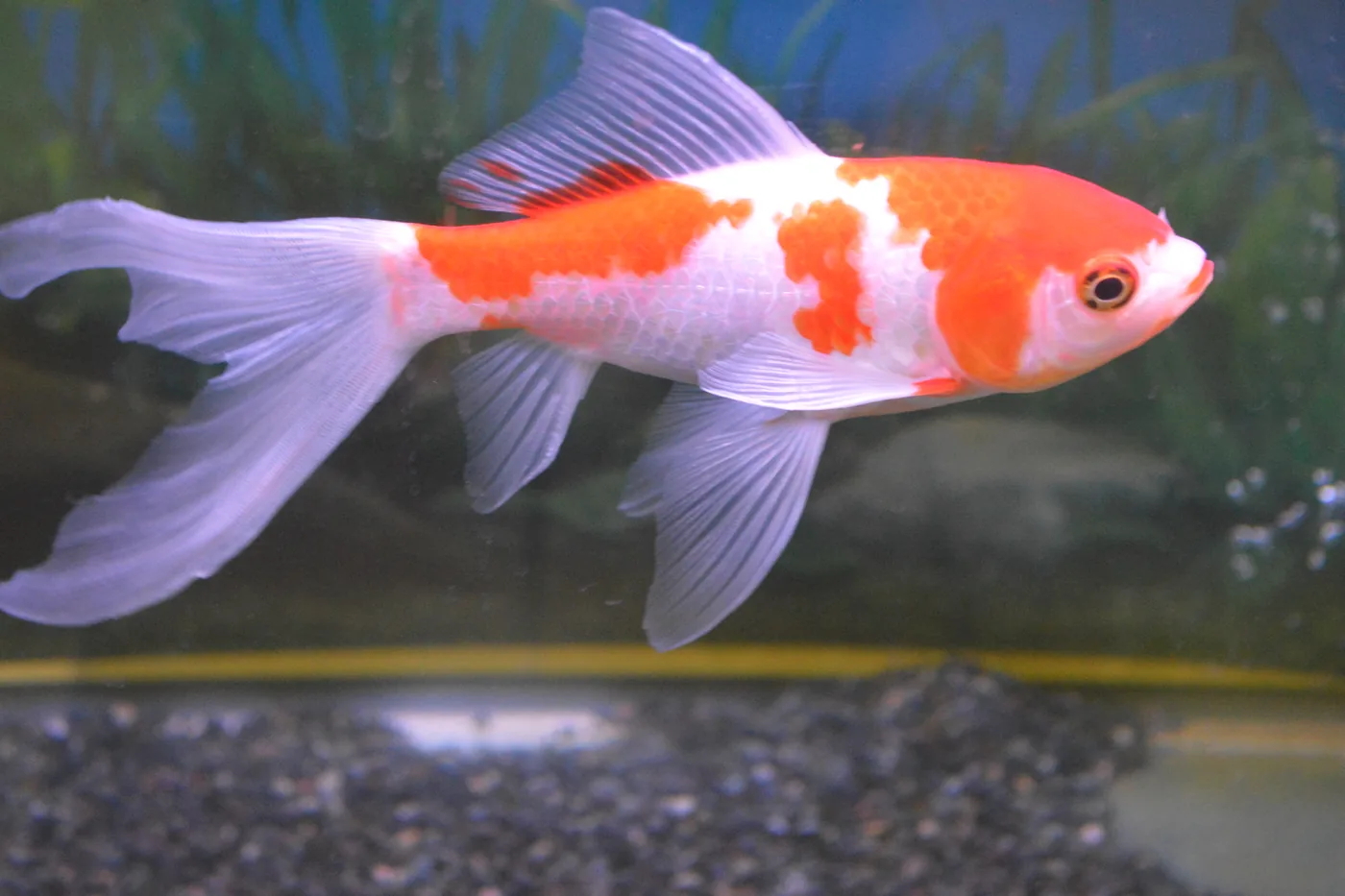
- Eyes Cloudy eyesBulging eye
- Mouth Mouth stuck open, blocked or sore
- Gills Fast or laboured breathingGasping at the surface
- Fins Torn or ragged finsRed streaksClamped finsBubbles on the fins, skin or eyes
- Skin and scales White spotsCotton-wool growthUlcers and open soresGrey film or excess slimeBlack patchesMissing or damaged scalesPale or faded colourSomething attached to the skinA lump or growth
- Belly Swollen abdomenLosing weight or getting thin
- Vent Swollen, red or protruding ventStringy or trailing faeces
- Back A bent or curved spine
How it swims and eats Floating upside downSitting on the bottomFlashing and rubbingNot eating
Search by symptom
What are you seeing?
Not sure anything is wrong? Several of the things that bring people here are normal. What a healthy goldfish looks like is the page to read first, and what each disease actually is is the reference behind these pages.
On the body and skin 11
- White spots Salt-grain spots scattered across the body and fins are the classic sign of ich, but not every white mark is a parasite. Here is how to tell them apart and what to do first. Act within a day or two
- Red streaks Fine red lines through the fins or across the body usually mean the fish is being burned by its own water. Sometimes it is a bacterial infection, and occasionally it is nothing at all. Act within a day or two
- Ulcers and open sores An ulcer is a hole in the barrier that keeps a freshwater fish separate from its water. It is the one skin problem where the clock genuinely matters, and the water is where treatment starts. Act today
- Cotton-wool growth Fungus grows on tissue that is already dead or damaged, so it is a marker rather than a beginning. The urgent question is not the fungus but what let it in — and whether the growth is fungus at all. Act within a day or two
- Black patches Black patches alarm people because they look like something spreading. Often they are the opposite: pigment laid down where the skin was injured, or a young or dark-bred fish's colour changing. Watch closely
- A lump or growth Many lumps on a goldfish are not tumours, and several of the harmless ones get medicated anyway. What the growth looks like, where it sits and how fast it is changing separate them — and the last of those is free to measure. Act within a day or two
- Missing or damaged scales A missing scale is an open patch of skin, which is why the thing to watch is the site rather than the scale. The first question is not what caused it but whether the scales are missing or standing out — those are different problems with different outcomes. Watch closely
- Pale or faded colour Most goldfish that lose colour are doing something ordinary — ageing, adjusting to a pale tank, or eating a diet with nothing in it to be orange with. The distinction that matters is whether it happened over months or over an afternoon. Watch closely
- A bent or curved spine Most bent spines are a record rather than a process — a deformity from development, a stunted first two years, or an old healed injury. The ones that matter are the ones still getting worse. Watch closely
- Grey film or excess slime A grey film is not something growing on a goldfish. It is the fish's own mucus, produced faster than usual because something is irritating the skin. That makes it one of the most informative symptoms on the site and one of the least specific — it says the skin is under attack without saying by what. Act within a day or two
- Something attached to the skin The parasites big enough to see on a goldfish are crustaceans and leeches, not worms, and all of them arrive from outside, on a new fish, a plant or a bag of live food. What you can see is the smaller part of the problem: the young stages and the eggs are already in the water. Act within a day or two
Fins and eyes 5
- Clamped fins Fins folded tight against the body are a goldfish's general-purpose sign of stress rather than a disease in themselves. The water is the usual reason, parasites the next, and the fish's other behaviour points to which. Act within a day or two
- Cloudy eyes A milky or white haze over a goldfish's eye is most often a reaction to the water, sometimes an injury, and occasionally an infection or age. Whether one eye or both is affected is a useful clue. Act within a day or two
- Torn or ragged fins A split or ragged fin is usually mechanical damage that will regrow in clean water. Fins that fray from the edges with white or red margins are fin rot, a bacterial problem that most often follows poor water. Watch closely
- Bulging eye A protruding eye is swelling behind the eye rather than a problem with the eye itself. Whether one or both are affected is a very useful thing you can notice, because it separates an injury from something systemic. Act within a day or two
- Bubbles on the fins, skin or eyes Most bubbles on a goldfish are air clinging to the outside after a fill, and they drift off within the hour. Bubbles inside the fins, under the skin or in the eyes are gas bubble disease: the water is holding more gas than it can, and the fix is the water, not the fish. Act today
How it is swimming 5
- Floating upside down Buoyancy problems, often called swim bladder disease, are common in round-bodied fancy goldfish and have several possible causes, from food and body shape to infection and organ disease. A fish that floats only after meals often settles with a short fast and a change of diet; one that stays affected for weeks needs a vet. Watch closely
- Sitting on the bottom A goldfish resting on the bottom is sometimes just asleep, but a fish that stays down during the day with clamped fins or fast breathing is usually reacting to its water, its temperature or a parasite. Act within a day or two
- Gasping at the surface A goldfish mouthing at the surface is struggling to get oxygen into its blood. The cause is the water more often than the fish, and the first hour matters. A large water change and aeration come before anything else. Act today
- Flashing and rubbing Flashing is a goldfish trying to scratch an itch it cannot reach. It is the earliest warning most keepers get, and it usually means either something on the skin and gills or something wrong in the water. Act within a day or two
- Fast or laboured breathing Gill movement is the most informative thing on a goldfish and the least often measured. Fast breathing is a symptom rather than a disease, it has a normal range that shifts with temperature, and the useful question is what changed rather than what the number is. Act within a day or two
Eating and the gut 6
- Swollen abdomen A rounded belly can be as harmless as a big meal or a female full of eggs, or as serious as dropsy. Whether the scales lie flat or stand out is the first thing to check. Act within a day or two
- Not eating A goldfish that ignores food is telling you something, but not always something serious. Cold water, a new home or a stale tub of flakes explain many cases; the water test sorts out the rest. Watch closely
- Stringy or trailing faeces Faeces are the most informative thing a goldfish produces and the thing keepers look at least. Long, pale or trailing strings usually mean food passing through undigested — which is a feeding problem, until it is a parasite. Watch closely
- Mouth stuck open, blocked or sore Goldfish feed by sifting, so the mouth takes more wear than any other part of the fish. Most mouth problems are mechanical, a stone that went in the wrong way or a snout worn on the glass. One, columnaris, is an infection that will not wait. Act within a day or two
- Swollen, red or protruding vent The vent is the opening just in front of the anal fin, and most of the time you cannot see it. When you can, something has changed. A female ready to spawn is a common reason and the only normal one; straining, infection, worms and a prolapse are the others, and they look different enough to tell apart. Act within a day or two
- Losing weight or getting thin A thin goldfish is either not getting enough food or not keeping what it eats, and the two need opposite answers. Watching one feeding usually tells you which. The first is fixed at the feeding spot; the second is where parasites, and rarely mycobacteriosis, come in. Act within a day or two
If a fish is in trouble right now
Four things that help in almost every case
- Test ammonia and nitrite. If either reads above zero, do a 30–50% water change with dechlorinated water at the same temperature, and at least half the water if ammonia reads 2 mg/L or more.
- Add oxygen. Increase surface agitation with an air stone or by lowering the water level under the filter outflow.
- Stop feeding for a day. Food adds ammonia and the fish will not miss a meal.
- Do not medicate blind. Guessing at treatments, or combining them, can do more harm than waiting a day to understand the problem.
gold.fish is an educational resource and cannot diagnose your fish. For a fish that is deteriorating, an aquatic veterinarian is the right call. Read our editorial policy.
Prevention