No. 11Reached Nagasaki around 1800
Oranda
The hooded aristocrat of the fancy goldfish world.
Also known as Dutch Lionhead · Oranda Shishigashira · Red Cap Oranda (variety)
- Specimen
- Fancy goldfish, China and Japan
- Adult size
- 20–30 cm
- Lifespan
- 10–15 years
- Water
- 18–24 °C
- Care
- Moderate
- Swimming
- Moderate
- First fish needs
- 100 litres
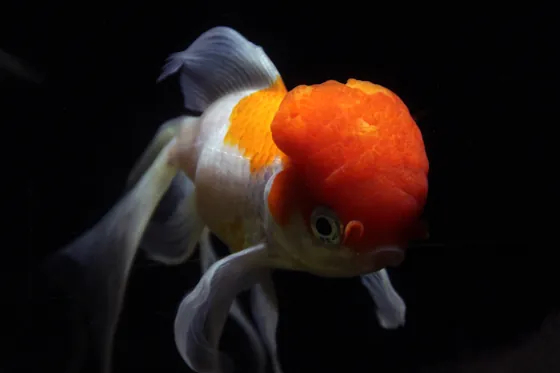
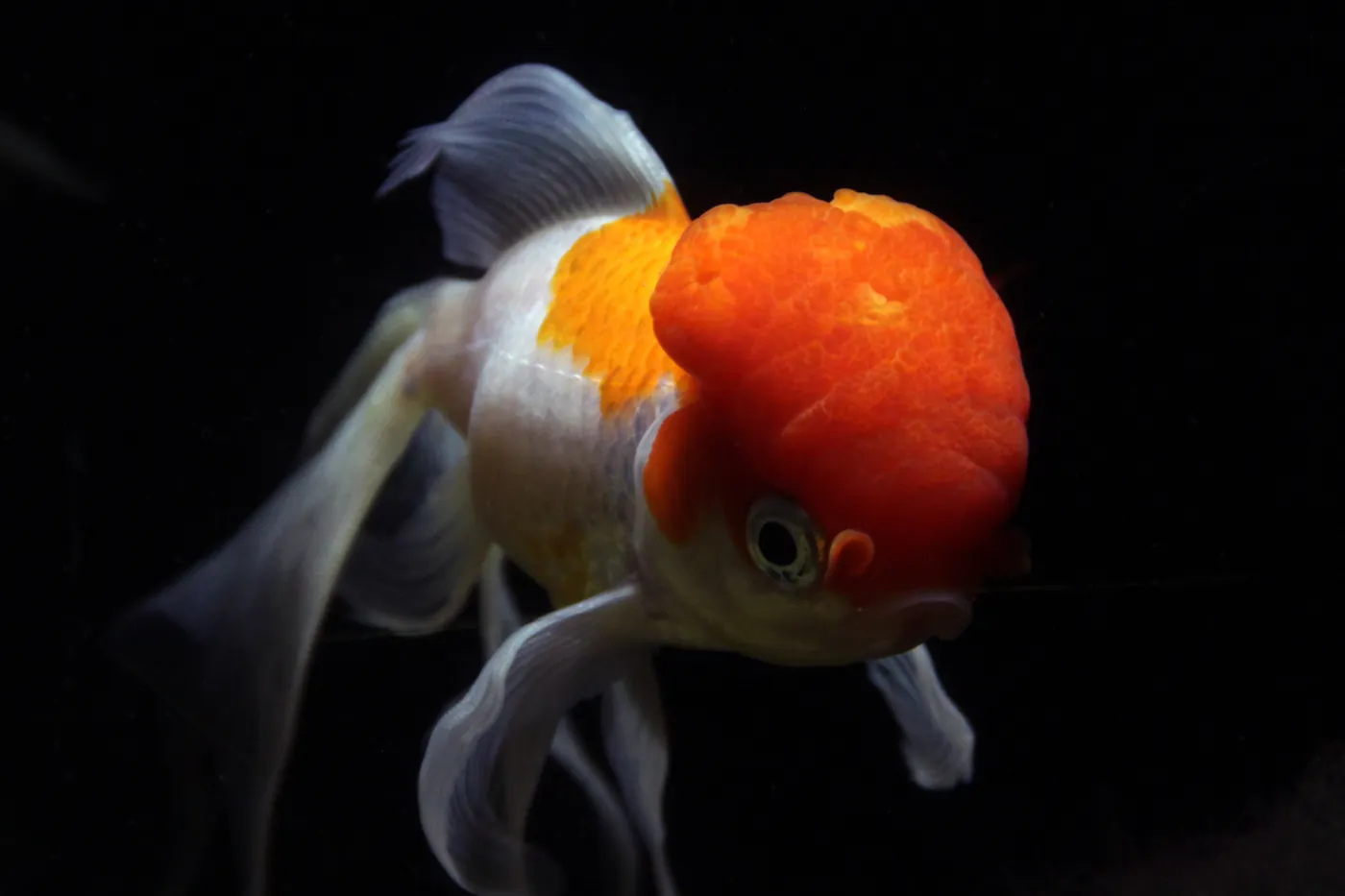
Photograph: Vassil — CC0 · Wikimedia Commons
About this pictureThe raised dorsal fin is the quickest way to tell an oranda from a lionhead, which carries the same hood on a back with no fin at all. This fish is close to a red cap, the pattern that puts the colour in the hood, with an orange saddle behind it.
About these figures Size, lifespan and water are the ranges keepers' guides give for a fish in good care, not measurements of this breed, and swimming and care are this site's own ratings of the published advice. Lifespan is where the sources differ most: how long goldfish live sets them side by side. First fish needs is a middle figure for one fish, from advice that runs from 50 litres to about 300; tank size sets that out.
The specimen
Quick facts
- Classification
- Fancy goldfish
- Body type
- Egg-shaped body with a full, flowing double tail and a distinctive fleshy hood (wen) on the head
- Tail and dorsal
- Double tail, dorsal fin present
- Swimming ability
- Moderate
- Keeper experience
- Intermediate
- Temperament
- Peaceful, sociable and curious; easily outpaced at feeding time by faster fish
- Adult size
- 20–30 cm (8–12 in)
- Temperature
- 18–24 °C (64–75 °F)
- Minimum aquarium
- 100 L (26 US gal) for one fish
- Origin
- China, reaching Nagasaki around 1800, Sources disagree on the date and route
How to recognise one
- A raspberry-textured hood (wen) covering the top of the head, often spreading to the cheeks and gill covers
- Deep, egg-shaped body with a clearly visible dorsal fin
- Long, flowing double caudal fin that drapes rather than fans
- Available in orange, red, red-and-white, calico, chocolate, blue, black and the white-bodied Red Cap
Identification
The oranda is unmistakable once you know what to look for. The head carries a fleshy, textured growth called a wen, which starts as a modest cap in young fish and can spread across the cheeks and gill covers over the first two or three years — wen care covers how it develops and what keeping one healthy actually involves. Beneath it sits a deep, egg-shaped body, a proper dorsal fin, and a double tail that hangs in soft folds rather than fanning out stiffly.
Orandas are sometimes confused with lionheads and ranchus, which also carry a wen. The quickest check is the back: orandas have a dorsal fin, lionheads and ranchus do not. Ryukins share the tall body but have a pointed head with no hood.
The Red Cap is the most recognisable variety, with a clean white body and a wen confined to the top of the head in a single patch of red. Calico orandas show blue, red, black and white on nacreous scales, and there are chocolate, blue-scaled and black lines as well, though black fish often shift toward bronze as they age.
Oranda, lionhead or ranchu?
Three hooded goldfish side by side: an oranda with a dorsal fin ringed on its back, a lionhead with its fairly straight, finless back ringed, and a ranchu with its arched, finless back ringed.
- Oranda. The one of the three with a dorsal fin. Its hood can spread down the cheeks and over the gill covers.
- Lionhead. No dorsal fin, and a back that runs fairly straight or gently curved, with only a mild tuck at the tail. Shops often sell it as a ranchu.
- Ranchu. No dorsal fin, and one smooth arch from head to a tail tucked in at about 45 degrees.
Photographs: Oranda, Vassil, CC0; Lionhead, Lawrencekhoo, CC BY-SA 4.0; Ranchu, Lerdsuwa, CC BY-SA 4.0. Rings added.
The varieties
Among the most varied of the fancies, and the naming is inconsistent between sellers.
- Red Cap. A clean white body with the wen confined to the top of the head as a single red patch. The most recognisable oranda and the hardest to keep looking its best, because a white fish shows every mark.
- Calico. Blue, red, black and white over nacreous scales. Patterning shifts through the fish’s life and no two are alike.
- Chocolate, blue and black. Selected colour lines. Black orandas commonly drift toward bronze as they age, which is ordinary rather than a problem — pale or faded colour covers what colour change means and does not mean.
- Tigerhead and goosehead. A tigerhead has a hood over the whole head and a goosehead a hood on the crown, though sellers use both names loosely.
- Panda. Black and white, and frequently unstable; many panda fish do not stay panda.
- The large Asian lines. Thai and Chinese breeders produce orandas well beyond the sizes most keepers picture, and a fish from one of those lines needs the volume to match.
What the label is worth: less than the fish. Shops label loosely, young fish look alike, and an oranda sold as a Red Cap at four centimetres may not hold the pattern. Buy the individual.
How it develops
An oranda is bought as one fish and lived with as another, and the timeline explains most of the disappointment people report. A wen usually starts to show in the first few months and keeps developing for one to two years, so a young fish can look like a plain fantail with a slightly domed head.
So the fish in the shop is a prediction, and the parents are a better guide to the adult than the juvenile is. That argument is made at length in breeding goldfish, and it is the reason serious stock comes from a breeder rather than a display tank.
Buy the tank for the adult, not the one in the bag. How big do goldfish get sets out how far that gap runs.
Choosing one
Ten minutes in front of the tank, in this order.
- Watch it swim before looking at its head. It should hold level without effort, use the whole tank, and sit upright when it stops. A juvenile that already struggles to stay level may not grow out of it.
- Look from above. The body should be symmetrical, and the tail carried evenly rather than folded permanently to one side.
- Then the wen. However small, it should be developing evenly. Heavy growth on one side at a young age tends to stay uneven.
- Check both eyes are clear and that the fish is not breathing hard — fast or laboured breathing covers what a raised gill rate in a shop tank means.
- Read the whole system, not the fish. Dead fish in the tank, a shared filtration system with a sick fish two tanks over, or visible disease anywhere is a reason to leave. Choosing and bringing home a goldfish covers the rest.
- Then quarantine it, for at least four weeks, without exception — quarantining a new goldfish explains why this matters more for a fancy going in with other fancies than for almost anything else.
Where you will find one. Any decent aquatic shop, often as a juvenile with little or no wen — which is awkward, because the wen is the thing being bought and it is not there yet. Wen growth runs over one to two years or more and its final shape is not predictable from a young fish. If you want a particular head type, a red cap especially, buy an older fish from a specialist or accept that you are buying a lottery ticket with good odds rather than a known outcome.
Personality and behaviour
Orandas are gentle, deliberate fish. They spend much of the day working through the substrate for anything edible, and they learn quickly where food arrives and who delivers it. Many keepers find their orandas following a finger along the glass within a few weeks.
Because they are slow and round-bodied, they do badly in mixed company with fast single-tailed goldfish, who usually reach the food first — chasing and bullying covers that slow mechanism, which does its damage without anything that looks like conflict. Kept with other fancies of similar speed, they are peaceful to the point of being social, and a pair or trio will usually forage together.
Aquarium requirements
Orandas are among the largest fancy goldfish, and the aquarium should reflect that. Around 100 litres (26 US gallons) for the first fish and an additional 40 to 50 litres for each further oranda is a reasonable working range, and more is always better — goldfish tank size explains where those figures come from. Footprint matters more than height: a long, wide tank gives more swimming room and more surface area for gas exchange than a tall, narrow one holding the same volume. Use the tank size calculator to see the numbers for your own group.
Filtration should be strong but gentle. Goldfish produce a lot of waste, so aim for a filter rated well above the tank’s volume, but baffle the outflow so the current does not push a fish with flowing fins around the tank. Sponge filters and canister filters with a spray bar both work well, and goldfish filtration covers sizing one for a fish that produces this much waste. Keep the water between 18 and 24 °C, avoid rapid swings, and change 25 to 40 percent of the water weekly, adjusting from your own nitrate readings.
Decor should be smooth. Rounded stones, silk or robust live plants such as anubias and java fern, and nothing with edges or narrow gaps that a curious, poorly sighted fish could catch a fin or a wen on. Sand or bare glass is easier to keep clean than gravel and avoids the risk of a swallowed stone — substrate for goldfish covers grain size, and aquarium decorations the test for anything you are unsure about.
Feeding
A quality sinking pellet designed for fancy goldfish should be the base of the diet. Sinking food matters more for orandas than for many breeds, because gulping air at the surface is often blamed for floating problems in round-bodied fish. Soak dry food for a minute before feeding if your fish tend to bolt it.
Add variety across the week: blanched vegetables such as shelled peas, zucchini or spinach, gel food, and occasional frozen daphnia or brine shrimp. Feed small amounts two or three times a day, only what is eaten in a minute or two, and skip a day now and then. Orandas with a large wen may struggle to see food directly in front of them; drop pellets in the same spot each time so the fish learns where to look.
Common health considerations
The wen is the oranda’s signature and its weak point. Its folds can trap debris and mucus, and the wen is prone to infection when water quality slips, showing as reddened or fluffy patches. Clean water is the prevention and the first response. Keepers often find that small white pimples on the wen alone are new growth rather than disease; spots that multiply or reach the body are treated as ich. An overgrown wen can also hide a tumour, and one that bleeds, ulcerates or changes shape quickly needs a vet.
Like other deep-bodied goldfish, orandas are said to be prone to buoyancy problems: floating, tilting or struggling to stay level. Diet, gulped air and constipation are common culprits, and switching to sinking food sometimes resolves it, though vets find other causes too. Persistent or sudden problems deserve a water test and a closer look at the floating guide.
Long fins tear easily on sharp decor and in strong currents. Torn fins heal well in clean water, but repeated damage invites fin rot, so fix the cause rather than just treating the symptom — first aid for an injured goldfish covers finding what it caught itself on, which is the step that stops a second one.
What goes wrong, in order
The oranda’s problems are predictable, which makes them preventable.
| What you see | Usually | Where to look |
|---|---|---|
| Floating or tilting after meals | Often diet, though other causes exist | Floating upside down |
| Redness or fuzz in the wen folds | Water quality, then bacteria | Wen care |
| Thin fish, no obvious cause | Outcompeted at feeding | Chasing and bullying |
| White pimples on the hood only | New wen growth, not disease | White spots |
| Ragged fin edges | Sharp decor, or fin rot in poor water | Torn fins |
| Hood growing over the eyes | The breed, taken far | Wen care |
The pattern in the causes is that four of the six are the tank rather than the fish. An oranda is a demanding animal to keep well and an undemanding one to diagnose, because almost everything traces back to water quality, flow and how it is fed.
Is an oranda right for you?
Worth saying plainly, because it is bought on looks more than any other goldfish.
It suits you if you want a slow, characterful fish that learns who you are, you can give it a long tank of 100 litres or more, you are willing to feed deliberately rather than scattering food, and you find a fish that needs attention interesting rather than tiresome.
It does not suit you if you already keep single-tails, if the tank has to share space with fast or nippy fish, if the setup is small, or if you want something that will look after itself. It is not a beginner’s fish in the way a comet is, and goldfish for beginners is straight about which end of that range to start at.
And the wen is a commitment, not a decoration. It can be the first place poor water shows, which is useful, and it means an oranda kept in mediocre water may show it sooner than a common goldfish would.
History and origin
The oranda is Chinese in origin, and Japanese sources have it reaching Nagasaki through the Ryukyu Islands around 1800, selected from a hooded ryukin mutation, with breeders there refining the body shape and finnage that define the breed today. The Japanese name, Oranda Shishigashira, translates roughly as “Dutch lionhead”; sources disagree on whether Dutch traders carried the fish or whether “Dutch” simply meant exotic.
Selective breeding since then has pushed the wen larger, the tail longer and the colour range wider. UK show standards score hood development over the crown, cheeks and gill covers, and the giant orandas seen in Thai and Chinese breeding lines can reach sizes that would surprise anyone who thinks of goldfish as small.
Before you bring one home
- The wen's folds can trap debris and it is prone to infection in poor water; one that bleeds, ulcerates or changes quickly needs a vet
- In some lines the wen grows over the eyes, reducing vision; feed where the fish can find food easily
- Long fins tear on sharp decor and can be damaged by strong filter currents
- Grows larger than most fancy goldfish and needs the water volume to match
Suitable companions
Round-bodied goldfish should live with fish of similar speed. These breeds share the same pace, water and food.
Ryukin
Telescope
Black Moor
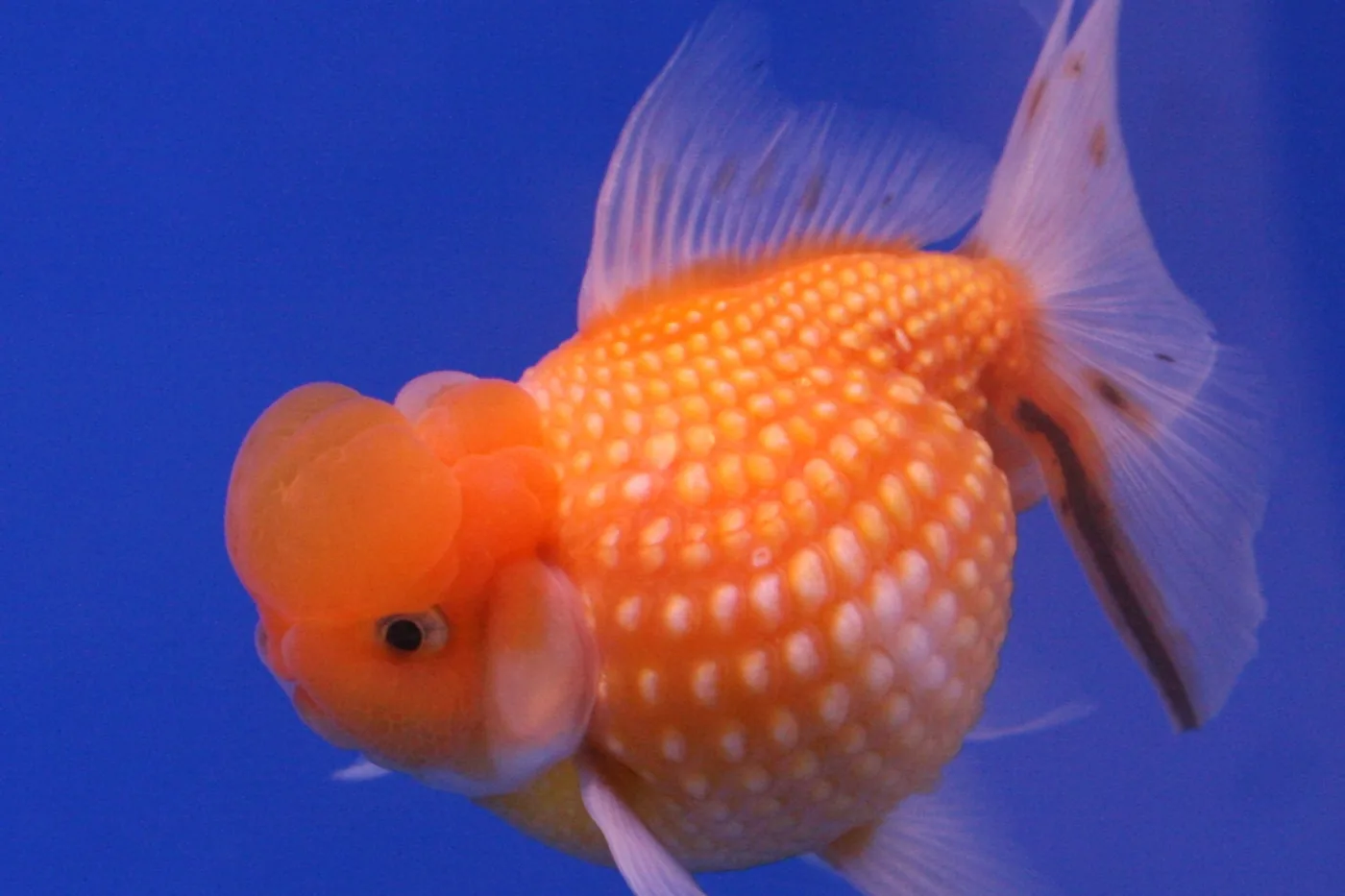
Pearlscale
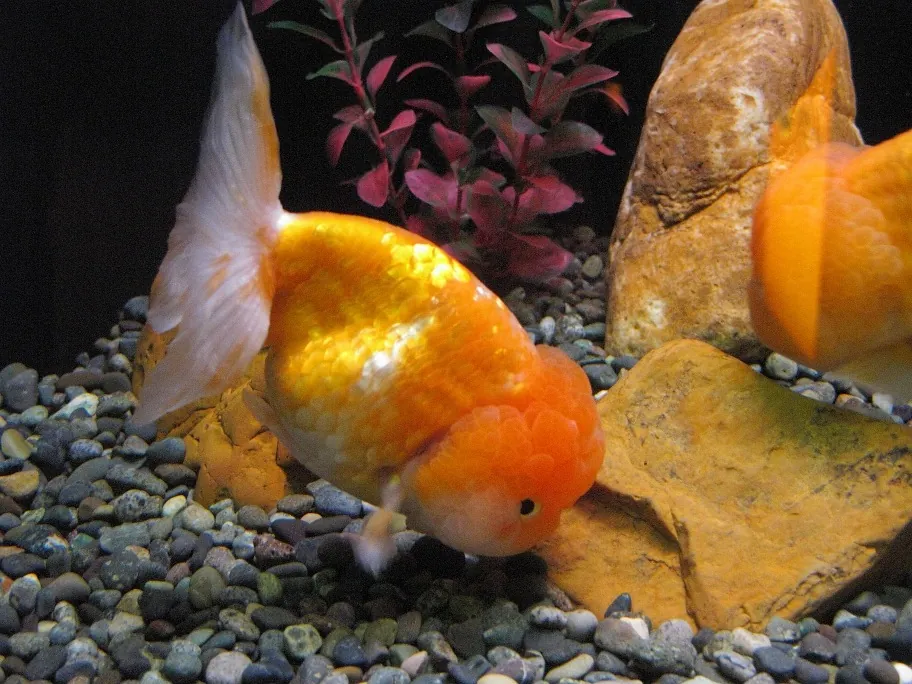
Lionhead
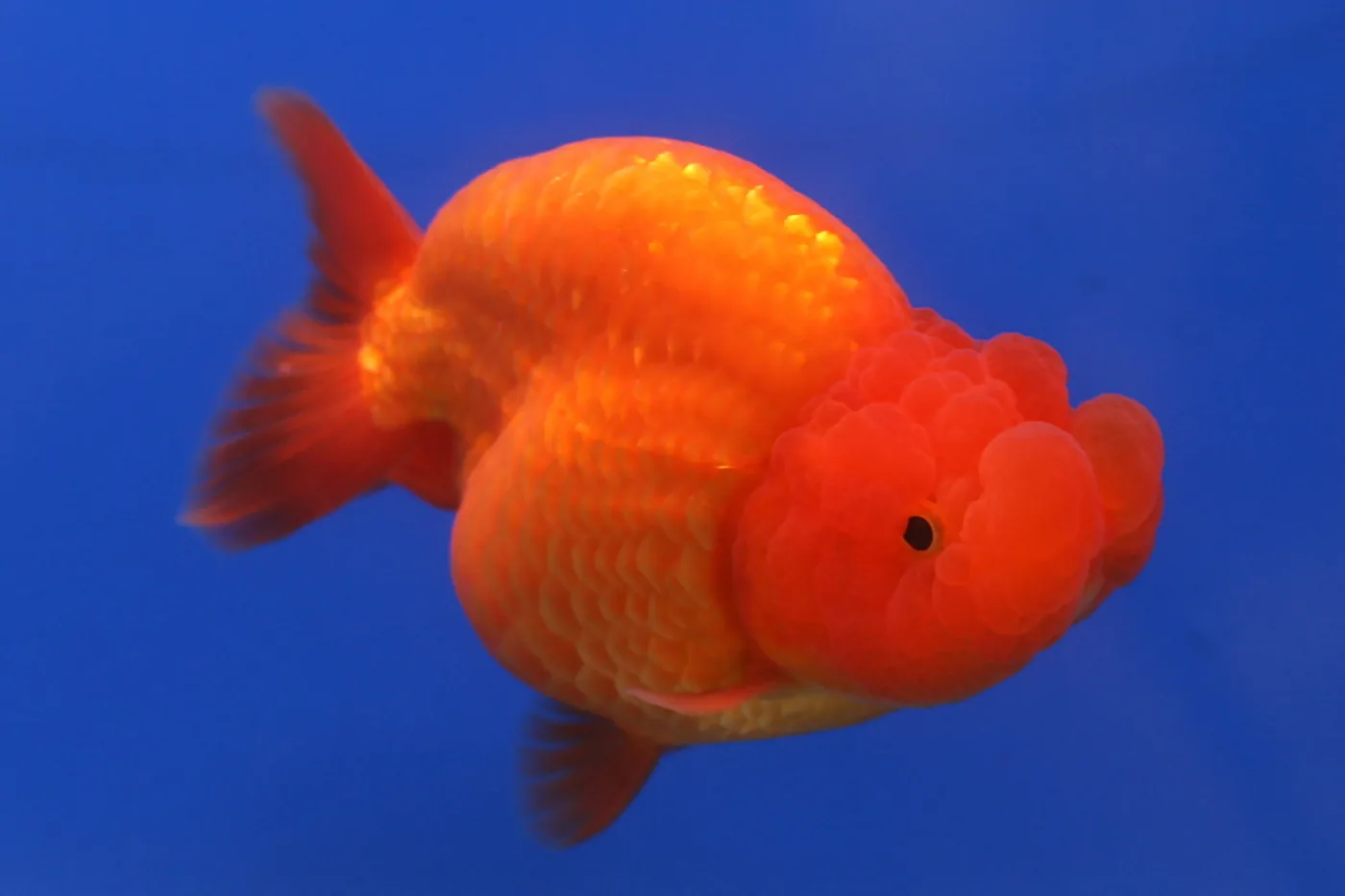
Ranchu
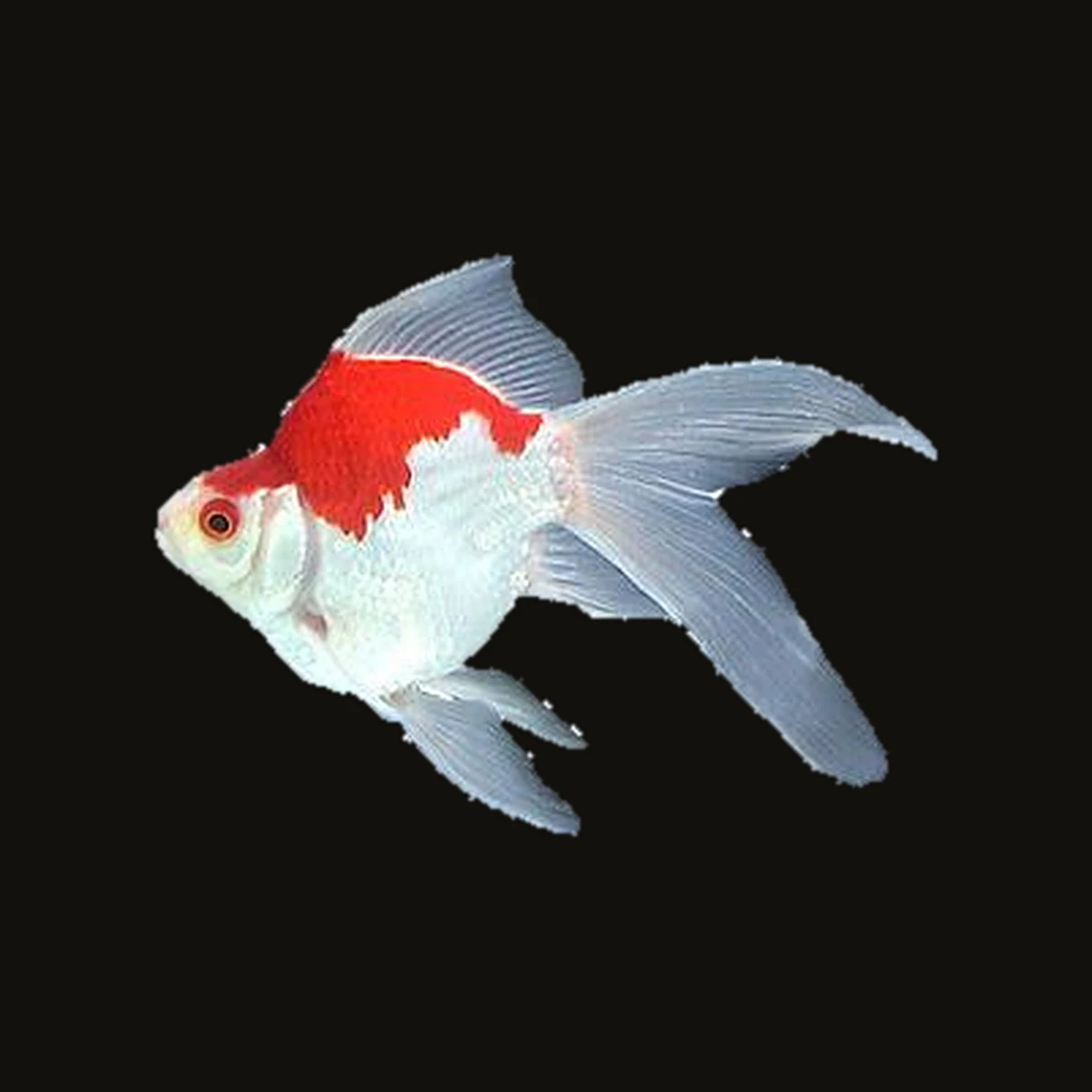
Tamasaba
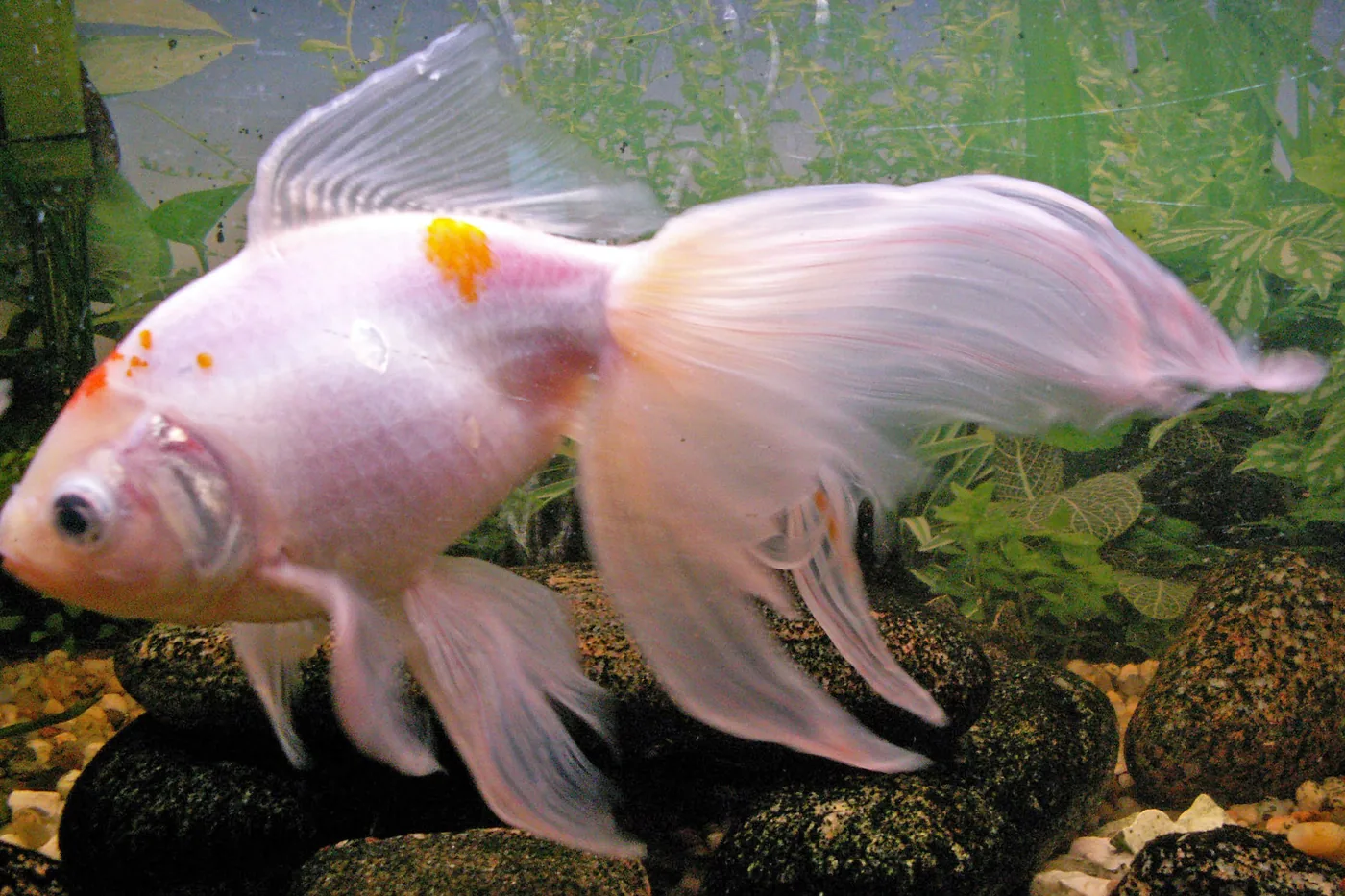
Veiltail
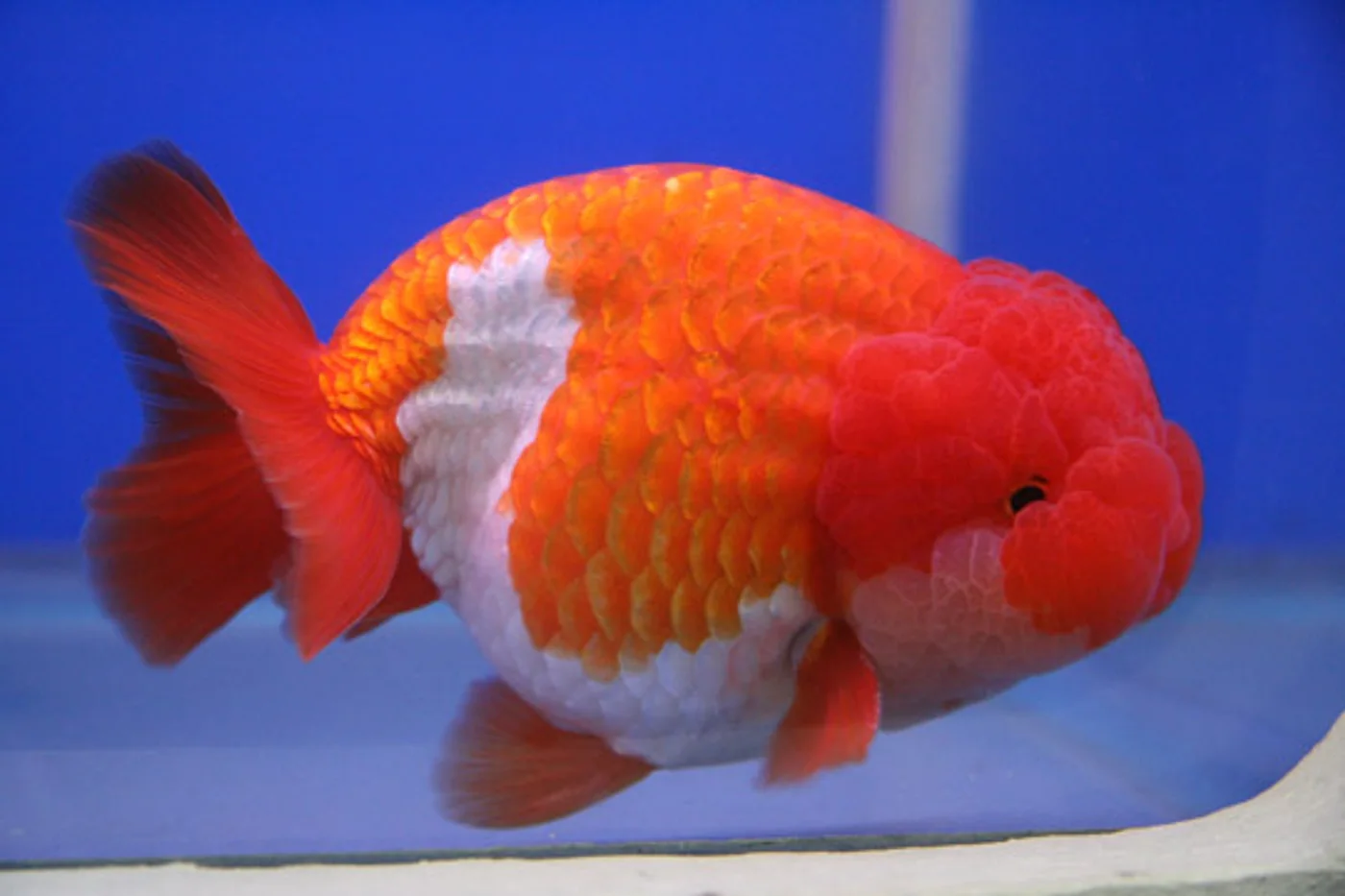
Lionchu
Best kept apart from: Common Goldfish, Comet, Shubunkin, Bubble Eye, Celestial Eye, Jikin. Speed and appetite differences leave the slower fish underfed.
Thinking about other species? Try the compatibility checker.
Similar breeds
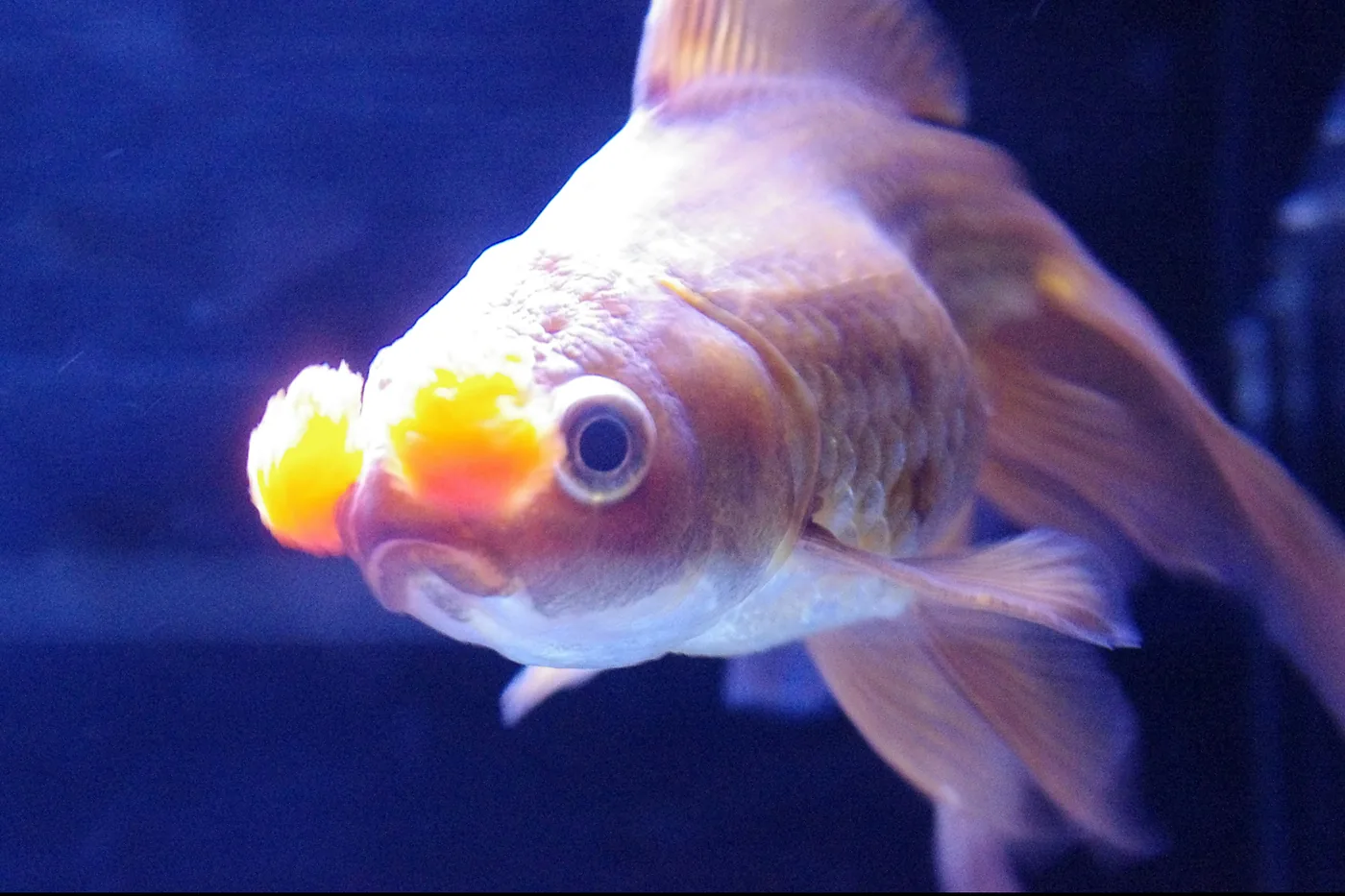
Of the breeds most like the oranda, the lionhead, ranchu, fantail, pearlscale and ryukin are pictured above among its companions. The others:
Frequently asked questions
How big does an oranda get?
Most orandas reach 20 to 30 cm (8 to 12 inches) including the tail, and well-kept fish in large aquariums or ponds can go beyond that. Plan the aquarium for the adult, not the juvenile you bring home.
Why does my oranda have white spots on its wen?
Small white pimples confined to the wen are often new wen growth, which is normal. Spots that look like grains of salt across the body and fins, or fluffy patches, are different and worth investigating. Test the water first and see the white spots guide.
Do orandas need a heater?
Not necessarily, but they do better without big swings. A room that stays between 18 and 24 °C is fine. If your room swings widely between day and night, a heater set to the low twenties keeps conditions steady, and avoiding large, fast swings matters more than the exact number.
How long does it take for an oranda's wen to grow?
Longer than most people expect. A wen usually starts to show in the first few months, with one study of a hooded strain seeing it start at about 50 days and be distinct by 80, and it keeps developing for one to two years; no published source gives a finer timetable. This is why a young oranda in a shop tank often looks like a plain fantail with a slightly domed head, and why the parents tell you far more about the adult than the fish in front of you does.
What should I look for when buying an oranda?
Watch it swim before you look at its head. It should hold itself level without effort, use the whole tank, and sit upright when it stops. Then check that the body is symmetrical from above, that the caudal fin is carried evenly rather than folded to one side, that both eyes are clear, and that the wen — however small — is developing evenly rather than heavily on one side. A fish that is struggling to stay level as a juvenile may not improve with age.
Can an oranda live in a pond?
In a mild climate and a deep, well-filtered pond, yes for the warmer months, but it is not a fish for overwintering outdoors where the water gets genuinely cold. Orandas are slow, round-bodied and poor at competing, the wen is thought to be prone to infection in cooler water, and they are easier prey for herons than a fast comet. Many keepers move them outdoors for summer and back in for winter, which works well if the temperature change is made gradually at both ends.
Why does my oranda sit on the bottom after eating?
Often buoyancy rather than illness, and often diet, though vets find many causes. A deep-bodied fancy has a shorter body that may predispose it to buoyancy problems, and a meal of dry food that swells after swallowing may press on the swim bladder. Soaking the pellets, feeding a sinking food and adding vegetables to the week sometimes settles it. If it persists between meals, or comes with clamped fins, fast breathing or loss of appetite, it is worth testing the water and reading the sitting-on-the-bottom page instead.
Can orandas live with common goldfish?
It is usually a poor combination. Single-tailed goldfish are faster and more boisterous, and orandas often end up underfed and stressed. Keep orandas with other slow, round-bodied fancies instead.