No. 10Reached Japan in the 1770s or 1780s
Ryukin
A deep-bodied fancy with a shoulder hump and an appetite to match.
Also known as Riukin · Ryūkin · Fringetail Ryukin (long-finned lines)
- Specimen
- Fancy goldfish, China and Japan
- Adult size
- 15–20 cm
- Lifespan
- 10–15 years
- Water
- 18–24 °C
- Care
- Moderate
- Swimming
- Moderate
- First fish needs
- 100 litres
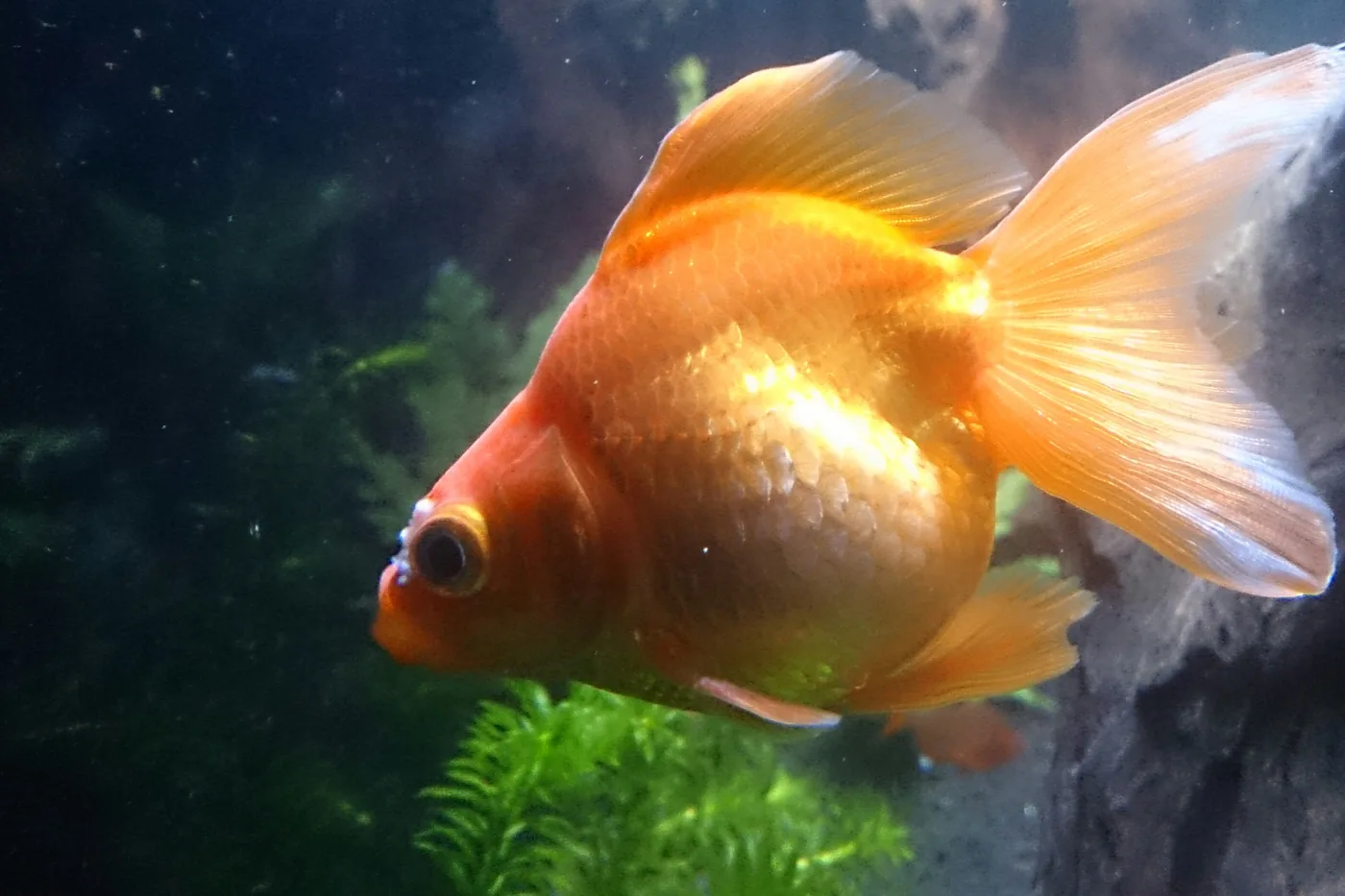
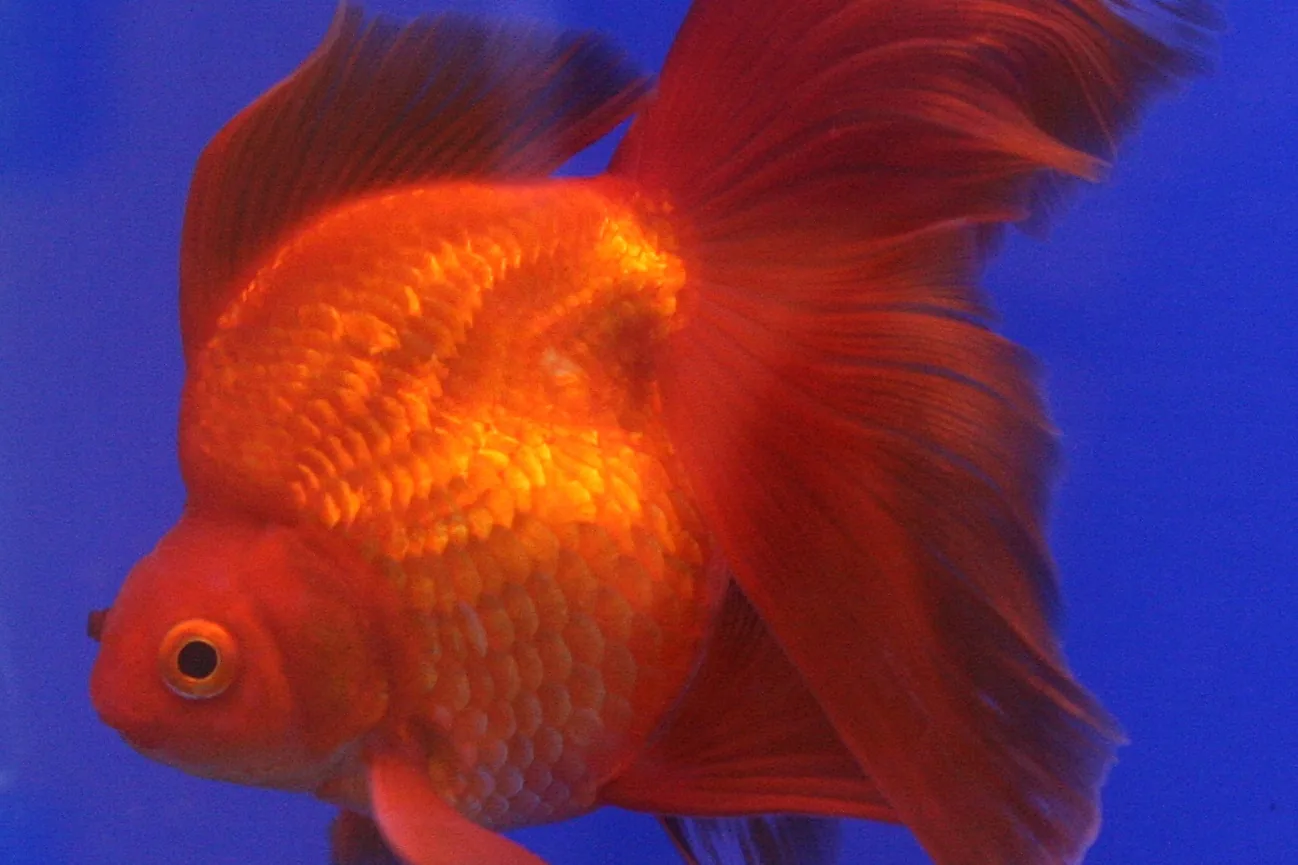
Photograph: Lerdsuwa, CC BY-SA 3.0 · Wikimedia Commons
About these figures Size, lifespan and water are the ranges keepers' guides give for a fish in good care, not measurements of this breed, and swimming and care are this site's own ratings of the published advice. Lifespan is where the sources differ most: how long goldfish live sets them side by side. First fish needs is a middle figure for one fish, from advice that runs from 50 litres to about 300; tank size sets that out.
The specimen
Quick facts
- Classification
- Fancy goldfish
- Body type
- Tall, deep, laterally compressed body with a pronounced hump rising behind the head and a small, pointed snout
- Tail and dorsal
- Double tail, dorsal fin present
- Swimming ability
- Moderate
- Keeper experience
- Intermediate
- Temperament
- Peaceful but assertive; usually first to the food and quick to push slower tankmates aside at mealtimes
- Adult size
- 15–20 cm (6–8 in)
- Temperature
- 18–24 °C (64–75 °F)
- Minimum aquarium
- 100 L (26 US gal) for one fish
- Origin
- China, reaching Japan via the Ryukyu Islands, Reached Japan in the 1770s or 1780s
How to recognise one
- A steep hump beginning just behind the head, so the back rises sharply before the dorsal fin
- Deep body that is almost as tall as it is long, with a small, pointed head
- Tall dorsal fin carried high on the hump
- Double caudal fin, either short and stiff or long and flowing depending on the line
- Typically red, red-and-white, white, calico or chocolate, with red-and-white the classic pattern
Identification
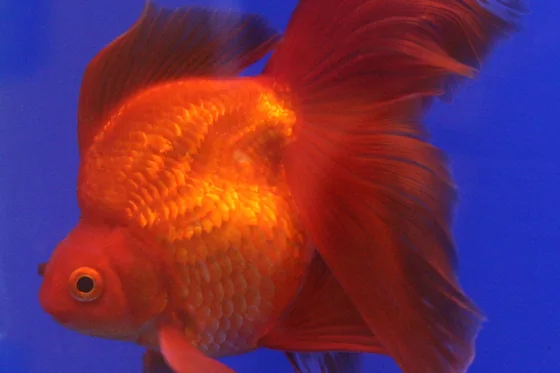
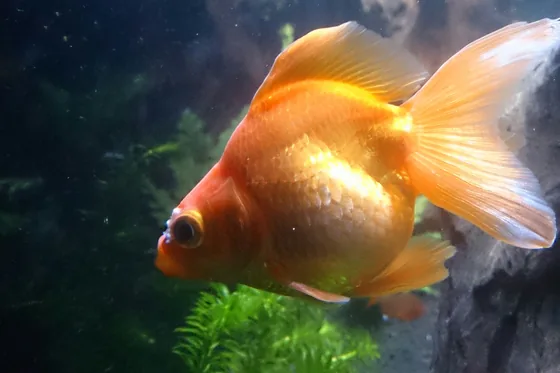
The ryukin’s silhouette is all about the back. Immediately behind the head the body rises in a steep hump, so the profile climbs almost vertically before the dorsal fin, and the body beneath is deep and compressed from side to side, often nearly as tall as it is long. The small, pointed head exaggerates the hump further.
The dorsal fin is tall and the tail is double. Short-tailed ryukins carry a stiff, fanned tail that keeps them agile; long-tailed lines, sold in some countries as fringetails, trail a tail that can be as long as the body.
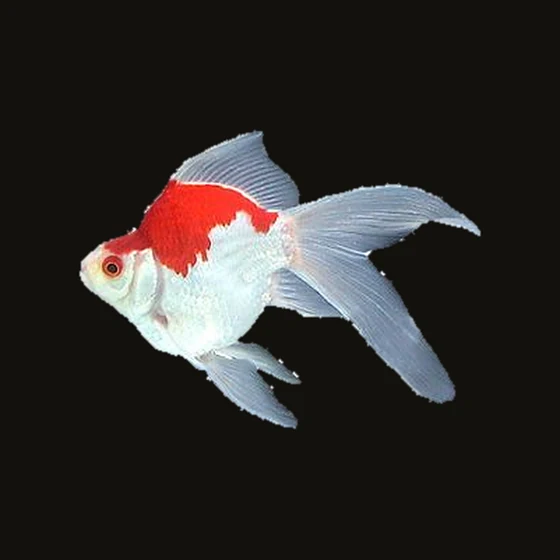
Red and white in bold patches is the classic colour, but solid red, white, calico, chocolate and tricolor fish are all common. A young ryukin can be mistaken for a fantail, which shares the dorsal fin and double tail; the hump is the tell, and a fantail’s back is a smooth egg shape with none. An oranda shares the tall body but carries a hood and a less pronounced shoulder, while a ryukin’s head is bare and pointed. Young fish of all three look alike, because the hump arrives with growth.
Ryukin, fantail or tamasaba?
Three deep-bodied goldfish side by side: a ryukin with the hump behind its head ringed, a fantail with its smooth back ringed, and a tamasaba with its single long tail ringed.
- Ryukin. The back climbs sharply behind the head before the dorsal fin, on a deeper body. In a young fish the hump is slight, so judge body depth too: the British standard asks for about 80% of body length in a ryukin and 65% in a fantail.
- Fantail. The body rises in one smooth egg shape with no hump, over a double tail.
- Tamasaba. A back that rises behind the head like a ryukin’s, with a full dorsal fin, but a single undivided tail, which in the photograph is a long one.
Photographs: Ryukin, Lerdsuwa, CC BY-SA 3.0; Fantail, ProjectManhattan, CC BY-SA 3.0; Tamasaba, Desaix83, after Ghasem1122, CC BY-SA 3.0. Rings added.
The varieties
The differences are in the fins and the colour; the body is the constant.
- Short-finned ryukin. A rounder fish with a short tail, bred mainly in China; Japanese lines carry longer fins.
- Long-finned or ribbontail ryukin. Draping fins that can approach the body in length. Slower, and far easier to damage.
- Red-and-white. The classic pattern and the one most lines aim at.
- Calico and tricolour. Nacreous scales with blue, red, black and white.
- Chocolate and white. Less common colour lines.
The hump, and what it is not
The defining feature, and the source of a recurring false alarm.
The hump is conformation, not a growth. It is a deep shoulder rising behind the head, bred for over generations, and it develops as the fish grows rather than appearing suddenly. A three-centimetre juvenile may show almost none of it.
It is not a tumour, an infection or a swelling. Nothing needs doing about it, and lumps, growths and tumours covers the things that genuinely do.
But it hides something worth checking. A steeply arched back is very good at disguising a spine that curves sideways, which is a different matter entirely. The test is to look down the length of the fish from directly above: the hump should be symmetrical and the spine straight. Bent spine and deformity covers what a real curve means, including the stunting and mycobacteriosis cases.
How it develops
The shoulder is the point of the breed and the last thing to arrive, which makes a young ryukin an easy fancy to buy by mistake. The hump is slight in juveniles and develops with age.
So a young ryukin and a young fantail are hard to tell apart, and the hump is the last thing to arrive rather than the first. Buying on the promise of a line is the argument breeding goldfish makes.
The hump develops with maturity. Show standards treat a steep hump as desirable and breeders often feed protein-rich food for it, but there is no shortcut: a ryukin fed more than it needs fouls its water and is easy to overfeed, and overfeeding goldfish shows up as a physical problem as well as a water-quality one.
Choosing one
- From above, down the length. A straight spine, an even body, a symmetrical hump. This is a very useful check on this breed, because the arch hides a curve.
- From behind. Two even tail lobes, carried apart.
- Watch it swim. Level, without visible effort. A juvenile that floats, sinks or lists may not grow out of it.
- Watch it eat, if you can. A ryukin that is not first to the food in a shop tank is worth a second look.
- Read the shop, as choosing and bringing home a goldfish sets out, then quarantine for at least four weeks.
Where you will find one. Common in aquatic shops, though juveniles are regularly mistaken for fantails, including by the shop — the shoulder hump that defines the breed develops with age and is slight or absent in a young fish. Check the dorsal height and the body angle rather than the hump. The short-tailed form is what you will usually see; broadtail and long-finned ryukins are a specialist purchase.
Personality and behaviour
Among fancy goldfish, ryukins are the confident ones. They are often quicker off the mark than orandas or telescopes, notice food first, and will happily shoulder a slower fish away from a pellet. This is not usually aggression: goldfish are not territorial, and a ryukin competes for food rather than fighting. It simply eats faster and pushes harder.
Which makes it a stocking decision rather than a behaviour problem. A ranchu, a bubble eye, a celestial eye or a heavily wenned lionhead will lose every meal to it over months, and chasing and bullying covers that quiet mechanism and the feeding tactics that mitigate it. Good company is a fantail, an oranda or another ryukin — fish of comparable speed and confidence. And it is not a fish for a single-tail tank either, in the other direction: a comet still outpaces it.
Aquarium requirements
Ryukins grow larger than most keepers expect. Allow 100 litres (26 US gallons) for the first fish and 40 to 50 litres more for each additional ryukin; a fish that reaches 25 cm will use every litre of a bigger tank. Length and width matter more than height, because a wide footprint gives more swimming room and more surface area for gas exchange. The tank size calculator runs the numbers for your own group.
Filtration should be generous, because a fish that eats this enthusiastically produces waste to match. Choose a filter rated well above the tank’s volume and soften the outflow with a spray bar or baffle so the tall dorsal fin and long finnage are not blown about. Keep the water between 18 and 24 °C (64 and 75 °F), keep it stable, and change 25 to 40 percent weekly according to nitrate readings.
Decor should be smooth, since a deep-bodied fish that turns sharply catches fins on rough edges, and sand or a bare bottom removes the risk of swallowed gravel.
Feeding
A quality sinking pellet formulated for fancy goldfish should form the base of the diet. Ryukins gulp floating food at the surface, and the air that comes with it is often blamed for floating problems in deep-bodied fish; sinking food removes that issue at a stroke.
Feed small amounts two or three times a day, only what disappears within a minute or two, and watch that slower tankmates get their share; spreading pellets across the tank helps. Blanched peas, spinach and zucchini, gel foods and occasional frozen daphnia or brine shrimp round out the diet. The feeding calculator gives a starting portion.
Common health considerations
Ryukins are relatively robust for a fancy breed, and a well-kept fish is often trouble-free for years. Their weakness is the shape that makes them attractive: a short, tall body packs the organs into less space, and the swim bladder, which sits above the gut, is affected by whatever happens below it. A gulp of air, a large dry meal or constipation can leave a ryukin tilting, floating or resting on the bottom. Some episodes settle with sinking food, a day without feeding and a few shelled peas; persistent problems are covered in the floating guide.
Because they eat so readily, ryukins are also easy to overfeed, which shows up as a swollen belly, stringy waste and fouled water. Sudden swelling with raised scales is a different matter and should be checked against the swollen abdomen guide. Tall dorsal fins and long tails tear on decor or in strong current; clean water heals most tears, but fix the cause.
The deep body, and what it costs
Everything distinctive about keeping a ryukin follows from one fact.
A shorter body changes the arrangement inside it. In a comet the gut runs the length of a slim body; in a ryukin the same organs sit in something almost as tall as it is long, and the swim bladder shares that space. Goldfish anatomy and biology covers the arrangement, and goldfish nutrition covers what a stomachless gut can actually process.
So a ryukin may be prone to buoyancy trouble, although one breed standard says ryukins seem less susceptible than many other deep-bodied fish, and the trigger is often the meal rather than a disease.
The precautions are mostly dietary:
- Soak dry food for a minute before it goes in, which may reduce swelling inside the fish.
- Feed sinking, which stops the air-gulping at the surface — sinking versus floating food.
- Add vegetables a couple of times a week for the fibre.
- Feed small and often rather than one large meal.
- And consider gel food, which is soft, moist and the easiest thing a deep-bodied fancy can process.
Floating upside down covers what to do when it happens anyway, and constipation the related picture.
What goes wrong, in order
| What you see | Usually | Where to look |
|---|---|---|
| Floating or tipping after meals | Often the meal, though other causes exist | Floating upside down |
| Long trailing faeces | Dry food, not enough fibre | Constipation |
| A curve seen from above | Not the hump — a real deformity | Bent spine |
| Split or frayed fins | Sharp decor, or strong flow | Torn fins |
| A slower tankmate going thin | The ryukin is eating its share | Chasing and bullying |
| Resting low, fins clamped | Water quality or temperature | Sitting on the bottom |
Two of those six are about food and one is about the fish it lives with, which is a fair summary of ryukin keeping: the tank is rarely the problem, the feeding usually is.
Is a ryukin right for you?
It suits you if you want a striking fancy with real presence, you will feed deliberately — soaked, sinking, small and often — and you will keep it with fish of similar speed.
It does not suit you if the tank holds slow fancies it would outcompete, if you want to scatter floating flakes and walk away, or if you have not yet got a routine for water changes. It is not a difficult fish; it is a fish that punishes casual feeding.
And the deep body is a real cost, in the terms goldfish welfare sets out. The moderate ryukins are a good deal easier to defend than the most extreme show lines, where the compression is taken further than the animal comfortably manages.
History and origin
The ryukin takes its name from the Ryukyu Islands, the chain that includes Okinawa. Deep-bodied, double-tailed goldfish of this type were bred in China and reached Japan through the Ryukyu Islands in the 1770s or 1780s, and Japanese breeders developed the type further; some accounts make it a mutation of the wakin. It remains popular in Japan.
Ryukins spread to Europe and North America with the wider goldfish trade of the late nineteenth and early twentieth centuries. Today they are bred widely in Thailand, China and Japan, and show fish are bred for steep humps. The ryukin body has also been used to build other varieties, including ryukin-bodied telescopes.
Before you bring one home
- The compressed body may predispose to buoyancy problems, though vets find many causes in fish of every shape; sinking food helps
- Outcompetes slower fancies at feeding time; pair it with fish of similar speed and confidence
- Can exceed 25 cm in a large aquarium and needs the water volume and filtration to match
- The tall dorsal fin and long-finned lines are vulnerable to strong currents and sharp decor
Suitable companions
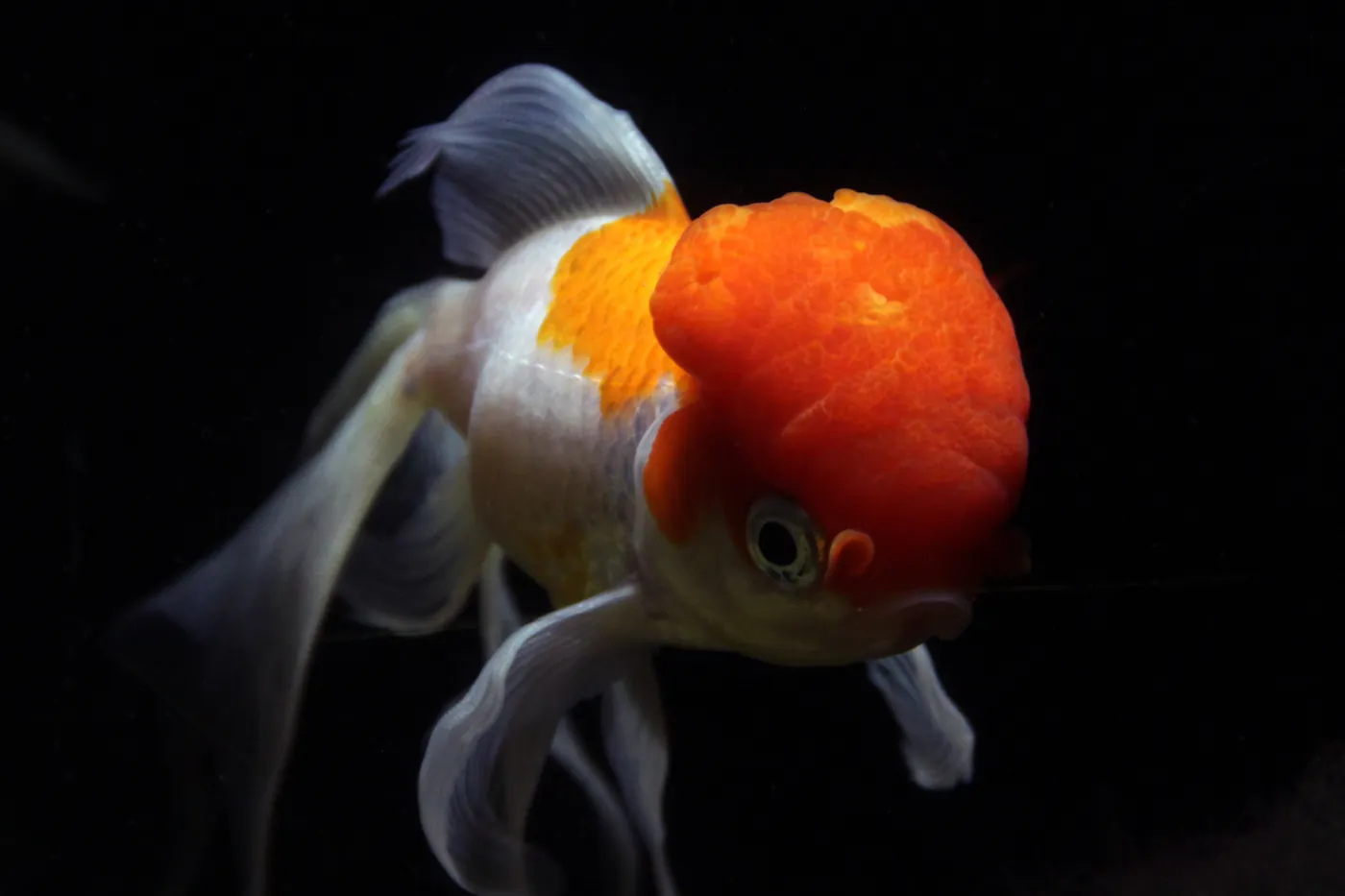
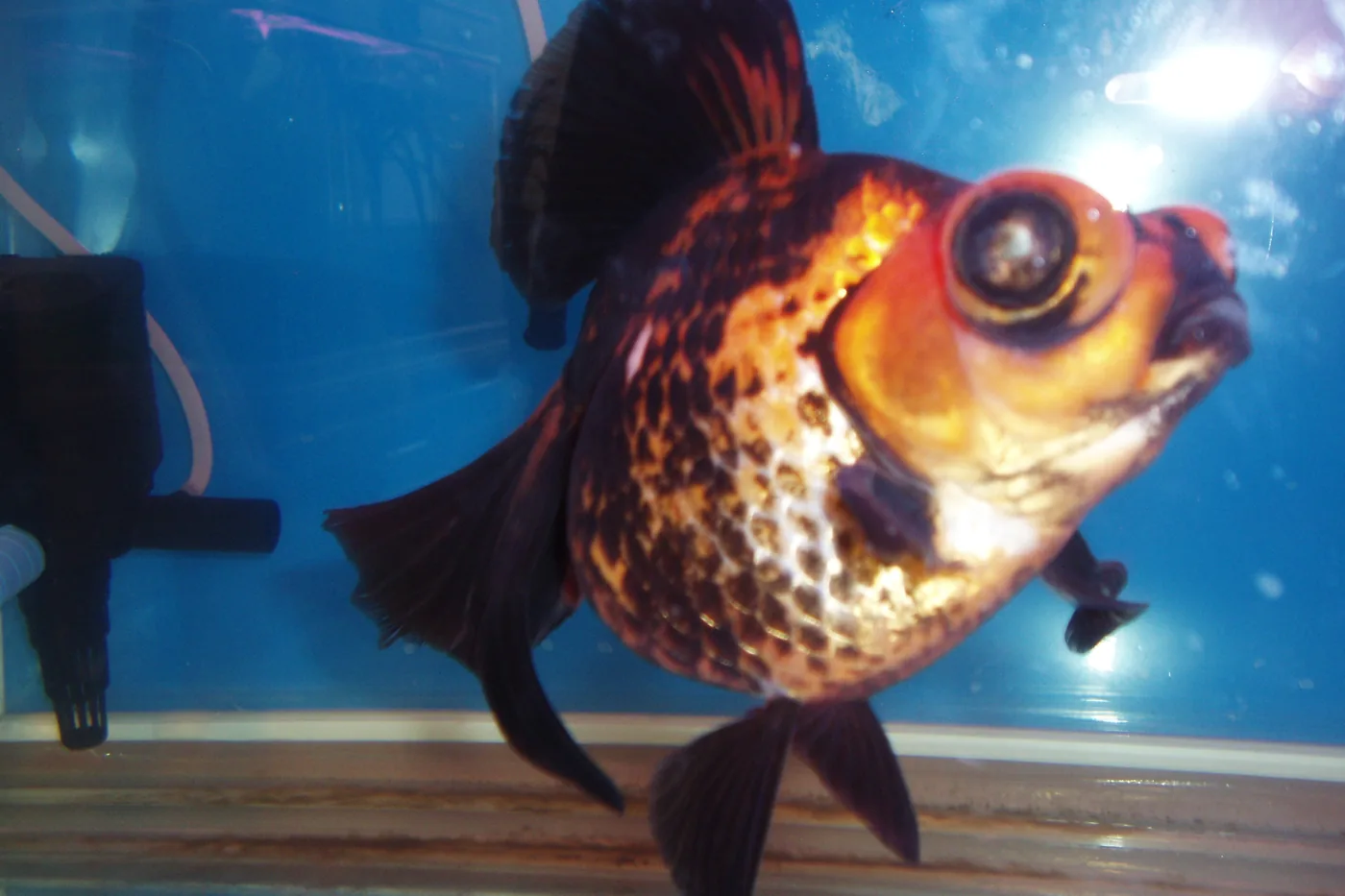
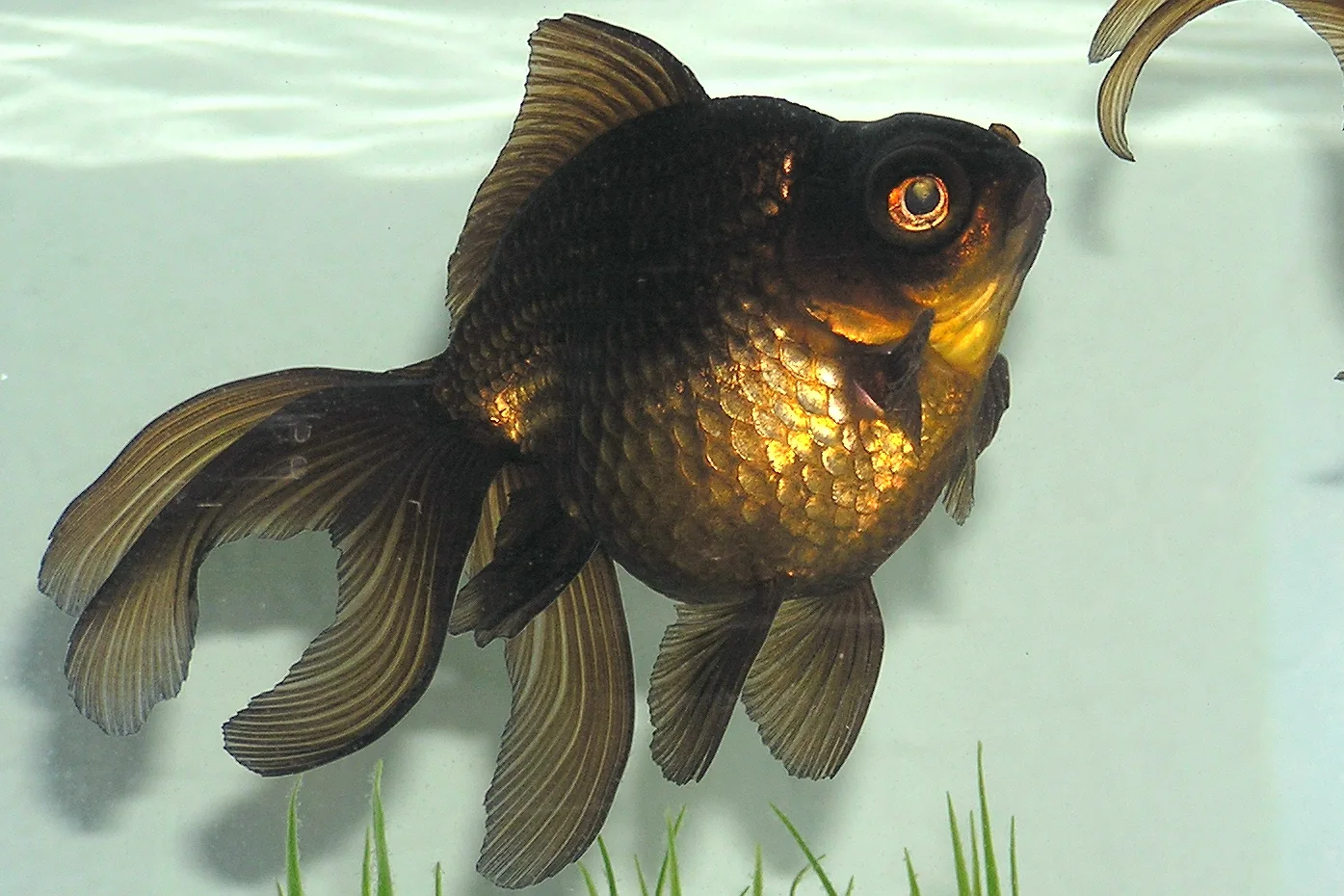
Round-bodied goldfish should live with fish of similar speed. These breeds share the same pace, water and food.
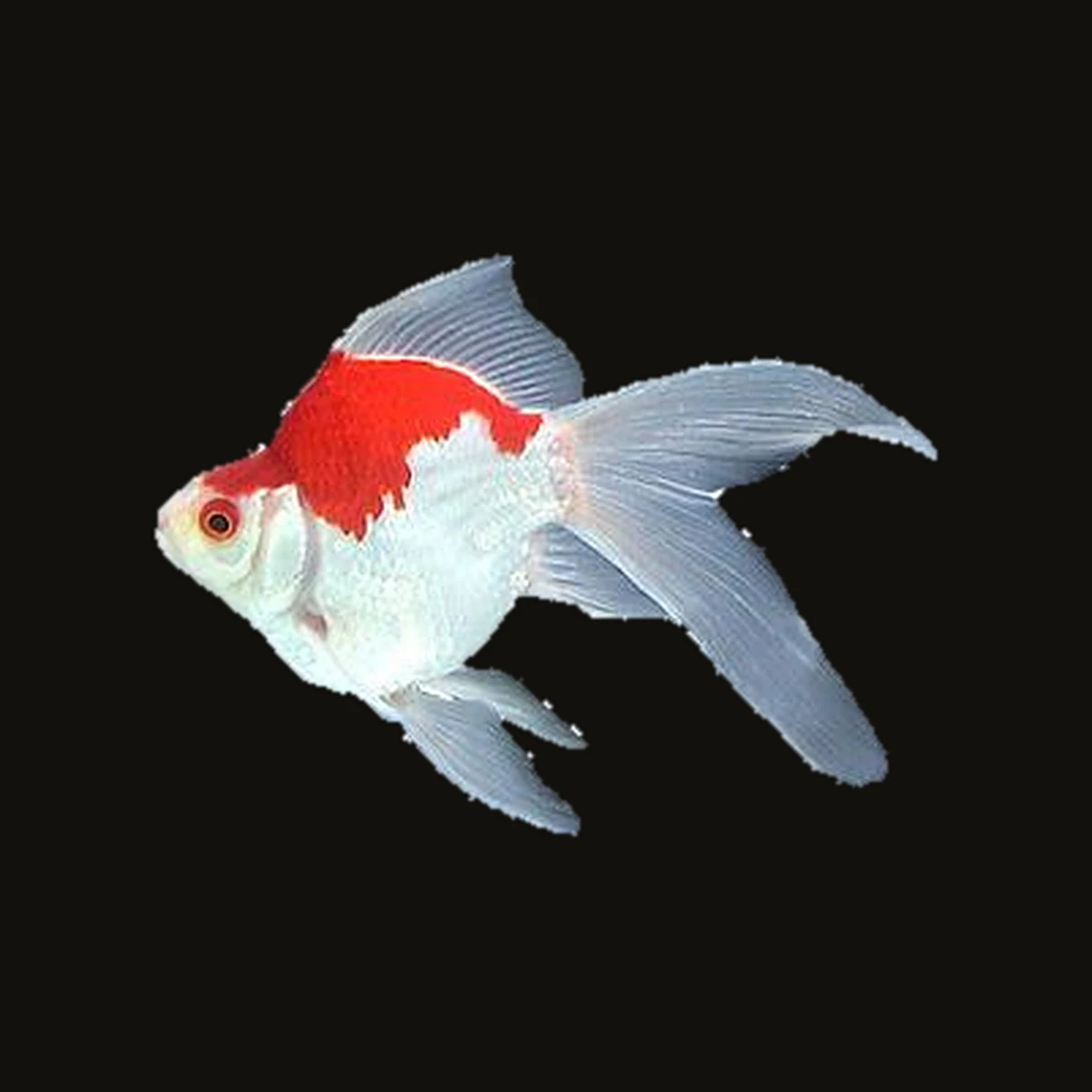
Best kept apart from: Common Goldfish, Comet, Shubunkin, Pearlscale, Bubble Eye, Celestial Eye, Ranchu, Lionhead, Pompom, Veiltail, Tosakin, Lionchu, Jikin. Speed and appetite differences leave the slower fish underfed.
Thinking about other species? Try the compatibility checker.
Similar breeds
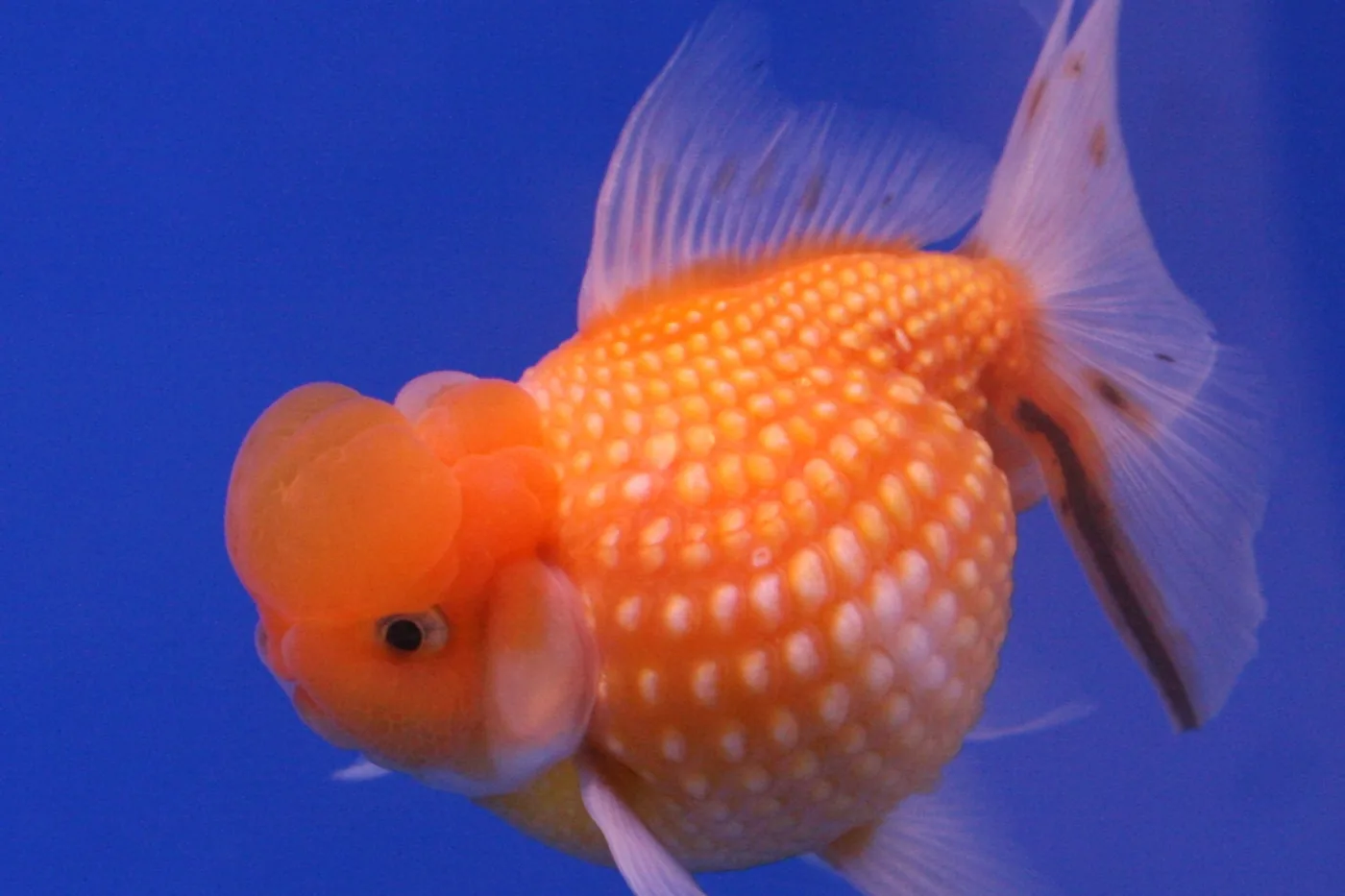
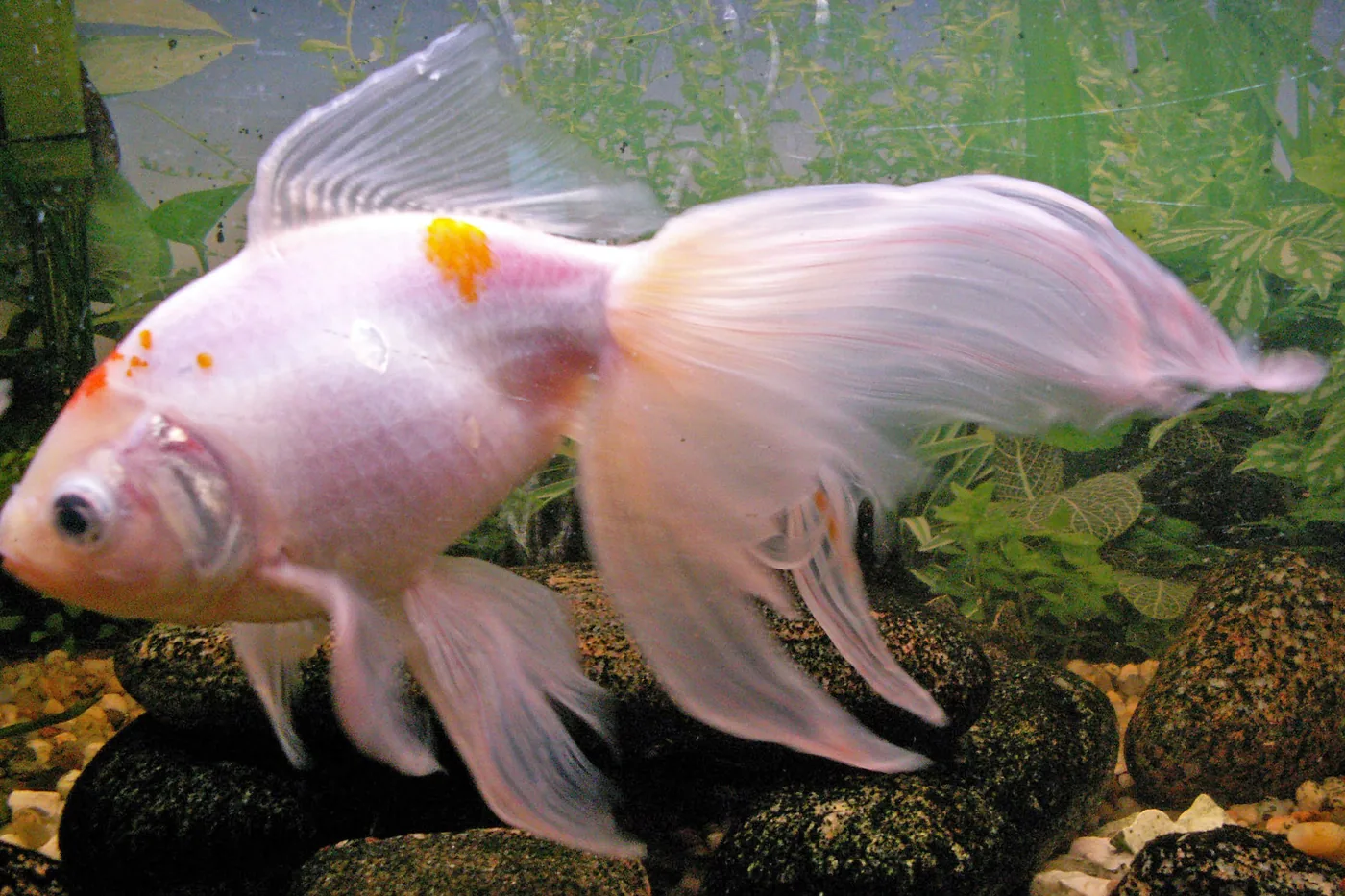
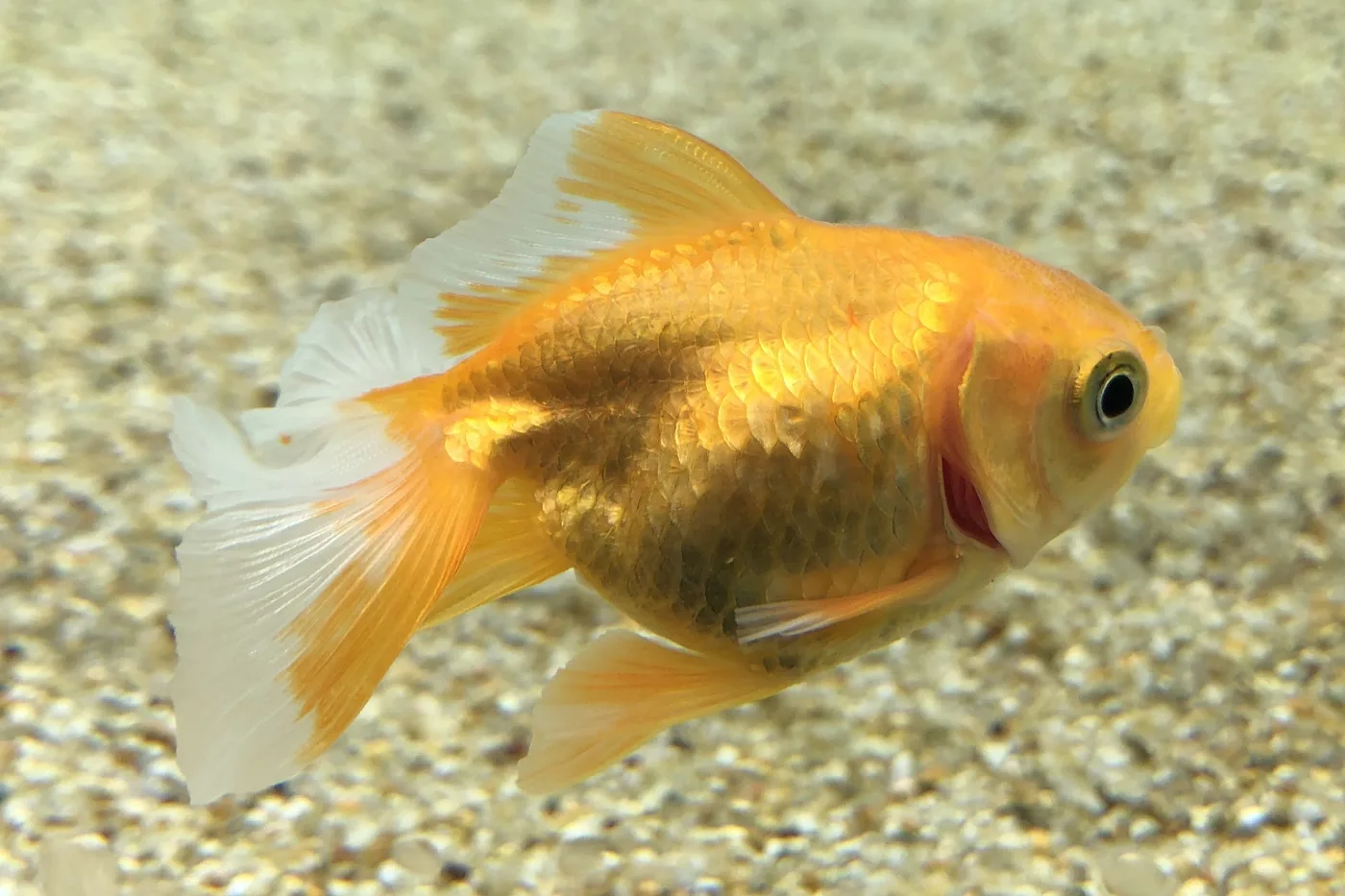
Of the breeds most like the ryukin, the fantail, oranda, telescope and tamasaba are pictured above among its companions. The others:
Frequently asked questions
How big does a ryukin get?
Most ryukins reach 15 to 20 cm (6 to 8 inches) including the tail, and a well-fed fish in a large aquarium or pond can pass 25 cm. Growth is fastest in the first two years and continues slowly for years afterward, so size the tank for the adult rather than the fish in the shop.
Why does my ryukin float after eating?
A deep, compressed body may leave little room for the swim bladder, so a large meal, dry food that swells in the gut, or air gulped at the surface can tip the fish off balance, and other causes exist. Switch to sinking pellets, feed smaller portions, and skip a day. If floating persists beyond a day or two, test the water and read the floating guide.
Is the hump on my ryukin normal?
Yes. The steep rise behind the head is the breed's defining feature. It is modest in juveniles and becomes more pronounced with age and good feeding, and show fish are bred for the steepest possible profile. What is not normal is soft, one-sided swelling, lifted scales, or a lump that appears suddenly on a fish that was previously smooth-backed.
What should I look for when buying a ryukin?
Look down the length of it from above first. The spine should be straight and the body even on both sides, because a steeply arched back is very good at hiding a curve — and a ryukin's hump is a conformation while a curve is a deformity. Then look from behind for two even tail lobes, and watch it swim level without working at it. A juvenile that floats, sinks or lists may not grow out of it.
Is a ryukin's hump a deformity?
No. The hump is the breed's defining conformation, a deep shoulder that rises behind the head as the fish grows, and it is bred for rather than being a fault or a growth. A juvenile may show very little of it. What is not normal is a spine that curves sideways seen from above, or a back that kinks rather than arcs smoothly — those are a different thing entirely, and the bent spine page covers them.
Why is a ryukin more prone to floating than a fantail?
Possibly, though the evidence is thin. A deeper, shorter body may predispose a fancy goldfish to buoyancy problems, and the ryukin's appetite and speed at feeding add the big meals and gulped air that can tip a fish off balance. But one breed standard says ryukins seem less susceptible than many other deep-bodied fish, and vets find many causes in fish of every shape. Soaking the food, feeding sinking pellets and adding vegetables to the week is a sensible precaution, not a guarantee.
Can a ryukin live with a ranchu or bubble eye?
It is usually a poor match. Ryukins are quick and pushy at feeding time, and a ranchu, bubble eye, celestial or pearlscale will be beaten to every pellet and gradually lose condition. Keep ryukins with fancies of similar speed and confidence, such as fantails, orandas and telescopes, and give the slow breeds a tank of their own.