No. 15Established by about 1900
Veiltail
Among the most extreme finnage in goldfish, and a fish that spends its life carrying it.
Also known as Philadelphia Veiltail · Broadtail Moor (the telescope-eyed form)
- Specimen
- Fancy goldfish, Philadelphia
- Adult size
- 13–15 cm
- Lifespan
- 7–10 years
- Water
- 18–24 °C
- Care
- Demanding
- Swimming
- Weak
- First fish needs
- 100 litres
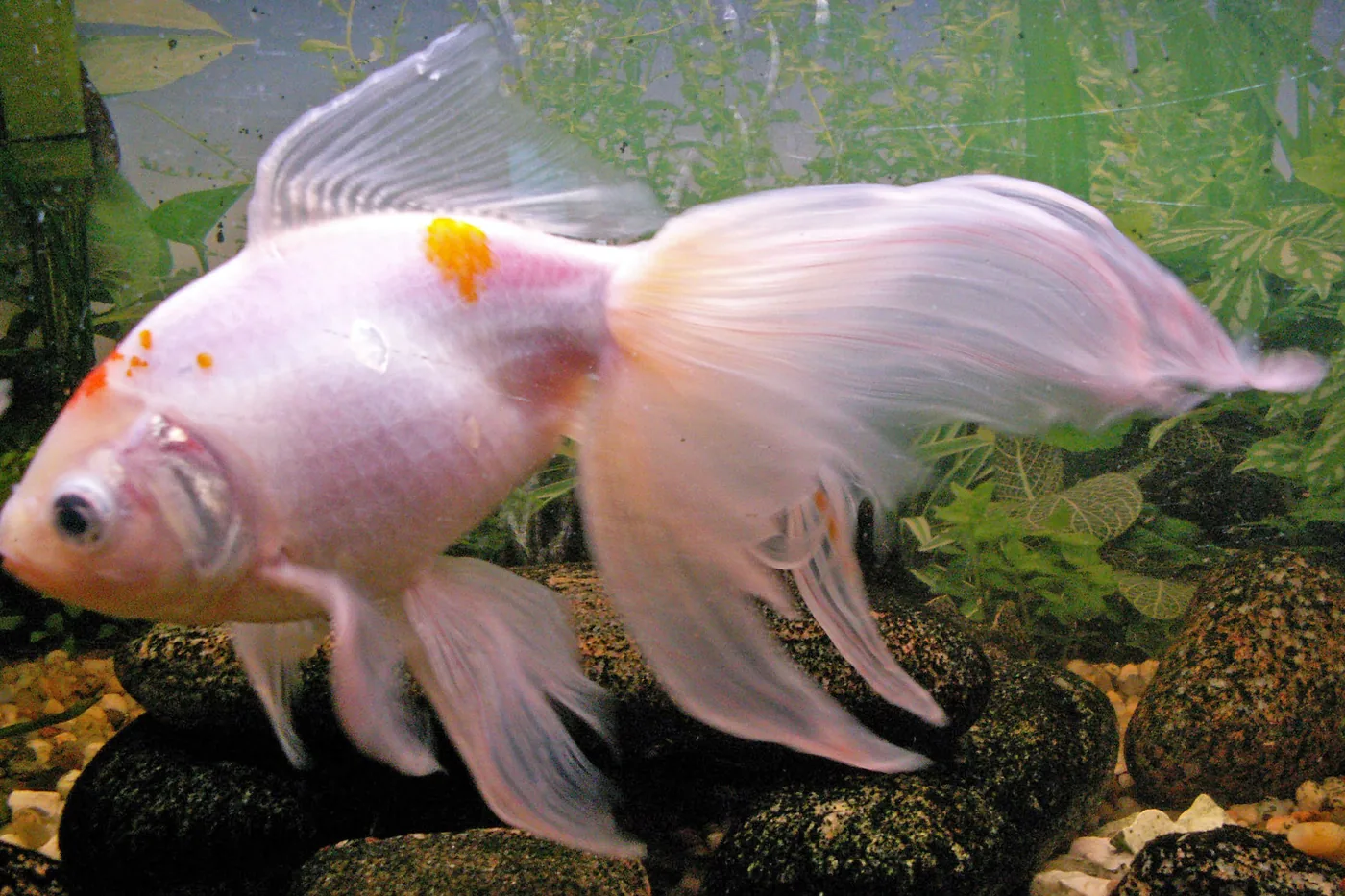
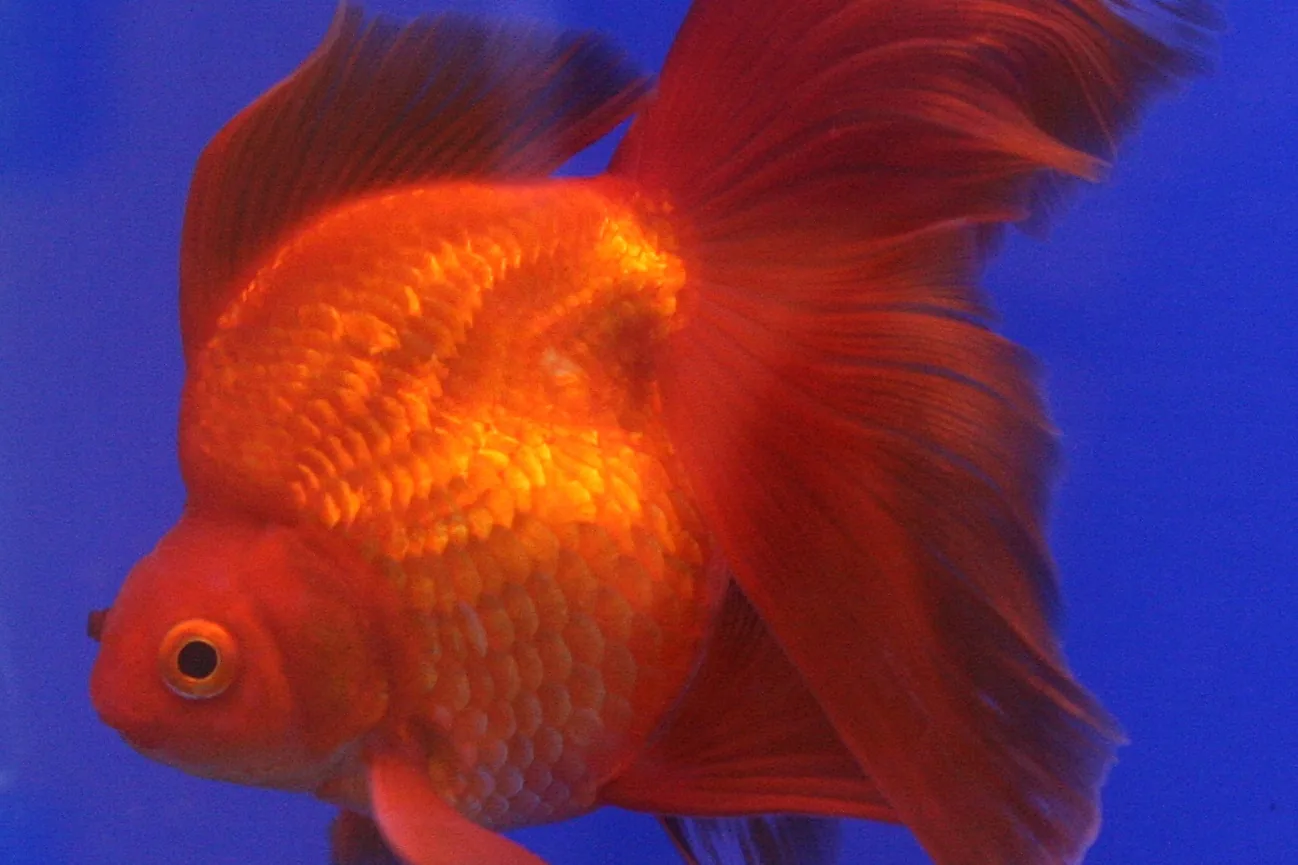
Photograph: Bechstein, CC BY-SA 3.0 · Wikimedia Commons
About this pictureThe tail here has pointed, separated lobes rather than the square unforked fall the standard asks for. That is what many fish sold as veiltails look like, which is worth seeing before paying a premium for one.
About these figures Size, lifespan and water are the ranges keepers' guides give for a fish in good care, not measurements of this breed, and swimming and care are this site's own ratings of the published advice. Lifespan is where the sources differ most: how long goldfish live sets them side by side. First fish needs is a middle figure for one fish, from advice that runs from 50 litres to about 300; tank size sets that out.
The specimen
Quick facts
- Classification
- Fancy goldfish
- Body type
- Short, deep egg-shaped body with a notably tall erect dorsal fin and a very long double caudal that hangs in square-edged folds without a fork
- Tail and dorsal
- Double tail, dorsal fin present
- Swimming ability
- Weak
- Keeper experience
- Experienced
- Temperament
- Slow, placid and easily outcompeted; the fins make it the last fish to any food in the tank
- Adult size
- 13–15 cm (5–6 in)
- Temperature
- 18–24 °C (64–75 °F)
- Minimum aquarium
- 100 L (26 US gal) for one fish
- Origin
- Japanese stock, with the modern form developed in Philadelphia, United States, 1890s, established by about 1900; sources differ on the dates
How to recognise one
- A very long double caudal fin with no fork and no notch, well spread but carried below the horizontal so that it droops rather than fans
- The tail alone can approach or equal the length of the body, or more, so the figures above describe the body and not the fin
- A tall, erect dorsal fin carried high, which the standard scores nearly as highly as the tail
- Short, deep egg-shaped body with a smooth back and no shoulder hump
- Eyes are usually normal; the telescope-eyed form is the broadtail moor, most often solid black
- Commonly calico, red, red-and-white, chocolate or blue, and the long fins often carry the pattern most strongly
Every fancy goldfish is a trade, and the veiltail made its trade in the fins, as far as they will go. It carries a double caudal fin with no fork in it, hanging in broad square folds that can approach the length of its own body, above which sits a dorsal held as high as the standard can manage.
It is the most dramatic goldfish there is. It is also a fish that spends every minute of its life carrying that, and nearly everything below follows from the fact.
Identification
Two features, and the second is the one people forget.
The tail has no fork. This is the whole breed. A veiltail’s double caudal is long, broad and square-cut across the trailing edge, with no fork and no notch, and it is well spread but carried below the horizontal, so it droops rather than fans. Any fork, any notch, and it is not a veiltail however long the fins are.
The dorsal is tall and erect. Carried high and well developed, and the standard gives it nearly as many points as the tail. A long-finned fancy with a low or drooping dorsal is a long-finned fancy, not a veiltail.
The body underneath is a short, deep egg shape with a smooth back — no shoulder hump, which is what separates it from a ryukin at a glance. Eyes are normally ordinary; the telescope-eyed version is the broadtail moor, usually solid black, which is a telescope wearing this finnage.
What kind of goldfish do I have sets out where this sits among the other double-tailed fancies, and why the tail is the thing to judge by.
How it develops
The finnage arrives last, which is why a juvenile veiltail cannot be verified as one. A young fish of this breed is a deep-bodied fancy with unremarkable fins, and the square unforked trailing edge that defines it only declares itself as the tail lengthens.
Young fish fill out with age, and no published source gives a finer timetable.
So most fish sold as juvenile veiltails are a forecast rather than a fish. Buying an older fish, or buying from a line whose adults you have seen, are the only two ways to be sure — which is the argument breeding goldfish makes about lines rather than pairs, and the reason what kind of goldfish do I have treats juvenile identification as a separate problem.
The care requirement arrives on the same schedule. A young veiltail has little tail to carry and needs less accommodation; as the fins lengthen the decor and flow requirements on this page start to matter. Set the tank up for the adult rather than for the fish you brought home.
Why the finnage is the care problem
This is the section that matters, and it is the reason this page exists separately from the fantail.
A goldfish fin is thin tissue over fine rays, kept intact by a healthy slime coat and clean water. Make it much larger and three things change at once:
It is often the first tissue to show bad water. Fins can fray, split and recede before anything else on a goldfish shows trouble, which is why torn fins is so often a water-quality page in disguise. On a veiltail that early-warning property becomes a liability: the fish has vastly more of the tissue that goes first, and vastly more to lose.
It adds drag. A long unforked tail adds resistance, and a veiltail is generally described as slower than a fantail of the same size, tiring sooner and less able to hold itself against flow that other fancies ignore, although the swimming studies have measured fantails rather than veiltails.
It catches on everything. Ornament edges, plastic plants, unguarded filter intakes, gravel with corners. And regrown fin often comes back shorter or a different colour, which on a fish judged entirely by the outline of its fins is a permanent mark rather than a cosmetic one.
Aquarium requirements
100 litres minimum for one, and more for each additional fish. That is the same floor as much faster breeds, for a different reason: a veiltail needs swimming room in proportion to a body that is far longer than its measurement suggests, and it needs the dilution that volume provides because poor water shows early on a fish with this much fin.
Gentle flow, deliberately arranged. Spread a canister’s outflow with a spray bar, or use a filter whose outflow is inherently soft. A veiltail held against the glass by a current is not swimming, it is being pinned. The filtration guide covers the options; the requirement here is capacity without velocity.
Nothing sharp, anywhere. Run a finger over every ornament, every plant and every join. The decorations guide sets out the test, and on this breed it is not optional. Silk or live plants rather than plastic, smooth rounded stone, and every intake guarded with a sponge.
A steady temperature, and not too cold. Many guides give 18 to 24 °C and some breed societies 15 to 20 °C. Cold water slows fin healing considerably, which matters more here than anywhere else — the temperature guide covers the bands and the reason autumn is when small damage becomes a real problem.
Water quality treated as the breed’s requirement, not as general good practice. Ammonia and nitrite at zero, nitrate low and steady, tested rather than assumed. The water parameter checker will interpret the readings.
Personality and behaviour
Placid, slow and undemanding in temperament — a calm fish that drifts rather than darts, and one that does not compete for anything.
That last part is the practical issue. A veiltail is often the last fish to the food in the tank, and it will be outfed by most fish sharing the water with it, without any aggression being involved at all. The chasing and bullying page makes the general version of this argument: food competition is one of the things that harm fancies, and it needs no conflict.
Feeding
Arrange it rather than assume it.
Sinking food, because a veiltail struggles at the surface and gulping air compounds the buoyancy risk that comes with a deep compressed body. Sinking versus floating covers why this is the default for every deep-bodied fancy.
A consistent spot, so the fish learns where food arrives and does not have to search for it.
Watch it actually eat. With slower tankmates this is straightforward; with anything quicker, feed in more than one place and confirm the veiltail is getting a share. The feeding calculator sets the quantity, but the quantity is not the problem here — the distribution is.
Soak dry food before feeding, keep portions small, and use the vegetables and rest days that overfeeding covers.
Common health considerations
In the order they actually occur:
Fin damage and fin rot. A common problem, and the one the whole regime is built around. A frayed or receding edge is a water test, not a medication decision.
Fungus on damaged fin. Opportunistic, and it takes hold on tissue that was already injured in water that was not clean enough. Fungus and cotton growth covers it and is one of the few cases where treating is genuinely indicated.
Buoyancy trouble. The deep, compressed body may predispose to it, as with a ryukin’s, and the usual precautions apply: soaked sinking food, small portions, vegetables, no surface gulping. Floating upside down has the full treatment.
Being outfed. Not a disease, and a common reason a veiltail declines. Weight loss on a fish in a tank with faster company is a feeding arrangement problem before it is anything else.
What goes wrong, in order
| What you see | What it usually is | Where to go |
|---|---|---|
| Frayed or receding fin edges | Water quality, before anything else | Torn fins |
| A split appearing overnight | Something sharp in the tank | Decorations |
| White cottony growth on a tear | Fungus on damaged tissue | Fungus |
| Fins held tight against the body | Stress, chill or poor water | Clamped fins |
| Floating, or struggling to stay down | Often diet, though other causes exist | Floating upside down |
| Thinning fish in a mixed tank | Outcompeted at feeding | Tankmates |
Choosing one
Many fish sold as veiltails are not. Judge the fish:
- Look at the trailing edge of the tail. Any fork or notch and it is a long-finned fancy of no particular type. That is not a bad fish — it is simply not this one, and it should not carry the price of one.
- Look at the dorsal. Tall and erect, not low or folded over.
- Look for existing damage. Splits, notches and a ragged edge on a shop fish tell you about the shop’s water, and they will not fully resolve.
- Watch it swim. It should move deliberately but under control. A fish labouring, listing or resting constantly on the bottom is not simply being a veiltail.
The general checks in choosing and bringing home a goldfish all apply, and the fin inspection is added on top of them.
Is a veiltail right for you?
Yes, if you want the most spectacular goldfish there is, you have a large calm tank with nothing sharp in it, you are prepared to arrange feeding rather than scatter it, and you will look at the fins every week.
No, if this is a first goldfish, if the tank has a strong filter outflow or resin ornaments, if there is a comet or a common in it, or if you want a pond fish. And no if you are buying on the look alone: a fantail gives you the same body shape, much of the grace and none of the fragility, which is the sound recommendation for most people who are drawn to this breed.
History and origin
Long-finned goldfish were bred in Japan through the nineteenth century, but the veiltail as a defined type is largely an American achievement. In the 1890s Franklin Barrett of Philadelphia crossed a Japanese fringetail with a Chinese telescope-eyed goldfish, and the type was established in America by about 1900, though sources differ on the dates, which is why the fish is still sometimes called the Philadelphia veiltail.
The trajectory since then is the ordinary one for a demanding standard: the type is hard to produce, a spawn yields relatively few fish that meet it, and the fins that define it damage easily in commercial conditions. So the name survived while the fish became scarce, and many shop fish carrying it today are something else.
That is worth understanding rather than lamenting, and the showing guide explains the mechanism: goldfish standards are set by societies rather than by any central authority, they differ between countries, and a breed whose standard is genuinely difficult tends to survive in the hands of the few people who are chasing it deliberately.
Before you bring one home
- The finnage is the care problem; almost everything on this page follows from the tail rather than from the body
- Long fins show poor water before any other tissue does, so water quality is not a general virtue here but the specific thing that keeps the fish intact
- Often a weak swimmer even by fancy standards, because the long tail adds drag
- Sharp decor, unguarded intakes and strong flow all cost fin tissue, and regrown fin is often shorter or differently coloured
- Slow to food and easily outcompeted, so feeding has to be arranged rather than assumed
- Best kept indoors, since a pond is risky for the fins, and not a first goldfish
Suitable companions
Round-bodied goldfish should live with fish of similar speed. These breeds share the same pace, water and food.
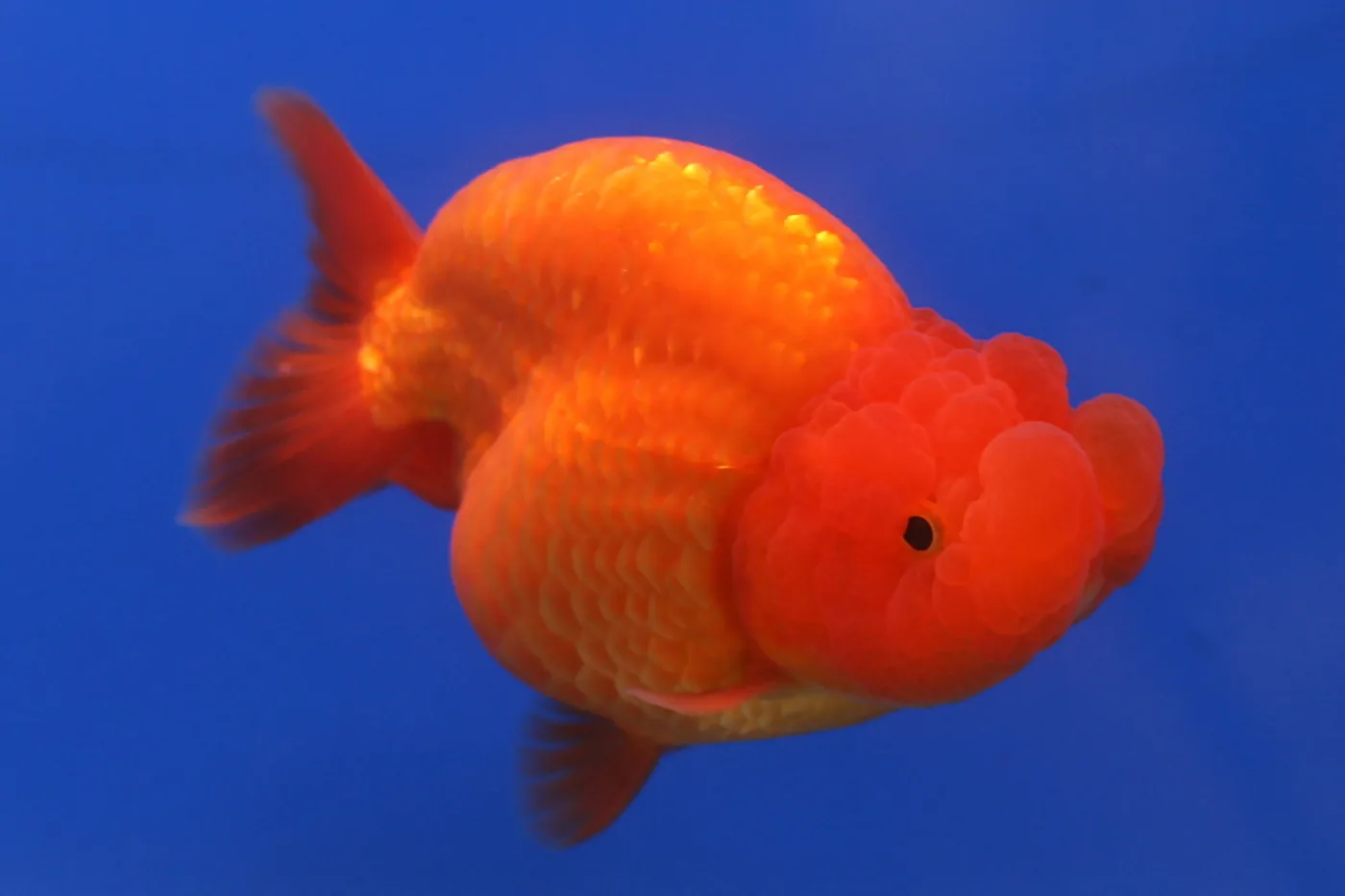
Ranchu
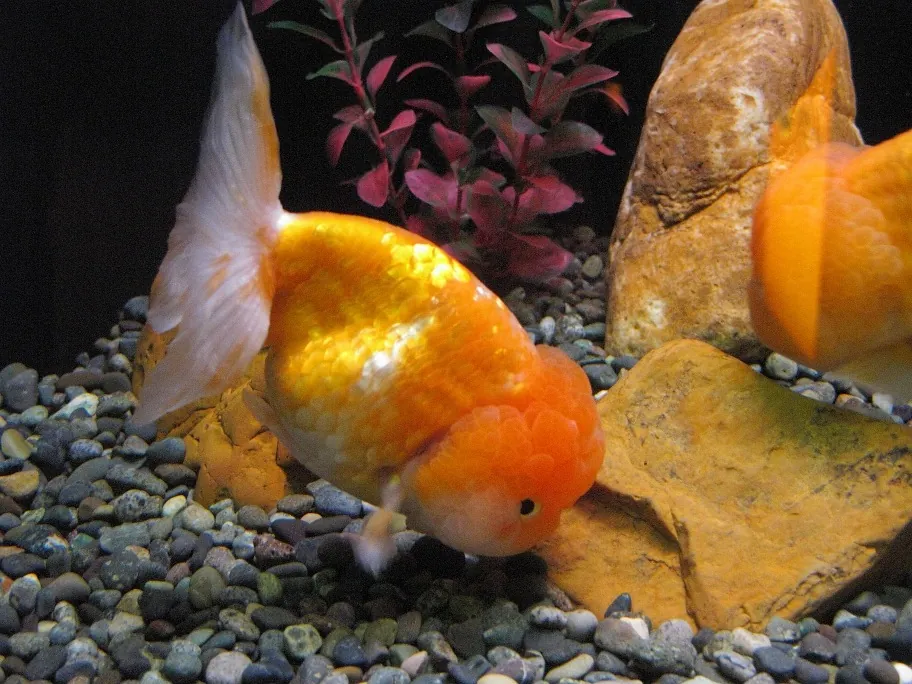
Lionhead
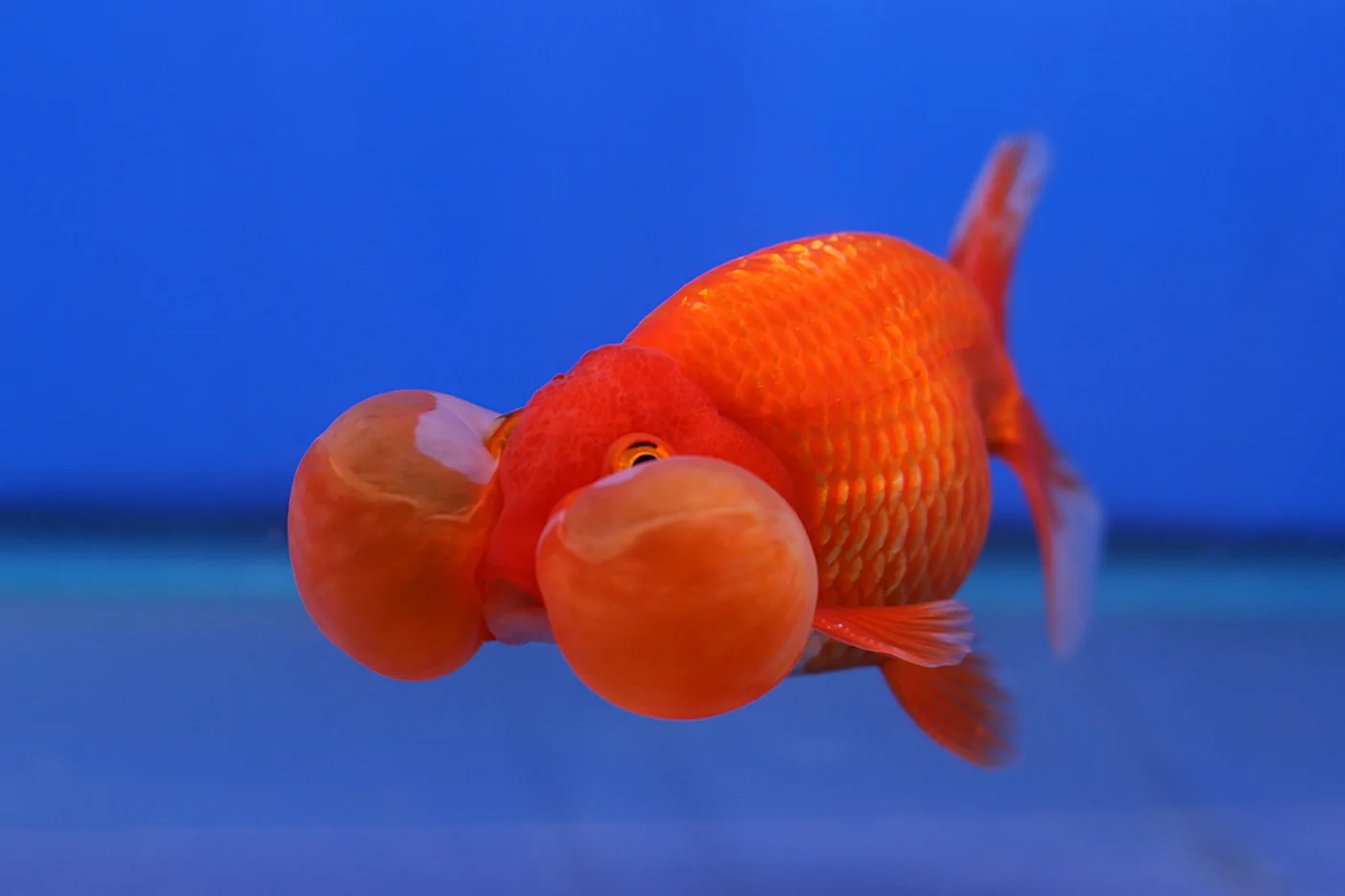
Bubble Eye
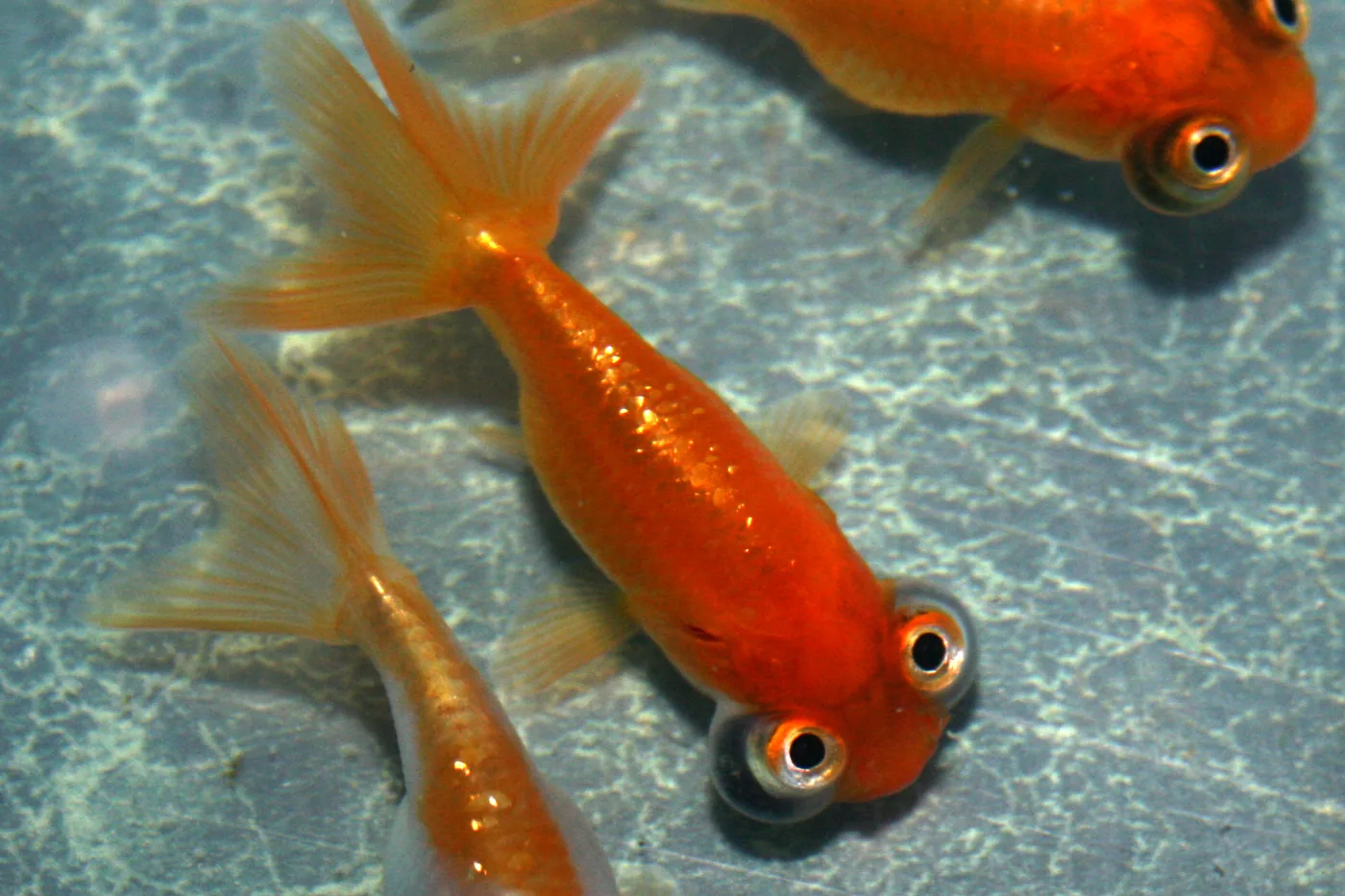
Celestial Eye
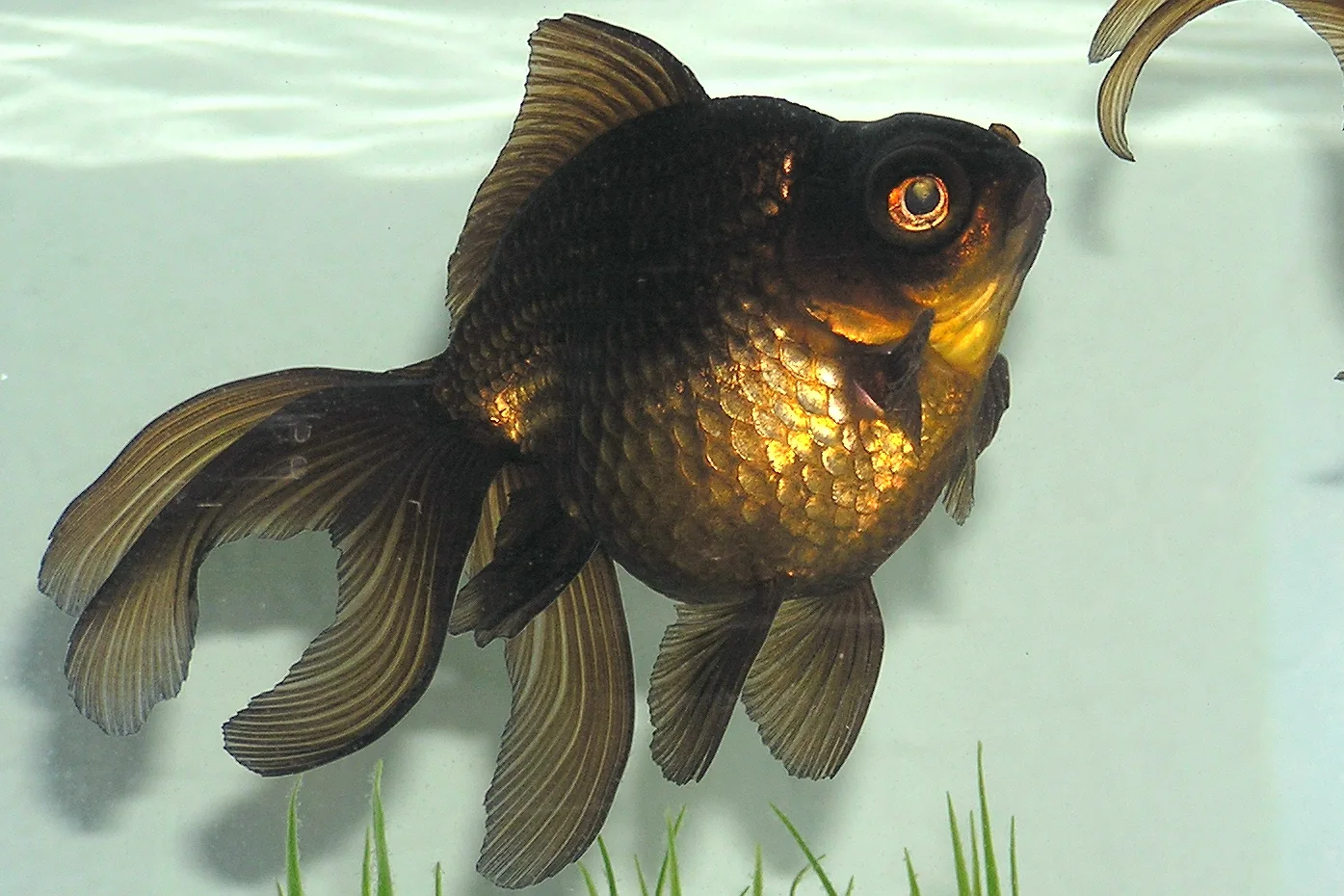
Black Moor
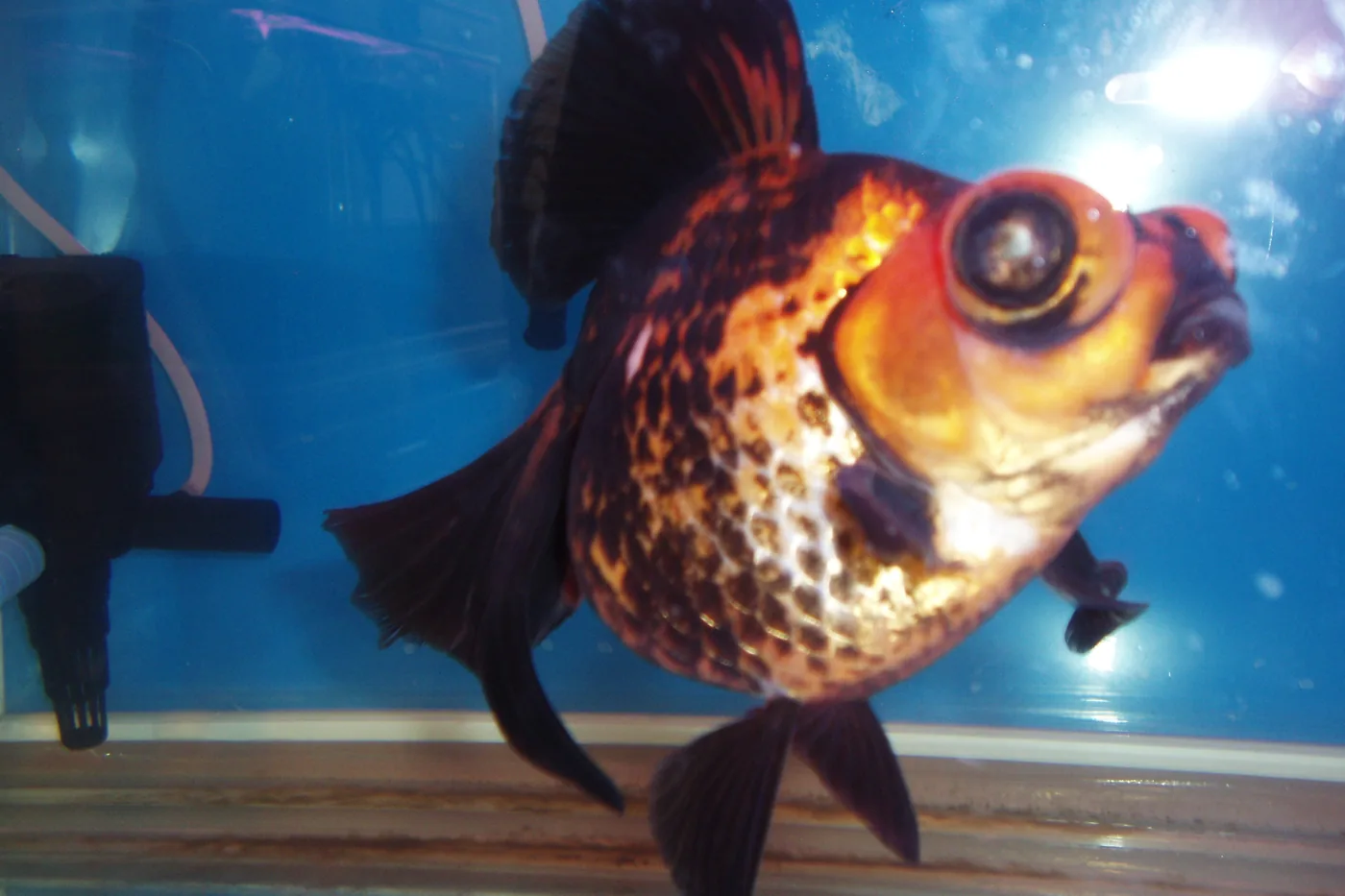
Telescope
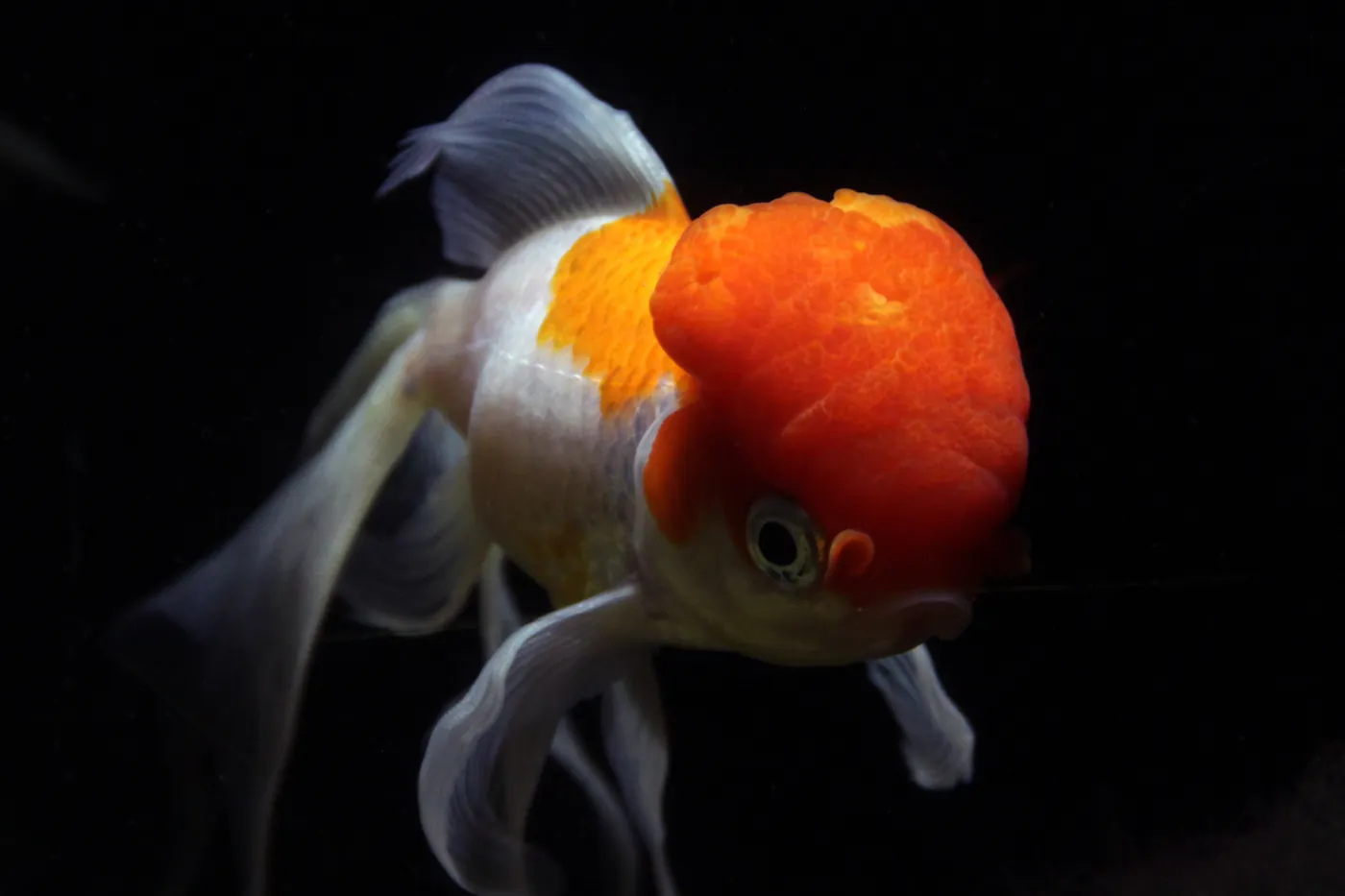
Oranda
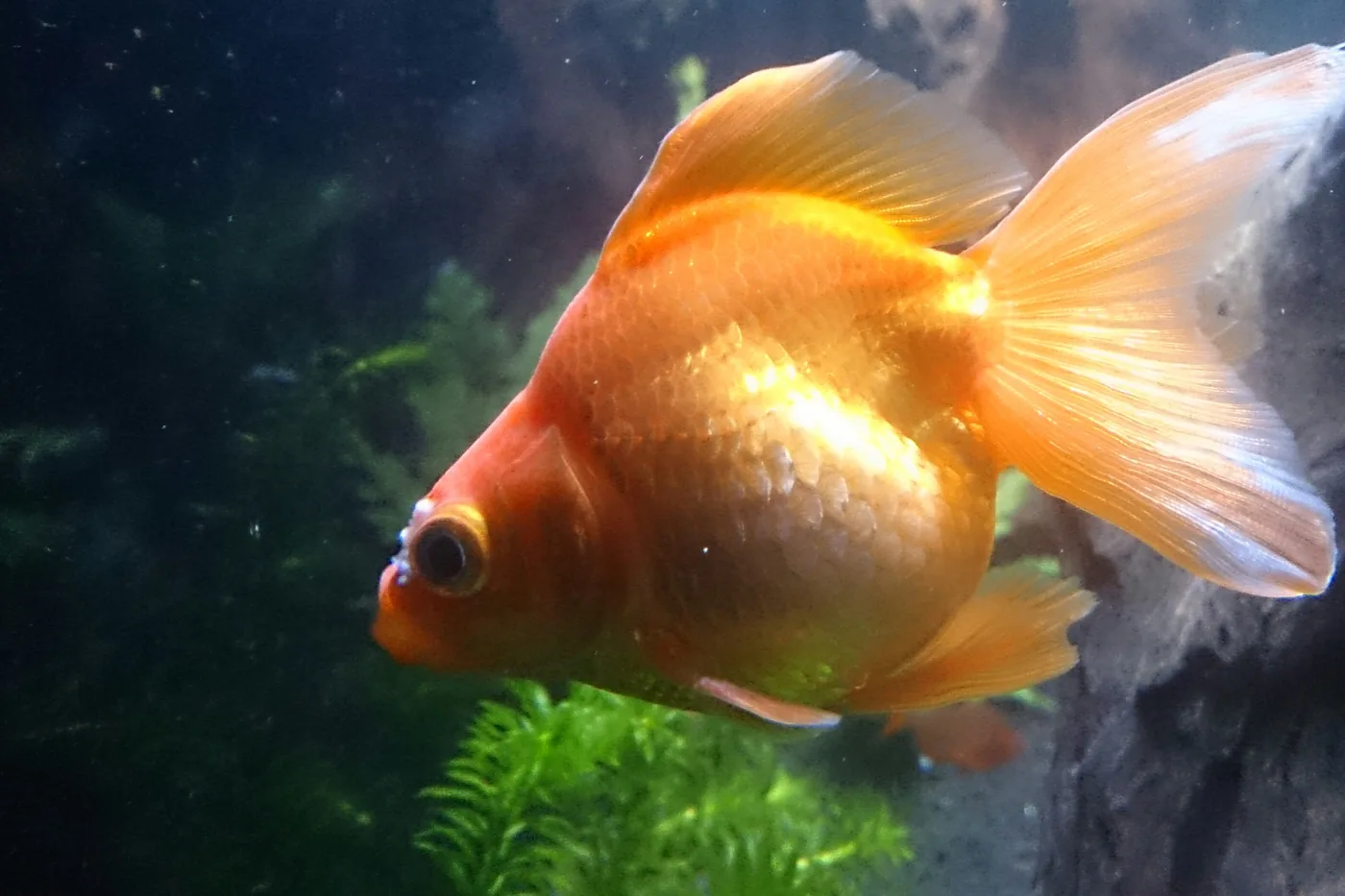
Fantail
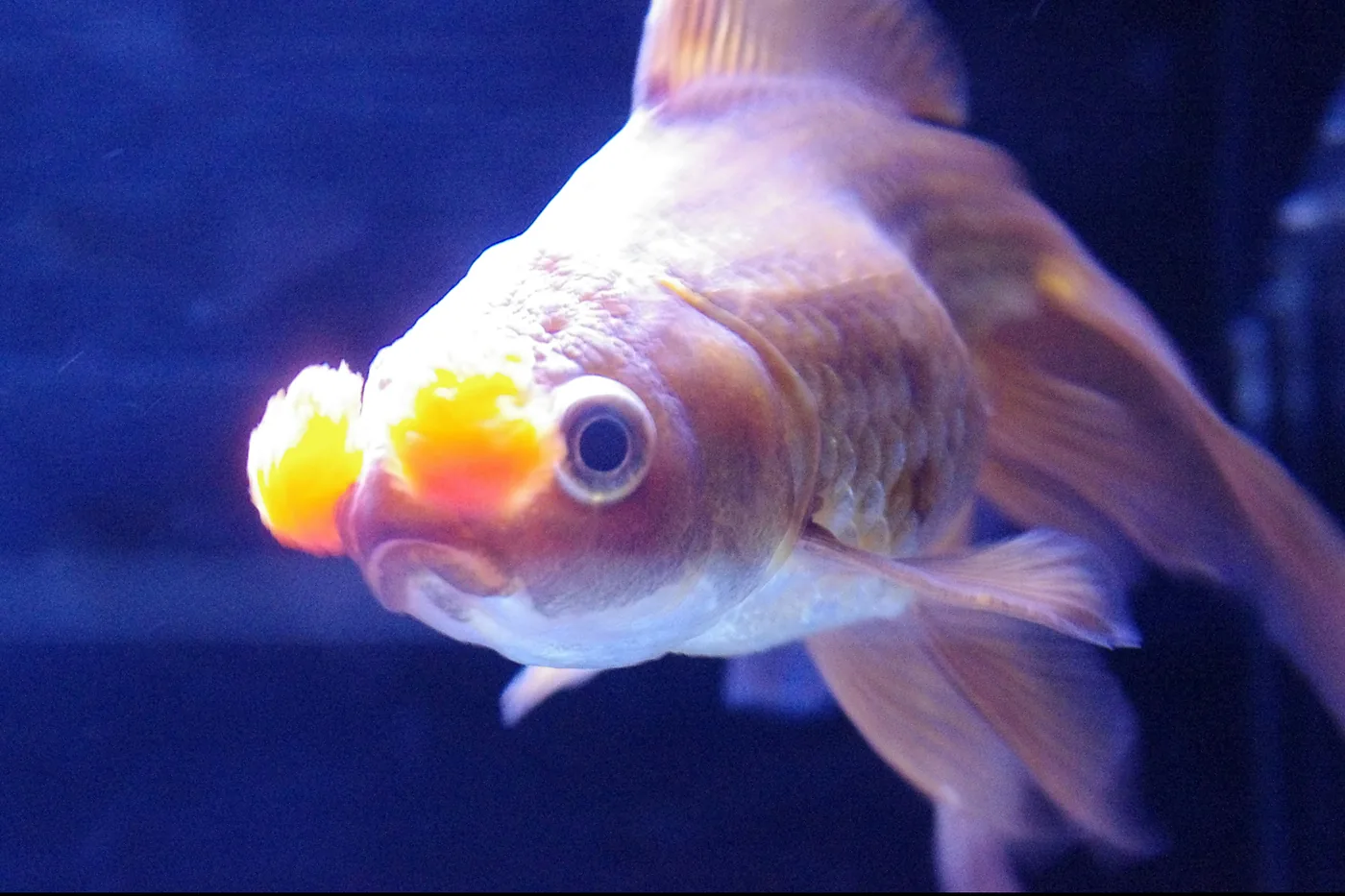
Pompom
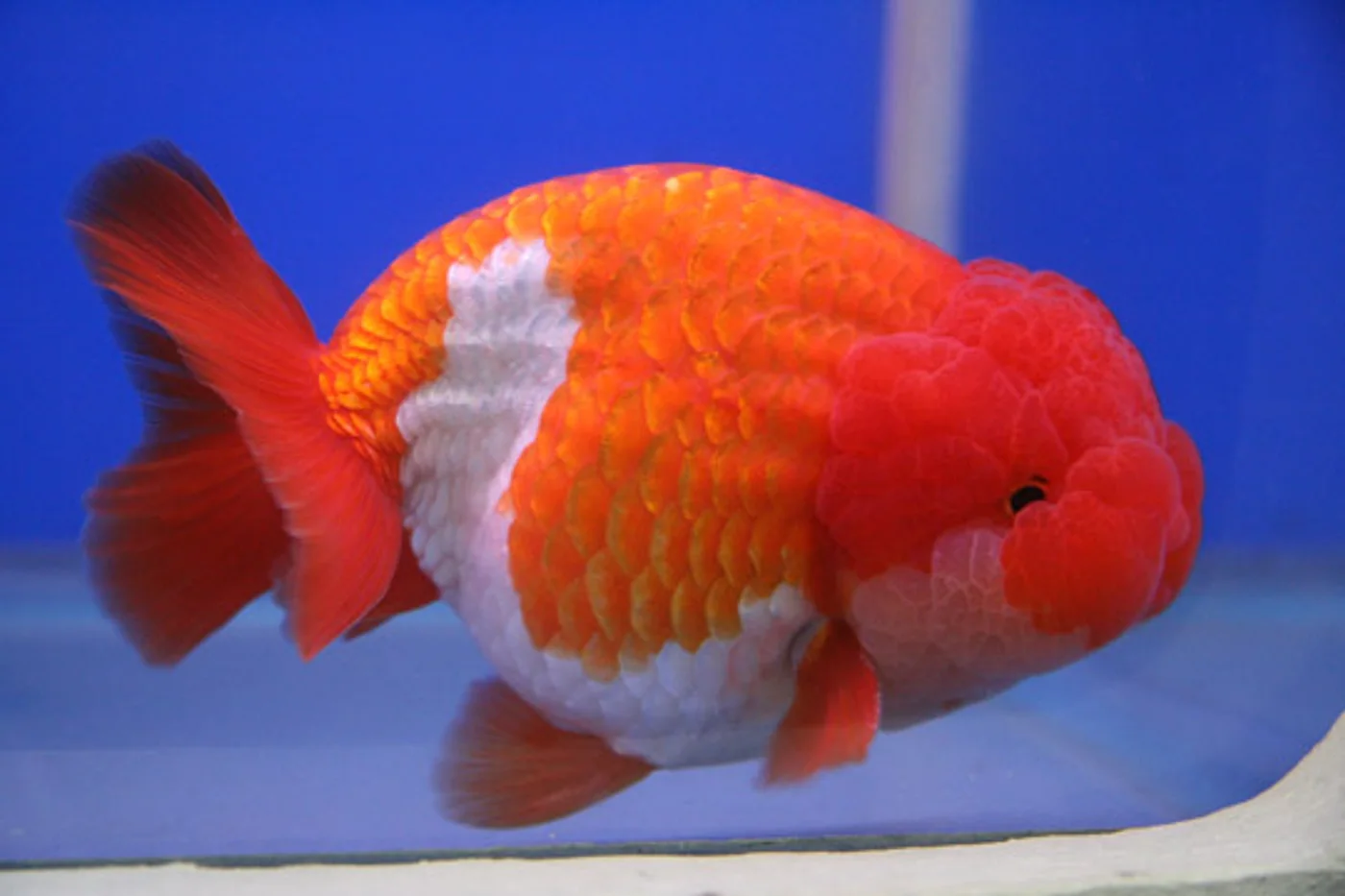
Lionchu
Best kept apart from: Common Goldfish, Comet, Shubunkin, Ryukin, Jikin, Tamasaba, Wakin. Speed and appetite differences leave the slower fish underfed.
Thinking about other species? Try the compatibility checker.
Similar breeds
Of the breeds most like the veiltail, the fantail, black moor and telescope are pictured above among its companions. The others:
Frequently asked questions
What is the difference between a veiltail and a fantail?
The trailing edge of the tail. A fantail's double caudal is comparatively short and usually forked or notched, and it spreads. A veiltail's is long, square-cut and has no fork at all, and it is well spread but carried below the horizontal, so it droops rather than fans. The bodies are similar deep egg shapes, so the tail is what you judge by - and the veiltail also carries a noticeably taller dorsal fin.
Is a broadtail moor the same as a veiltail?
It is the telescope-eyed form of one, usually in solid black. Same body, same unforked hanging tail, same tall dorsal, with the protruding eyes of a telescope added. It needs everything on this page plus the eye protection the telescope page sets out, which makes it one of the more demanding goldfish anyone keeps.
Why are veiltails so hard to find?
Because they are difficult to breed to the standard and the fins damage easily in commercial conditions. A spawn produces many fish with a forked or notched tail, a short dorsal, or both, and those are not veiltails by any standard that means anything. Many fish sold under the name are long-finned fancies of no particular type, which is worth knowing before paying a premium for one.
Can a veiltail live in a pond?
Most keepers house veiltails indoors; a sheltered pond is possible in warm weather but risky for the fins. The fins are a liability in moving water, the fish cannot escape anything, it cannot compete for food outdoors, and cold water slows fin healing exactly when damage is most likely. The Bristol Aquarists' Society says veiltails can be kept in ponds, though most of its members keep them indoors.
Do damaged veiltail fins grow back?
Usually yes, if the base is intact and the water is clean, but slowly, and the regrown fin is often shorter or a different colour. On a fish whose entire point is the outline of its fins, a permanent notch matters more than it would elsewhere. That asymmetry - easy to damage, slow to restore, never quite the same - is the argument for prevention rather than treatment.
Is a veiltail a good first goldfish?
No. It is a weak swimmer that needs pristine water, smooth surroundings, gentle flow and deliberate feeding, and it shows any lapse in the first tissue you look at. A fantail gives you the same shape of fish with none of that, and is the sound recommendation for anyone who likes the look and is starting out.
How big does a veiltail get?
The body reaches roughly 13 to 15 cm, and the tail adds a body-length or more on top of that, so a mature fish occupies far more space than the body figure suggests. Plan the tank around the whole animal and the swimming room it needs rather than around the number, which is one reason the minimum here is the same as for much faster fish.