No. 03Traditionally dated to 1502
Wakin
The original Japanese pond goldfish, and the one that breaks the rule about counting tails.
Also known as Japanese goldfish · Sarasa (the red-and-white pattern) · Wakin goldfish
- Specimen
- Single-tailed goldfish, Japan
- Adult size
- 25–30 cm
- Lifespan
- 15–20 years
- Water
- 10–24 °C
- Care
- Easy
- Swimming
- Strong
- First fish needs
- 150 litres
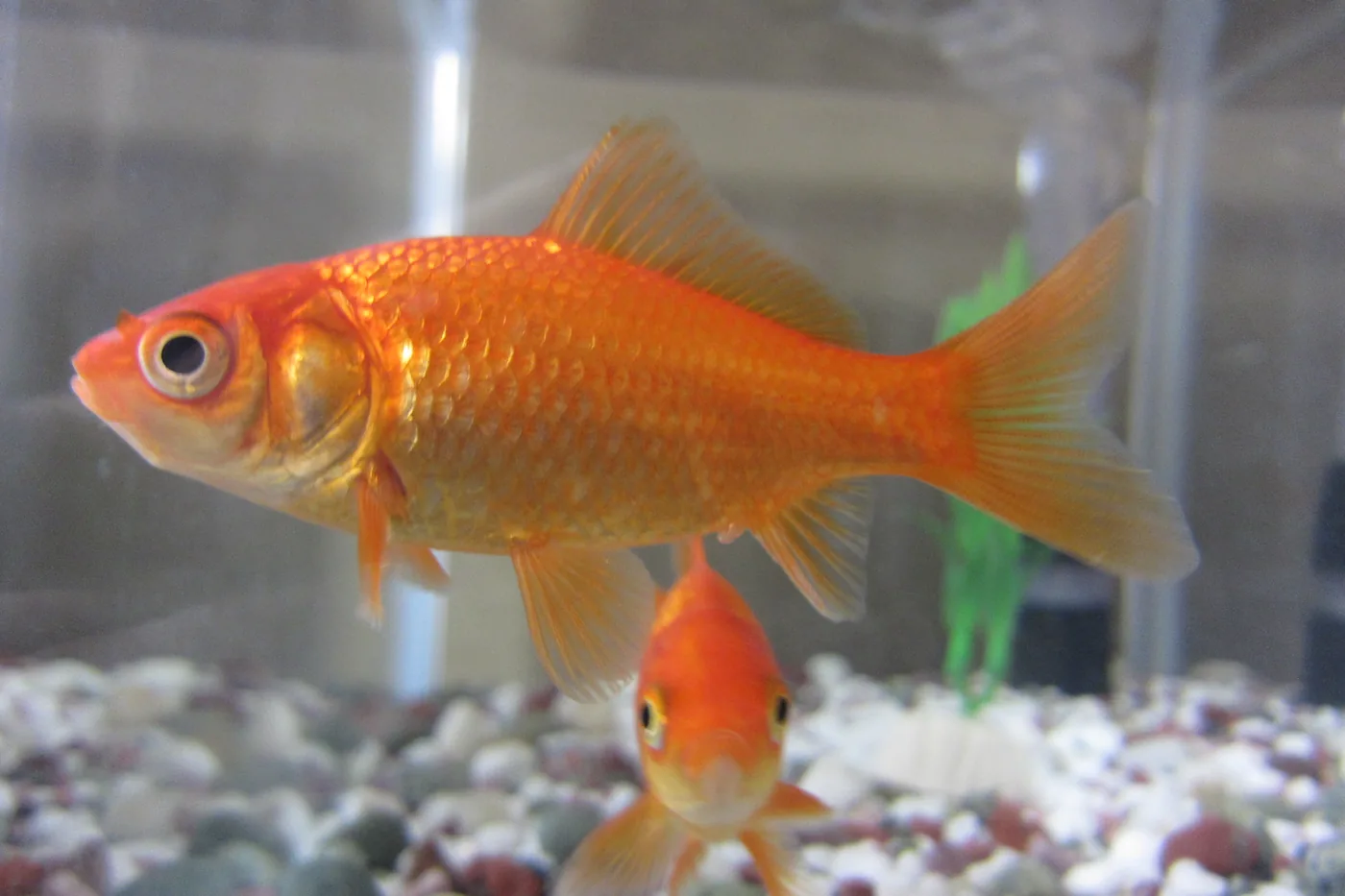
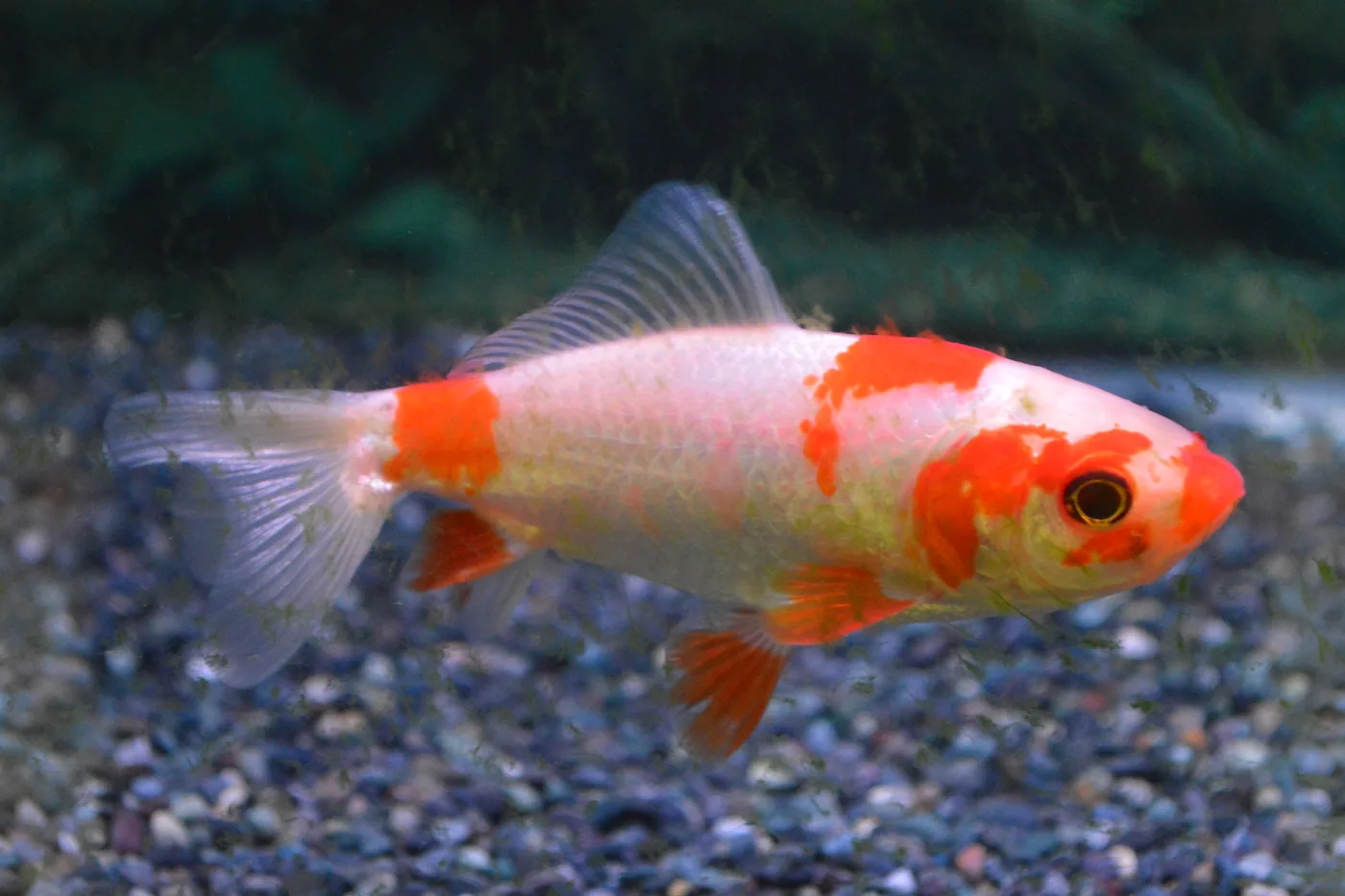
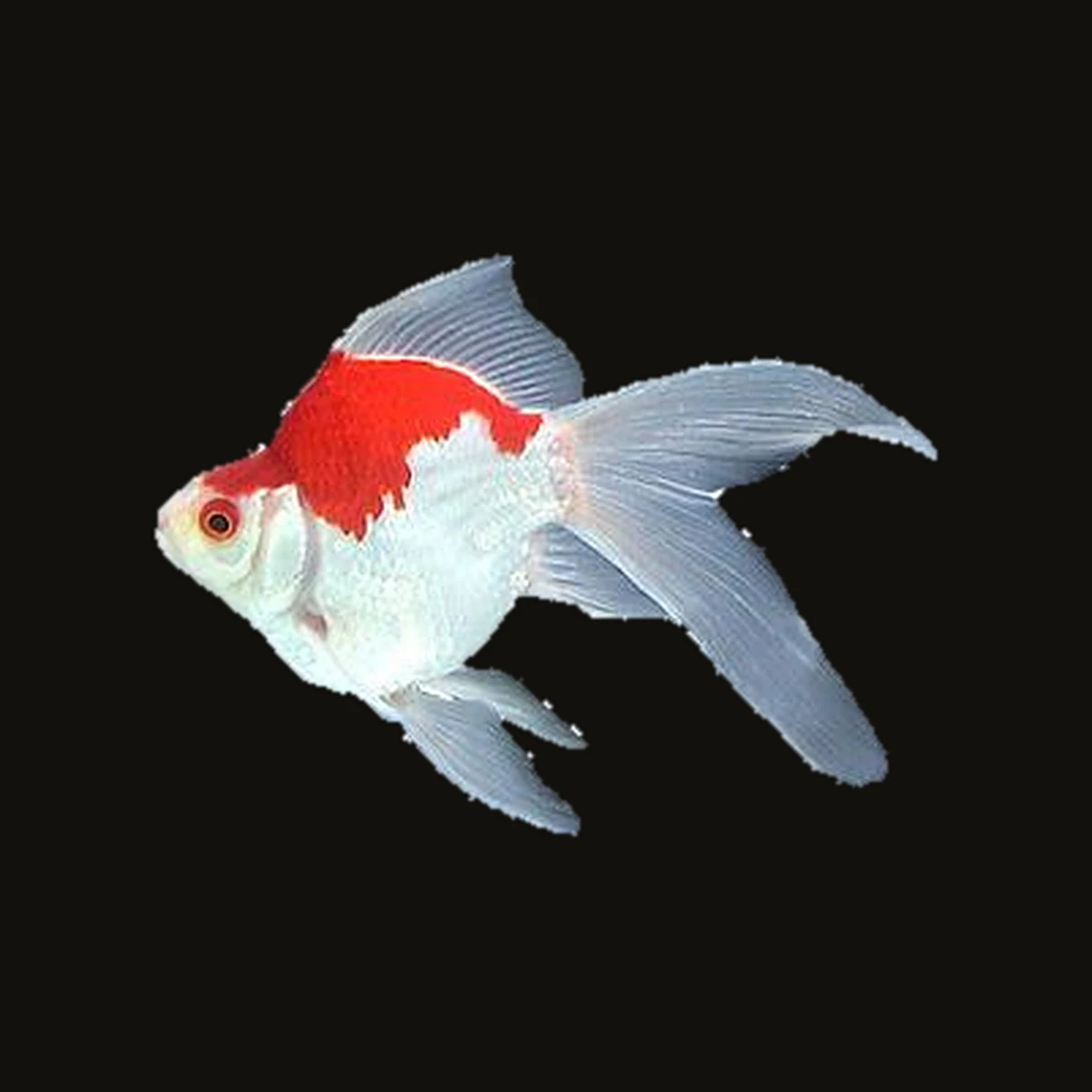
Photograph: Yatokin, CC BY-SA 4.0 · Wikimedia Commons
About these figures Size, lifespan and water are the ranges keepers' guides give for a fish in good care, not measurements of this breed, and swimming and care are this site's own ratings of the published advice. Lifespan is where the sources differ most: how long goldfish live sets them side by side. First fish needs is a middle figure for one fish, from advice that runs from 50 litres to about 300; tank size sets that out.
The specimen
Quick facts
- Classification
- Single-tailed goldfish
- Body type
- Long, streamlined single-tail body carrying a double caudal fin, closer to the ancestral goldfish than to any fancy
- Tail and dorsal
- Double tail, dorsal fin present
- Swimming ability
- Strong
- Keeper experience
- Beginner
- Temperament
- Fast, confident and competitive at feeding time, and sometimes rough with weaker fish
- Adult size
- 25–30 cm (10–12 in)
- Temperature
- 10–24 °C (50–75 °F)
- Minimum aquarium
- 150 L (40 US gal) for one fish
- Origin
- Japan, from red crucian-type stock, Traditionally dated to 1502; kept at first by the wealthy
How to recognise one
- A double caudal fin on a long torpedo-shaped body, which is a combination few other goldfish have
- The body is a common goldfish's, not an egg-shaped fancy's, and that is what decides its care
- The classic colouring is sarasa, a red-and-white pattern on metallic scales
- A full dorsal fin carried high on a smooth back, with no hump behind the head
- Reaches roughly 25 to 30 cm, and considerably more in a pond with years behind it
- Swims like a comet rather than like a fantail, which is the giveaway before you have looked at the tail at all
Almost every goldfish sorts cleanly into two groups. Long body, single tail, fast and hardy. Or egg-shaped body, double tail, slow and particular.
The wakin has the long body and the double tail, and it is the reason this site’s identification guide has an exceptions paragraph.
Identification
A double caudal fin on a torpedo-shaped body. That combination is the breed. Viewed from behind the tail is clearly paired; viewed from the side the fish is a common goldfish with a fuller tail.
A smooth back with a full dorsal, and no hump behind the head — which is what separates it from a ryukin at a glance, since that is the other breed people reach for when they see a deep tail.
Usually sarasa, the red-and-white pattern on metallic scales that is the classic wakin colouring. The pattern is not the breed, though: wakin come in plain red and in white as well.
And it moves like a single-tail. This is the fastest identification of all and it happens before you have looked at anything: a wakin patrols, chases and turns like a comet. No egg-bodied fancy moves that way.
How it develops
The body tells you first, and it tells you early. A young wakin is already long-bodied, which is the feature that decides its care, and the tail fills out alongside it. No published source gives a timetable; most goldfish hatch bronze and lose the dark pigment during the first year.
Which is the useful part, because the identification guide says tail count and dorsal presence are the two features a juvenile can be judged by. On a wakin the tail count is the one that misleads, and the body is the one that does not. Judge the body.
Why the care follows the body
This is the whole of the page, and it is worth stating plainly because the double tail sends people to the wrong half of this site.
Size. A wakin reaches roughly 25 to 30 cm and keeps going in a pond. That is a common goldfish’s adult size, not a fantail’s, and how big do goldfish get has the figures.
Volume. 150 litres as a first-fish minimum and 200 comfortably, rising with each addition — the single-tail row of the tank size guide, not the fancy one. A wakin in a 100-litre tank is an undersized fish whatever its tail looks like.
Temperature. It handles the full single-tail range, roughly 10 to 24 °C, where a fancy wants 18 to 24. The temperature guide covers why that difference exists and it is about body shape rather than finnage.
Speed, and therefore company. Covered below, and it is the mistake with the most immediate consequences.
Personality and behaviour
Fast, confident and entirely undelicate. A wakin patrols the whole tank or pond, investigates everything, and arrives at food first.
That last part is the reason the tankmate advice matters. A wakin among fancies will out-eat them, since it eats while they are still turning round, and Japanese sources add that it can be rough with weaker fish and with spawning females. The chasing and bullying page makes the general version of this argument — food competition is one of the things that harm fancies, and it needs no conflict at all.
Aquarium requirements
A pond, for preference. This is what the breed was bred in, across centuries of Japanese temple and garden ponds, and goldfish ponds covers what one needs. A wakin handles a pond year the way a common does; a pond through the year needs no adjustment for it.
Or a large aquarium. 150 litres minimum for the first fish, 200 or more comfortably, plus 75 to 100 for each additional single-tail. Long and low beats tall: swimming room matters more to this fish than depth.
Filtration for a heavy waste producer, sized as the filtration guide sets out for single-tails rather than for fancies.
Smooth decor, as ever. The one genuinely fancy-like concession the breed needs: a double tail catches on sharp edges more readily than a single one, and torn fins is the usual result.
Feeding
Straightforward, and the same as for any single-tail. A wakin has no buoyancy problem to design around because it has no compressed body — the deep-bodied fancies’ entire feeding regime exists to manage a gut folded into a short space, and none of that applies here.
Feed as how often to feed goldfish sets out, with vegetables and rest days, and expect the fish to be first to it.
Common health considerations
Fin damage, from decor or from a tankmate, and the only complaint the double tail adds.
Nothing else that is breed-specific. A wakin is as robust as a common goldfish, which is to say among the more robust goldfish in this collection. It is not prone to buoyancy trouble, it has no wen to inspect, no protruding eyes to protect and no bubble sacs to catch. The signs of a healthy goldfish page is the whole of what needs watching.
What goes wrong, in order
| What you see | What it usually is | Where to go |
|---|---|---|
| A split or notch in the tail | Sharp decor, or a hard turn past it | Torn fins |
| Outgrowing the tank within a year | It was housed as a fancy | Tank size |
| Fancy tankmates thinning | Outcompeted at every meal | Tankmates |
| Flicking and scraping | Water quality, before parasites | Flashing |
| Sluggish in a warm room in summer | Warm water holds less oxygen | Aeration |
| Colour fading over months | Diet, or simply the fish | Pale colour |
Choosing one
- Check the body, not the tail. Long and muscular is a wakin. Deep and egg-shaped with a full tail is a fantail or a ryukin, and needs different housing.
- Check the back. Smooth is a wakin; a hump behind the head is a ryukin.
- Watch it move. A wakin swims like a comet. If it drifts, it is not one.
- Expect mislabelling. Outside Japan a wakin is often sold simply as a fancy goldfish, because the tail is what a shop sees first.
The general checks in choosing and bringing home a goldfish apply on top.
Finding one outside Japan
Worth its own note, because the difficulty is not scarcity so much as naming.
Wakin are common in Japan and uncommon everywhere else, and where they do appear in European or North American retail they are usually not labelled as wakin. A shop sorts goldfish by what it can see, a double tail reads as fancy, and the fish goes into the fancy tank with a fancy price and fancy advice attached.
So the practical search is not for the name. It is for a long-bodied goldfish with a doubled tail, and it is worth checking the single-tail tank as well as the fancy one, because a young wakin in a tank of comets looks entirely at home.
What gets sold as a wakin and is not: a fantail with an unusually slim juvenile body, which will deepen within the year; and a comet whose long single tail has been read as doubled from the side. The rear view settles both in a second.
And the opposite mistake matters more. A wakin bought as a fancy goes into a 60-litre tank with a ranchu. Within a year it is 25 cm, the ranchu has not been eating, and the tank is the wrong size for either. The stocking checker will tell you what the fish you actually have needs, which is the single-tail figure.
Is a wakin right for you?
Yes, if you want a hardy pond goldfish with more presence than a plain common, you have the space a single-tail needs, and you like the idea of keeping the oldest of the Japanese forms.
And yes, if it is your first pond fish. It is rated easy and suitable for a beginner, the same as a common goldfish, and it has rather more to look at. It forgives the mistakes a first pond makes — a filter sized optimistically, a first summer without enough shade, a winter you were not sure about — in the way the fancies do not. A goldfish for a child argues that the adult is the keeper whatever the arrangement, and a wakin is a sound fish to be the keeper of.
No, if you were looking for a fancy. It is not one, and housing it as one underhouses it. If the double tail is what appeals and a pond is not on the table, a fantail is the fish you actually want.
History and origin
The wakin is traditionally the first goldfish to have reached Japan, dated to 1502. Japanese sources derive it from the hibuna, a red crucian-type fish with a single tail from which divided tails arose, and they count three- and four-lobed tails as variants and include single-tailed wakin. It was kept at first by aristocrats and rich merchants, before any of the extreme forms existed.
The jikin was bred from wakin stock, and some accounts make the wakin the ancestor of the ryukin; the ranchu is traced in English sources to the Chinese lionhead. The domestication page covers the sequence, and the wakin is the step where the tail doubled and the body had not yet been asked to change.
Before you bring one home
- Its care follows the body rather than the tail, so it belongs with the single-tails in every practical respect
- A pond fish first, and one that grows too large and too fast for the tanks a double tail suggests
- Tolerates cold water as well as any common goldfish, and should not be treated as a delicate fancy
- Outcompetes fancy goldfish at feeding time and may harass them, so keep it with single-tails
- The double tail is slightly more prone to catching on sharp decor than a single one, which is the only fancy-like concession it needs
Suitable companions
Single-tailed goldfish are fast and boisterous. Keep them with fish that can keep up.
Best kept apart from: Ranchu, Lionhead, Bubble Eye, Celestial Eye, Pearlscale, Veiltail, Pompom, Telescope, Tosakin, Lionchu, Jikin. Speed and appetite differences leave the slower fish underfed.
Thinking about other species? Try the compatibility checker.
Similar breeds
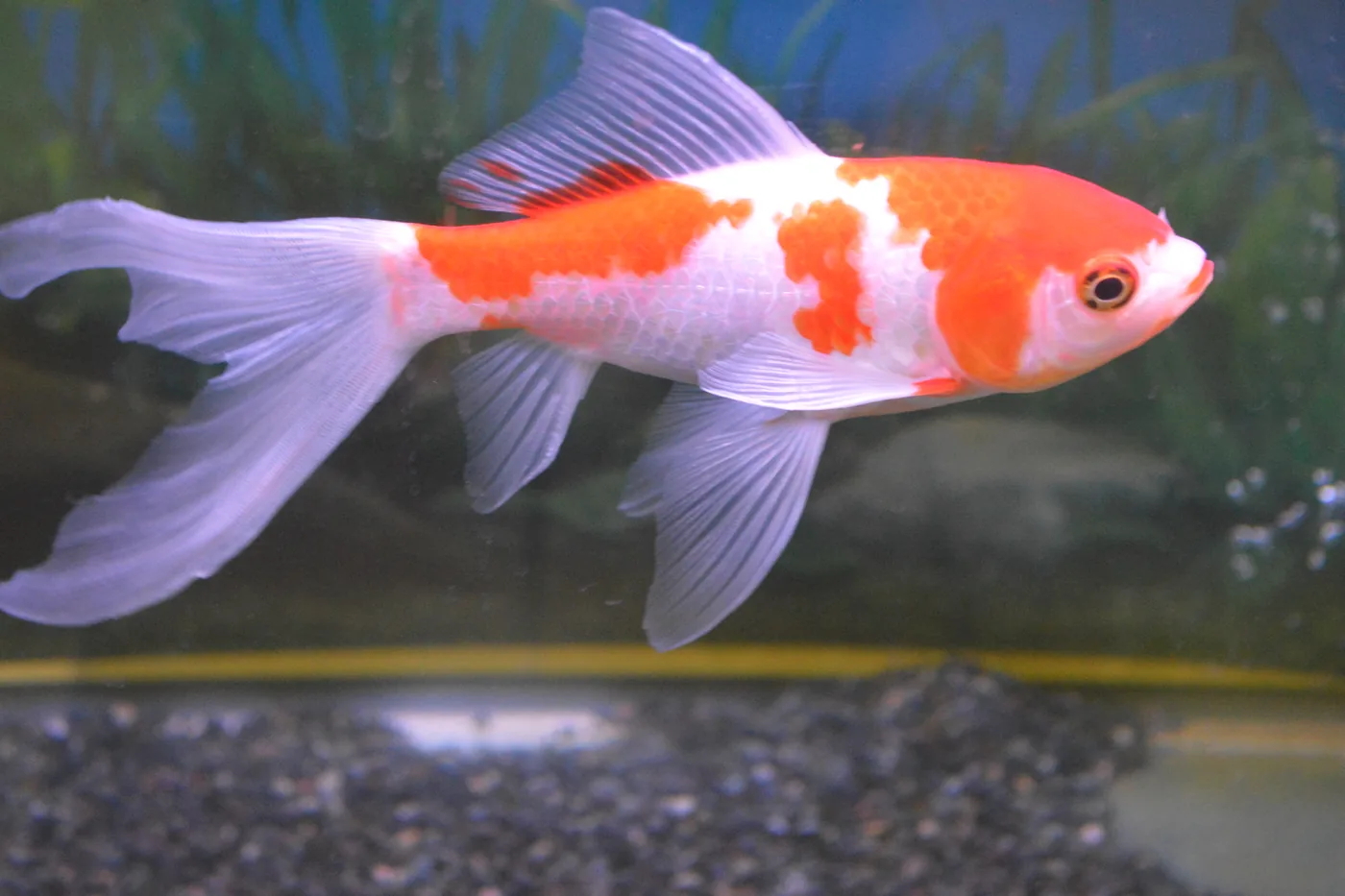
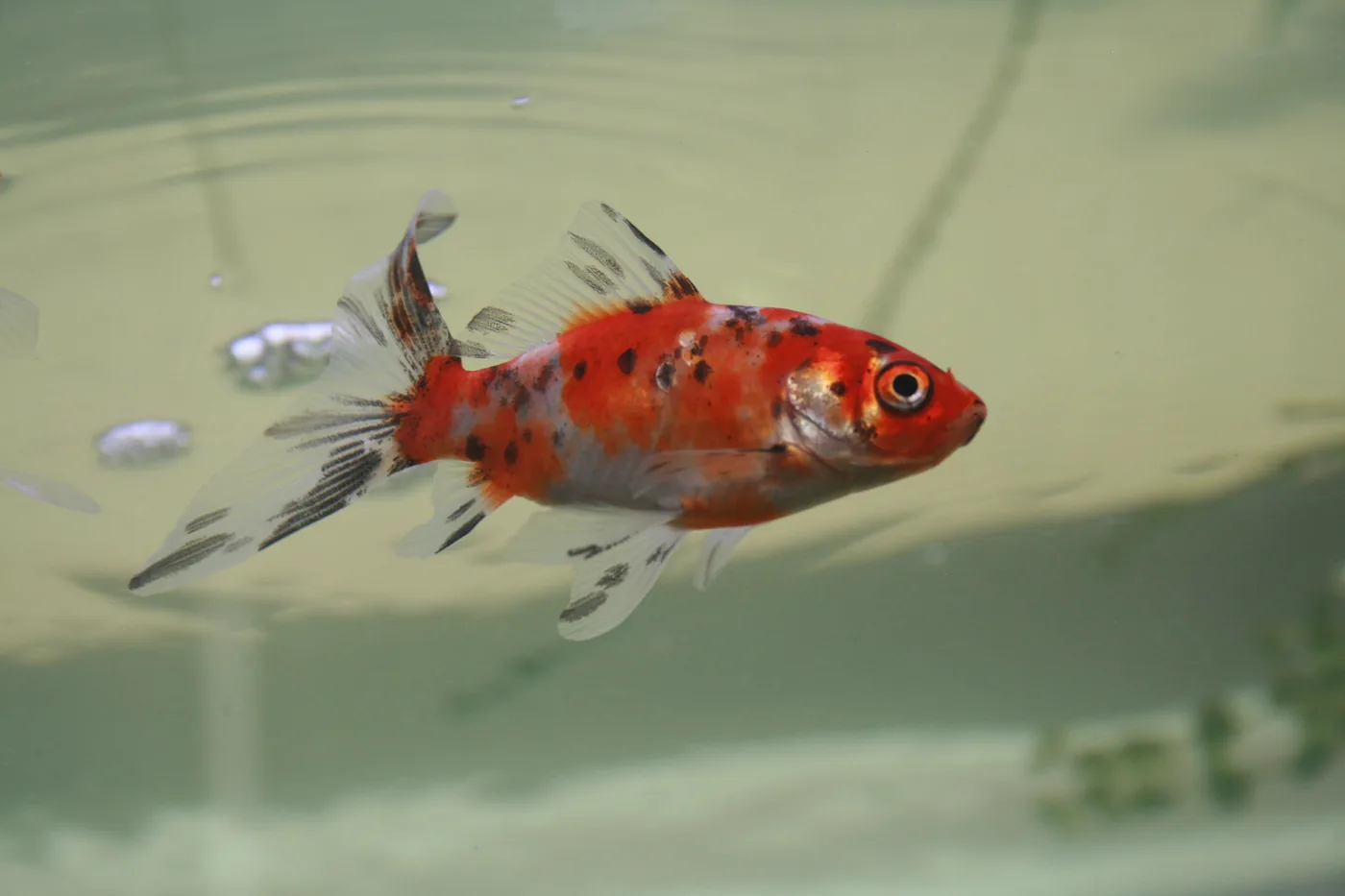
Of the breeds most like the wakin, the common goldfish, comet and tamasaba are pictured above among its companions. The others:
Frequently asked questions
Is a wakin a fancy goldfish?
No, despite the double tail. Everything that decides how a goldfish is kept comes from the body, and a wakin's body is a common goldfish's - long, muscular and built for speed. It swims strongly, tolerates cold, grows to 25 to 30 cm and belongs in a pond or a very large aquarium. Housing one as a fancy, in a warm tank of slow-moving round fish, gets both the wakin and its tankmates wrong.
Why does a wakin have two tails on a single-tail body?
Because tail doubling and body shortening are separate traits that happened to travel together in most breeds rather than being the same thing. The wakin is the counterexample, and it is why the identification guide on this site names it as an exception: tail count is a reliable feature on a juvenile goldfish, and the wakin is one of the few fish it gets wrong.
How big does a wakin get?
Roughly 25 to 30 cm is normal, and pond fish with years and space behind them are reported considerably larger. Plan for a common goldfish's adult size rather than a fantail's, because that is what you have.
Can a wakin live in a pond?
Yes, and it is what the breed was made for. Wakin were bred in Japanese ponds for centuries and they handle a British pond year as well as a common or comet does. The pond pages cover depth, filtration and overwintering; nothing on them needs adjusting for this fish.
Can I keep a wakin with fancy goldfish?
Not fairly. It is faster and stronger than an egg-bodied fancy, and it will usually have eaten before a ranchu has reached the food. Japanese sources also describe it as rough-tempered, chasing weaker fish and hurting spawning females, and advise keeping it apart from other varieties. Keep wakin with commons, comets and shubunkins.
Are wakin rare?
Common in Japan and uncommon in Europe and North America, where the double tail tends to get them sold as a fancy of some kind. If you find one labelled simply as a fancy goldfish with an unusually long body, that is worth a second look.
What is a sarasa?
The red-and-white pattern rather than a separate breed, and the classic wakin colouring. The same name is used for the pattern on other fish, including koi, which is a reminder that colour names in this hobby describe patterns and not varieties.