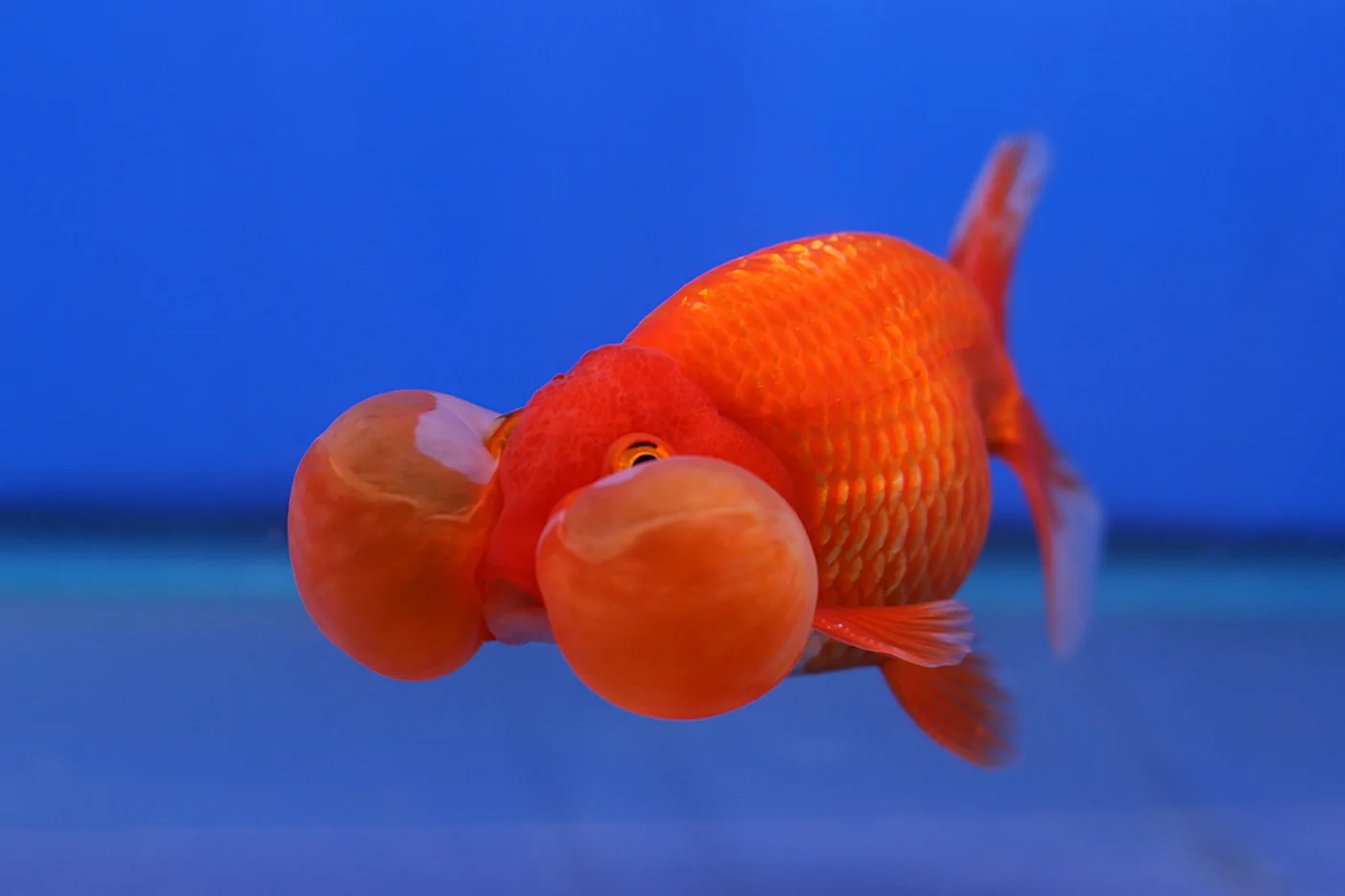
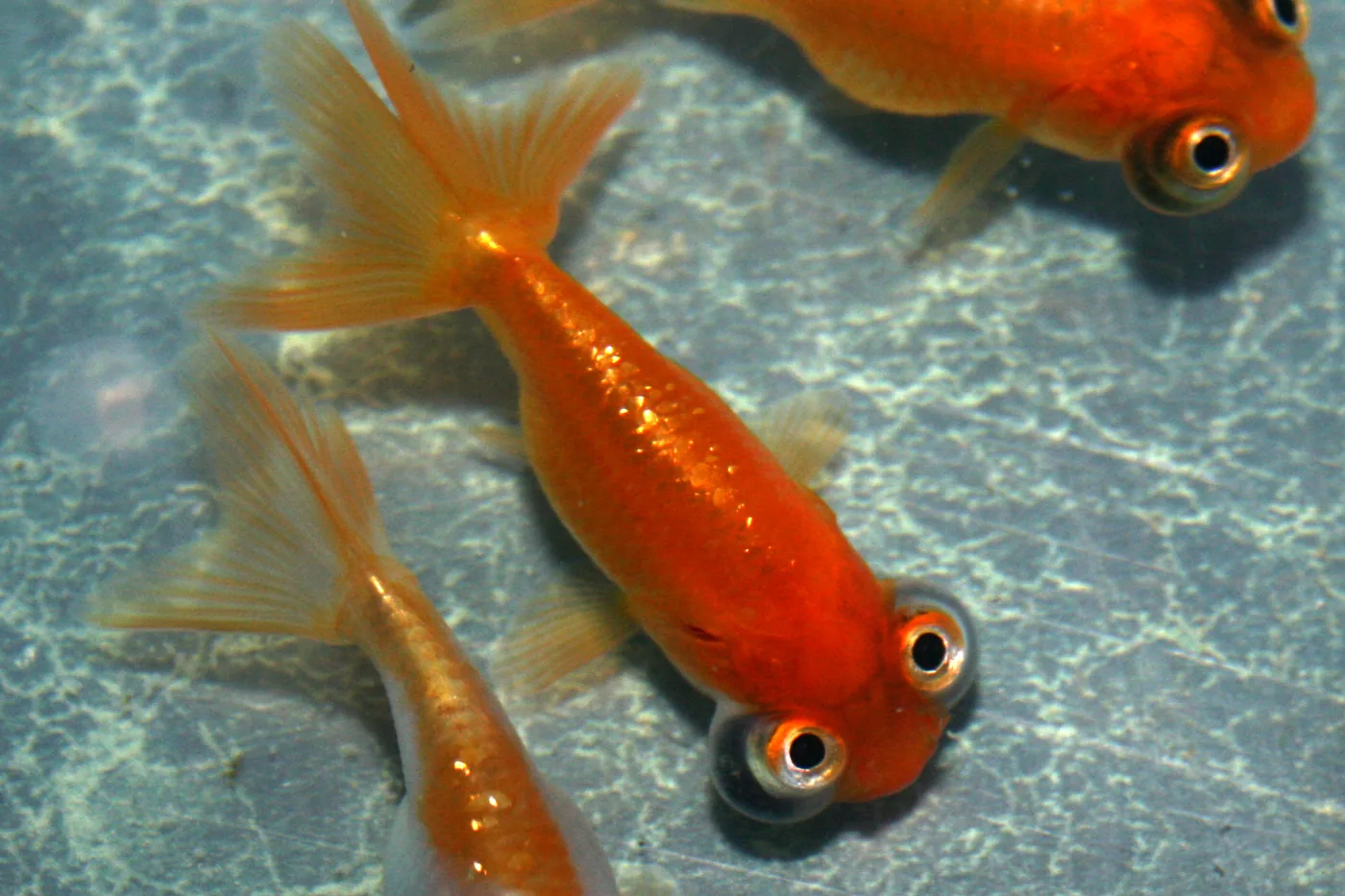
No. 09Depicted by 1772; dates differ
Celestial Eye
The goldfish that looks permanently at the sky, and needs a tank designed around the fact.
Also known as Choten gan · Chotengan · Celestial
- Specimen
- Fancy goldfish, China
- Adult size
- 12–15 cm
- Lifespan
- 7–10 years
- Water
- 18–24 °C
- Care
- Demanding
- Swimming
- Weak
- First fish needs
- 100 litres
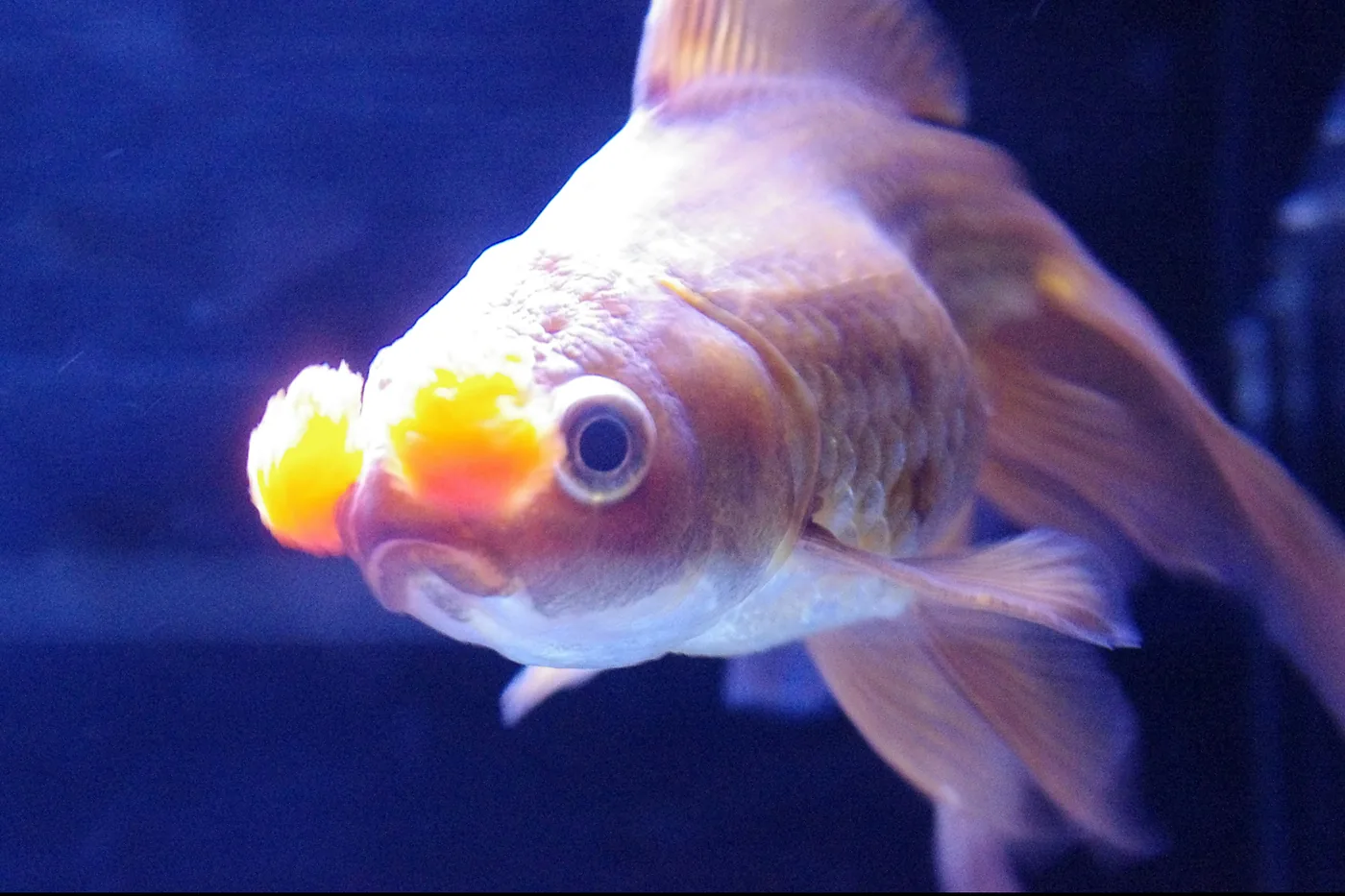
Photograph: Michelle Jo, CC BY 3.0 · Wikimedia Commons
About these figures Size, lifespan and water are the ranges keepers' guides give for a fish in good care, not measurements of this breed, and swimming and care are this site's own ratings of the published advice. Lifespan is where the sources differ most: how long goldfish live sets them side by side. First fish needs is a middle figure for one fish, from advice that runs from 50 litres to about 300; tank size sets that out.
The specimen
Quick facts
- Classification
- Fancy goldfish
- Body type
- Egg-shaped body with a smooth, finless back, a double tail and protruding eyes that are turned permanently upward
- Tail and dorsal
- Double tail, no dorsal fin
- Swimming ability
- Weak
- Keeper experience
- Experienced
- Temperament
- Quiet, slow and completely non-aggressive; easily left hungry by faster or better-sighted fish
- Adult size
- 12–15 cm (5–6 in)
- Temperature
- 18–24 °C (64–75 °F)
- Minimum aquarium
- 100 L (26 US gal) for one fish
- Origin
- China (some accounts say Korea), reaching Japan in the early 1900s, Earliest known depiction 1772; some sources say about 1870
How to recognise one
- Eyes that protrude like a telescope's but with the pupils fixed pointing straight upward
- No dorsal fin; the back is a smooth, unbroken arch from head to tail
- Egg-shaped body, seen from above as two eyes staring straight up
- Double tail, usually short and fanned
- Eyes are normal in fry, protrude in the first months, and turn upward as the fish matures
Identification
A celestial eye looks up. Its eyes protrude from the head like a telescope’s, but the pupils are fixed pointing straight at the sky; it is not a posture, because the eyes cannot turn. Fry hatch with normal eyes, which begin to project in the first few months and then rotate upward as the fish matures, in most fish; the timing varies between lines.
Behind the eyes the back is smooth and finless, arching from head to tail, and the tail is double and usually short. Colours are mostly orange and red, with red-and-white, calico, white and black fish also bred.
The breed shares its finless back and upward gaze with the bubble eye, which is distinguished by the fluid sacs under its eyes.
Telescope, celestial or bubble eye?
-
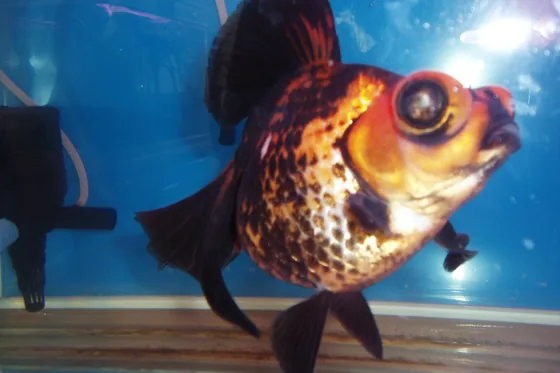
Eyes pushed out to the sides
-
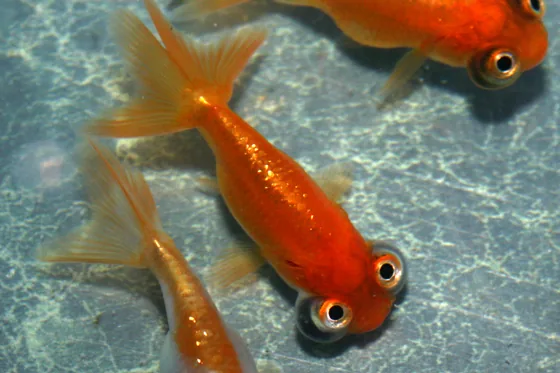
Eyes turned to the sky
-
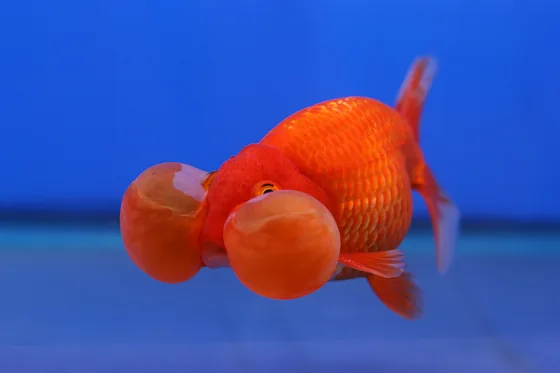
A sac beneath each eye
Three eye breeds side by side: a telescope with an eye projecting from the side of its head ringed, a celestial seen from above with an upturned eye ringed, and a bubble eye with the fluid sac beneath its eye ringed.
- Telescope. Eyes that project outward from the sides of the head. The black moor is the black form of the telescope (the British show standard judges it as a separate type).
- Celestial Eye. No dorsal fin in the standard, and eyes turned upward to gaze at the surface, with no sac beneath them.
- Bubble Eye. No dorsal fin in the standard, upturned eyes, and a fluid-filled sac beneath each one that trembles with every movement.
Photographs: Telescope, Fanghong, CC BY 2.5; Celestial Eye, Michelle Jo, CC BY 3.0; Bubble Eye, Lerdsuwa, CC BY-SA 4.0. Rings added.
What a celestial actually sees
The fact that everything else on this page follows from, and it is more specific than “poor eyesight”.
The pupils point permanently upward. This is not a telescope’s problem of poor focus — the telescope page covers that one — but a different thing: the visual field is aimed at the surface and above it.
So the fish sees little forward or down, which is where food is, where obstacles are, and where other fish approach from.
And it can see you, at least in outline, whenever you lean over the tank. Some keepers report celestials responding readily to a person above the water, which would be less a personality trait than a consequence of where the eyes are aimed.
It locates food by smell and by feel, running along the substrate with its mouth. Goldfish anatomy and biology covers the lateral line and the sense of smell that make this workable, and it is workable — a well-kept celestial feeds perfectly well. It simply does it differently, and slowly.
Substrate matters more here than for any other breed
A specific and under-stated consequence of that upward gaze.
A fish that feeds by mouthing along the bottom will take in whatever is there. Coarse gravel is a swallowing and choking hazard for any goldfish and a considerably larger one for this breed, because the fish is not looking at what it picks up.
Sand or bare glass, therefore, without exception — substrate for goldfish covers grain size and why the middle sizes are the dangerous ones.
And food that stays put. Sinking pellets in a consistent spot, not scattered, so the fish can find the same place every time — sinking versus floating food covers why surface feeding is doubly wrong here.
How it develops
Fry hatch with ordinary eyes, flat to the head. The eyes protrude within the first two months and usually turn upward over the next few, in most fish by about nine months, and a few take longer or never turn fully.
So a juvenile celestial looks like a dorsal-less telescope for a while, and the upward turn is the last thing to happen. Asymmetry that is present early may stay.
The timing is the thing to know before you buy. A celestial eye does not hatch with its eyes upturned. Fry look like any other dorsal-less fancy, and the rotation happens gradually over the first months. A juvenile whose eyes are still part-way round is normal and will usually continue; a mature fish whose eyes have stopped short may stay as it is, and neither is a defect so much as a stage.
This matters at the shop. Celestials are commonly sold young, at the point where the eyes are turning but the final position is not yet fixed, and no one can tell you exactly where a given fish will end up. If you want a particular look, buy an older fish and pay for it. If you buy a juvenile, buy it for the breed rather than for the individual, and expect the face you get in a year to be somewhat different from the one in the bag.
The varieties
Few, and the differences are mostly in colour. That is worth understanding before you go looking: in most fancy breeds the varieties are finnage — a ryukin comes short-tailed or long-tailed, an oranda veiled or not. The celestial eye has no such range, because the two features that define it, the missing dorsal and the upturned eyes, are fixed. What is left to vary is colour.
- Colour lines: orange, red, red-and-white, calico, white and black.
Orange and red-and-white are what you will actually find. Calico celestials exist and are genuinely uncommon rather than merely expensive, and black ones often do not stay black — as with the black moor, a line that was never fixed for black loses it, and a black celestial bought at three months may be bronze by two years. Buy the fish in front of you, not the one on the tank label.
The standard celestial has no dorsal fin. Upward-eyed fish with a dorsal fin exist in China, where a 1904 text lists both kinds, but they are rare and do not meet the standard; a dorsal fin, or even a ridge of one, on a fish sold as a celestial usually means a cross, most often with a telescope.
Choosing one
- Two eyes protruding evenly and aimed the same way. Asymmetry is permanent.
- Clear corneas, no scrapes on the protruding tissue.
- Level swimming, deliberate rather than struggling.
- Watch it feed. This is the test that matters most for this breed.
- Look at the substrate it is standing on, since a celestial on coarse gravel has been picking things up blind.
- Read the shop, then quarantine for at least four weeks.
Where you will find one. A scarce fancy — most general shops have never stocked one, and a specialist will often order rather than hold them. That usually means waiting and paying more, and it makes the usual advice about inspecting before buying harder to follow, so it is worth being firm about it anyway: ask for photographs of the actual fish, from above as well as side on, since the view from above is the one this breed is judged by and the one a listing rarely shows.
Personality and behaviour
Celestial eyes are quiet, slow and inoffensive, and they experience the aquarium in a way no other goldfish does. They see the surface, the lights and anything passing overhead, but nothing of the substrate in front of them, so they feed by smell and by rooting along the bottom.
They are the wrong fish for a busy community. Anything with a dorsal fin is faster; anything with forward-facing eyes finds food first. Other celestials, bubble eyes and, with care, ranchus or lionheads are the sensible company, and the compatibility checker will confirm what does not belong.
Aquarium requirements
Start from 100 litres (26 US gallons) for the first fish and 40 to 50 litres for each additional one, in a long, shallow tank rather than a tall one. The interior must be smooth, with nothing that can scratch a projecting eye, and sparse: rounded stones, a piece of smooth wood and soft live plants are enough.
Substrate is the important decision. A fish that feeds by feel along a bottom it cannot see will take in whatever is there, so sand or a bare bottom is the answer, as the substrate guide explains.
Filtration must be effective but calm. Cover every intake with a sponge and keep the outflow soft, since a fish without a dorsal fin rolls easily in current and tires quickly; the filtration guide covers suitable options. Many guides give 18 to 24 °C (64 to 75 °F) and some breed societies 15 to 20 °C; keep it stable, and change 25 to 40 percent weekly according to nitrate readings.
Feeding
Sinking food, always, and always in the same place. A celestial cannot watch a pellet fall past its face, but it can smell it and will head for a corner where food reliably arrives. Base the diet on a quality sinking pellet for fancy goldfish, add gel food that stays where it is put, and offer blanched peas, spinach and zucchini for roughage; the sinking food guide sets out the reasoning.
Because the eyes point upward, celestials will feed at the surface when food floats there, and the air they gulp doing so is often blamed for floating episodes. Feed small amounts two or three times a day and watch that the fish is actually eating; a celestial can go hungry in a full tank unnoticed.
Common health considerations
The eyes come first. A scratch from decor, gravel or a net can cloud the cornea and, if the water is dirty, become infected; the cloudy eyes guide covers what to watch for. Since the eyes point upward, injury from above, such as a rough net, is a particular risk, so move the fish in a container.
Hunger is the quiet problem. A celestial in a shared tank can eat too little for weeks before it looks thin, and a fish that is losing weight, sitting on the bottom or ignoring food should have its water tested and be checked against the loss of appetite guide. Buoyancy upsets from gulped air and overfeeding are as common as in any fancy and often resolve with sinking food and a day’s fast, though vets find other causes too; a celestial that cannot right itself for more than a day needs attention.
What goes wrong, in order
| What you see | Usually | Where to look |
|---|---|---|
| Not finding food | The breed, plus company that is too quick | Chasing and bullying |
| A cloudy or scraped eye | Decor, an intake, or gravel | Cloudy eyes |
| Mouthing at gravel, then distress | Something swallowed | Substrate |
| Gradually thinner, no visible cause | Losing every meal, over months | Loss of appetite |
| Struggling against the flow | The filter, not the fish | Goldfish filtration |
| Floating or tipping after meals | Often diet, though other causes exist | Floating upside down |
Rows one and four are the same failure at two timescales, and it is the one that actually kills celestials: not a disease, but a fish that quietly receives less food than it needs for long enough to matter. The fix is stocking and feeding technique rather than anything from a bottle.
Is a celestial eye right for you?
It suits you if you have kept demanding fancies before, you will run sand or bare glass, feed sinking food in one place and watch that it gets eaten, and you will keep it with fish as slow as itself or on its own.
It does not suit you if you want a mixed community, if you like a gravel substrate, or if this is an early goldfish. Like the bubble eye it is a fish for someone who will design a tank around it.
And it carries two selected traits at once — the upward eyes and the missing dorsal fin — which is the combination goldfish welfare asks the hardest questions about. Kept as this page describes it lives well; kept as an ordinary goldfish it does not, and it is the keeper rather than the fish who decides which.
History and origin
The celestial is an old breed. The earliest known depiction of an upward-eyed goldfish is a Chinese scroll of 1772, although some sources date the breed to about 1870, and some accounts credit Korea with developing the type. Some authors treat the celestial as a mutation of the telescope, but genetic work suggests the two arose separately, and breeders fixed the trait by selection.
The fish reached Japan in the early twentieth century and became the choten gan, roughly “eyes toward the heavens”. Today celestials remain a specialist’s fish, prized as much for their calm as for their upward stare.
Before you bring one home
- Sees only what is above it; feed sinking food in a consistent spot and check that it is eating
- Protruding eyes are easily scratched, so decor must be smooth and filter intakes guarded
- Weak swimmer without a dorsal fin; keep the current gentle and the company slow
- Use sand or a bare bottom, because it feeds by feel along the substrate and can swallow gravel
Suitable companions
Round-bodied goldfish should live with fish of similar speed. These breeds share the same pace, water and food.
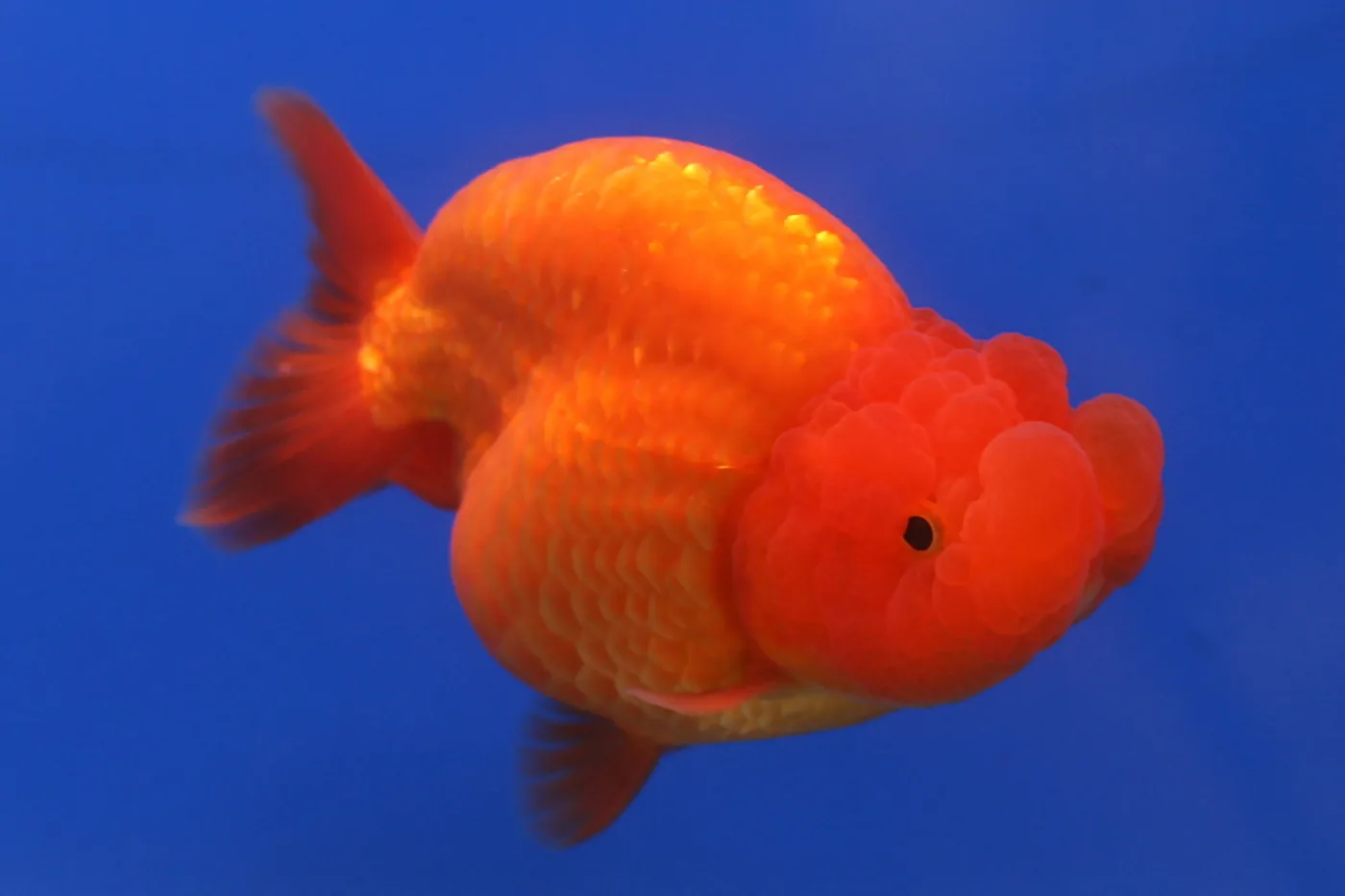
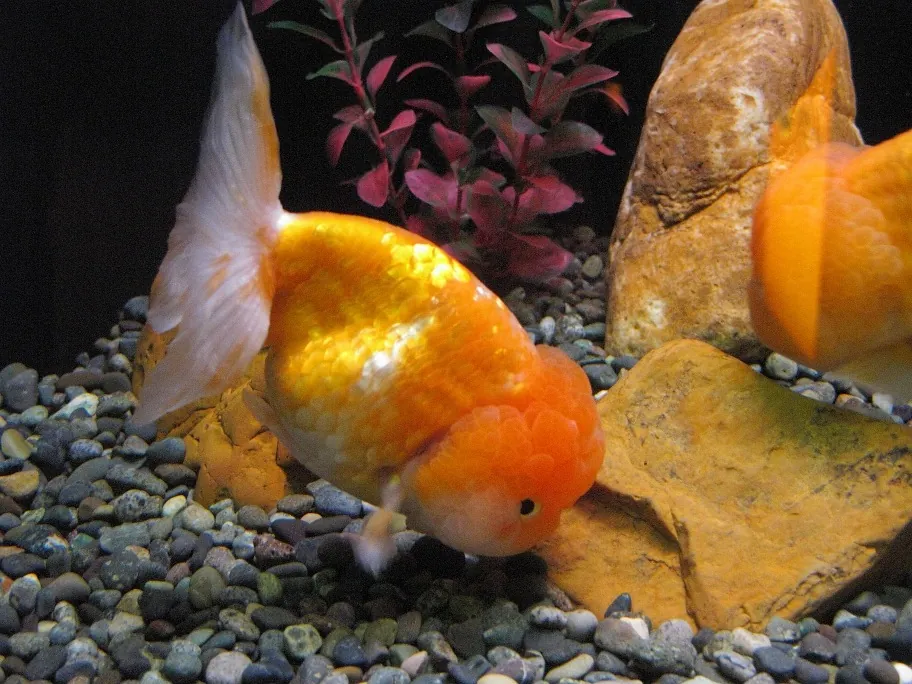
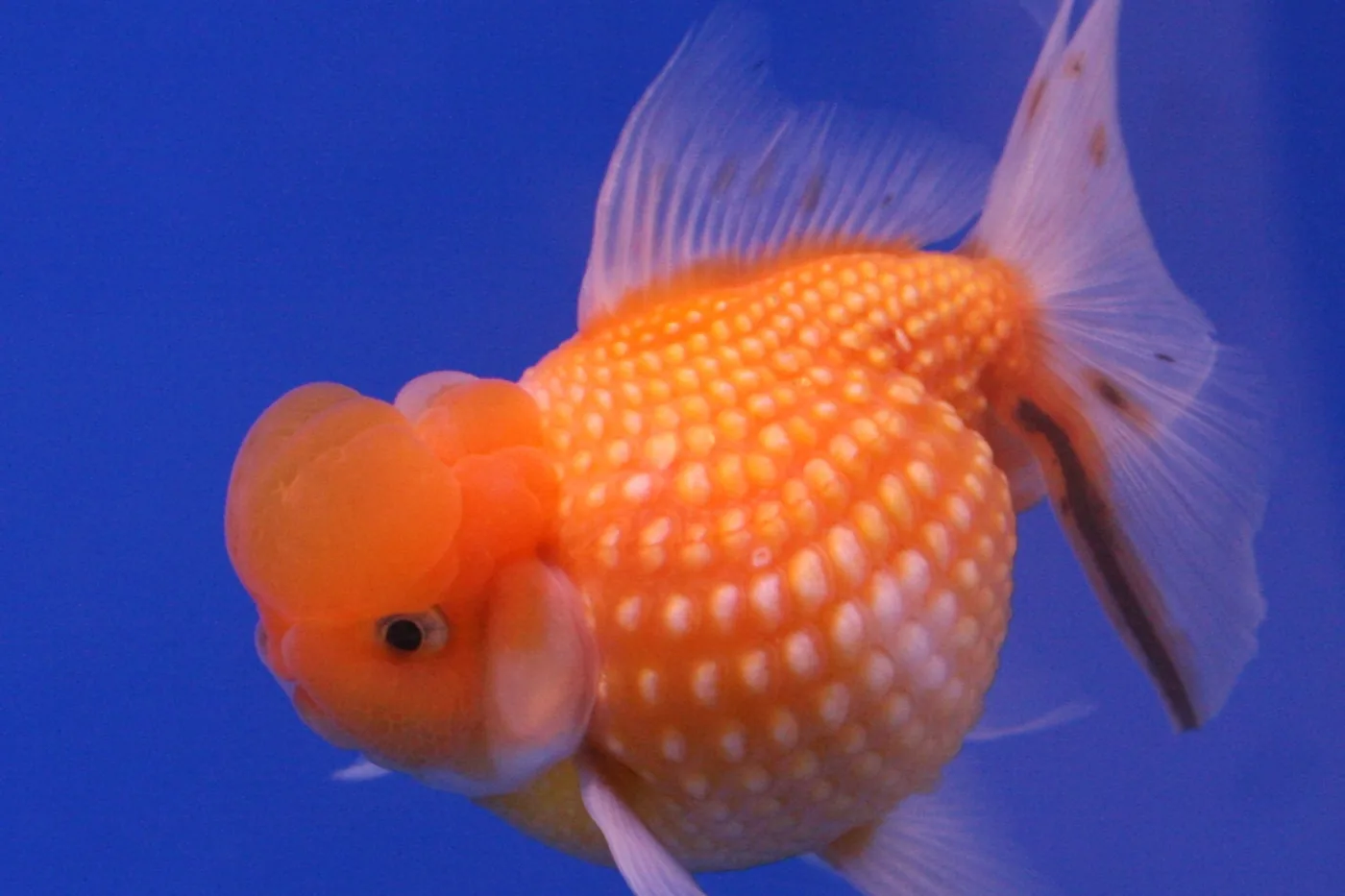
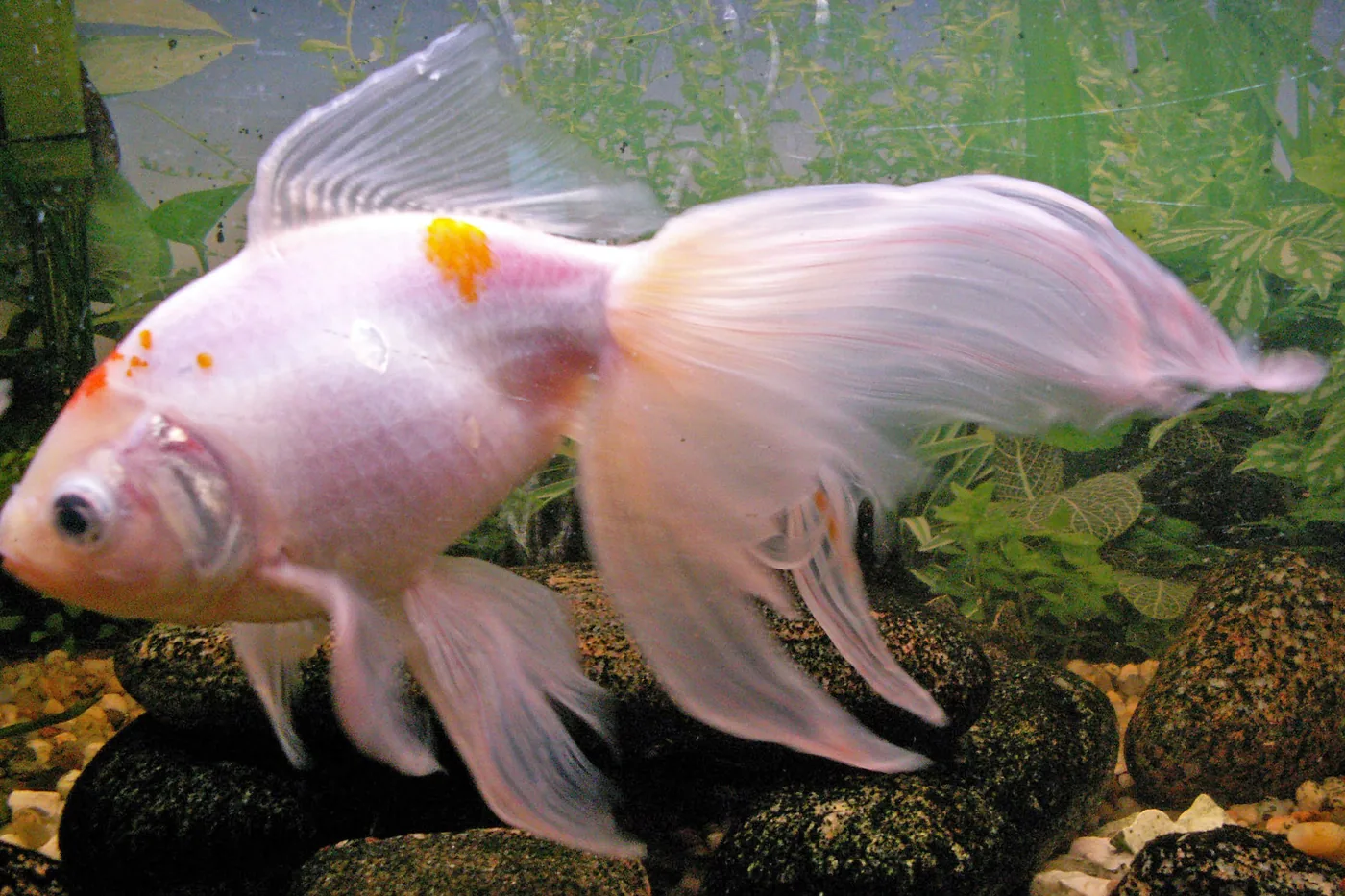
Best kept apart from: Common Goldfish, Comet, Shubunkin, Ryukin, Fantail, Oranda, Telescope, Black Moor, Jikin, Tamasaba, Wakin. Speed and appetite differences leave the slower fish underfed.
Thinking about other species? Try the compatibility checker.
Similar breeds
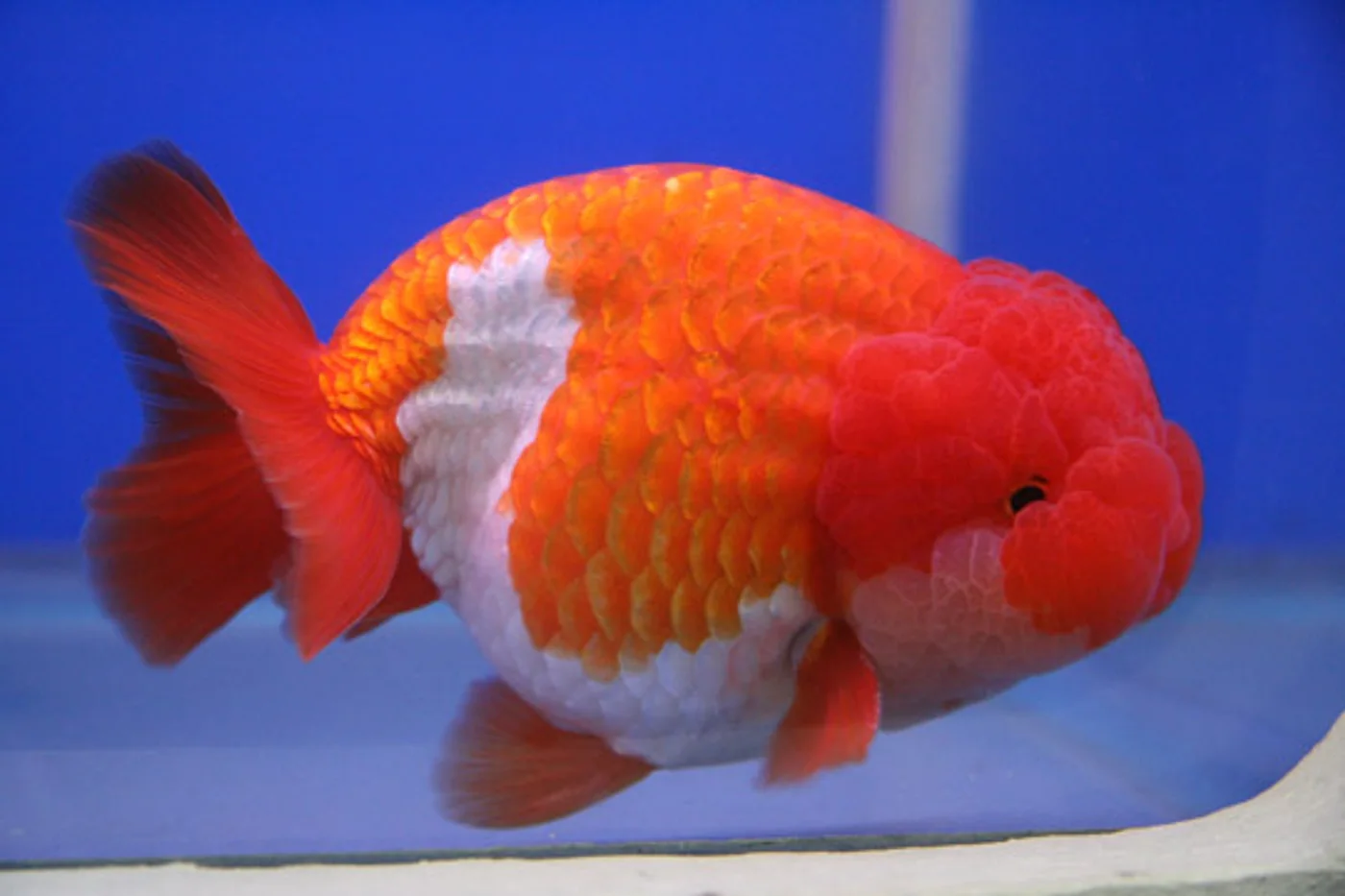
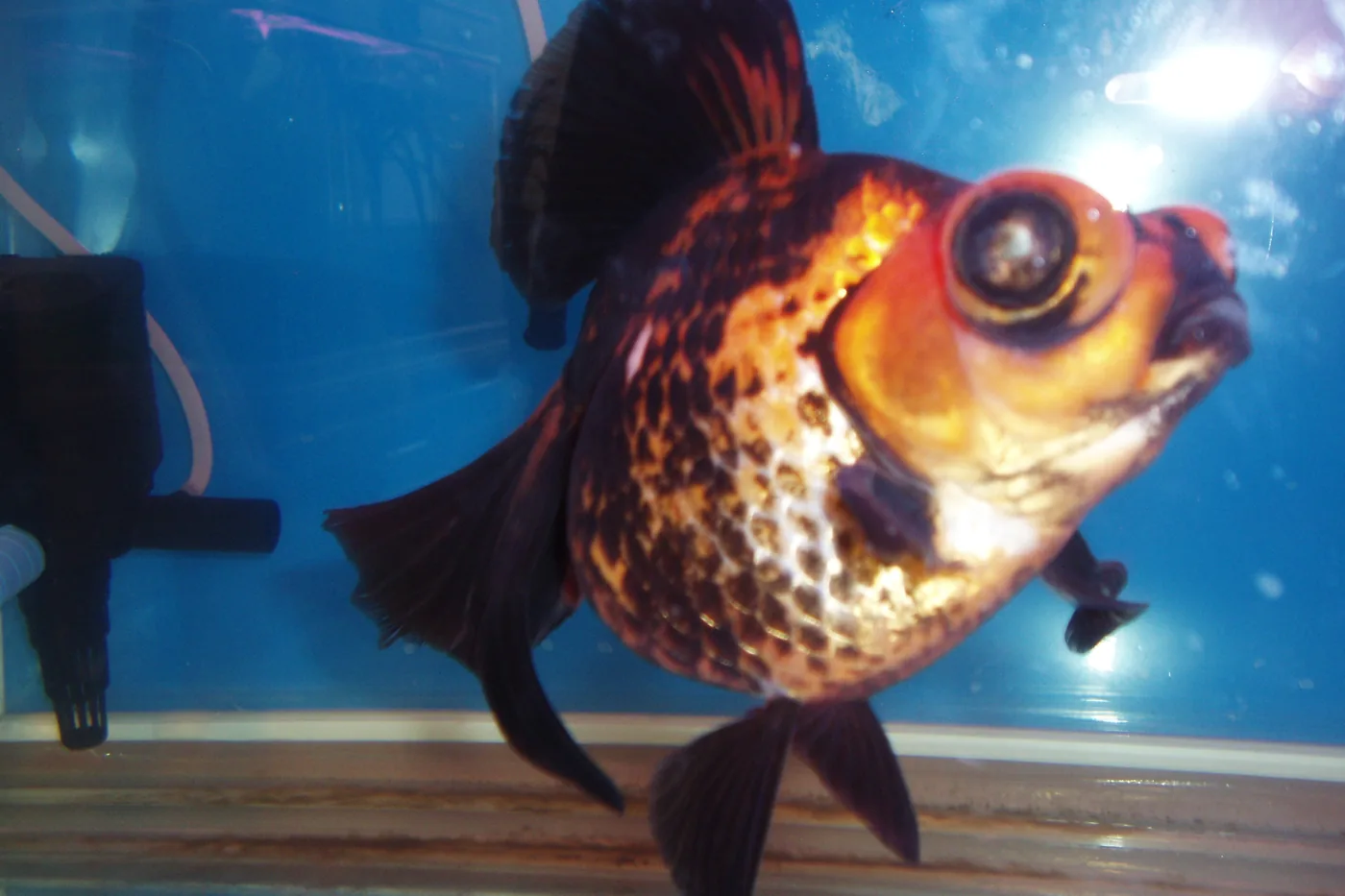
Of the breeds most like the celestial eye, the bubble eye and ranchu are pictured above among its companions. The others:
Frequently asked questions
Can celestial eye goldfish see?
Poorly. The pupils point upward, so a celestial sees the surface, the lights and anything passing overhead, including your hand and food dropping from above, but little of what is in front of or below it, and welfare accounts say the retina degenerates as the eyes turn, so sight is restricted and may worsen. It finds food on the bottom by smell and by rooting through sand, and it learns a regular feeding spot quickly. Avoid strong overhead lighting, and treat it as a fish with a narrow, fixed window on the world.
When do the eyes turn upward?
Fry hatch with normal eyes. The eyes protrude within the first two months and usually turn upward over the next few, in most fish by about nine months; a few take longer or never turn fully. Timing and symmetry vary between lines, and a fish whose eyes settle slightly unevenly is common and does not need any intervention.
Why should I not keep a celestial eye on gravel?
Because it cannot see the bottom it feeds from. A celestial roots along the substrate by feel and will take in gravel small enough to fit in its mouth, which can lodge in the throat. Sharp gravel can also scratch the exposed eyes. Sand or a bare bottom lets the fish sift safely for food and is easier to keep clean.
What should I look for when buying a celestial eye?
Two eyes protruding evenly and turned the same way — asymmetry is common in poor stock and is permanent. Both corneas clear rather than clouded, no scrape marks on the protruding tissue, and a fish that holds level and moves deliberately. Then watch it feed, because a celestial that cannot locate food in a shop tank will not do better in yours. And look at the substrate it is standing on: coarse gravel under a fish that feeds by feel is a reason to be careful about what it has already swallowed.
Why does a celestial eye seem to notice me more than other goldfish?
Because you are in the part of the world it can see. A celestial's pupils point permanently upward, so the surface, the light and whatever is above the tank are its visual field, while everything in front of and below it is not. Some keepers report that celestials respond readily to a person leaning over the tank, which would be less a personality trait than a consequence of where the eyes are aimed.
Do celestial eyes need a species tank?
Not strictly, but the list of acceptable company is short: a bubble eye, another celestial, or a ranchu or lionhead — fish as slow and as poorly sighted as itself. Anything quicker takes every meal first, and since a celestial locates food by smell and feel rather than sight, it loses that race by a wide margin and the damage is invisible for months. A species tank is the simplest way to get it right.
Can a celestial eye live with a telescope?
It is not a good match. A telescope has a dorsal fin, swims faster and sees enough to reach food first, so the celestial ends up hungry. Better company is other celestials, bubble eyes and, with care, ranchus or lionheads, which share the finless back and the slow pace. Check any planned mix with the compatibility checker.